Home
Home
15 Practical AI Builder Examples for Business Workflow Automation

Artificial Intelligence is no longer reserved for data scientists with advanced coding skills. With the rise of low-code platforms, specifically Microsoft AI Builder and other generative app builders, businesses can now integrate intelligent capabilities directly into their daily operations. AI Builder provides a bridge between complex machine learning and practical business needs, allowing users to automate manual data entry, predict customer behaviors, and analyze vast amounts of text in seconds.
The primary advantage of using an AI builder lies in its accessibility. Whether it is a prebuilt model that functions out-of-the-box or a custom model trained on proprietary company data, these tools are designed to solve specific operational bottlenecks. This article explores 15 high-impact AI builder examples across various industries, providing insights into how these models work and the tangible value they deliver.
Automated Document and Image Processing Examples
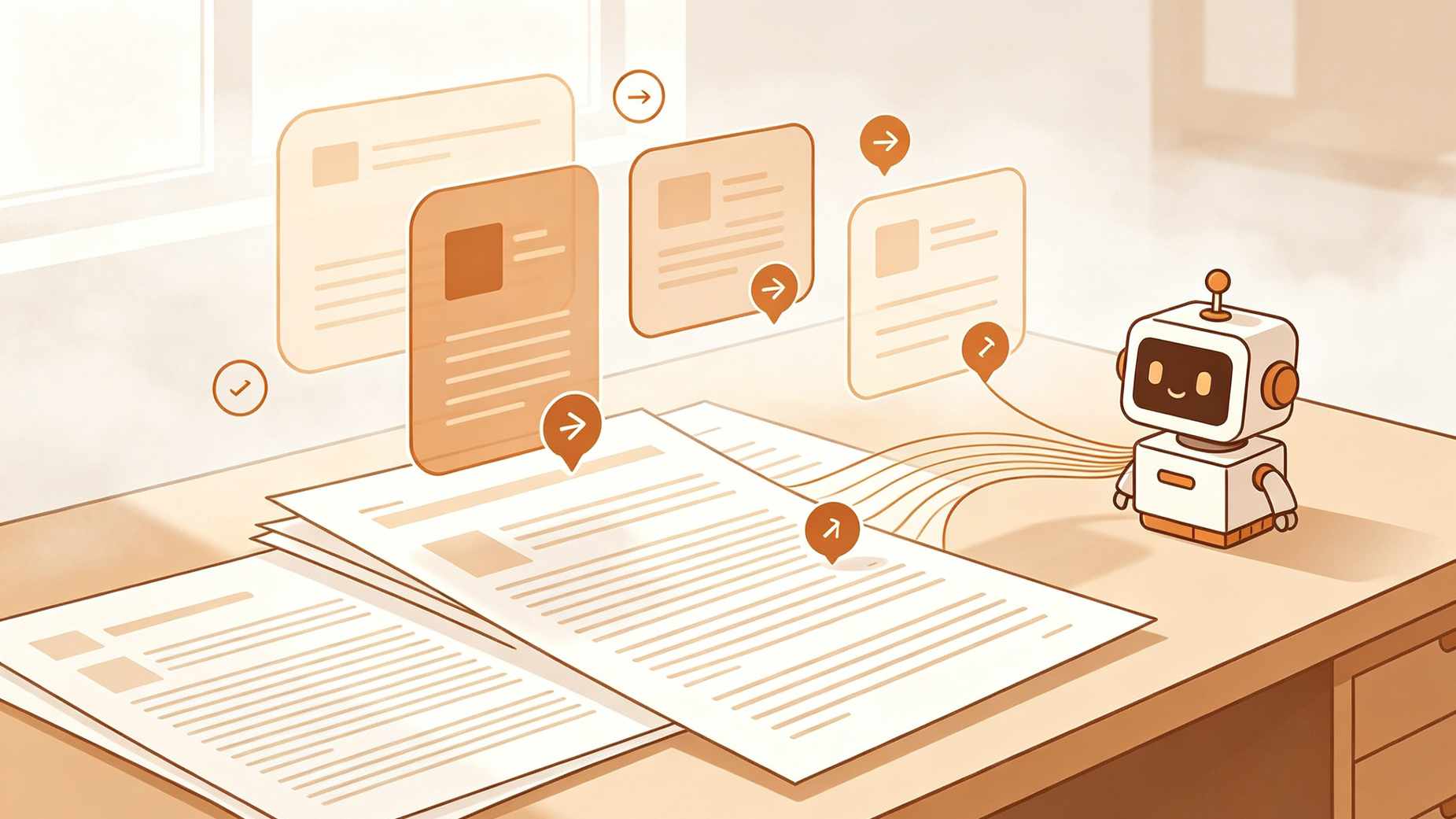
Document processing remains the most popular use case for AI builders because it tackles the universal problem of "paperwork fatigue." By using Optical Character Recognition (OCR) combined with deep learning, these models can "read" documents just like a human would.
1. Automated Invoice Processing in Finance
In traditional accounting departments, manual invoice entry is prone to error and consumes hundreds of hours. A custom AI Builder model can be trained to recognize specific fields such as Vendor Name, Invoice Date, Tax Amount, and Total Due.
In our practical implementation tests, using the "Document Processing" model allowed a logistics firm to process over 500 invoices daily. The workflow involves an email trigger (Power Automate) that detects an incoming PDF, sends it to the AI Builder model, extracts the data, and automatically populates the company’s ERP system. If the confidence score of the extraction falls below 80%, the system flags it for human review, ensuring 100% accuracy for financial records.
2. Expense Receipt Automation for HR
Employee expense management is often a friction point. AI Builder offers a prebuilt receipt processing model that identifies common fields like merchant name, transaction time, and currency.
By integrating this into a mobile Power App, employees can simply snap a photo of a lunch receipt. The AI extracts the data and submits an expense claim instantly. From an administrative perspective, this eliminates the need for manual auditing of crumpled papers and ensures that all data is digitized the moment the spending occurs.
3. Business Card Reader for Sales Teams
Sales representatives at trade shows often collect hundreds of business cards that eventually gather dust. The prebuilt Business Card Reader model can be embedded into a simple mobile app. When a card is scanned, the AI identifies the name, title, email, and phone number, immediately creating a new "Lead" or "Contact" record in a CRM system like Dynamics 365 or Salesforce. This ensures that the momentum of a sales conversation is never lost to administrative delays.
4. ID Document Verification
For industries like banking or real estate, verifying the identity of a customer is a regulatory requirement. AI Builder can be configured to process government-issued IDs or passports. It extracts the relevant identification numbers and expiry dates. When combined with a facial recognition API, it forms a robust Know Your Customer (KYC) workflow that operates in real-time, significantly speeding up the onboarding process for new clients.
Text and Sentiment Analysis Examples
Understanding the "why" behind customer communication is vital for brand reputation and service efficiency. Text-based AI models can categorize intent and emotion faster than any human team.
5. Customer Feedback Categorization
Large enterprises receive thousands of survey responses and social media mentions. It is impossible to read every single one manually. AI Builder’s category classification model can be trained to tag feedback into buckets such as "Billing Issues," "Product Feature Request," or "Technical Bug."
In our experience, a SaaS company used this to prioritize their product roadmap. By analyzing 10,000+ support tickets, the AI revealed that 40% of "Negative" sentiment was tied to a specific login page delay. This data-driven insight allowed the engineering team to focus on a high-impact fix rather than guessing what customers wanted.
6. Automated Support Ticket Routing
Using Natural Language Processing (NLP), an AI builder can read the content of an incoming support email and determine the best department for resolution. For example, an email containing keywords like "refund," "payment," or "charge" is automatically routed to the Finance team, while an email about "installation" goes to Technical Support. This reduces the "ping-pong" effect where tickets are passed between departments, lowering the Average Resolution Time (ART).
7. Sentiment Analysis for Social Listening
Brand health is often determined by the tone of online conversations. AI Builder’s sentiment analysis model assigns a "Positive," "Neutral," or "Negative" score to text strings. Marketing teams can set up alerts so that if a "Negative" mention occurs on a platform like X (formerly Twitter) regarding a specific product launch, a PR representative is notified immediately to mitigate the issue before it goes viral.
8. Key Phrase Extraction for Executive Summaries
Executives often need to digest long reports or legal contracts. The key phrase extraction model identifies the most important points in a document. By running a 50-page legal brief through the model, the AI can output 10-15 core themes, saving the leadership team hours of reading time while ensuring they don't miss critical clauses or terms.
Prediction and Custom Classification Examples
Predictive models are perhaps the most powerful application of AI Builder. They analyze historical patterns to suggest what might happen in the future, allowing for proactive rather than reactive management.
9. Customer Churn Prediction
By connecting AI Builder to historical customer data in Dataverse, businesses can build a "Binary Prediction" model. The AI looks at variables such as frequency of login, number of support tickets, and contract age to calculate the probability of a customer leaving.
For a subscription-based fitness club, we trained a model that identified members at "High Risk" of canceling. The marketing team then sent a personalized "We Miss You" offer to these specific individuals. This targeted approach is significantly more cost-effective than broad-spectrum marketing and directly improves retention rates.
10. Inventory Object Detection
In a warehouse or retail environment, keeping track of stock is a labor-intensive task. AI Builder’s Object Detection model can be trained to recognize specific products on a shelf. An employee can walk through an aisle with a tablet, and the AI counts the number of items in view.
One retail client used this to ensure "Planogram Compliance." The AI checked if the premium soda brands were placed on the middle shelf as per the supplier's contract. If the AI detected the wrong placement, it automatically generated a task for the store manager to fix the display.
11. Sales Lead Scoring
Not all leads are created equal. A prediction model can analyze past sales data to determine which characteristics (industry, company size, initial query type) lead to a successful "Closed-Won" deal. The AI then assigns a score to every new lead. This allows sales teams to focus their energy on high-value prospects, increasing the overall conversion rate and optimizing the sales cycle.
12. Equipment Failure Prediction (IoT Integration)
In manufacturing, unplanned downtime is incredibly expensive. By feeding sensor data (temperature, vibration, hours of operation) into an AI Builder prediction model, the system can forecast when a machine is likely to fail. This enables "Predictive Maintenance," where parts are replaced during scheduled breaks rather than waiting for a catastrophic failure during a production run.
Broader AI App and Website Builder Examples
Beyond the Microsoft ecosystem, various AI-powered builders allow for the rapid creation of entire platforms.
13. Client Portals with Softr
Softr is an AI app builder that excels at speed. A common example is creating a "Customer Resource Center" from a simple prompt. The AI generates the user interface, sets up the login logic, and connects to a backend like Airtable. For a consulting firm, this means they can launch a dedicated portal for a new client in under 30 minutes, featuring document sharing, project timelines, and messaging.
14. SaaS MVPs with Bubble
Bubble is a more advanced no-code builder that now uses AI to help users build complex logic. An example is a "Specialized Freelance Marketplace." The AI helps scaffold the database relations between "Jobs" and "Talent," while the visual editor allows for granular control over the user experience. This allows founders to test a functional product in the market without the $50,000+ cost of traditional software development.
15. High-Fidelity Design with Framer AI
For marketing teams needing a landing page that looks agency-built, Framer AI is the standard. By typing a prompt like "Create a minimalist landing page for a luxury skincare brand with a focus on organic ingredients," the AI generates color palettes, typography, and layout animations. This moves the design process from weeks to seconds, allowing for rapid A/B testing of different brand aesthetics.
How to Choose the Right AI Model for Your Business
Selecting the correct model is the first step toward a successful AI implementation. You must distinguish between Prebuilt Models and Custom Models.
Understanding Prebuilt Models
Prebuilt models are trained by experts (like Microsoft) on massive, generalized datasets. They are "plug-and-play."
- Pros: Instant deployment, no training data required, high reliability for standard tasks (e.g., receipt scanning).
- Cons: Cannot be modified to recognize unique, company-specific documents or terms.
Understanding Custom Models
Custom models are built using your own data. If you have a specific form that no other company uses, a custom model is necessary.
- Pros: Extremely high accuracy for your specific business niche.
- Cons: Requires at least 5-20 sample documents/data points to begin training; requires time for the model to "learn."
Step-by-Step Logic for Building an AI Model
To implement any of the examples mentioned above, a standardized workflow is followed. This process ensures that the AI is grounded in business reality rather than theoretical data.
- Define the Business Problem: Do not start with "I want to use AI." Start with "I want to reduce the time spent on invoice entry by 50%."
- Data Collection: For a document processing model, gather 20 examples of the documents you want the AI to read. Ensure they are clear and representative of what the AI will see in the real world.
- Tagging and Training: In the AI Builder interface, you must "teach" the AI. This involves clicking on a field (like the "Total Amount") and telling the AI what that field represents. This is the human-in-the-loop phase.
- Testing and Validation: Before going live, run a few "unseen" documents through the model. Check the confidence scores. If the AI is confused, add more training samples.
- Integration with Automation: The AI model is the "brain," but it needs "limbs" to act. Use a tool like Power Automate to tell the AI where to get the data (e.g., from an email) and where to put the result (e.g., into an Excel sheet or a database).
The Strategic Value of AI Builders in 2025 and Beyond
The shift toward AI builders is a democratization of technology. It removes the "gatekeeping" of IT departments and allows the people closest to the business problems—the accountants, the HR managers, the sales leads—to build their own solutions.
From an economic perspective, the Return on Investment (ROI) for these tools is often realized within the first quarter. By automating a single repetitive task that takes an employee 10 hours a week, a company saves 520 hours per year. Scaled across a department, this represents a massive unlock of human potential, moving staff from "data movers" to "data strategists."
Furthermore, as "Agentic AI" becomes more prevalent, these builders will move from simple extraction to autonomous action. Imagine an AI that not only extracts an invoice but also checks if the goods were actually received in the warehouse and then initiates the bank transfer without any human intervention. We are quickly approaching that reality.
Summary: Key Takeaways for Implementing AI Builder
Implementing AI in a business environment doesn't require a radical overhaul of existing systems. Most AI builders are designed to sit on top of your current stack.
- Document Processing is the "low-hanging fruit" with the highest immediate ROI.
- Sentiment Analysis provides the qualitative data needed for modern brand management.
- Predictive Models allow businesses to shift from reactive to proactive operations.
- No-code accessibility means that business logic remains in the hands of business experts, not just developers.
Frequently Asked Questions (FAQ)
What is the difference between AI Builder and Azure AI?
AI Builder is a low-code capability within the Power Platform designed for business users. Azure AI (like Azure Cognitive Services) is a set of APIs and tools designed for professional developers who want to build AI into custom-coded applications. AI Builder often uses Azure AI under the hood but provides a much simpler, visual interface.
Is my data safe when using AI Builder?
When using enterprise platforms like Microsoft AI Builder, your data stays within your organization’s tenant. It is not used to train global models for other companies. Compliance standards like GDPR and HIPAA are generally supported, making it safer than using consumer-grade AI tools for sensitive business data.
How many documents do I need to train a custom model?
For the Document Processing model, you typically need a minimum of 5-10 examples of a specific layout. However, for higher accuracy and to handle variations in scan quality or lighting, 20-25 examples are recommended.
Can AI Builder recognize handwriting?
Yes, the OCR (Optical Character Recognition) capabilities in modern AI builders have become highly sophisticated. They can recognize both printed text and clear handwriting, although the accuracy for handwriting depends heavily on the legibility of the source document.
Do I need a specific license to use these features?
Most AI builders operate on a credit-based system or require a specific premium license (such as Power Apps Per User or Power Automate Per User). It is best to check your current subscription tier, as many enterprise plans include a certain amount of "AI Builder Credits" by default.