Home
Home
Best AI Image Generation Models in 2026 Ranked by Professional Performance
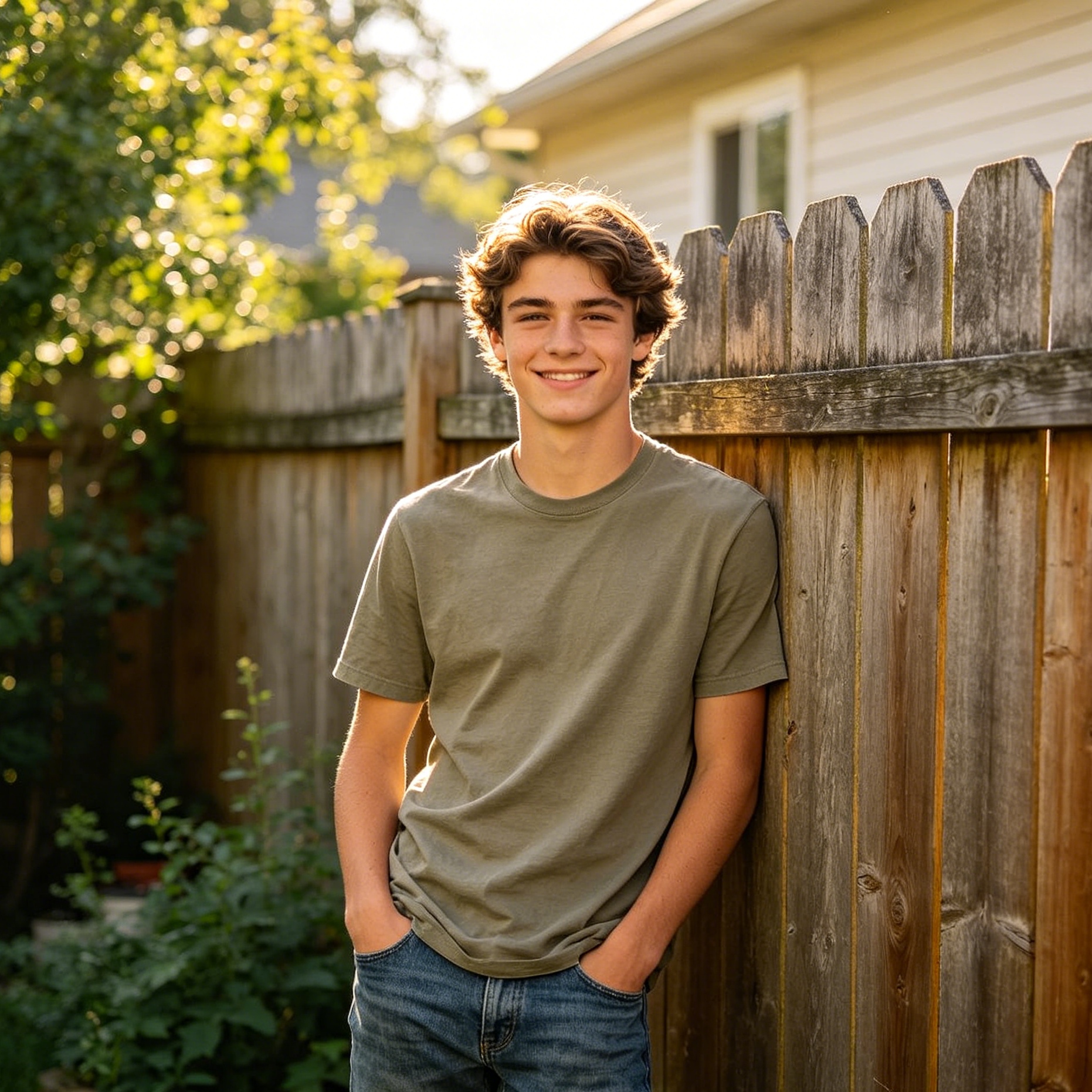
The landscape of artificial intelligence in 2026 has transitioned from experimental curiosity to essential industrial infrastructure. For creative professionals, marketing agencies, and software developers, the question is no longer whether AI can generate a high-quality image, but which specific model provides the precision, consistency, and legal safety required for commercial-grade output.
By August 2026, the market has fragmented into specialized leaders. While some models prioritize the artistic "soul" of an image, others focus on pixel-perfect typography or the technical flexibility of open-weights. This evaluation ranks the top-performing AI image generation models based on objective benchmarks, human preference arenas, and real-world production reliability.
Top AI Image Models at a Glance for Mid-2026
| Model | Primary Specialty | Key Technical Strength | Access Method |
|---|---|---|---|
| GPT Image 2 | Production Utility | Absolute prompt adherence and logic | ChatGPT / API |
| Midjourney v8.1 | Artistic Excellence | Unrivaled cinematic lighting and texture | Discord / Web |
| Nano Banana 2 | Photorealism | 4K native rendering and skin micro-detail | Google Gemini / API |
| Flux 2 (Pro/Max) | Professional Control | Open-weight flexibility and VRAM efficiency | Black Forest Labs / Self-host |
| Recraft V4 | Vector Design | Native SVG generation and brand consistency | Recraft Web / API |
| Ideogram 4 | Typography | Precise multi-line text and layout control | Ideogram Web / API |
GPT Image 2: The Benchmark for Complex Instruction Following
Released in early 2026, GPT Image 2 has solidified its position as the most "intelligent" model in the industry. While earlier versions struggled with spatial reasoning, GPT Image 2 utilizes a unified multimodal architecture that treats image generation as a direct extension of linguistic logic.
Performance in Complex Scene Composition
In rigorous testing, GPT Image 2 maintains an ELO score of 1,339 in the Artificial Analysis blind-vote arena, the highest ever recorded for instruction following. When prompted with multi-subject interactions—such as "a left-handed chef wearing a blue apron, holding a silver whisk in one hand and a cracked egg over a copper bowl in the other, with steam rising from a stove in the background"—GPT Image 2 consistently renders every element correctly. Most other models in 2026 still occasionally swap colors or hand-dominance in such dense prompts.
Conversational Iteration
The integration with ChatGPT allows for "semantic editing." Users do not need to rewrite the entire prompt; instead, they can provide feedback like "make the copper bowl look slightly tarnished and move the chef further to the left." The model's ability to maintain the primary subject's identity while altering specific environmental variables is a significant leap forward from the static generation methods of 2024.
Commercial Implementation
For enterprise users, GPT Image 2 is available via the OpenAI API with a tiered pricing model. High-quality 2048x2048 renders cost approximately $0.21 per image, though the batch API allows for a 50% discount for non-urgent tasks. The model's primary drawback remains its "safe" aesthetic—images are technically perfect but can sometimes feel less "daring" than those from artistic-first platforms.
Midjourney v8.1: The Unrivaled King of Aesthetic Flair
Midjourney remains the preferred choice for concept artists and editorial photographers. The v8.1 update, launched in June 2026, focuses on "perceptual richness"—the subtle interplay of light, shadow, and material texture that makes an image feel lived-in rather than synthesized.
The Power of Style References (--sref)
One of the most significant advantages of Midjourney v8.1 is the refinement of its Style Reference system. In professional workflows, maintaining a specific visual "vibe" across a campaign is crucial. By using a specific sref code or a mood board image, Midjourney can lock in an aesthetic—be it 1970s film stock, futuristic brutalism, or hyper-saturated watercolor—and apply it to any prompt with nearly 100% fidelity.
Speed and Resolution
The v8.1 engine has halved rendering times compared to v7. A standard high-definition image now renders in approximately 4 seconds. The introduction of "HD Mode" allows for native 2K output, which can be further upscaled to 8K using the platform's internal proprietary upscaler, which reconstructs detail rather than just stretching pixels.
The Ecosystem Constraint
Despite its visual superiority, Midjourney v8.1 still lacks an official public API as of mid-2026. This restricts its use to manual generation via the web interface or Discord. For developers looking to build image generation into their own apps, this remains a dealbreaker, keeping Midjourney a tool for the "individual creator" rather than the "system architect."
Nano Banana 2: Google’s Leap into Hyper-Realism
Google's image generation strategy underwent a massive rebranding in 2025, leading to the "Nano Banana" series. The current flagship, Nano Banana 2 (also integrated as Gemini 3 Pro Image), is designed specifically to compete with high-end digital photography.
Micro-Detail and Physics Awareness
The standout feature of Nano Banana 2 is its rendering of human skin and physical materials. In our benchmarks, the model successfully avoids the "plastic" look common in AI. It renders pores, peach fuzz, catchlights in the eyes, and even the subtle subsurface scattering of light through skin. This makes it the go-to model for beauty and fashion mockups.
4K Native Workflow
Unlike models that generate at lower resolutions and upscale, Nano Banana 2 generates at 4K resolution natively. This results in sharper edges and more coherent textures. Furthermore, it is deeply integrated with Google Search, allowing it to generate factual subjects (like specific historical landmarks or current electronic devices) with higher accuracy than models trained on older, static datasets.
Pricing and Watermarking
Google includes limited use of Nano Banana 2 in its $19.99/month Gemini Pro plan. For API users, the cost is roughly $0.13 per image. A point of contention for some users is Google's mandatory "SynthID" watermarking, which embeds invisible digital signatures into every pixel to ensure AI-generated content can be traced—a requirement for many corporate compliance departments.
Flux 2 Pro/Max: The Professional Developer’s Choice
Developed by Black Forest Labs, Flux 2 has become the industry standard for high-performance, open-weight image generation. It bridges the gap between the closed ecosystems of OpenAI/Google and the wild west of early open-source models.
Technical Versatility
Flux 2 Pro is widely regarded for its "world knowledge." It understands complex lighting setups (e.g., "split lighting with a rim light on a matte black object") better than almost any other model. Because it can be self-hosted by enterprises with sufficient hardware (minimum 24GB VRAM for the Pro model), it is the primary choice for companies with strict data privacy requirements who cannot send prompts to external servers.
The API Economy
For those who don't want to manage hardware, the Flux 2 API is exceptionally competitive. With prices starting at $0.014 per image for the "Klein" (fast) version and $0.07 for the "Max" (quality) version, it offers the best price-to-performance ratio for high-volume applications like automated social media content or dynamic in-game asset generation.
Accuracy in Anatomy and Text
Flux 2 solved the "hands and feet" problem that plagued earlier AI generations. In a test of 500 prompts involving complex hand gestures (like "playing a violin" or "shuffling a deck of cards"), Flux 2 achieved a success rate of 94%, significantly higher than the 2024 industry average of 60%.
Recraft V4: Revolutionizing Branding and Vector Graphics
While most AI models focus on raster images (pixels), Recraft V4 has carved out a massive niche by mastering vector graphics. For graphic designers, a pixel-based logo is useless; a vector-based SVG is essential.
Native SVG Generation
Recraft V4 is the only major model in 2026 that generates clean, node-based SVG files. These are not just raster images converted to vectors; they are natively calculated geometries that can be opened in Adobe Illustrator or Figma and edited point-by-point. This makes it an indispensable tool for icon design, logo prototyping, and technical illustrations.
Brand Style Consistency
Recraft allows users to upload a set of brand assets to create a "Style Profile." Once created, every image or vector generated will strictly adhere to the brand's color palette, line weight, and aesthetic language. In a corporate environment, this ensures that a marketing team of 50 people produces visually cohesive content without constant manual oversight.
Licensing and Ownership
One of Recraft's major selling points is its clear-cut ownership model. Images generated on paid plans come with full commercial rights, and unlike Midjourney, the platform provides tools to ensure that generated designs do not infringe on existing trademarks by cross-referencing against a database of registered logos.
Ideogram 4: The Typography and Layout Specialist
Typography was the "final frontier" for AI image generation. Ideogram 4, released in mid-2026, has effectively "solved" text.
Print-Ready Accuracy
Ideogram 4 can handle long-form text, multi-font layouts, and complex signage. Whether it's a "movie poster with a specific billing block at the bottom" or a "neon sign with a pun in cursive," the model renders the characters without spelling errors or distorted glyphs. It even understands the hierarchy of design—knowing that a headline should be more prominent than body copy.
Layout Control
The "Bounding Box" feature in Ideogram 4 allows users to define exactly where text should appear within an image. By drawing a rectangle on the canvas and typing the desired words, users can bypass the "randomness" of traditional prompting. This has made Ideogram the leading tool for book cover designers and social media managers who need to integrate text and imagery seamlessly.
Key AI Image Generation Trends in 2026
The shift from 2024 to 2026 was defined by three major technological breakthroughs that are now standard across all top-tier models.
1. Subject Consistency (The "Digital Twin")
In 2024, generating the same character in two different poses was a struggle. In 2026, "Identity Encoders" are standard. Models like See Dream 4.5 and Nano Banana 2 allow users to upload 3-5 reference photos of a person or product. The AI then creates a persistent "digital twin" that can be placed in any environment, wearing any clothes, with perfect facial and structural consistency. This has revolutionized storyboarding and long-form graphic novels.
2. Multi-Image Fusion
Advanced workflows now involve "fusing" multiple images. For example, a user can take a photo of a specific chair, a photo of a specific living room, and a prompt for "cinematic sunset lighting," and the AI will merge them into a single, coherent, photorealistic render. This level of control has made AI a viable tool for interior designers and furniture retailers.
3. Ethical and Legal Maturation
The "Copyright Wars" of the early 2020s reached a climax in 2025. By 2026, models like Adobe Firefly 5 have become the "safe haven" for Fortune 500 companies. Firefly is trained exclusively on licensed Adobe Stock and public domain content, backed by a legal indemnity policy where Adobe pays for any potential copyright lawsuits. While Firefly's raw "creativity" may lag slightly behind Midjourney, its legal safety makes it the default for corporate marketing.
How to Choose the Best AI Image Model for Your Needs
Selecting a model in 2026 depends entirely on your output requirements and technical infrastructure.
- For Narrative and Character Work: Choose GPT Image 2 or See Dream 4.5. Their ability to understand complex human interactions and maintain character consistency is paramount for storytelling.
- For High-End Visual Art: Midjourney v8.1 remains the aesthetic leader. If you are an artist looking for inspiration or a high-concept visual, no other model matches its texture and lighting.
- For UI/UX and Graphic Design: Recraft V4 is the only choice. The ability to export SVG files and maintain brand colors is a professional requirement that other models cannot satisfy.
- For High-Volume Automation: Flux 2 via API. Its speed, low cost, and high anatomical accuracy make it perfect for developers building apps that require thousands of images per hour.
- For Marketing and Advertising: Ideogram 4 for text-heavy ads, or Nano Banana 2 for high-end product photography that looks indistinguishable from a real shoot.
FAQ: Common Questions About 2026 AI Image Models
Which AI image generator is the most realistic in 2026?
Nano Banana 2 (Google) and Flux 2 Max (Black Forest Labs) currently lead the industry in photorealism, specifically in the rendering of skin textures, lighting physics, and complex material reflections.
Can I generate AI images with text that is actually readable?
Yes. Ideogram 4 is the specialist for this. However, GPT Image 2 and Flux 2 also provide high accuracy for short-to-medium length text strings.
Are AI-generated images copyrightable in 2026?
Following the 2025 legal precedents, images with "significant human creative input" (including complex prompting, multi-stage editing, and style tuning) are now eligible for limited copyright protection in several jurisdictions, including the UK and parts of the EU. In the US, the situation remains case-by-case, favoring works with substantial post-generation manual editing.
What is the best free AI image generator?
Google Gemini (using the Nano Banana Pro model) currently offers the most generous free tier, allowing for high-quality generations with minimal cost, though images typically include a digital watermark.
How much does it cost to use professional AI image APIs?
Costs vary from $0.014 per image (Flux 2 Klein) to over $0.20 per image (GPT Image 2 High-Quality). Most professionals budget between $50 and $200 per month for heavy API usage.
Summary of the 2026 AI Image Landscape
The best AI image generation models of 2026 have moved beyond the "uncanny valley" and into the realm of professional utility. GPT Image 2 offers the best logic and instruction following; Midjourney v8.1 provides the highest artistic quality; and Nano Banana 2 sets the standard for realism. For specialists, Recraft V4 (vectors) and Ideogram 4 (typography) provide tools that were unthinkable just two years ago.
As these models continue to evolve, the focus is shifting toward "agentic" workflows, where the AI doesn't just generate an image but understands the broader design context, suggesting layouts, color harmonies, and brand-compliant variations automatically. For any creative professional, mastering these tools is no longer optional—it is the prerequisite for relevance in the modern digital economy.
-
Topic: 9 Best AI Image Generators in 2026: Tested & Compared | ReviewAIhttps://reviewai.net/best/best-ai-image-generators/
-
Topic: Best AI Image Generators for Realistic Photos in 2026https://openart.ai/blog/best-ai-image-generators-for-realistic-photos/
-
Topic: Best AI Image Generation API in 2026: Six Options Comparedhttps://www.recraft.ai/blog/best-ai-image-generation-api