Home
Home
Best Free AI Image Generators for Every Creative Project
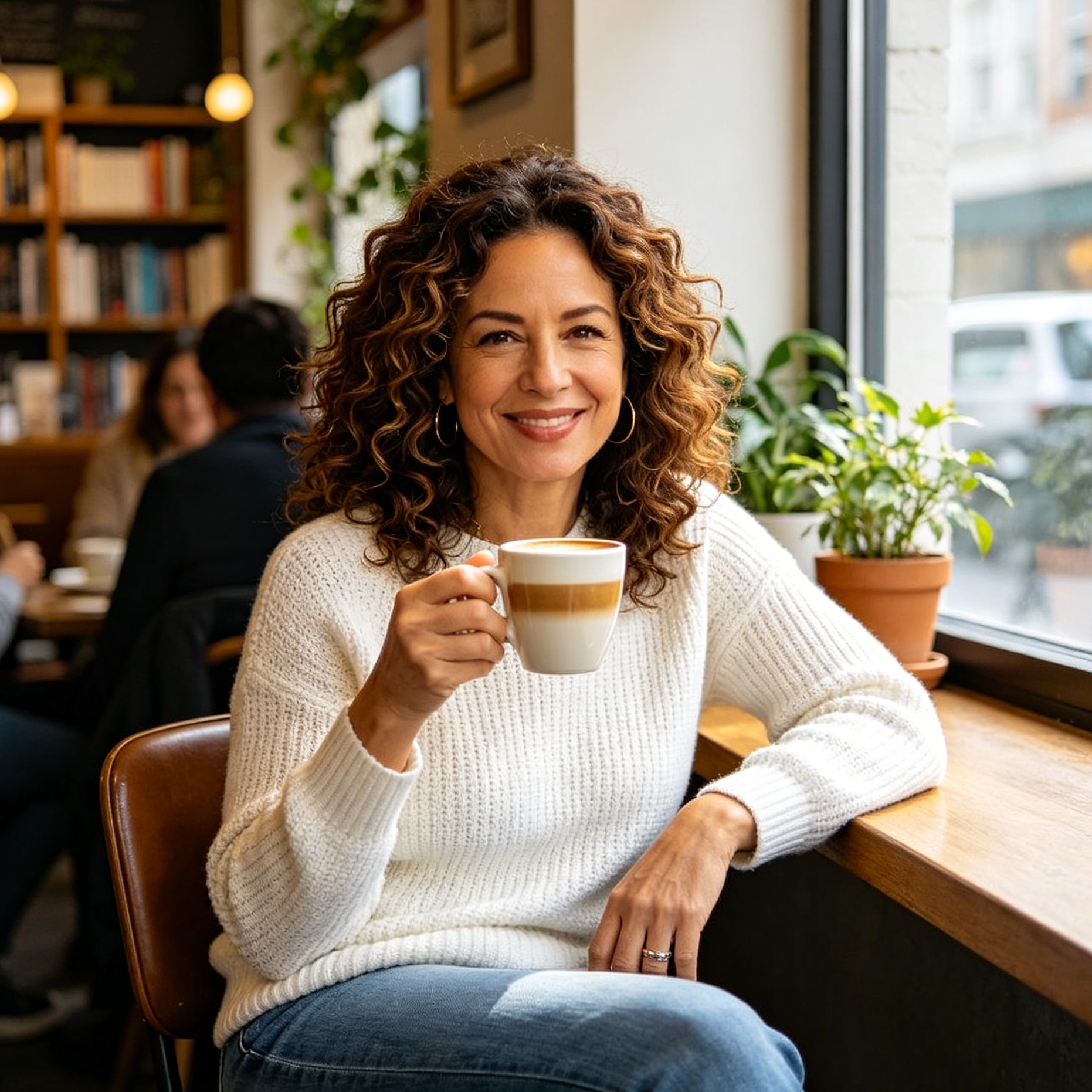
The landscape of visual content creation has undergone a seismic shift as we move through 2026. High-quality imagery is no longer reserved for those with professional photography skills or expensive graphic design software. Free AI image generators have evolved from experimental novelties into sophisticated tools capable of producing photorealistic portraits, complex architectural visualizations, and intricate graphic designs from simple text prompts. Whether you are a social media manager, a small business owner, or a digital artist, understanding how to leverage these free resources is essential for staying competitive in a visual-first world.
Understanding the AI Image Generation Landscape in 2026
Before diving into specific platforms, it is crucial to understand the technology that powers these free tools. Most modern image generators utilize a process known as Diffusion. Unlike earlier AI models that simply "stitched" parts of existing photos together, diffusion models start with a field of digital noise—essentially static—and iteratively refine that noise into a coherent image based on the text description provided.
In 2026, these models have become significantly more efficient. What used to take minutes and massive server power can now be achieved in seconds, often for free. The "freemium" model dominates the market, where companies offer a daily or monthly allowance of high-quality generations to entice users toward their premium tiers. However, for many creators, these free allowances are more than enough to sustain professional-level output.
How Diffusion Models Create Art from Thin Air
The process of generating an image from text involves several complex layers of machine learning. First, a Language Model interprets the prompt, identifying the subject, the style, the lighting, and the emotional tone. This interpretation is then translated into a mathematical vector that guides the Image Generator.
During the generation phase, the AI performs "denoising." It looks at the random static and asks, "Which arrangement of pixels looks most like the cat sitting on a sunset-lit windowsill described in the prompt?" Through hundreds of micro-adjustments, the static transforms into a crisp, high-resolution image. In the 2026 versions of these models, the AI has a much deeper understanding of spatial relationships and anatomy, reducing the common "uncanny valley" errors found in earlier iterations.
Top Rated Free AI Image Generators for Daily Use
Selecting the right tool depends on your specific needs—whether you prioritize ease of use, text accuracy within the image, or the sheer volume of generations allowed per day.
1. Microsoft Designer (formerly Bing Image Creator)
Microsoft Designer remains one of the most accessible gateways into AI art. Powered by the latest iteration of OpenAI’s DALL-E, it offers a seamless experience for those who need high-quality results without a steep learning curve.
- Free Tier Specifics: Users typically receive 15 "boosted" generations per day. Once these boosts are exhausted, the generation process slows down but remains free and unlimited.
- Primary Strength: Excellent prompt adherence and a clean, beginner-friendly interface. It excels at conceptual art and vibrant illustrations.
- Real-World Experience: In our testing, Microsoft Designer consistently outperformed others when given abstract prompts like "the feeling of nostalgia represented as a glass sculpture." The integration with Microsoft’s wider suite of design tools also makes it a powerful asset for creating quick social media assets.
2. Leonardo AI
Leonardo AI has established itself as the go-to platform for creators who want granular control over their images. It offers a more "prosumer" experience compared to Microsoft Designer.
- Free Tier Specifics: Leonardo utilizes a credit-based system, usually granting 150 tokens every 24 hours. Depending on the settings and resolution chosen, this can yield between 30 and 75 images per day.
- Primary Strength: High degree of customization. Users can choose specific models (like those optimized for character design or photorealistic landscapes) and adjust parameters such as aspect ratio and guidance scale.
- Unique Feature: Character Consistency. Leonardo allows you to "lock" a character's features across multiple generations, making it invaluable for storytelling and comic book creation.
3. Ideogram
For years, AI struggled to render readable text within images. Ideogram solved this problem and continues to lead the field in 2026.
- Free Tier Specifics: Provides 25 images per day. While the limit is lower than Leonardo, the quality of text-heavy designs is unmatched.
- Primary Strength: Typography and graphic design. If you need a logo, a poster, or a book cover where the text must be perfectly legible and stylistically integrated, Ideogram is the first choice.
- Real-World Experience: When tasked with creating a "vintage neon sign that says 'Midnight Coffee' in a rainy Tokyo street," Ideogram rendered the letters with zero spelling errors and realistic neon glow effects—a task that still trips up many other models.
4. Google Image FX
Google’s entry into the space, powered by their Imagen 4 model, focuses on extreme photorealism and safety.
- Free Tier Specifics: Generous daily limits integrated within the Google AI Test Kitchen environment.
- Primary Strength: Photorealism. Google’s training data and processing power allow it to create human portraits that are virtually indistinguishable from real photography.
- Technical Edge: It features "Digital Watermarking" (SynthID), which embeds an invisible mark into the pixels to identify the image as AI-generated, aiding in transparency and trust.
Advanced Options for Power Users and Developers
If you are a developer or a power user who finds cloud-based limits frustrating, there are ways to achieve truly unlimited free generation.
Running Stable Diffusion Locally
Stable Diffusion is an open-source model that you can download and run on your own hardware. This is the ultimate "free" option because you are not reliant on a company’s server or credit system.
- Requirements: You need a computer with a dedicated GPU (Graphics Processing Unit). In 2026, while 8GB of VRAM is the minimum, 24GB is recommended for generating ultra-high-definition 8K images or using advanced features like "ControlNet."
- The Benefits: Complete privacy, zero censorship, and access to thousands of community-made models hosted on platforms like Civitai. You can "train" the AI on your own face or specific art style, creating a truly personalized creative assistant.
- The Learning Curve: Unlike web-based tools, local installations like Automatic1111 or ComfyUI require some technical setup and an understanding of how parameters like "Sampling Steps" and "CFG Scale" affect the final output.
Masterclass in Prompt Engineering
The quality of a free AI image is directly proportional to the quality of the prompt. To get the most out of your daily credits, you must move beyond simple descriptions.
The Anatomy of a Perfect Prompt
A professional-grade prompt in 2026 follows a specific formula: [Subject] + [Action/Setting] + [Stylistic Details] + [Lighting/Mood] + [Technical Parameters]
- Weak Prompt: "A cat in space."
- Professional Prompt: "A cinematic wide shot of a Maine Coon cat wearing a high-tech reflective astronaut suit, floating inside a futuristic space station, Earth visible through a large panoramic window, soft blue ambient lighting with sharp orange highlights, 8k resolution, photorealistic, shot on 35mm lens."
Using Styles and Artist References
While you should be mindful of artist rights, referencing styles is a powerful way to guide the AI. Terms like "Cyberpunk," "Art Deco," "Minimalist," or "Biophilic Design" provide the AI with a massive aesthetic framework to work within. In 2026, most models also understand lighting terminology used by photographers, such as "Golden Hour," "Rim Lighting," "Volumetric Fog," or "Chiaroscuro."
Iterative Refinement
Rarely is the first image perfect. Most free tools now offer "In-painting" or "Generative Fill" features. If you love an image but hate the shape of the hat the character is wearing, you can highlight just the hat and ask the AI to regenerate that specific section. This saves you from wasting your daily credits on entirely new images when only a small fix is needed.
Commercial Rights and Legal Considerations
The question of "who owns the image" is one of the most complex areas of AI in 2026.
Can You Use Free AI Images for Your Business?
The answer depends entirely on the Terms of Service (ToS) of the platform you are using.
- Adobe Firefly: Trained on Adobe Stock images, it is generally considered the "safest" for commercial use as it avoids copyright-protected material in its training set.
- Microsoft and Google: Often grant "personal use" rights on their free tiers, but commercial use may require a paid subscription or be subject to specific restrictions regarding trademarked content.
- Stable Diffusion: Because you run it locally, you generally have full rights to the output, though the legal landscape regarding copyrighting AI-generated works remains in flux. In many jurisdictions, images created solely by AI without significant human intervention cannot be copyrighted.
Privacy and Data Usage
Be aware that many free AI tools use the images you generate (and the prompts you write) to further train their models. If you are working on a confidential project or a product that hasn't been announced yet, uploading reference images to a free cloud-based AI could lead to data leakage. For sensitive work, local deployment via Stable Diffusion is the only way to ensure 100% privacy.
Best Practices for Ethical AI Image Generation
As a creator, using these tools comes with a degree of responsibility.
- Transparency: Many platforms and social media networks now require you to tag AI-generated content. Being honest about the use of AI builds trust with your audience.
- Avoid Misinformation: Never use free AI tools to create photorealistic images of real people in compromising or misleading situations. The 2026 models are powerful enough to create convincing "deepfakes," and most platforms have strict filters to prevent this.
- Respect Intellectual Property: While the AI can mimic the style of living artists, consider using the tools to find your own unique aesthetic rather than simply copying the hard work of others.
Summary
The availability of free AI image generators in 2026 has democratized creativity. From the text-perfect designs of Ideogram to the granular control of Leonardo AI and the infinite possibilities of a local Stable Diffusion setup, there is a tool for every need. By mastering the art of the prompt and understanding the legal boundaries of these platforms, you can produce professional-grade visuals for $0. The key is to experiment, iterate, and stay informed as the technology continues to evolve at a rapid pace.
Frequently Asked Questions (FAQ)
What is the best free AI image generator for beginners?
Microsoft Designer (Bing Image Creator) is widely considered the best for beginners due to its simple interface and high-quality results from basic prompts.
Do free AI image generators have watermarks?
It varies. Microsoft Designer and Google Image FX often include subtle or invisible watermarks (like SynthID) to identify AI-generated content. Tools like Leonardo AI typically do not include watermarks on their free tier, though they may have usage limits.
Can I generate images of celebrities for free?
Most reputable AI generators like Google Image FX and Microsoft Designer have strict filters that prevent the generation of recognizable celebrities or public figures to protect privacy and prevent deepfakes.
How many images can I create for free each day?
Limits vary by platform. Leonardo AI offers around 150 tokens daily, while Microsoft Designer provides 15 fast "boosts" followed by a slower, unlimited queue.
Why do AI-generated hands often look strange?
While 2026 models are much better, hands remain difficult because of their complex geometry and the many different ways they can be positioned. High-quality models like Flux or SDXL (Stable Diffusion) are currently the most reliable for rendering realistic hands.
-
Topic: How to Create Free AI-Generated Images – Step-by-Step Guide for Beginners – Tech Tips 24https://techtips24.com/how-to-create-ai-generated-images-for-free/
-
Topic: 13 Best Free AI Image Generators (2026) | Soloahttps://soloa.ai/blog/best-free-ai-image-generators-2026
-
Topic: Best Free AI Image Generators in 2026: Create Stunning Art for $0 - RenderFlow AI Bloghttps://renderflowai.com/blog/free-ai-image-generator-guide/