Home
Home
Best Free AI Image Generators to Create Professional Visuals Online Today
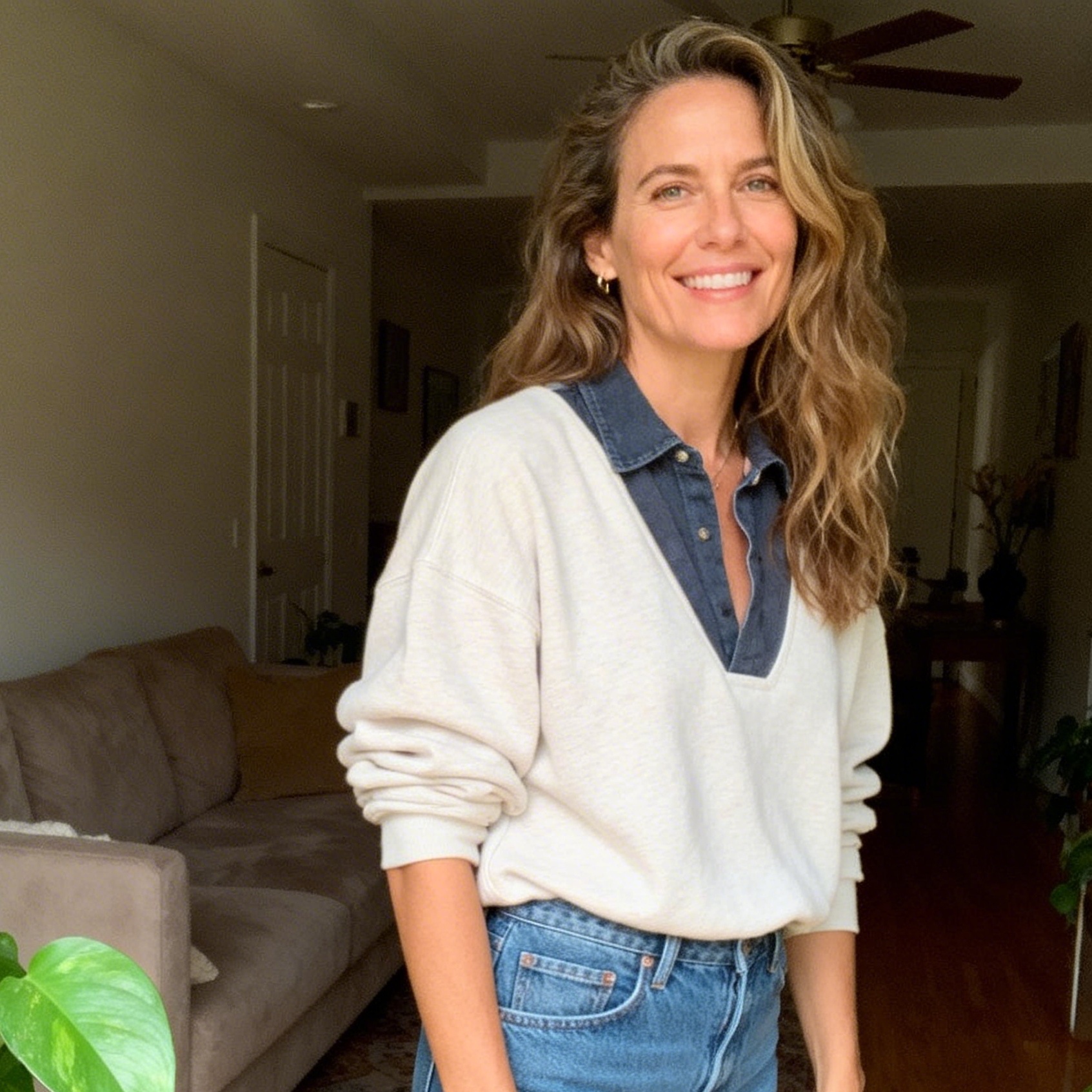
The landscape of digital creativity has shifted dramatically. Gone are the days when high-quality visual content required either a professional photography budget or years of mastery in complex design software. Today, generative artificial intelligence allows anyone to transform a simple text description into a stunning piece of art, a realistic photograph, or a functional graphic for a business presentation.
However, the surge in popularity of these tools has created a crowded market. Finding a platform that is truly accessible, easy to use, and—most importantly—free, can be a daunting task. Many services claim to be free but hide their best features behind restrictive paywalls or watermarks that render the final image unusable.
This detailed analysis explores the leading free online AI image generators, evaluating them based on output quality, prompt adherence, and their specific "free" model. Whether you are a social media manager, a hobbyist artist, or a professional looking for a quick prototype tool, these platforms offer the best entry points into the world of AI-assisted design.
Quick Summary of Top Free AI Image Generators
For those seeking an immediate recommendation, here are the standout performers currently available online:
- Best for Beginners: Microsoft Designer (formerly Bing Image Creator). It is fast, intuitive, and high-quality.
- Best for Creative Control: Leonardo.ai. It offers advanced fine-tuning and multiple model choices.
- Best for Graphic Design: Canva Magic Media. Ideal for integrating AI images directly into layouts.
- Best for Text Accuracy: Ideogram. If you need your AI image to contain readable, correct text, this is the leader.
- Best for Quick Experimentation: Perchance AI. No login required and completely free with minimal restrictions.
- Best for Realism: Adobe Firefly. Trained on Adobe Stock, it produces exceptionally safe and high-fidelity visuals.
Understanding the "Free" in AI Image Generation
Before diving into the specific tools, it is crucial to understand that "free" usually falls into one of two categories. AI models require immense computing power (GPU time), and companies must manage these costs.
The Freemium Model
Most industry leaders, such as Leonardo.ai and Adobe Firefly, operate on a credit-based system. Users receive a daily or monthly allowance of "tokens." Each generation consumes a certain amount of tokens. While this limits the quantity of images you can create in a single session, the quality is often significantly higher because you are accessing premium, high-compute models.
Truly Free and Open-Access Tools
A few platforms offer unlimited generations without a credit system. These are often based on open-source models like Stable Diffusion and hosted by community-driven sites like Perchance or Craiyon. While you gain unlimited quantity, you might sacrifice some speed, resolution, or the latest cutting-edge features found in paid counterparts.
1. Microsoft Designer: High-End Quality for Every Microsoft User
Microsoft Designer, powered by OpenAI’s DALL-E 3 technology, has set a high bar for free accessibility. If you have a standard Microsoft account, you can access one of the world's most sophisticated image models directly through your browser or the Copilot interface.
The User Experience
In our practical testing, Microsoft Designer excels at "semantic understanding." This means it is exceptionally good at interpreting long, complex sentences without getting confused. If you ask for "a small red robot holding a blue umbrella in a rainy cyberpunk city during golden hour," it rarely misses a single detail.
The interface is intentionally minimalist. You enter your prompt, and within seconds, the AI provides four distinct variations. Unlike some professional tools, there are no complicated sliders for "guidance scale" or "seed numbers," making it the gold standard for users who want results without a learning curve.
Pros and Cons
- Pros: High resolution out of the box; excellent prompt adherence; completely free with a daily "boost" system that resets.
- Cons: Limited customization options for advanced users; requires a Microsoft account login.
2. Leonardo.ai: The Professional Creative’s Playground
If Microsoft Designer is the "point-and-shoot" camera of AI, Leonardo.ai is the professional DSLR. It has quickly become a favorite for creators who want to do more than just type a prompt and hope for the best.
Advanced Features for Free Users
Leonardo.ai is remarkably generous with its free tier, providing 150 tokens daily. What sets it apart is the suite of tools it offers:
- Model Selection: You can choose between different versions of Stable Diffusion, Leonardo’s proprietary models (like Leonardo XL), and specialized models for 3D renders or anime.
- Image Guidance: You can upload your own sketch or a reference photo. The AI will then use the structure of that image to generate its output, ensuring the composition matches your vision.
- Real-time Canvas: This allows you to "paint" with AI, generating and editing parts of an image in real-time.
The Verdict
Leonardo.ai is the best choice for those who find other tools too restrictive. During our tests, the ability to adjust the aspect ratio (portrait for TikTok, landscape for blogs) without paying for a premium subscription was a significant advantage.
3. Ideogram: Conquering the "Text in AI" Problem
For years, the biggest weakness of AI image generators was text. If you asked an AI to create a neon sign saying "Open," it would often return gibberish or strange symbols. Ideogram has solved this problem better than almost any other free-access tool.
Specialized Capability
Ideogram is specifically engineered to handle typography and graphic design. If you need a logo, a book cover, or a social media graphic that includes specific words, Ideogram should be your first stop. In our tests, we prompted for "a minimalist coffee shop poster with the text 'FRESH BREW' in bold typography," and the result was perfectly spelled and aesthetically balanced.
Usage Limitations
The free tier is slightly more restrictive than others, offering a limited number of generations per day. However, for specific projects where text accuracy is non-negotiable, it is an indispensable resource.
4. Adobe Firefly: High Fidelity and Legal Peace of Mind
Adobe’s entry into the AI space, Firefly, is built differently than the open-source models found elsewhere. It was trained on Adobe Stock images, openly licensed content, and public domain content.
Professional Integration
Firefly is designed with a "creator-first" approach. The web interface offers a high degree of control over styles, light, and composition via a simple sidebar. You can select "Cinematic," "Vibrant," or "Artistic" filters with a single click, which dramatically changes the mood of the output without needing to rewrite your prompt.
One of its most impressive free features is "Generative Fill," which allows you to upload an image and ask the AI to add or change specific elements (like changing a person's jacket or adding a tree to a background).
Ethics and Safety
Because of its training data, Firefly is widely considered the most "commercially safe" AI tool. It avoids generating copyrighted characters or trademarked logos, which is a crucial consideration for business users.
5. Canva Magic Media: The Workflow Enhancer
Canva has integrated AI directly into its design platform. For most people, an image is just one part of a larger project—a flyer, a presentation, or an Instagram story. Magic Media allows you to generate that image exactly where you need it.
Seamless Implementation
When you are inside a Canva design, you can open the "Apps" tab and select Magic Media. After typing your prompt, the generated image can be instantly dragged into your layout. This eliminates the need to download images from one site and upload them to another.
The free version of Canva allows for a set number of AI generations. While the quality is very high (leveraging a version of Stable Diffusion), the real value is the ecosystem—being able to immediately apply filters, crop, and add text to your AI-generated art.
6. Perchance AI and Craiyon: Truly Unlimited Exploration
Sometimes, you don't want to deal with logins, credit systems, or daily limits. This is where community-hosted tools like Perchance AI and Craiyon shine.
No-Strings-Attached Access
Perchance AI is a fascinatiing platform because it is entirely free and doesn't require an account. It uses an efficient version of Stable Diffusion that runs in the browser or on community servers. It is particularly useful for rapid brainstorming.
Craiyon (formerly DALL-E mini) is the "OG" of free AI art. While its images are lower resolution and often have a "dream-like" or surreal quality compared to the crispness of DALL-E 3, it offers an unfiltered look at how AI processes concepts. It generates a grid of nine images at once, which is great for seeing many variations of an idea simultaneously.
7. Flux and Stable Diffusion: The New Frontier of Detail
Flux has recently taken the AI world by storm. It is a new model architecture that rivals (and sometimes surpasses) Midjourney in terms of realism and prompt adherence. While running Flux locally requires a powerful computer with at least 16GB to 24GB of VRAM, several online platforms offer free trials or limited free access to Flux.1 [dev] or [schnell] models.
Why Flux is Different
In our comparison tests, when given a prompt like "a close-up portrait of an elderly man with weathered skin, every wrinkle visible, hyper-realistic," Flux produced textures that were indistinguishable from real photography. It handles human hands and anatomy with a level of precision that was impossible for AI just a year ago.
How AI Image Generators Actually Work
To get the most out of these tools, it helps to understand the technology behind them. Most modern generators use a process called Diffusion.
Imagine a clear photograph of a cat. Now imagine someone slowly adding static (noise) to that photo until it is just a screen of grey and white pixels. Diffusion models work by learning to reverse this process. They are trained on billions of images paired with text descriptions. When you give the AI a prompt, it starts with a field of random noise and "de-noises" it step-by-step, pulling a coherent image out of the static based on the patterns it learned during training.
Another method, used by models like the original DALL-E, is Autoregression. This works more like a text predictor (like ChatGPT), but instead of predicting the next word, it predicts the next pixel or "chunk" of the image based on what it has already drawn.
Mastering the Art of the Prompt
Your results are only as good as your instructions. Writing a "perfect" prompt is a skill that combines creative writing with technical precision. Here is the framework we use for professional-grade results:
1. The Core Subject
Be specific. Instead of "a dog," use "a long-haired Miniature Dachshund."
2. The Environment and Background
Describe where the subject is. "In a sun-drenched library with mahogany shelves" provides much more context than "inside."
3. Lighting and Mood
This is the most overlooked part of prompting. Use terms like:
- Golden Hour: Soft, warm, directional light.
- Volumetric Lighting: Think of sunbeams piercing through dust or fog.
- Cyberpunk Neon: Harsh, colorful, high-contrast light.
- Soft Studio Lighting: Even, flattering light used in professional portraits.
4. Style and Medium
Tell the AI what "kind" of art you want.
- Photographic: Specify the camera lens (e.g., "35mm lens, f/1.8") for realistic bokeh.
- Artistic: Mention specific styles like "oil painting," "Ukiyo-e print," "3D isometric render," or "pencil sketch."
5. Compositional Keywords
Use terms like "low-angle shot" to make a subject look heroic, or "macro photography" for extreme close-ups of small objects.
Practical Comparison: The "Neon City" Test
To demonstrate the differences, we ran the same prompt through three different free generators: Prompt: "A futuristic Tokyo street at night, heavy rain reflecting neon signs, a lone traveler with a transparent umbrella, cinematic 8k resolution."
- Microsoft Designer: Produced a very "clean" and vibrant image. The reflections in the puddles were perfect, and the traveler looked like a character from a big-budget movie.
- Leonardo.ai (using PhotoReal model): The result was much moodier. It added more grit to the pavement and a slight "lens flare" effect that made it feel more like a real photograph and less like a digital render.
- Craiyon: The image was more abstract. While the colors were correct, the person’s face was blurry, and the signs had "fake" Japanese characters. However, it generated nine versions in 30 seconds, giving us a great "mood board" to start with.
Ethical Considerations and Usage Rights
When using free AI image generators, you must be aware of the "Terms of Service" regarding how you can use the images.
- Commercial Use: Many free tiers (like those of Canva or Adobe Firefly) allow for commercial use, but others (like Leonardo’s free tier) may have restrictions or require you to credit the platform. Always check the specific license if you plan to sell the image or use it in a paid advertisement.
- Copyright: Current legal precedents in many jurisdictions suggest that AI-generated images without significant human intervention cannot be copyrighted. This means you may not "own" the image in the traditional sense, and others could technically use it.
- Deepfakes and Safety: Reputable platforms have strict filters. They will block prompts involving real celebrities, violence, or nsfw content. Attempting to bypass these filters can result in a permanent ban from the service.
Summary
The world of free AI image generation is no longer a gimmick; it is a suite of powerful tools that can significantly enhance your creative output.
- For speed and ease, stick with Microsoft Designer.
- For artistic depth and control, spend time mastering Leonardo.ai.
- For design integration, use Canva.
- For perfect text, choose Ideogram.
By understanding the strengths of each platform and refining your prompting techniques, you can produce visuals that were previously impossible for a non-artist to create. The best part is that because these tools are free, there is no risk in experimenting. Open a tab, type a dream, and see what the AI builds for you.
Frequently Asked Questions
Which free AI image generator is the best for realistic photos?
Currently, Microsoft Designer (DALL-E 3) and Adobe Firefly offer the best photorealism for free users. If you can find a free host for Flux.1, that model currently holds the title for the most realistic human features and textures.
Do I own the copyright to images I generate for free?
In most cases, no. Under current US and EU laws, AI-generated content is generally not eligible for copyright protection because it lacks "human authorship." However, you usually have the right to use the images for personal or commercial projects depending on the platform's terms.
Why do AI-generated hands often look strange?
AI doesn't "understand" the anatomy of a hand; it only understands the patterns of pixels that usually represent hands. Because hands are highly articulated and can appear in thousands of different positions, the AI sometimes gets confused about the number of fingers or the way joints bend. Newer models like Flux and DALL-E 3 have significantly improved this.
Is there a truly unlimited free AI image generator?
Yes, tools like Perchance AI and Craiyon offer unlimited generations because they use more efficient, open-source models and are supported by ads or community contributions rather than a subscription-first model.
Can I turn my own photos into AI art for free?
Yes, platforms like Leonardo.ai and Adobe Firefly have "Image-to-Image" or "Generative Fill" features that allow you to upload a photo and use it as a base for AI transformations.
-
Topic: Top 6 Free Online AI Image Generators | Create Custom Visualshttps://www.capcut.com/resource/best-free-online-ai-image-generators
-
Topic: The 8 best AI image generators in 2026 | Zapierhttps://www.zapier.com/blog/best-ai-image-generator/
-
Topic: How to create images with artificial intelligence online for freehttps://informatecdigital.com/en/How-to-create-images-with-artificial-intelligence:-a-complete-guide-to-tools-and-tips/