Home
Home
Best Free AI Picture Generators for High Quality Visuals in 2026
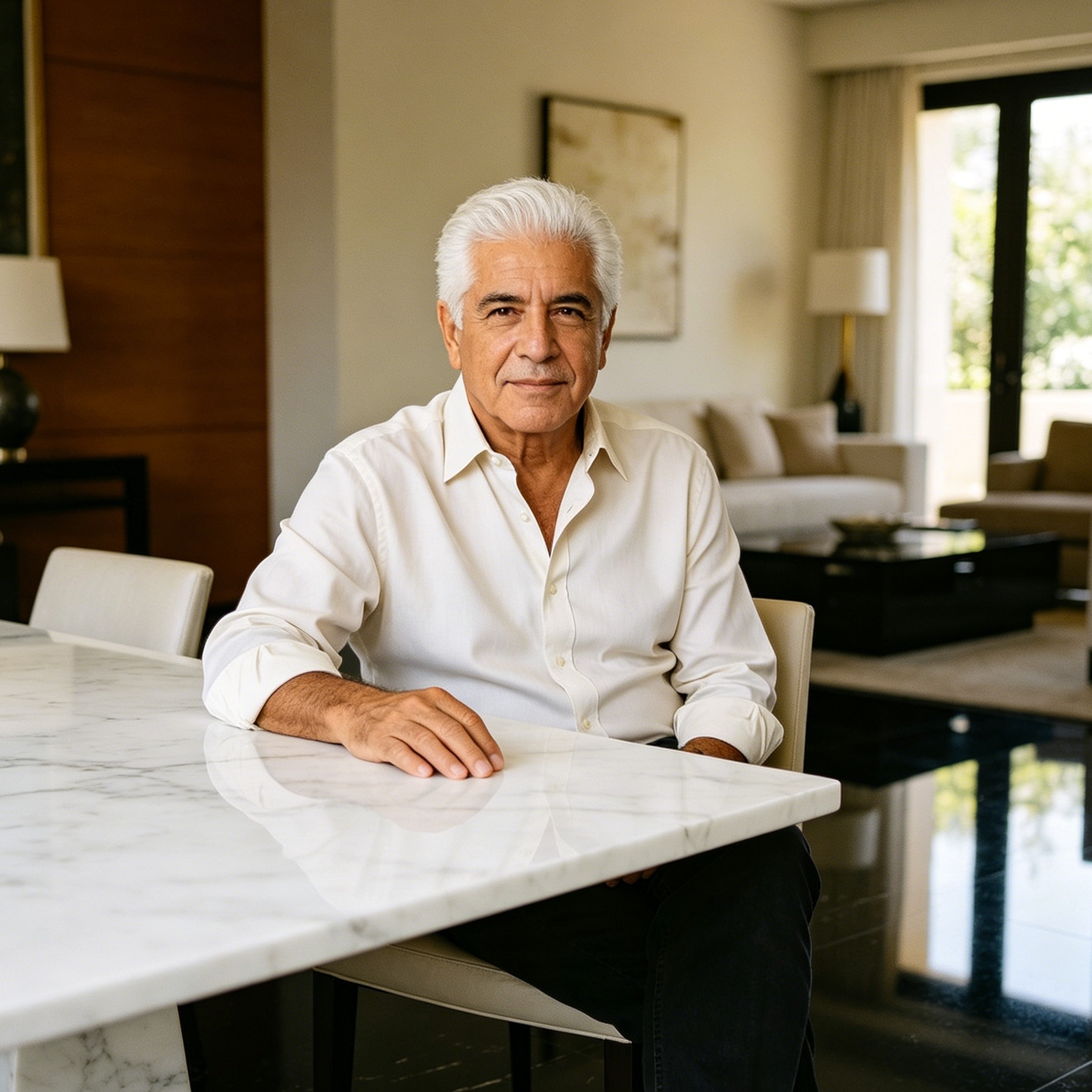
Artificial intelligence has fundamentally changed the landscape of digital art and content creation. For anyone looking to generate high-quality images without a steep subscription fee, the options in 2026 are more sophisticated than ever. While the phrase "free" often comes with caveats—such as daily usage limits, watermarks, or slower processing speeds—the top-tier platforms have optimized their free tiers to provide genuine value for hobbyists and professionals alike.
Navigating this ecosystem requires an understanding of which tool excels in specific areas, whether it is photorealism, typography, or creative flexibility. This detailed analysis explores the most effective free AI picture generators currently available, how to master their features, and how to work around the limitations of unpaid accounts.
Quick Summary of Top Free AI Image Platforms
For those who need an immediate recommendation, here is a breakdown of the leading tools categorized by their primary strength:
- Best for Creative Control: Leonardo.ai
- Best for Beginners and Ease of Use: Microsoft Designer
- Best for Text and Typography: Ideogram
- Best for Photorealism: Google ImageFX
- Best for Commercial Safety: Adobe Firefly
- Best for Zero Friction (No Account): Perchance
Detailed Reviews of the Best Free AI Picture Generators
Leonardo.ai: The Powerhouse of Customization
Leonardo.ai remains a favorite among digital artists because it provides access to advanced settings that most competitors hide behind a paywall. Unlike tools that give you a single "Generate" button, Leonardo offers a complete dashboard.
The Free Tier Mechanics
Leonardo operates on a token-based system. On the free plan, users typically receive 150 tokens every 24 hours. A standard image generation costs about 1 to 2 tokens, meaning a user can create roughly 75 to 150 images daily. These tokens do not stack; if they are not used, they reset to 150 the next day.
Why It Stands Out
In our hands-on testing, Leonardo’s ability to utilize "Fine-tuned Models" is its greatest asset. You are not limited to a generic base model. You can choose from specialized models like "PhotoReal" for cinematic photography, "DreamShaper" for versatile digital art, or "3D Animation Style" for character design.
The platform also allows for "Image Guidance," where a user can upload a reference sketch or photo to influence the composition of the generated output. This is a game-changer for creators who have a specific layout in mind but lack the drawing skills to execute it.
Key Features and Parameters
- Prompt Magic v3: A toggle that helps refine your input to ensure the AI interprets complex descriptions more accurately.
- Negative Prompts: Essential for professional results. By typing what you don't want (e.g., "extra fingers," "blurry," "distorted text"), the quality of the output increases significantly.
- Canvas Editor: A built-in tool that allows for "Inpainting" and "Outpainting," enabling users to fix small errors or expand the borders of an image for free.
Microsoft Designer: The Integration King
Formerly known as Bing Image Creator, Microsoft Designer is powered by OpenAI’s DALL-E 3. It is perhaps the most accessible tool for the average user because it integrates directly into the Microsoft ecosystem.
Ease of Access
If you have a Microsoft account, you already have access. The interface is clean and focuses entirely on the prompt box. It uses a "Boost" system—users get a set number of "Boosts" per day (usually 15 to 25) that ensure fast generation. Once the boosts are depleted, images can still be generated, but they will take significantly longer to process.
Visual Fidelity
DALL-E 3 is renowned for its ability to follow complex instructions. In a test case where the prompt was "A Victorian detective investigating a futuristic crime scene with neon magnifying glass," Microsoft Designer followed every descriptor accurately, whereas other models often omitted the Victorian clothing or the neon element.
Limitations to Consider
The primary drawback is the lack of technical control. There are no options to adjust aspect ratios (it defaults to 1:1 square), and there is no way to adjust the "Guidance Scale" or use negative prompts. It is a "what you type is what you get" experience.
Ideogram: Solving the Typography Problem
For years, AI image generators struggled with text, often producing gibberish characters. Ideogram 3.0 has largely solved this, making it the premier choice for creating posters, logos, and social media graphics.
The Typography Advantage
If your prompt includes specific text, such as "A neon sign that says 'Midnight Coffee' in a rainy street," Ideogram will render the letters with near-perfect accuracy. This makes it an indispensable tool for small business owners or content creators who need professional-looking branding elements without hiring a graphic designer.
Free Account Structure
The free plan on Ideogram offers a daily limit of 10 to 20 generations. While lower than Leonardo, the quality of the text rendering often means you need fewer attempts to get the right result. Images generated on the free tier are public, meaning they appear in the community feed.
Creative Styles
Ideogram offers a "Magic Prompt" feature that automatically expands your simple ideas into detailed, descriptive prompts, helping the AI generate more cinematic and textured visuals.
Google ImageFX: Unmatched Photorealism
Google ImageFX is part of the AI Test Kitchen and uses the Imagen 3 model. It is designed for high-end visual fidelity, particularly in textures and lighting.
The User Experience
The interface is unique. As you type a prompt, ImageFX highlights certain keywords and turns them into "dropdown chips." You can click these chips to quickly swap out styles (e.g., changing "oil painting" to "35mm film") without retyping the whole prompt.
Quality Analysis
When generating human portraits, ImageFX excels at skin texture, iris detail, and hair realism. It avoids the "plastic" look that often plagues lower-end AI models. It is completely free to use during its testing phase, though it requires a Google account and is subject to geographic availability.
Adobe Firefly: The Professional Workflow
Adobe Firefly is built differently from its competitors. While many AI models are trained on scraped internet data (which raises ethical concerns), Firefly is trained on Adobe Stock images and public domain content.
Commercial Safety
This is the only tool that can realistically claim to be "commercially safe." For designers working on client projects, using Firefly ensures that the generated assets do not infringe on existing artist copyrights.
The Free Credits
Adobe provides 25 generative credits per month for free users. While this is significantly less than the daily resets of other platforms, the quality is exceptional. Firefly also offers "Generative Fill" within its web interface, allowing you to upload a photo and add or remove objects just by describing them.
How AI Image Generators Actually Work
Understanding the technology behind these tools helps in crafting better prompts and managing expectations. Most modern generators use a process called Latent Diffusion.
The Training Phase
The AI is trained on millions of image-text pairs. It learns to associate specific words (like "cat," "sunset," or "cyberpunk") with specific visual patterns, colors, and textures.
The Denoising Process
When you enter a prompt, the AI does not "search" for an image. Instead, it starts with a canvas of random digital noise (which looks like television static). It then iteratively "denoises" the canvas, slowly shaping the static into a coherent image based on the instructions in your prompt. This is why you sometimes see the image progressively getting clearer in certain interfaces.
The Role of LLMs in Image Generation
Newer tools like DALL-E 3 and Ideogram use Large Language Models (LLMs) as a front-end. This allows them to understand natural language much better. Instead of needing "keyword salad" (e.g., "man, hat, blue, 4k, hyperrealistic"), you can talk to the AI like a human: "Generate a picture of a man wearing a blue hat sitting by the sea at sunset."
Pro-Tips for Better Results on Free Tiers
Since free tiers often limit your number of tries, you need to make every generation count.
1. Be Extremely Specific
Instead of "a dog," try:
"A golden retriever puppy sitting on a rustic wooden porch, soft golden hour sunlight, cinematic lighting, shallow depth of field, 8k resolution." Specifics give the AI less room for error.
2. Use Stylistic Keywords
If you don't specify a style, the AI might give you a generic 3D render. Use these keywords to steer the aesthetic:
- Photography: "35mm film," "bokeh," "long exposure," "street photography."
- Art: "Impressionist oil painting," "watercolor," "charcoal sketch," "cyberpunk aesthetic."
- Lighting: "Chiaroscuro," "rim lighting," "volumetric fog," "soft glow."
3. The Power of Negative Prompts
If the tool allows it (like Leonardo.ai or Stable Diffusion-based sites), use negative prompts to filter out common AI mistakes. A standard negative prompt string often looks like this:
"ugly, deformed, extra fingers, missing limbs, blurry, low resolution, watermark, text, signature, distorted face, bad anatomy."
4. Iterate, Don't Just Regenerate
If the first result isn't perfect, don't just click "generate" again with the same prompt. Look at what the AI got wrong. If the colors are too bright, add "muted colors" to your prompt. If the character is too far away, add "close-up portrait."
Addressing Common Limitations and Challenges
Even the best free AI picture generators have their quirks. Here is how to handle the most common issues:
The "Anatomy" Problem
AI still struggles with hands and feet. This happens because the model sees millions of images of hands in different positions, and it doesn't quite "understand" the underlying skeletal structure.
- The Fix: Try prompts where hands are hidden (e.g., "hands in pockets") or use "Inpainting" tools to specifically target and fix the hand area.
Watermarks and Resolution
Many free tools add a small watermark or limit the output to 1024x1024 pixels.
- The Fix: Use a free AI image upscaler (like Upscale.media or various open-source tools) to increase the resolution and clarity after you have generated the image.
Copyright and Ownership
For most free AI tools, you do not "own" the copyright in the traditional sense. In many jurisdictions, AI-generated images cannot be copyrighted because they lack "human authorship." Furthermore, many platforms' Terms of Service state that free-tier images are for personal use only or remain the property of the platform for promotional purposes. Always read the fine print if you plan to use an image for a commercial product.
What is the best free AI image generator with no sign up?
For users who value privacy or simply want to generate an image without the hassle of creating yet another account, Perchance and Craiyon are the top choices.
- Perchance: This is an open-source-friendly platform that allows for unlimited generations without a login. It uses various Stable Diffusion models and is surprisingly fast. It is particularly popular for generating anime-style art and character concepts.
- Craiyon: Formerly known as DALL-E Mini, Craiyon is entirely ad-supported. While the quality is lower than DALL-E 3 or Midjourney, it produces 9 images per batch and has no usage limits. It is excellent for "brainstorming" and generating weird, surreal concepts quickly.
How to use AI images for social media and blogging
Using AI-generated images can significantly boost the engagement of your content.
- Blog Headers: Use Ideogram or Microsoft Designer to create custom headers that match your blog’s specific topic, rather than using overused stock photos.
- Social Media Graphics: Use Canva’s "Magic Media" (which integrates AI generation) to create background textures for Instagram stories or X posts.
- Visual Metaphors: AI is great at creating things that don't exist. If you are writing about "time management," instead of a photo of a clock, generate "a surreal hourglass where the sand turns into butterflies."
Future Trends: What to Expect in Late 2026
The gap between free and paid AI image generators is narrowing. We are beginning to see "Video-to-Image" and "Real-time Generation" becoming more common. In the near future, we expect:
- Local Execution: As smartphone and PC hardware becomes more powerful, more "free" AI generation will happen locally on your device rather than in the cloud, removing the need for daily limits.
- Perfect Video Consistency: The same tech used for pictures is moving into video, allowing users to generate short, consistent clips for free.
Conclusion
The "best" free AI picture generator depends entirely on your specific project. If you need a professional design with text, Ideogram is the clear winner. If you want to experiment with artistic parameters and different AI models, Leonardo.ai provides the most robust platform for free users. For those who prioritize ease of use and instant results within a familiar environment, Microsoft Designer is the go-to choice.
By understanding the credit systems and mastering the art of the prompt, you can produce professional-grade visuals in 2026 without spending a single dollar. The key is to experiment across different platforms, as each one interprets the world through a slightly different mathematical lens.
Frequently Asked Questions (FAQ)
Which free AI image generator is best for anime?
Perchance and Leonardo.ai are the top contenders for anime styles. Perchance has a dedicated "AI Anime Generator" that requires no login, while Leonardo offers several fine-tuned models specifically trained on high-quality anime and manga datasets.
Can I use free AI images for my YouTube thumbnails?
Yes, most platforms allow you to use generated images for YouTube thumbnails. However, check the specific terms of the tool. Adobe Firefly and Microsoft Designer are generally safe for this purpose, but some platforms may require a paid subscription for full commercial rights.
Why do AI generators give people extra fingers?
AI models predict the next pixel based on patterns, not biological rules. Because hands appear in so many different angles and overlaps in training data, the AI sometimes gets confused about the total count of fingers. Using negative prompts or tools with better "Human Anatomy" training, like Google ImageFX, can help reduce this.
Is there a truly unlimited free AI image generator?
Truly unlimited generators are rare because of the high server costs. Tools like Perchance and Craiyon are "unlimited" because they are ad-supported or run lighter models. For "truly" unlimited generation without ads, you would need to host a model like Stable Diffusion locally on your own computer with a powerful GPU.
How do I upscale an AI image for printing?
Images from free generators are usually 72 DPI and around 1024 pixels, which is too low for high-quality printing. To fix this, use a free AI upscaler tool. These tools use a different type of AI to add pixels and sharpen edges, allowing you to print the image in larger formats without losing quality.
-
Topic: Free AI text to image generator for creating stunning visuals.https://www.adobe.com/products/firefly/features/text-to-image.html
-
Topic: 11 Best AI Image Generator: Top Tools Tested & Reviewedhttps://venngage.com/blog/best-ai-image-generator/
-
Topic: 15 Best Free AI Bot Image Generators in 2026 (No Signup Options Included) | AxeeTechhttps://axeetech.com/15-best-free-ai-bot-image-generators/