Home
Home
Best UX Design Agencies for AI Products and Systems in 2025

The landscape of artificial intelligence in 2025 has moved far beyond the initial hype of generative chatbots. As enterprises and startups integrate agentic systems, multimodal interfaces, and complex reasoning models into their core offerings, the role of User Experience (UX) design has undergone a fundamental transformation. Designing for AI is no longer about "skinning" a model; it is about managing probabilistic outputs, building trust through transparency, and calibrating human expectations against machine capabilities.
In 2025, the best UX design agencies for AI products are those that understand the technical nuances of latency, token costs, and model uncertainty. They treat AI not as a static feature, but as a dynamic, sometimes unpredictable collaborator. This article analyzes the top-tier agencies currently leading the industry and provides a framework for selecting a partner capable of shipping production-ready AI systems.
The Paradigm Shift in AI UX Design for 2025
The primary challenge of AI product design in 2025 lies in the move from deterministic to probabilistic interfaces. Traditional software follows a linear logic: if a user clicks button A, result B occurs. In AI systems, the output is often a statistical probability. This creates a "trust gap" that only superior UX can bridge.
Managing Probabilistic Outputs
When a user interacts with a generative or predictive model, the results can vary. Leading agencies in 2025 focus on "Error-Tolerant Design." This involves creating interfaces that allow users to steer, correct, and validate AI outputs without friction. The goal is to ensure that even when a model produces a sub-optimal result, the user experience remains intact and the workflow continues.
Trust Calibration and Transparency
Trust in AI is fragile. If a system is too confident but wrong, the user loses faith. If it is too cautious, it provides no value. The top agencies now employ "Confidence Cues"—visual indicators that show how certain a model is about a specific suggestion. This level of transparency is critical in high-stakes industries like healthcare, fintech, and autonomous logistics.
Designing for Agentic Workflows
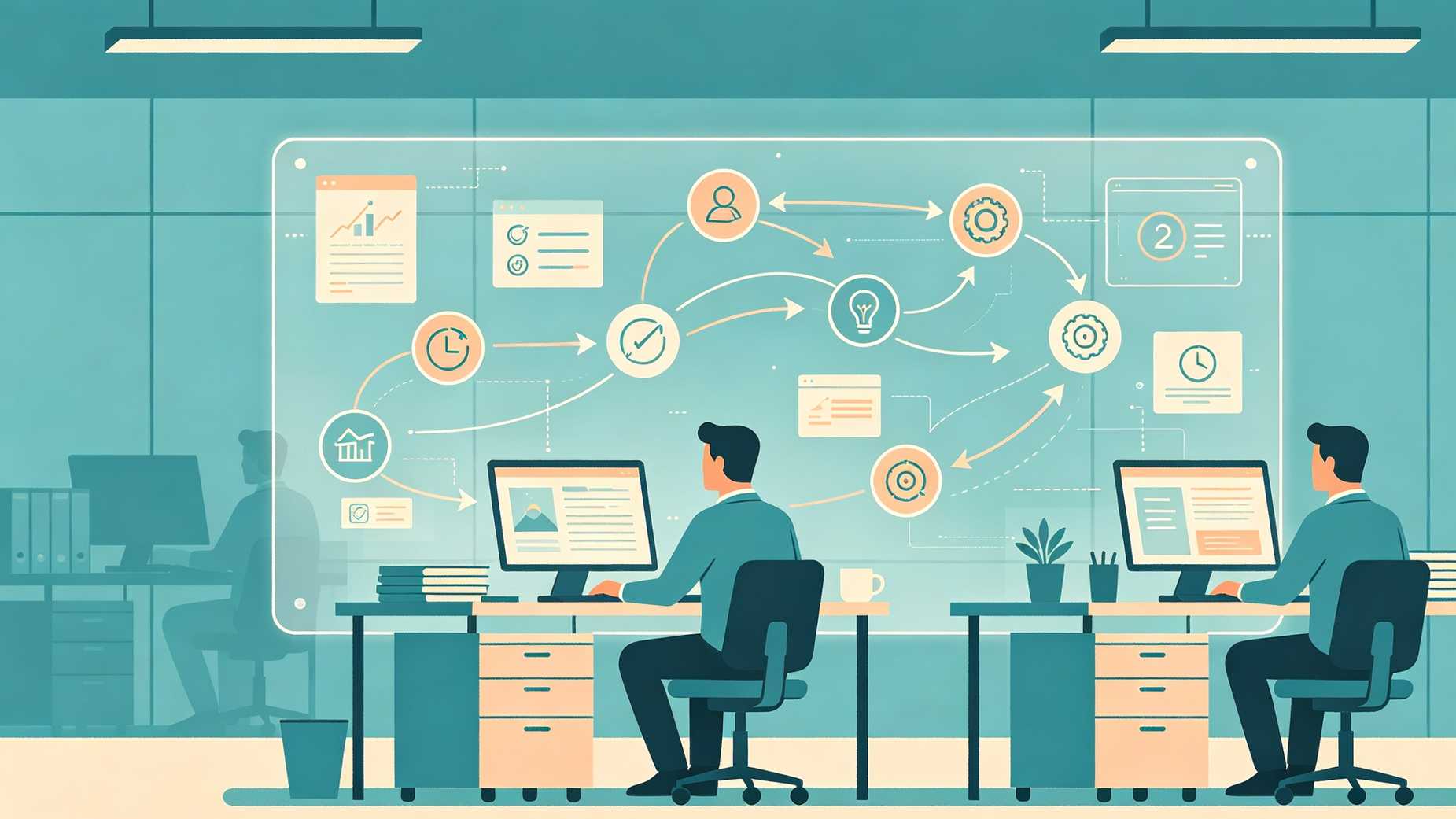
2025 is the year of the "Agent." Unlike simple chatbots, AI agents perform multi-step tasks autonomously. Designing for these agents requires a shift from "Direct Manipulation" to "Delegation and Supervision." UX designers must now create "observability dashboards" for agents, allowing users to see the chain of thought and intervene at critical decision nodes.
Critical Criteria for Evaluating an AI UX Partner
Before selecting an agency, it is essential to look beyond a portfolio of static UI screens. An agency’s ability to design for AI must be vetted through specific technical and strategic lenses.
Verification of Shipped Production Work
The AI design market is saturated with "concept decks" and "vision videos." In 2025, the most reliable metric for an agency is its history of shipping production-ready products. Ask for live applications or case studies where the design had to account for real-world model constraints like latency and hallucination. An agency that has only worked on "wrappers" may struggle with deep integration.
Handling of Fallback States and Uncertainty
A true AI UX expert will have a clear strategy for when things go wrong. Query potential partners on how they handle model timeouts, incorrect outputs, or data gaps. Their answer should involve more than just a simple error message; it should include sophisticated "graceful degradation" strategies that maintain user trust.
Team Composition and Technical Fluency
Designing an effective AI interface requires a team that understands how LLMs (Large Language Models), vector databases, and RAG (Retrieval-Augmented Generation) architectures function. The agency’s designers should be able to collaborate closely with data scientists to understand what is technically feasible versus what is a design aspiration.
Top Rated UX Design Agencies for Enterprise Scale
For large-scale organizations and regulated industries, the focus is on stability, security, and complex data architecture. These agencies excel in navigating the bureaucratic and technical hurdles of enterprise AI.
Punchcut: Pioneers in Multimodal AI
Punchcut has established itself as a leader in human-centered AI innovation. In 2025, they are specifically recognized for their work in autonomous systems and multimodal interactions. Their expertise extends beyond the screen, incorporating voice, gesture, and spatial computing.
- Primary Strength: Designing for complex ecosystems where AI interacts with physical hardware (IoT, automotive, and robotics).
- Focus Area: Creating unified experiences across multiple touchpoints where the AI provides a "connective tissue" between devices.
frog: Transforming Legacy Systems with AI
Part of the Capgemini Group, frog brings decades of industrial design and strategy experience to the AI sector. They are the preferred choice for massive enterprise transformations where AI must be woven into existing, often rigid, legacy platforms.
- Primary Strength: Large-scale organizational change and strategic roadmapping for AI implementation.
- Focus Area: Regulated industries such as healthcare and civic services where compliance and ethics are as important as performance.
Momentum Design Lab: Data-Driven Enterprise Dashboards
Acquired by HTEC Group, Momentum focuses on the "Intelligence" part of AI. They specialize in high-density data dashboards for CRM, fintech, and supply chain management. Their designs are built to help executives make decisions based on AI-generated insights.
- Primary Strength: Translating complex back-end data architectures into actionable, simplified front-end insights.
- Focus Area: B2B SaaS platforms that require high levels of explainability and data visualization.
Neuron: Specialists in B2B Software Integration
Neuron is highly regarded for its ability to embed AI into professional software environments. They understand that for a tool to be effective in a B2B setting, the AI must enhance existing workflows rather than disrupt them.
- Primary Strength: Precision UI for professional tools and complex legacy system modernization.
- Focus Area: Engineering-heavy platforms where the user needs high control and low distraction.
Premier AI UX Agencies for Startups and Scale-ups
Startups require a different approach: speed, brand differentiation, and rapid validation of MVP (Minimum Viable Product) hypotheses.
Clay: Brand-Driven AI Excellence
Clay is widely considered one of the most prestigious design agencies in the world. For AI startups, they provide a level of "polish" that can make a new technology feel like a premium, established brand. They excel in creating "Visual Identity Systems" that reflect the personality of the AI.
- Primary Strength: High-end UI design and the creation of emotional connections between users and AI products.
- Focus Area: Consumer-facing AI applications where first impressions and brand trust are paramount.
ANML: Senior-Led AI SaaS Design
ANML focuses on a senior-led delivery model, which is vital for B2B SaaS startups that cannot afford the "learning curve" of junior designers. They have deep expertise in healthcare and IoT, sectors where the UI must be both functional and fail-safe.
- Primary Strength: Efficient, high-quality delivery for complex B2B products.
- Focus Area: Startups moving from Series A to Series B that need to scale their design systems alongside their user base.
The Gradient: Behavioral Science and Rapid Prototyping
The Gradient stands out for its use of behavioral science in UX design. They don't just ask where a button should go; they ask how the AI's suggestion will influence the user's psychological state. This is crucial for fintech and health-tech AI.
- Primary Strength: Behavioral analysis and rapid validation of AI product-market fit.
- Focus Area: Fintech and consumer-tech products where user retention is driven by psychological engagement.
Cieden: Mastering Data Complexity for B2B
Cieden specializes in translating heavy technical logic into intuitive interfaces. They are known for their "Strategic Discovery" phase, where they help founders define how the AI should actually solve a problem before a single pixel is designed.
- Primary Strength: Simplifying data-heavy workflows and creating "Self-Service" AI platforms.
- Focus Area: EdTech, Sales Intelligence, and MarTech startups that handle massive datasets.
Lazarev.agency: Leaders in Agentic AI UX
Lazarev has quickly pivoted to become a specialist in "Agentic Systems." They focus on interfaces where the AI acts as a collaborator rather than just a tool. Their work often involves hybrid systems that combine traditional dashboards with sophisticated conversational layers.
- Primary Strength: Designing for "Human-AI Collaboration" and complex reasoning flows.
- Focus Area: AI-native startups building the next generation of productivity and automation tools.
Specialized Design Challenges in the 2025 AI Landscape
To truly understand what these agencies do, one must look at the specific technical challenges they solve daily.
Designing for Latency and "Thinking" Time
One of the most difficult parts of AI UX is the wait time. Whether it is a Large Language Model generating text or a predictive model analyzing a dataset, there is often a delay. Top agencies use "Progressive Loading" and "Skeleton Screens" coupled with "Status Updates" that explain what the AI is currently doing (e.g., "Scanning vector database..." or "Refining response based on your history..."). This prevents the user from feeling the system is frozen.
Explainability (XAI) and the Black Box Problem
The "Black Box" problem occurs when a user receives an answer from an AI but doesn't know why. Agencies in 2025 solve this by implementing "Just-in-Time Explainability." This means providing small tooltips or expandable sections that show the sources or the reasoning steps the AI took. For instance, in a medical AI, the interface might highlight the specific passage in a research paper that led to a suggestion.
Feedback Loops and Reinforcement Learning
For an AI to improve, it needs user feedback. However, constant "thumbs up/down" pop-ups are annoying. Top agencies design "Ambient Feedback Mechanisms" where the user's natural actions (like editing a suggested paragraph or clicking a specific link) serve as the training signal for the model. This is the pinnacle of seamless AI UX.
How to Match Your Project to the Right Agency
Choosing the "best" agency depends heavily on your current stage and the nature of your AI.
Early-Stage (Pre-seed to Seed)
If you are an early-stage founder, your priority is speed and validation. You need an agency that can help you build an MVP that proves your AI's value to investors.
- Recommended Partners: The Gradient, Goji Labs, or Arounda.
- Focus: Core value proposition and rapid iteration.
Growth-Stage (Series A to Series C)
At this stage, your product is working, but your design doesn't scale. You need to professionalize your brand and create a design system that can handle new features.
- Recommended Partners: ANML, Clay, or Lazarev.agency.
- Focus: Scalability, brand polish, and deeper feature integration.
Enterprise and Market Leaders
If you are a Fortune 500 company or a massive scale-up, you need a partner who can navigate security audits, internationalization, and massive user bases.
- Recommended Partners: frog, Momentum Design Lab, or Neuron.
- Focus: Stability, security, and enterprise-grade architecture.
FAQ about Choosing an AI Design Agency
What makes an AI design agency different from a traditional UX agency?
A traditional agency focuses on user flows and visual aesthetics. An AI design agency must also understand data science principles, model probability, latency management, and the ethics of automation. They design for "human-AI collaboration" rather than just "human-software interaction."
How much does it cost to hire a top-tier AI UX agency in 2025?
Budgets vary wildly. For mid-market and boutique agencies (like Cieden or The Gradient), projects often start at $25,000 - $50,000. For elite firms like Clay or enterprise partners like frog, engagement fees can easily exceed $100,000 to $250,000 depending on the scope and duration.
Do I need an agency that can also code my AI?
Not necessarily. While some agencies (like Linkup Studio or Good Face Agency) offer full-stack development, many of the world's best UX firms focus solely on the design and strategy. They will work closely with your internal engineering team or a third-party development partner to ensure the design is technically feasible.
How do I know if an agency really understands AI?
Ask them to explain their "Trust Framework." If they only talk about colors and fonts, they don't understand AI. If they talk about confidence intervals, fallback states, and how to visualize model hallucinations, they are likely the real deal.
Summary of the Best UX Design Agencies for AI Products
The success of an AI product in 2025 is determined less by the raw power of the underlying model and more by how that power is delivered to the user. A powerful model with a poor interface is a liability; a moderate model with an exceptional, trust-building UX is a market leader.
When evaluating partners, prioritize those who demonstrate:
- Technical Depth: Understanding of LLMs, agents, and probabilistic outputs.
- Strategic Thinking: Ability to define the product's role in the user's life.
- Proven Execution: A portfolio of shipped, functional AI products.
Whether you are building the next revolutionary consumer app with Clay or transforming a global enterprise with frog, the right design partner will be the bridge between your "Black Box" technology and human adoption.
-
Topic: Top 5 Design (UI/UX) Agencies for Early-Stage AI Startups to Watch in 2025https://pandahelp.vip/blog/top-5-design-ui-ux-agencies-for-early-stage-ai-startups-to-watch-in-2025/
-
Topic: Top 14 AI design agencies transforming businesses with smart UX | Lazarev.agencyhttps://www.lazarev.agency/articles/top-ai-design-agencies
-
Topic: 9 AI Design Agencies That Turn Complexity Into Clarityhttps://cieden.com/ai-product-design-agencies