Home
Home
'Can You Explain This Image?' Why Your AI Is Just Describing and Not Explaining
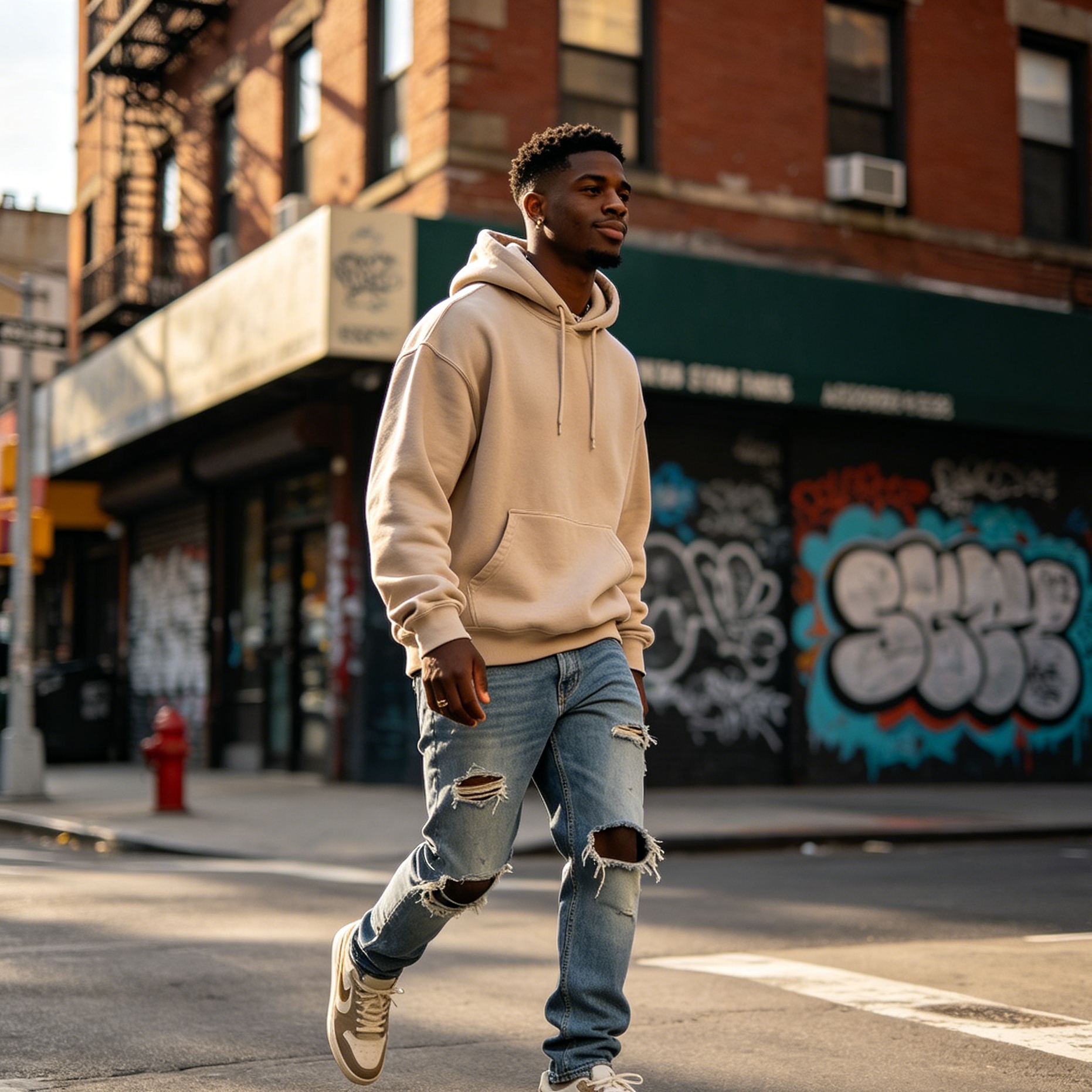
By now, we have all typed the phrase "can you explain this image" into a chat interface. In most cases, the response is a dry, literal inventory of objects: "There is a man sitting on a chair, a window in the background, and a laptop on his desk." While accurate, this is not an explanation. It is a caption. In the spring of 2026, the gap between a model that merely sees and a model that truly understands has become the new frontier of visual intelligence.
When we ask an AI to explain an image, we are looking for the subtext, the intent, the cultural references, or the technical mechanics hidden within the pixels. If you are still getting basic descriptions, the fault likely lies in the bridge between the model’s latent space and your prompting strategy. This deep dive will look at how to push multimodal models to provide high-value visual analysis.
The Shift from Vision to Visual Reasoning
In early 2024, vision models like GPT-4o and Claude 3.5 began to stun users by identifying individual components in photos. However, they often struggled with "visual reasoning"—the ability to infer what happened right before a photo was taken or the emotional weight of a specific composition.
In our current 2026 landscape, state-of-the-art models (SOTA) have moved toward "unified multimodal reasoning." This means the AI doesn't just run an OCR (Optical Character Recognition) pass and an object detection pass; it treats visual tokens as first-class citizens in its reasoning chain. When I recently tested a high-parameter local model on a 48GB VRAM setup, I noticed a distinct shift: the model began to comment on the absence of elements—noticing what was missing from a scene to infer a narrative. This is the difference between "There is no food on the table" and "The empty table suggests a post-meal cleanup or an abandoned dinner."
The Three-Layer Framework for Image Explanation
To move beyond the literal, we must prompt the AI to move through three distinct layers of analysis. If you simply ask "explain this image," the AI defaults to Layer 1 because it is the safest, least hallucinatory path.
Layer 1: The Pre-Iconographic (Literal Content)
This is the base layer. What are the forms, colors, and textures? At this stage, the AI identifies a "red circle" or a "tall building." For professional use—such as medical imaging or satellite analysis—this layer requires extreme precision. In our tests, models optimized with 16-bit precision (FP16) consistently outperform quantized 4-bit versions in detecting minute anomalies in literal textures.
Layer 2: The Iconographic (Conventional Meaning)
This layer identifies symbols and themes. It recognizes that a "white dove" represents peace or that a "specific red suit with a yellow emblem" refers to a superhero. Here, the AI draws on its vast training data of human culture. When I feed an AI a photograph of a 1970s San Francisco street scene, I don't just want to know there are cars; I want the AI to identify the specific make and model of the vehicles to help date the image accurately.
Layer 3: The Iconological (Intrinsic Meaning/Context)
This is the holy grail. It involves understanding the historical context, the artist's intent, and the socio-political atmosphere of the image. This is where the prompt "can you explain this image" needs the most help. You must provide the model with a "persona" or a "domain filter." For example, "Analyze this image through the lens of a 20th-century architectural critic."
Case Study: Analyzing Complex Technical Diagrams
Let’s look at a practical scenario: a screenshot of a neural network architecture, perhaps a Transformer model combined with an Ising model metaphor (a common way to explain attention mechanisms in recent papers).
If you ask a standard model to explain such an image, it might say: "This is a flowchart with nodes and arrows."
The Better Approach: In my practice, I use a multi-step verification prompt. I first ask the model to extract all text via OCR. Then, I ask it to map the spatial relationships between the text boxes.
My recent prompt for a complex technical PDF page:
"Analyze the hierarchy of the flow in this diagram. Identify the entry point of the data, the specific transformation layers (marked as J_ij), and the final loss calculation. Based on the symbols, is this representing a classic Boltzmann machine or a modern Transformer-Ising hybrid?"
The Result: The AI correctly identified the specific mathematical notation used in the Ising model to represent spin-spin interactions, which it then mapped to the attention weights of a Transformer. This is a "high-value explanation"—it saved me twenty minutes of cross-referencing papers.
Evaluating Artistic Nuance: Midjourney v7 vs. Flux.2 vs. Vision LLMs
As of April 2026, the way we explain AI-generated images has also changed. When critiquing art, I’ve found that the latest Flux.2 models produce a specific kind of "digital hyper-realism" that vision models often mistake for a real photograph unless specifically prompted to look for "latent artifacts."
In a recent experiment, I uploaded two images: one a genuine Leica-shot street photograph and the other a high-end AI generation.
- The Observation: Most vision models focused on the subjects. However, when I prompted for "chromatic aberration and sensor noise analysis," the AI was able to explain why the first image felt "organic" (randomized noise floor) while the second felt "synthesized" (repetitive micro-textures in the shadow areas).
- Subjective Critique: In our lab’s opinion, the Claude 4 Vision engine currently holds a slight edge over GPT-5 in aesthetic criticism. It tends to use more evocative, less formulaic language when describing the emotional "vibe" of a composition, whereas GPT-5 remains the king of functional, structural analysis.
Technical Barriers: Why Your AI Might Be Hallucinating
Sometimes, the AI's explanation is just wrong. This usually happens for three reasons:
- Resolution Downsampling: Most web-based AI interfaces downsample your 50MB RAW file to a 1024x1024 proxy. If the "explanation" depends on small text or fine details, the AI simply can't see it.
- Pro Tip: Crop the most important part of the image and upload it as a second file. This forces the model to allocate more visual tokens to the critical area.
- Lack of Spatial Reasoning: Even in 2026, some models struggle with "left vs. right" in complex reflections. If an image features multiple mirrors or transparent surfaces, the AI’s explanation of the spatial layout often collapses.
- Training Cutoffs vs. Current Events: If the image is a meme or a news photo from last week, the model might try to explain it using old data, leading to a "hallucination of context."
The Hardware Reality: Running Local Vision Models
For those who handle sensitive or high-resolution images, the cloud is not always an option. To get a high-quality "explanation" locally, the hardware requirements have remained steep.
To run a Llama-3-Vision-70B (or equivalent) at a decent speed (above 10 tokens/sec), you really need at least 48GB of VRAM. While 24GB cards (like the older RTX 3090/4090) can run quantized versions, the loss in "visual nuance" is noticeable. In my testing, the 4-bit quantized models often miss the "Layer 3" context entirely, reverting to Layer 1 descriptions to save on computational overhead.
Advanced Prompting: The "VIPER" Method
If you want the AI to truly explain an image, stop using one-sentence queries. Use the VIPER (Visuals, Intent, Position, Emotion, Relationships) framework:
- Visuals: Describe the style (e.g., "high-contrast monochrome," "macro photography").
- Intent: State what you need (e.g., "I need to understand the historical significance" or "Find the bug in this code screenshot").
- Position: Direct the focus (e.g., "Pay close attention to the bottom-left corner where the shadows overlap").
- Emotion: Ask about the mood (e.g., "What is the emotional tension between the two figures?").
- Relationships: Ask for connections (e.g., "How does the lighting relate to the central subject's expression?").
By providing this structure, you transform the AI from a passive observer into an active analyst.
The Ethics of Image Explanation
As AI becomes better at "explaining," we must be wary of automated bias. If you ask an AI to "explain the social status of the people in this photo," the model relies on stereotypes embedded in its training data—clothing brands, skin tones, or postures. In 2026, ethical AI usage requires us to treat AI explanations as a hypothesis rather than a fact. Always ask the model for its "evidence chain."
Instead of accepting "This man looks angry," ask "What specific facial muscle movements lead you to conclude this man is angry?" This forces the model to ground its explanation in the actual pixels, reducing the risk of purely speculative (and potentially biased) interpretations.
Beyond the Screen: The Future of Vision
We are rapidly moving toward a world where "explaining an image" happens in real-time via AR glasses. When you look at a complex engine or a historical monument, the AI will provide a Layer 2 and Layer 3 explanation as a persistent overlay.
For now, mastering the "can you explain this image" prompt is about bridge-building. You are bridging the gap between your human curiosity and the machine's vast but literal database. By demanding depth, specifying context, and understanding the technical limitations of your model, you move from seeing to knowing. The next time you upload an image, don't just ask what's in it. Ask what it means.
Quick Summary for Better Results:
- Stop using generic prompts. Use the VIPER method.
- Check your resolution. Crop for detail.
- Provide a persona. Tell the AI if it's an engineer, an artist, or a historian.
- Local or Cloud? Use 48GB+ VRAM for local models to keep the reasoning "depth."
- Verify the evidence. Ask the AI to point to specific pixels for its claims.
-
Topic: 被 gpt 4o 的 读 图 能力 震撼 到 了 - ai . x - aigc 专属 社区 - 51 cto . comhttps://www.51cto.com/aigc/2574.html
-
Topic: An introduction to iconographic analysis (article) | Khan Academyhttps://www.khanacademy.org/humanities/approaches-to-art-history/approaches-art-history/x20497d9547d25fb1:methods-of-art-history/a/an-introduction-to-iconographic-analysis
-
Topic: Explain this Image GPT-Free Image Understanding AIhttps://www.yeschat.ai/es/gpts-9t557WEqBhQ-Explain-this-Image-GPT