Home
Home
Choosing the Right AI Image Generator for Professional Workflows in 2026
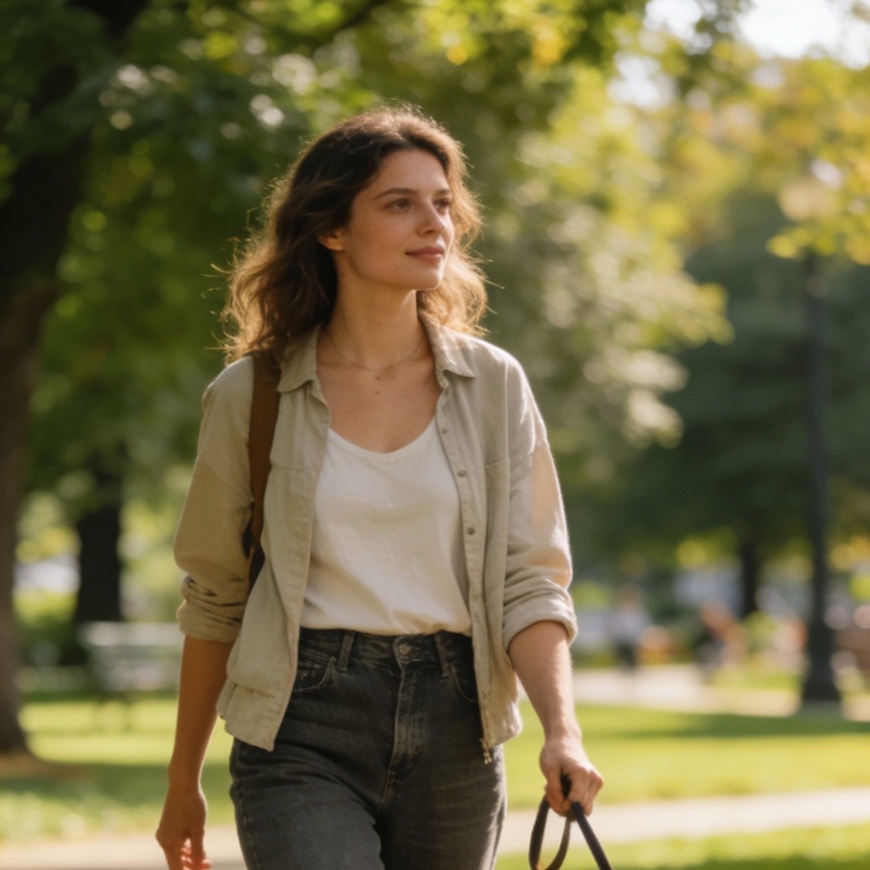
Artificial intelligence has fundamentally reshaped the visual landscape. As of mid-2026, the technology behind AI image generators has matured from experimental novelty into a precision-engineered pillar of professional design, marketing, and cinematic production. The current market is no longer defined by whether an AI can create a coherent image, but by how accurately it simulates physical reality, handles complex typography, and integrates into established creative pipelines.
For those seeking the most effective tools today, the landscape is led by a few dominant players: Nano Banana Pro for photorealistic accuracy, Midjourney v8 for unparalleled artistic direction, and Flux 2 Pro for developer-centric flexibility.
The State of AI Image Generation in 2026
The shift in 2026 is characterized by "Semantic Precision." Earlier models often struggled with the nuances of human intent—failing to place specific objects in exact locations or mangling complex text within an image. Today's top-tier models utilize a combination of massive neural networks and advanced training methodologies to ensure that every pixel serves the user's prompt.
Quick Guide to the Top Performers
- Best for Absolute Realism: Nano Banana Pro (Google Ecosystem)
- Best for Artistic and Cinematic Styles: Midjourney v8
- Best for Graphic Design and Vectors: Recraft v4
- Best for Typography and Branding: Ideogram 3.0 / GPT Image 2.0
- Best for Professional Customization: Flux 2 Pro
- Best for Corporate Compliance: Adobe Firefly / Getty AI
How Modern AI Image Generators Function
To choose the right tool, one must understand the underlying mechanics that drive visual output in 2026. The industry has converged on two primary architectural paths: Diffusion Models and Autoregression Models.
The Refinement of Diffusion Models
Most industry leaders, including Midjourney and Flux, utilize sophisticated diffusion techniques. A diffusion model starts with a canvas of random Gaussian noise. Through a series of iterative "denoising" steps, the AI shapes this noise into a coherent image based on the prompt's mathematical representation in the latent space.
In 2026, these models have become significantly more efficient. What used to take 50 steps to achieve clarity now takes fewer than 10, thanks to advanced sampling algorithms. This speed allows for real-time creative iteration, where designers can see a rough draft of their vision in milliseconds.
The Rise of Autoregression Models
Newer entrants, such as the GPT Image 2.0 series, have pioneered autoregressive image generation. Unlike diffusion, which refines the entire image simultaneously, autoregressive models generate the image in sequential chunks or "tokens." This method mimics the way large language models generate text, predicting the next segment of pixels based on the preceding ones. This approach has proven particularly effective for maintaining structural logic in complex scenes and ensuring that text remains legible and correctly spelled.
Deep Dive into the Titans of 2026
Nano Banana Pro: The Gold Standard for Physics-Accurate Realism
Nano Banana Pro has emerged as the premier choice for product photography and architectural visualization. In practical testing, this model demonstrates a superior understanding of physical properties compared to its competitors.
When prompted to render a "glass of water on a textured marble surface at sunset," Nano Banana Pro doesn't just draw a glass; it calculates the refractive index of the water and how the low-angle sunlight should scatter through the liquid onto the stone. The specular highlights and subsurface scattering on skin tones are virtually indistinguishable from high-end CMOS sensor captures. For agencies that need to produce commercial-grade assets without a physical photo shoot, this is the current industry benchmark.
Midjourney v8: The Aesthetic Powerhouse
Midjourney remains the undisputed favorite for those who value "style" above all else. Version 8 has moved beyond the overly stylized look of its predecessors, offering a refined cinematic quality that feels intentional and curated.
The strength of Midjourney v8 lies in its aesthetic intuition. It understands lighting cues like "Rembrandt lighting," "Golden Hour," or "Cyberpunk Neon" with a level of nuance that other models lack. It excels in creating concept art where the mood is just as important as the subject matter. However, it requires a steeper learning curve, often necessitating the use of specific parameters like --stylize or --weird to fine-tune the output, and it still primarily operates within a community-driven interface.
Flux 2 Pro: The Developer’s Choice
Flux 2 Pro represents the evolution of the "open-weight" movement. It is favored by developers and tech-heavy creative studios because of its high degree of controllability and the ability to run it on local infrastructure (provided there is at least 32GB of VRAM).
Flux 2 Pro’s primary advantage is its prompt adherence. It is incredibly literal. If a prompt specifies "a red apple on the left, a blue book in the middle, and a green vase on the right," Flux 2 Pro will rarely hallucinate the positions. It is also the foundation for many custom-trained "LoRA" (Low-Rank Adaptation) models, allowing businesses to train the AI on their specific product lines or brand characters for consistent results across thousands of generations.
Recraft v4: Redefining Graphic Design
While most AI tools focus on raster images (pixels), Recraft v4 has carved out a massive niche by offering native vector output. For graphic designers, this is revolutionary. Generating a logo or an icon as an SVG (Scalable Vector Graphics) means the asset can be scaled to the size of a billboard without losing quality.
Recraft’s interface is built for professional workflows, offering tools to maintain a consistent brand palette and style across an entire set of icons or illustrations. Its ability to generate clean, path-based art makes it the go-to for UI/UX designers and brand identity experts.
Ideogram 3.0 and GPT Image 2.0: Solving the Typography Puzzle
For the first three years of the AI boom, text was the "Achilles' heel" of image generators. In 2026, Ideogram 3.0 and GPT Image 2.0 have solved this. These models can render long sentences, specific fonts, and complex layouts with near-perfect accuracy.
Whether it is a movie poster with a specific tagline or a vintage neon sign for a storefront mockup, these tools ensure the text is not just legible but stylistically integrated into the environment. GPT Image 2.0, in particular, benefits from its deep integration with large language models, allowing it to understand the context of the text it is rendering.
Key Features to Evaluate When Choosing a Tool
Selecting the best AI image generator for your specific needs requires a breakdown of several technical capabilities.
1. High-Fidelity Prompt Following
Does the AI actually do what you tell it to? "Prompt adherence" is the most critical metric for professional use. Tools like Flux 2 Pro and Nano Banana Pro lead in this category. They are less likely to ignore negative prompts (e.g., "no trees") or confuse the relationships between objects. When evaluating a tool, test it with a complex spatial prompt to see if it can handle multiple subjects without merging them into a "visual soup."
2. Consistency and Character Persistence
For storytelling and marketing, the ability to generate the same character or environment in different poses and lighting is essential. Midjourney v8 has introduced robust "Character Reference" (--cref) and "Style Reference" (--sref) features that allow users to maintain a visual thread across a series of images. Without these features, AI-generated content often feels disjointed and unusable for long-form campaigns.
3. Inpainting and Outpainting Capabilities
Creation is rarely a one-step process. Professional workflows require the ability to edit specific parts of an image.
- Inpainting: This allows a user to brush over a specific area (like a model's shirt) and prompt the AI to change only that part (e.g., "change to a blue silk blouse").
- Outpainting (Generative Fill): This allows a user to expand the canvas, asking the AI to imagine what lies beyond the original frame.
Adobe Firefly, integrated directly into Photoshop, remains the market leader in these specific editing functions because it treats AI as an assistant to traditional photo manipulation rather than just a standalone generator.
4. Typography Rendering
If your work involves posters, book covers, or social media graphics, the quality of text rendering is non-negotiable. Look for tools that support "Text Layers," where the AI generates the text as a separate, editable element or renders it with perfect kerning and baseline alignment.
5. Integration and Video Extensions
In 2026, the line between image and video is blurring. Leading platforms now offer "Image-to-Video" extensions. For instance, after generating a static architectural render in Nano Banana Pro, you can instantly animate a "camera fly-through" using integrated motion models. This saves hours of manual 3D animation work.
Practical Applications Across Industries
Marketing and Advertising
In the advertising world, speed is the primary currency. Marketing teams are using Midjourney v8 and DALL-E 4 (integrated into ChatGPT) for rapid brainstorming. During a client meeting, a creative director can generate twenty different visual concepts in minutes to align on a creative direction.
For the final production, they often switch to Nano Banana Pro or a custom-trained Flux model to ensure the product looks exactly as it does in real life, maintaining the "Physics-accurate lighting" required for high-end glossy magazines.
Web Design and UI/UX
Web designers utilize Recraft v4 to generate bespoke icon sets and hero illustrations that match a site's specific color hex codes. The ability to export as SVG allows these assets to be directly dropped into Figma or development environments. Furthermore, AI-generated backgrounds are being used to create immersive parallax effects, where the AI generates multiple layers of a landscape to create a sense of depth during scrolling.
Architecture and Interior Design
Interior designers use AI image generators to show clients how a space could look under different lighting conditions or with different furniture styles. By using "Image-to-Image" prompts, they can take a photo of an empty, grey-box room and instantly render it as a "Mid-century modern living room at dusk." The precision of Nano Banana Pro is particularly useful here for showing how light will actually interact with specific materials like brushed brass or frosted glass.
Concept Art for Gaming and Film
Concept artists use the "Style Reference" features of Midjourney v8 to build out entire worlds. By establishing a visual "seed," they can ensure that every creature, building, and weapon generated for a new game project feels like it belongs to the same universe. This has reduced the "pre-production" phase of major creative projects by as much as 60%.
Commercial Ethics and Legal Considerations
The "Wild West" era of AI image generation has ended, replaced by more rigid corporate standards. When choosing a generator for professional work, one must consider the training data.
The "Safe" Models
Tools like Adobe Firefly and Getty Images Generative AI are trained exclusively on licensed or public-domain imagery. For large corporations, this is the only viable path to avoid copyright infringement lawsuits. These companies offer "Indemnification," essentially a legal guarantee that if a user is sued for copyright infringement based on an AI-generated image, the company will cover the legal costs.
The Creative Freedom vs. Compliance Trade-off
While Midjourney and Stable Diffusion (the predecessor to Flux) offer more creative flexibility and "edge," they carry more legal risk because their training datasets include copyrighted material from the open internet. In 2026, many professional agencies use a two-step process: they use the "free" models for ideation and then recreate the final asset using a "commercially safe" model or a custom-trained internal model to ensure legal compliance.
Strategies for Professional Prompt Engineering
To get the best results from these 2026 models, the "Skill" has shifted from simple descriptions to technical orchestration.
The Structural Prompting Framework
A professional prompt in 2026 typically follows a specific structure:
- Subject: Detailed description of the main focus (e.g., "A weathered 1960s astronaut helmet").
- Environment: The setting and background (e.g., "resting on a bed of lunar dust inside a dimly lit laboratory").
- Lighting/Atmosphere: The specific light quality (e.g., "dramatic chiaroscuro lighting, single cold blue spotlight from the upper left").
- Technical Specs: Camera and lens simulation (e.g., "shot on 35mm film, f/2.8 aperture, shallow depth of field, subtle grain").
- Composition: The framing (e.g., "extreme close-up, low angle, wide-screen 21:9 aspect ratio").
Avoiding "AI Smear"
One common issue with lower-quality generations is a lack of texture, often called "AI smear." To combat this, experienced users add specific "Material Prompts." Instead of just "a leather jacket," they specify "distressed full-grain cowhide leather with visible pores and frayed stitching." This forces the AI to pull from high-frequency detail sets in its latent space.
The Future: What Lies Beyond 2026?
As we look toward the late 2020s, the focus is shifting toward "Interactive Generation." Imagine a tool where you don't just type a prompt, but you speak to it in real-time, moving objects around a 3D-aware canvas with your hands, while the AI instantly re-renders the lighting and shadows to match.
We are also seeing the rise of "Personalized AI Aesthetics," where the generator learns your specific visual style over time. Eventually, every artist will have a "Personal Model" that acts as a digital extension of their own creative hand, trained on their lifetime of sketches, photos, and preferences.
Summary
The choice of an AI image generator in 2026 depends entirely on the objective of the project.
- If photographic truth is the goal, Nano Banana Pro is the clear winner.
- If the goal is expressive, cinematic storytelling, Midjourney v8 remains the leader.
- For designers and developers requiring precision and control, Flux 2 Pro and Recraft v4 provide the necessary toolkit.
The most successful creators are those who don't rely on a single tool but rather build a "Stack." They might ideate in Midjourney, refine the typography in Ideogram, and perform final product rendering in Nano Banana Pro. By understanding the strengths and weaknesses of each platform, you can transform AI from a random generator into a precise instrument for professional excellence.
FAQ
Which AI image generator is the most realistic in 2026?
Nano Banana Pro is currently considered the most realistic due to its advanced physics-based rendering engine, which accurately simulates light, reflections, and material textures better than artistic-focused models like Midjourney.
Can I use AI-generated images for commercial projects?
Yes, but the choice of tool matters for legal safety. Adobe Firefly and Getty Images Generative AI provide legal indemnification and are trained on licensed datasets, making them the safest choices for commercial and corporate use.
Do I need a powerful computer to run these tools?
Most professional tools like Midjourney, Nano Banana, and Ideogram are cloud-based, meaning you only need a browser and an internet connection. However, Flux 2 Pro and specialized Stable Diffusion models can be run locally if you have a powerful GPU (32GB+ VRAM recommended) for maximum privacy and customization.
How do I get text to look right in AI images?
Use models specifically optimized for typography, such as Ideogram 3.0 or GPT Image 2.0. In your prompt, place the desired text in quotation marks and describe the font style and placement clearly (e.g., 'a neon sign that says "Open Late" in a cursive 1950s font').
Is prompt engineering still a necessary skill?
While models have become much better at understanding natural language, "Technical Prompting"—knowing how to specify lighting, camera angles, and material textures—remains a vital skill for achieving professional, predictable results that meet a specific brief.
-
Topic: Image Generation using AI toolshttps://a.storyblok.com/f/137553/x/9110ed38ce/gen-ai-imagery-tools-ddc-hack.pdf
-
Topic: The 8 best AI image generators in 2026 | Zapierhttps://zapier.com/blog/best-ai-image-generator/#:~:text=Because
-
Topic: Top 5 AI Image Generators | AI Hubhttps://overchat.ai/ai-hub/top-5-ai-image-generators