Home
Home
Customer Experience Automation Is Replacing Rigid Support Workflows With Intelligent Agentic Systems

Customer Experience Automation (CXA) is the strategic implementation of artificial intelligence, machine learning, and robotic process automation to manage, optimize, and scale customer interactions throughout the entire lifecycle. At its core, CXA functions as a dynamic decision-making layer within a company's technology stack, leveraging real-time data to trigger the most relevant actions without requiring constant manual oversight. While traditional automation focused on linear, "if-this-then-that" logic, modern CXA utilizes generative models and agentic reasoning to provide experiences that are increasingly personalized and contextually aware.
The shift toward automation is no longer just a cost-saving measure; it is a fundamental requirement for brands operating in a digital-first economy. As consumer expectations for 24/7 availability and instant resolution reach all-time highs, the gap between human-only support and automated efficiency has become a critical competitive frontline. Businesses that successfully implement CXA report significant improvements in customer satisfaction (CSAT), net promoter scores (NPS), and operational resilience.
The Four Foundations of Modern Customer Experience Automation
To understand how CXA functions at a high level, one must look past individual tools and focus on the architectural pillars that support a mature strategy. A robust CXA ecosystem is built on four distinct yet interconnected capabilities.
Journey Orchestration and Mapping
Orchestration is the process of coordinating various touchpoints—social media, email, live chat, mobile apps, and in-store visits—into a cohesive narrative. In an unautomated environment, these channels often exist as silos. A customer might complain on X (formerly Twitter) only to find that the support agent on live chat ten minutes later has no record of the interaction.
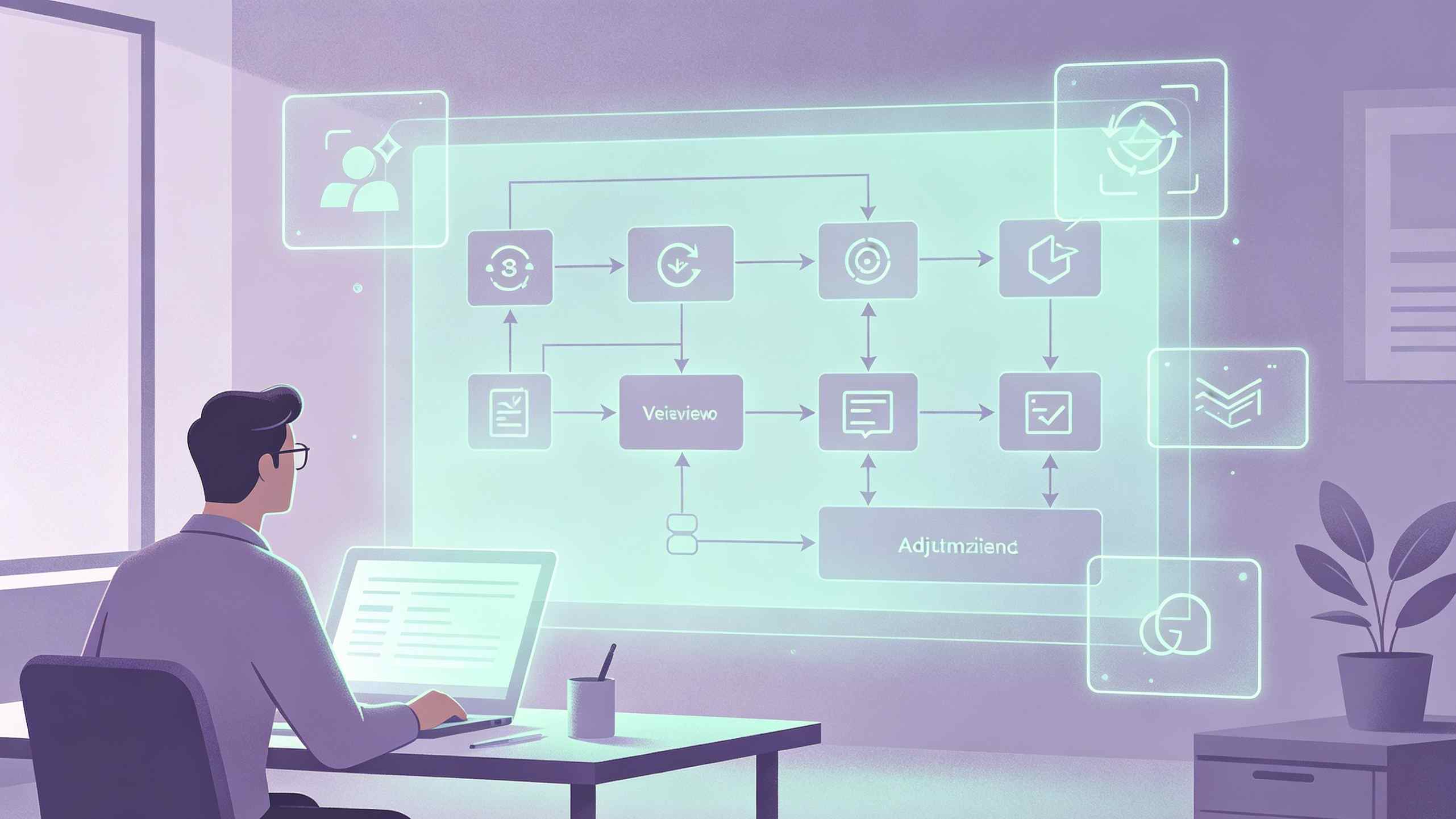
CXA solves this by mapping high-impact moments where automation adds the most value. This involves analyzing thousands of historical customer journeys to identify "friction points." By using orchestration engines, businesses can ensure that the transition from an AI chatbot to a human agent is seamless, carrying over the full context of the conversation so the customer never has to repeat themselves.
Real-Time Behavioral Segmentation
Traditional segmentation relied on static demographics like age or location. Modern CXA utilizes behavioral data processed in real-time. By integrating with Customer Relationship Management (CRM) systems and Data Platforms (CDPs), automation engines can group customers based on their current intent, lifecycle stage, or even their emotional sentiment during a call.
For example, a customer who has visited the "cancel subscription" page three times in one week is automatically segmented into a "high-churn risk" category. The CXA system can then trigger a proactive, personalized discount offer or escalate the next interaction to a specialized retention team, all without a human manager needing to run a manual report.
Hyper-Personalization at Scale
Personalization is the "how" of customer engagement. It determines the tone, the channel, and the specific offer presented to the user. CXA moves beyond simply using a customer's first name in an email. It leverages deep learning to understand history and preferences.
In our practical observations of implementing these systems, we have found that hyper-personalization thrives when the AI can access transactional data. If a customer typically purchases outdoor gear in the spring, a CXA system shouldn't just send a generic spring catalog. It should trigger a notification about the specific new arrivals in the "Hiking" sub-category that match the customer's size and previous brand preferences. This level of relevance is what differentiates a helpful brand from a noisy one.
Intelligent Execution and Automation
The final pillar is the actual execution of tasks. This is where Robotic Process Automation (RPA) and AI agents come into play. Whether it is processing a refund, updating a shipping address, or troubleshooting a technical bug, the execution layer must be fast and error-free.
The most advanced systems today are moving away from scripted bots toward "Agentic AI." These are autonomous systems that can interpret a high-level goal—such as "help the customer return their defective laptop"—and determine the necessary steps (verifying warranty, generating a shipping label, scheduling a pickup) independently by interacting with various internal APIs and databases.
The Rise of Agentic AI in the Customer Journey
The industry is currently witnessing a transition from Horizon 1 automation to Horizon 3 intelligence. To navigate this shift, business leaders must understand the evolution of decision authority.
Horizon 1: Workflow Rewiring
This is the current standard for most enterprises. Automation is applied to specific, high-volume workflows like password resets or order tracking. The value here is clear: it reduces the volume of repetitive tickets, allowing human agents to focus on complex issues. In Horizon 1, the AI operates within very strict guardrails and escalates to a human at the first sign of ambiguity.
Horizon 2: Domain Orchestration
In this stage, agents begin to coordinate multiple workflows within a specific domain, such as "Post-Purchase Support." Instead of just tracking a package, the AI can handle a package that is marked as "delivered" but was never received. It can cross-reference shipping data, check the customer's history of claims, and decide whether to issue an immediate replacement or require a formal investigation. The decision-making is more sophisticated and spans multiple systems.
Horizon 3: The Ecosystem Experience Engine
The future of CXA lies in the ecosystem engine. Here, AI agents operate across functions—marketing, sales, and service. If a service interaction reveals that a customer is unhappy with a specific product feature, the system doesn't just resolve the ticket; it automatically updates the product development queue and adjusts the marketing department's next campaign for that specific user to avoid promoting the feature they dislike. This is the ultimate goal: a self-healing, self-optimizing customer experience.
Why Generative AI is the Catalyst for CXA Growth
Generative AI (GenAI) has fundamentally changed the "human-like" quality of automation. Before GenAI, chatbots were often frustrating, relying on rigid keyword matching that failed to understand nuances like sarcasm or complex sentence structures.
Natural Language Understanding (NLU)
Modern CXA uses Large Language Models (LLMs) to perform sentiment analysis in real-time. If a customer uses words that indicate frustration or urgency, the system can adjust its tone to be more empathetic or instantly prioritize the ticket in the queue. This ability to "read between the lines" makes digital interactions feel authentically human.
Knowledge Management and Retrieval-Augmented Generation (RAG)
One of the biggest challenges in customer service is keeping knowledge bases up to date. Human agents often struggle to find the right documentation in the heat of a call. CXA systems now utilize RAG architecture to scan internal documents, wikis, and manuals to generate accurate, context-aware answers in seconds.
From a technical implementation standpoint, we have seen that a well-tuned RAG pipeline can reduce "hallucinations" (AI making up facts) by over 90%, making it safe for enterprise-grade customer interactions. This allows the AI to act as a "Copilot" for human agents, providing them with the exact information they need to solve a problem without leaving the chat interface.
Quantifying the Business Impact of Automation
The decision to invest in CXA is usually driven by three primary metrics: cost reduction, agent productivity, and customer lifetime value.
Reducing Operational Costs
By automating high-volume, low-complexity tasks, companies can significantly lower their cost-per-contact. In many sectors, a human-led support interaction can cost between $5 and $15, whereas an automated interaction costs mere cents. For a global brand handling millions of inquiries a month, the savings are transformative.
Boosting Agent Efficiency and Retention
Agent burnout is a major issue in the CX industry. When agents spend their entire day answering the same five questions, morale drops and turnover increases. CXA removes the "robotic" work from the human agent's plate.
When humans are only brought in for high-stakes, emotionally nuanced, or complex problem-solving scenarios, they feel more valued and challenged. Statistics show that companies using AI-powered agent assistance see a 15% to 20% increase in agent satisfaction scores.
Improving First Contact Resolution (FCR)
Customers hate being transferred. CXA improves FCR by using intelligent routing to ensure the customer reaches the right resource—whether it's an AI bot capable of solving the task or the specific human expert for that domain—on the first try. A higher FCR is directly correlated with higher brand loyalty and lower churn rates.
Overcoming the Challenges of Implementation
Despite the clear benefits, implementing CXA is not without its hurdles. Success requires more than just buying a software license; it requires a cultural and technical shift.
The Problem of Data Silos
Automation is only as good as the data it can access. If your customer service software cannot "talk" to your inventory management system, the AI will never be able to tell a customer why their order is delayed. Breaking down these silos through robust API integrations is the most time-consuming but essential part of the process.
Maintaining the Human Touch
There is a risk that over-automation can make a brand feel cold and clinical. The key is "human-centered automation." This means designing systems that know exactly when to step back and let a human take over. For example, in sensitive situations like a death in the family affecting a travel booking, the AI should recognize the context and immediately transfer the call to a human specialist trained in empathetic response.
Constant Optimization and Feedback Loops
A CXA system is not a "set it and forget it" tool. It requires constant monitoring. Companies must establish feedback loops where human agents can flag incorrect AI responses, and these corrections are fed back into the model to improve future performance. This process of Continuous Improvement (CI) ensures the system evolves as customer behaviors change.
The Future of Proactive and Predictive Service
We are moving toward an era where customer service happens before the customer even knows they have a problem. This is the ultimate expression of CXA.
Imagine a scenario where a smart appliance detects a mechanical failure is imminent. The CXA system automatically checks the inventory for the necessary replacement part, finds a local technician, and sends a notification to the customer's phone: "Your washing machine has a minor sensor issue. We have a technician in your area tomorrow at 2 PM to fix it for free under your warranty. Does that work for you?"
This shift from reactive to proactive service turns a potential negative experience into a massive positive touchpoint that builds deep, lasting trust.
Conclusion and Strategic Summary
Customer Experience Automation is the bridge between the scalability of machines and the empathy of humans. By focusing on orchestration, segmentation, and intelligent execution, brands can deliver experiences that are faster, more accurate, and more personal than ever before. The emergence of Agentic AI marks a new chapter where automation is no longer just following a script but is actively solving problems and making decisions in real-time to benefit the customer journey.
To succeed, organizations must move beyond viewing AI as a simple replacement for labor and instead see it as a foundational layer for growth. The future belongs to those who can master the balance of high-tech efficiency and high-touch human connection.
FAQ
What is the difference between basic automation and CXA? Basic automation usually involves simple, linear rules for specific tasks (like auto-reply emails). CXA is a broader strategy that uses AI to orchestrate the entire customer journey, making dynamic decisions based on real-time data and context across multiple channels.
Will CXA replace human customer service agents? No. While CXA handles repetitive and high-volume tasks, it is designed to empower human agents. It allows humans to focus on complex, high-value, and emotionally sensitive interactions that machines cannot handle, while providing them with AI-powered tools to work more efficiently.
How does AI improve personalization in customer experience? AI can analyze vast amounts of customer data—including purchase history, browsing behavior, and sentiment—to deliver tailored recommendations and communication at the exact moment they are most relevant, far beyond the capabilities of manual segmentation.
What is Agentic AI in the context of CX? Agentic AI refers to autonomous systems that can understand a complex goal and determine the steps needed to achieve it independently. Unlike traditional bots, they can interact with multiple APIs and databases to resolve issues end-to-end without human intervention.
How can a business start implementing CXA? The best way to start is by identifying high-volume, low-complexity "friction points" in the current customer journey. Begin with Horizon 1 (workflow rewiring) by automating these specific tasks, ensuring that data silos are broken down so the AI has access to the necessary context from the start.
-
Topic: Customer experience automation (CXA): Definition + exampleshttps://www.zendesk.es/blog/customer-experience-automation/
-
Topic: Agentic AI in CX: A new model | McKinseyhttps://www.mckinsey.com/capabilities/growth-marketing-and-sales/our-insights/rewiring-customer-experience-for-the-agentic-era
-
Topic: the future of ai in customer service | ibmhttps://www.ibm.com/think/insights/customer-service-future