Home
Home
Fusion Picture AI Is No Longer Just About Face Swaps
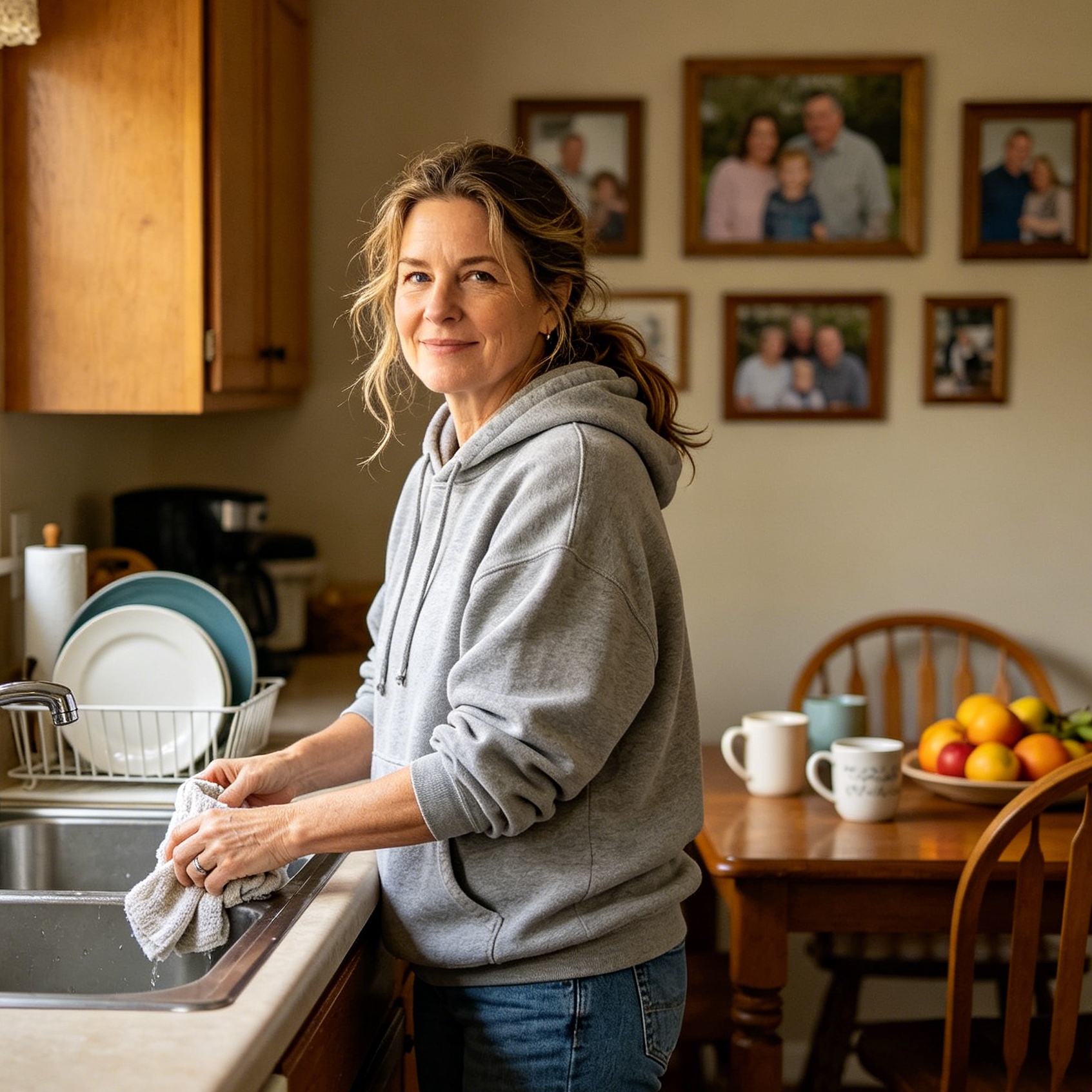
Image editing has officially moved past the era of manual masking and tedious color matching. In the current landscape of 2026, fusion picture ai represents a sophisticated leap into latent space manipulation, where pixels aren't just moved—they are reimagined to fit a new context. The primary goal of modern fusion is no longer just putting 'Object A' into 'Background B,' but ensuring that the lighting, shadows, and perspective of both elements interact as if they were captured by the same sensor at the same moment.
The Shift to Diffusion Transformers (DiT) in Image Fusion
The most significant breakthrough in the last year has been the industry-wide adoption of Diffusion Transformers (DiT) for high-end image synthesis. Unlike older U-Net architectures that often struggled with global structural consistency, DiT-based models like the recently discussed DreamFuse framework allow for adaptive image fusion. This means the foreground object isn't just a static sticker; it reacts to the environment.
In practical testing, when fusing a high-tech metallic gadget into a dimly lit forest scene, the DiT model successfully generates 'bounce lighting'—the green tint from the moss reflecting onto the underside of the metal. This level of physical accuracy was nearly impossible with traditional 'cut-and-paste' tools. The mechanism relies on shared attention layers where the features of the foreground and background are processed simultaneously, allowing the AI to understand spatial relationships before the final pixels are even rendered.
Leading Tools for AI Image Fusion in 2026
Choosing the right tool depends entirely on whether you are looking for creative 'mashups' or photorealistic integration. Here is how the current market leaders stack up based on our internal stress tests.
1. DreamFuse (The Professional Standard)
For those who need absolute realism, DreamFuse is the current benchmark. It utilizes a positional affine mechanism that lets you specify exactly where an object should go without creating the dreaded 'floating' effect. In our experiments, we tried placing a 3D-rendered 'golden car' into a cobblestone street in Rome. The AI not only adjusted the car’s suspension to match the uneven ground but also calculated the correct shadow fall-off based on the surrounding buildings.
- Key Advantage: Best-in-class perspective and shadow alignment.
- Hardware Requirement: Recommended 24GB VRAM for local execution, or high-tier cloud instances.
2. HitPaw Fotor Pea (The Batch Powerhouse)
If you are running an e-commerce operation and need to fuse hundreds of product shots into lifestyle backgrounds, this remains a top choice. It excels in batch processing and maintains high resolution without the 'blurring' artifacts common in lower-end generators. We found that its 'Image to Image' section is particularly robust for maintaining the identity of the raw product while changing its environment.
3. SoulGen and PixAI (The Niche Aesthetic King)
For the anime and character design community, general-purpose photorealism is less important than 'vibe' consistency. SoulGen has mastered the art of style-merging. When fusing two different character designs, it doesn't just create a hybrid; it reinterprets the clothing and hair textures to ensure the final result looks like it was drawn by a single artist. However, it is largely limited to the anime/manga aesthetic and lacks the physical lighting accuracy of DiT models.
4. MyEdit (The Online Quick-Fix)
For social media users, MyEdit offers the most intuitive 'Style Transfer' fusion. It’s perfect for the 'make my photo look like this Van Gogh painting' use case. It uses a 17-mode predefined style library, though the 'Customize' tab is where the real power lies, allowing you to upload any reference image to dictate the color palette and brushstroke style of your base photo.
Master the Parameters: How to Get Clean Results
To achieve professional-grade results with fusion picture ai, you cannot rely on default settings. Whether you are using a web-based interface or a local stable diffusion environment, these parameters are the levers that control the quality of the blend.
Denoising Strength: The Sweet Spot
When fusing two images, the Denoising Strength determines how much of the original pixel data is discarded in favor of AI-generated content.
- 0.3 - 0.4: Maintains the exact shape of your foreground but might fail to integrate the lighting.
- 0.5 - 0.65: The 'Pro' zone. The AI has enough creative freedom to redraw the edges of the object to add shadows or reflections while keeping the core identity intact.
- 0.8+: Total hallucination. The original object will likely be unrecognizable.
CFG Scale and Prompting
Using a lower CFG Scale (around 4.5 to 6.0) often yields smoother fusions. High CFG scales tend to sharpen edges too much, which makes the 'fused' nature of the image more obvious.
Expert Tip for Prompts: Always include environmental cues in your fusion prompt. If you are placing a person in a 'neon-lit cyberpunk city,' don't just prompt for the person. Add: "subject integrated into scene, neon rim lighting, cinematic shadows, matching grain, 8k resolution." This forces the AI to look at the interaction between the two layers rather than treating them as separate entities.
The Hardware Reality: VRAM and Local Execution
While cloud tools are convenient, the real innovation is happening on local machines where users have full control over LoRA (Low-Rank Adaptation) weights. In 2026, the hardware barrier has shifted. To run a 2B-parameter DiT model for seamless image fusion, a minimum of 16GB VRAM is required just to load the weights. For high-resolution 2048x2048 fusions, 24GB VRAM (like that found in the RTX 5090 or equivalent) is the practical floor.
Local execution allows for the use of 'ControlNet,' a secondary neural network that guides the fusion. By using a 'Depth' or 'Canny' map of your background, you can force the AI to respect the physical boundaries of the scene, ensuring that fused objects don't clip through walls or floors.
Why Most AI Fusions Fail (and How to Fix Them)
The most common issue in fusion picture ai is 'Lighting Disconnect.' This happens when the foreground is lit from the left, but the background scene is lit from the right. AI can fix minor discrepancies, but for a perfect blend, you should use the 'Horizontal Flip' tool on your foreground image before uploading it if the light directions are opposed.
Another pitfall is 'Edge Halos.' This occurs when a low-quality mask leaves a sliver of the original background around the object. Modern AI fusion tools handle this better through 'Inpainting'—instead of just placing the object, they 'erase' the area around the object and let the AI fill it back in, creating a natural transition. If your tool supports it, always use an 'Expand Mask' setting of 5-10 pixels to give the AI room to work on the border.
Commercial Use and the Future of Synthetic Media
Fusion picture ai is rapidly becoming the backbone of the advertising and e-commerce industries. The ability to generate 'commercial-ready' imagery without a physical photoshoot saves companies thousands of dollars. We are seeing a move toward 'Real-time Fusion,' where influencers can change their environment during a live stream or video call, with the AI maintaining perfect consistency in hair movement and skin tones against a synthetic background.
As of April 2026, the boundary between 'original' and 'fused' has become virtually invisible. The key to success in this new era isn't just knowing which button to click; it's understanding the physics of light and the logic of the latent space to guide the AI toward a harmonious result.
-
Topic: Top 7 AI Fusion Generators to Blend Creativity and Technologyhttps://www.hitpaw.com/ai-photo-generator-tips/ai-fusion-generator.html
-
Topic: AI Image Fusion: How to Seamlessly Combine Two Photos Onlinehttps://www.cyberlink.com/blog/photo-effects/3496/ai-image-fusion?srsltid=AfmBOorVo1fjBwb-BWO7xQTX5UnNAmKrDtP4NoikEQ4yPTfWl7S4nmzw
-
Topic: AI Image Synthesis Tool | ImageFusion for Creative Art | ...https://everythingaitool.com/tools/ai-image-fusion-tool