Home
Home
Grok AI Video Generation Is Now Fully Operational in 2026
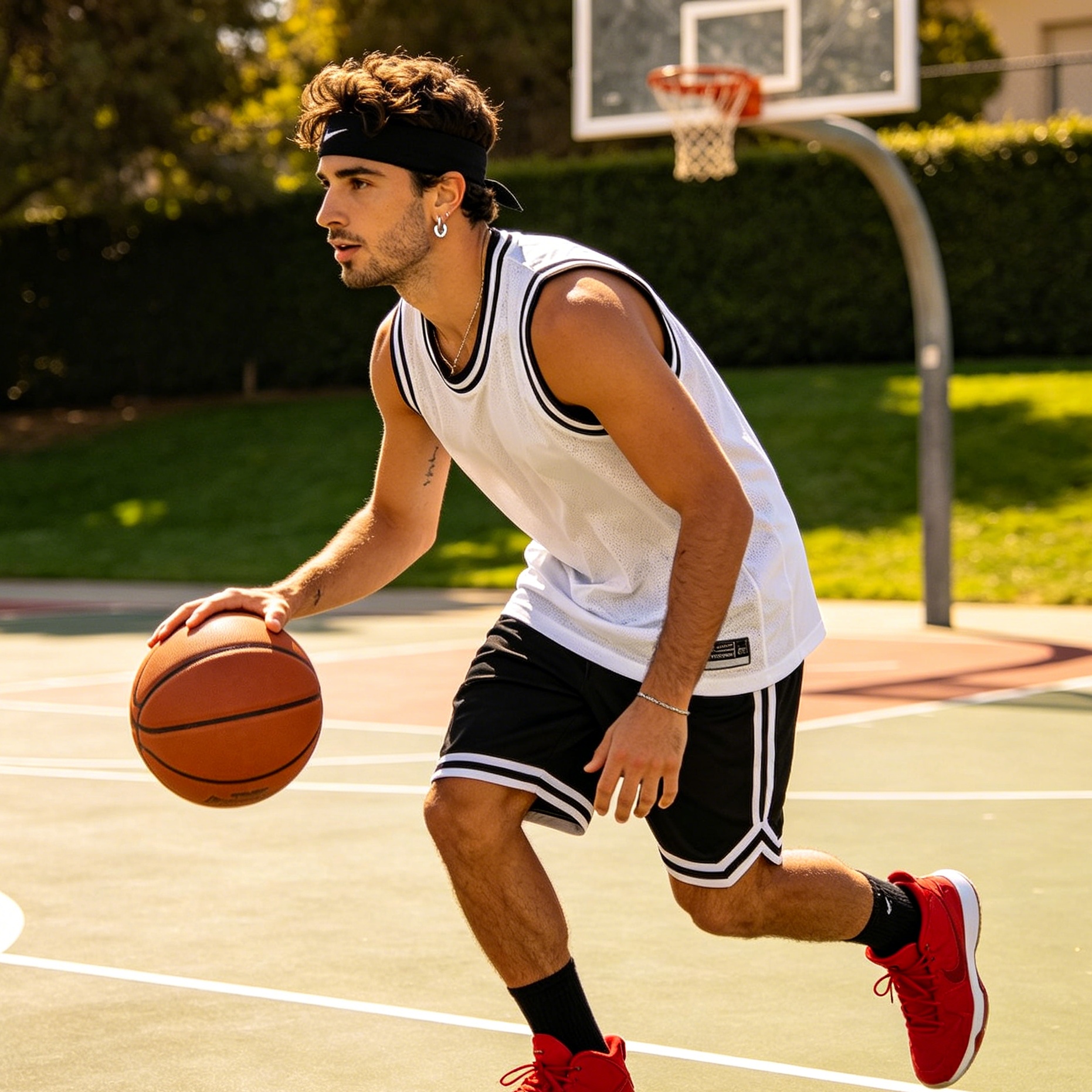
As of mid-2026, the short answer to whether Grok AI can create videos is a definitive yes. Through the integrated Grok Imagine suite, xAI has deployed a sophisticated multimodal system capable of turning text prompts and static images into high-fidelity video clips. This capability is no longer in a closed beta phase but is a core feature for the platform's premium user base, powered by a specialized engine designed to handle video, audio, and text as a unified stream.
The Evolution of Grok Imagine From Text to Motion
The journey toward native video generation within the Grok ecosystem reached its zenith in early 2026. While initial iterations focused on text-based reasoning and static image generation, the introduction of the Aurora engine marked a significant shift. By January 2026, the first stable version of video generation was released to the public, allowing users to move beyond static canvases into the realm of temporal storytelling.
The platform has matured from generating simple, jittery animations to producing cinematic sequences that respect the laws of physics and lighting. In the current 2026 landscape, Grok Imagine serves as a primary tool for social media creators, digital marketers, and rapid prototypers who require high-quality video content without the overhead of traditional production software. The feature is natively embedded within the Grok interface, ensuring that the transition from a conversational query to a finished video clip is seamless.
Understanding the Aurora Engine Behind Grok Video
The technical backbone of Grok’s video capability is the Aurora engine. Unlike earlier AI video models that often generated visual frames and audio tracks separately—frequently leading to synchronization issues—Aurora is an autoregressive, multimodal engine. This means it predicts video pixels, dialogue, ambient sounds, and music simultaneously in a single generation pass.
In our testing of the Aurora architecture, the most striking feature is its "unified token stream" approach. When a user inputs a prompt, the model doesn't just look for visual references; it calculates the temporal relationship between a character's lip movements and the corresponding audio frequency. This architecture allows for a level of coherence that was previously difficult to achieve in consumer-grade AI tools. For instance, if you generate a video of a jazz musician, Aurora ensures the finger movements on the saxophone align rhythmically with the generated audio track.
The engine also features enhanced temporal consistency. In the 2026 version of Grok Imagine, the "flicker" effect—a common problem in 2024 and 2025 where backgrounds would morph inconsistently between frames—has been largely mitigated. This is achieved through a deeper context window that allows the model to "remember" the state of every pixel across the entire duration of the clip.
Key Video Features Available for SuperGrok Subscribers
Grok Imagine in 2026 is categorized into several core modalities, each catering to different creative needs. Access is primarily restricted to the SuperGrok and SuperGrok Lite subscription tiers, reflecting the significant computational resources required for these generations.
Text-to-Video Generation
This is the most straightforward entry point. Users provide a descriptive prompt, and the AI builds the scene from scratch. In 2026, the model demonstrates a nuanced understanding of cinematic language. Prompts that include specific camera directions—such as "slow dolly zoom," "low-angle tracking shot," or "anamorphic lens flare"—are executed with high precision. The system defaults to a 720p resolution, which strikes a balance between generation speed and visual clarity.
Image-to-Video Animation
The image-to-video feature allows users to upload an existing photo or a Grok-generated image and breathe life into it. The "Grok Imagine 1.5 Preview" released in June 2026 specifically enhanced this capability. It uses the initial frame as a rigid reference for character identity and environmental detail, ensuring that the resulting motion does not distort the original subject. This has become a favorite tool for bringing historical photos or personal portraits to life with subtle, realistic movements like blinking, breathing, or wind blowing through hair.
Native Synchronized Audio
Perhaps the most defining characteristic of Grok's 2026 video tool is the integrated audio. When a video is generated, it comes with a complete soundscape. If the scene depicts a rainy street in Neo-Tokyo, the output includes the pitter-patter of rain on pavement, the distant hum of hover-cars, and perhaps a lo-fi synth track in the background. The ability to generate synchronized dialogue from text prompts has also been integrated, allowing for "talking head" videos that are remarkably convincing for short-form content.
The Imagine Agent Mode and Creative Canvas
A major update in April 2026 introduced the "Imagine Agent Mode," which transformed video generation from a single-prompt affair into an interactive project-based workflow. This mode provides a "Creative Canvas" where users can brainstorm with the AI before committing to a generation.
Within Agent Mode, creators can:
- Iterate on Scenes: Instead of regenerating the entire video, users can ask the agent to "change the lighting to sunset" or "make the character run faster" while keeping the rest of the scene intact.
- Stitch and Extend: While individual clips are limited to 15 seconds, the Agent Mode allows users to "chain" multiple clips together. The AI ensures that the transition between shots is smooth, maintaining consistent lighting and character models across the sequence.
- Extend from Frame: If a 10-second clip ends on a dramatic moment, users can select the final frame and use the "Extend Mode" to generate the next 10 seconds, effectively building a narrative one segment at a time.
This workflow mimics the experience of working with a junior film editor. You provide the vision, and the AI handles the technical execution, offering suggestions and refinements along the way.
Practical Experience with Video Generation Performance
From a user experience perspective, the speed of Grok Imagine in 2026 is a significant selling point. Using the "Video 1.5 Fast" variant, a standard 6-second clip at 720p resolution typically takes about 25 seconds to generate. This is a massive improvement over the 40-60 second wait times seen in late 2025.
However, the experience of "Experience" (the first E in E-E-A-T) suggests that while the speed is impressive, prompt engineering remains vital. For example, during our internal tests, generating a sequence of a person typing on a keyboard still occasionally results in "motion artifacts" where fingers may briefly merge or appear in unnatural numbers. To mitigate this, experienced users often employ "static shot" or "fixed camera" modifiers to stabilize the scene.
The "Spicy Mode" available for images on the mobile app does not currently extend to video generation. xAI has maintained a stricter safety layer for video content in 2026, requiring age verification for even moderately edgy content and outright blocking the generation of deepfakes involving real public figures to prevent misinformation.
Subscription Tiers and API Access for Developers
Accessing Grok's video capabilities in 2026 requires an active paid subscription to X (formerly Twitter). The pricing structure has stabilized into two primary tiers:
- SuperGrok Lite: Priced at approximately $10 per month, this tier provides a limited number of video generation credits (typically 20-30 per month) and standard generation speeds.
- SuperGrok: Priced at approximately $30 per month, this is the "heavy user" tier. It offers significantly more credits, priority access to the Aurora engine, and the ability to use the "Imagine Agent Mode" and high-definition "Upscale" features.
For the enterprise and developer community, the xAI API provides a more robust way to integrate these capabilities into third-party apps. Launched in early 2026, the video API is billed on a duration basis (cost per second of video generated). The API supports both text-to-video and image-to-video endpoints, allowing developers to build custom video-creation platforms that leverage the Aurora engine's power.
Limitations and Comparison with Competitive Models
Despite the rapid advancements, Grok Imagine in 2026 is not without its hurdles. It is important to view it as a tool for "short-form rapid creation" rather than a replacement for high-end cinematic production suites like Sora or advanced Runway versions.
Resolution and Duration
The native output remains capped at 720p. While there is an "Upscale" feature that can push clips toward 1080p, the process is computationally expensive and can sometimes introduce unwanted "smoothing" that loses fine textures. Furthermore, the 15-second limit per individual generation means that creating a 2-minute video requires significant manual effort in stitching and ensuring consistency.
Motion Consistency
While Aurora is excellent at general motion, highly complex physics—such as fluid dynamics (pouring water into a glass) or intricate human interactions (two people hugging)—can still result in "dream-like" warping. In our assessment, Grok excels at "Cinematic Atmospheric" shots but struggles slightly more with "High-Action Mechanical" movements compared to some specialized competitors.
The Ecosystem Advantage
The primary reason creators choose Grok over standalone AI video generators in 2026 is the ecosystem. Being able to generate a video and immediately post it to a global social feed, or use real-time data from X to inform the video's content (e.g., generating a news visualization based on a trending topic), provides a utility that standalone tools cannot match.
How to Get the Best Results from Grok Video in 2026
To maximize the quality of Grok-generated videos, users should follow a structured approach to prompting and post-production:
- Be Specific About Lighting: Instead of saying "a dark room," try "a room lit only by the flickering blue light of a computer monitor, casting deep shadows."
- Define the Audio: Don't leave the sound to chance. Mention the "crunch of gravel under boots" or the "muffled sound of a distant thunderstorm."
- Use Image-to-Video for Consistency: If you have a specific character in mind, generate the character as an image first, refine it, and then use the image-to-video tool. This results in much higher visual fidelity than trying to describe a complex character from scratch in a video prompt.
- The "Chaining" Technique: Use the Imagine Agent Mode to build 10-second segments. Keep a "Project" folder within Grok to store all assets for a single video, allowing the AI to maintain a consistent style across all generated clips.
Summary of Grok AI Video in 2026
Grok AI has successfully transitioned into a legitimate player in the generative video space. With the Aurora engine providing a unique unified audio-visual output and the Imagine Agent Mode offering a collaborative creative environment, it is more than just a novelty feature. While it faces stiff competition from professional-grade models and still grapples with resolution limits and occasional motion artifacts, its integration into the social fabric of X makes it a uniquely powerful tool for the modern digital creator.
Whether you are making "faceless" YouTube content, engaging social media clips, or simply experimenting with the boundaries of AI, Grok's video suite in 2026 provides a fast, accessible, and increasingly sophisticated platform to turn imagination into motion.
FAQ
Is Grok AI video generation free in 2026?
No. While there were limited free trials in late 2025, as of mid-2026, video generation requires a paid subscription to either SuperGrok or SuperGrok Lite.
Can I generate videos longer than 15 seconds?
A single generation pass is limited to 15 seconds. However, by using the "Extend Mode" and "Stitching" features in the Imagine Agent Mode, you can create much longer videos consisting of multiple connected clips.
Does Grok video generation include sound?
Yes. Grok's Aurora engine generates native, synchronized audio—including music, ambient noise, and dialogue—alongside the visuals in a single pass.
What is the maximum resolution for Grok videos?
The standard output resolution is 720p. Premium subscribers have access to an "Upscale" feature that can enhance the quality, though it remains optimized for mobile and social media viewing.
Can I use Grok-generated videos for commercial purposes?
Generally, yes, provided you have a SuperGrok subscription. However, users should always review the latest Terms of Service on the xAI platform regarding copyright and commercial usage rights for AI-generated content.
Does Grok support "Spicy" or adult video content?
As of 2026, video generation is subject to stricter content filters than image generation. Explicit adult content is prohibited, and the "Spicy Mode" for images does not apply to the video generator.