Home
Home
How AI Booklet Generators Turn Simple Prompts Into Print-Ready Documents

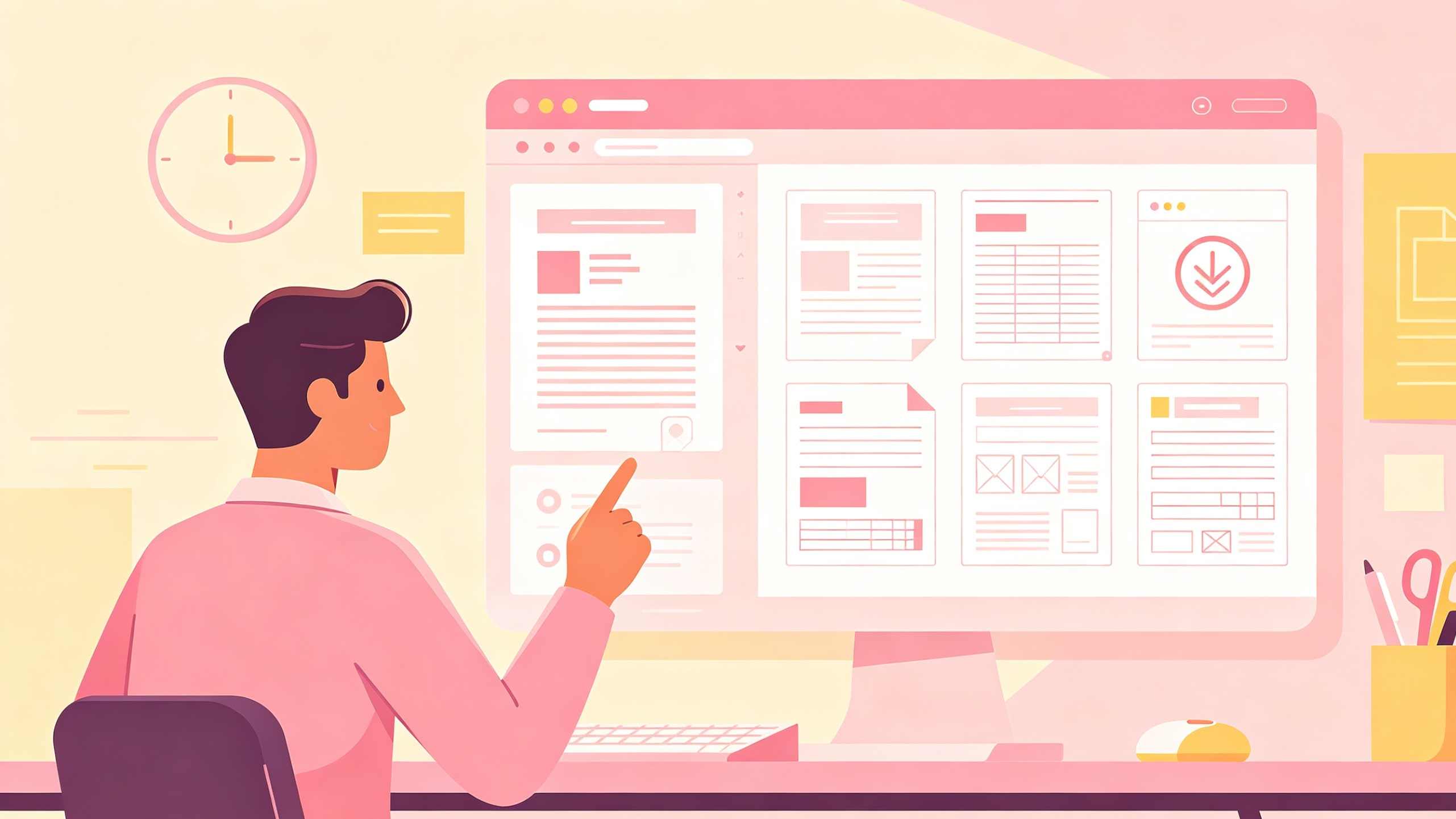
AI booklet generators represent a significant shift in document creation, moving away from manual graphic design toward automated, content-first production. Unlike standard large language models that output blocks of text, these specialized systems are engineered to handle the spatial and structural complexities of multi-page layouts. They integrate research, copywriting, asset generation, and formatting into a unified workflow, allowing users to produce professional A4 booklets in a fraction of the time traditional methods require.
Understanding the AI Booklet Generation Workflow
The process of creating a booklet through AI is fundamentally different from using a traditional word processor or layout software. It follows a structured sequence that prioritizes the hierarchy of information before a single pixel is placed on the page.
The Conceptualization and Prompting Phase
Everything starts with a prompt. However, a high-quality AI booklet generator does not simply take a sentence and print a document. Instead, it initiates a dialogue. When a user inputs a topic like "A Guide to Sustainable Urban Farming," the AI begins by asking clarifying questions. It identifies the target audience—whether they are hobbyists or professional agriculturists—and determines the intended tone. This initial step is crucial because it sets the "Industry Skills" parameters, ensuring the language and structure align with professional standards in that specific field.
Automated Research and Synthesis
One of the most powerful features of advanced generators is their ability to perform real-time web research. Rather than relying solely on pre-trained data, these tools deep-scrape high-quality sources to find current statistics, case studies, and trends. The AI synthesizes this information, creating a factual foundation for the content. This prevents the "hallucination" issues common in general-purpose AI, as the generator anchors its writing in the materials provided or found during the research phase.
Structural Mapping: Cover to Closing
A booklet is more than a sequence of paragraphs; it requires a logical flow. The AI automatically generates a Table of Contents (TOC), divides the material into coherent chapters, and plans for a front cover and a concluding summary. This structural mapping ensures that the reader's journey is intuitive. The AI understands that a "Product Catalog" needs high-density visual sections, while an "Employee Handbook" requires clear headings and policy bullet points.
Core Features That Define Professional AI Booklet Tools
When evaluating an AI booklet generator, the distinction between a hobbyist tool and a professional-grade platform lies in the technical output and customization options.
Industry-Specific Skill Adaptation
Top-tier generators are equipped with diverse "Industry Skills." This means the AI understands the conventions of different document types. For a healthcare booklet, the AI will prioritize clarity, medical accuracy, and regulatory disclaimers. For a marketing brochure, it will focus on persuasive headers, call-to-action (CTA) placements, and brand storytelling. This adaptation ensures that the output doesn't feel like a generic template but a purpose-built professional document.
Automated Illustration and Visual Matching
The AI doesn't just write; it visualizes. Modern generators automatically match images to the content of each page. If a chapter discusses "Water Conservation Techniques," the system will generate or retrieve relevant illustrations or diagrams. In our testing of these workflows, the ability to regenerate a single image without affecting the surrounding text layout is a key efficiency marker. This eliminates the hours designers usually spend browsing stock photo libraries.
Print-Ready Technical Standards
For many users, the final goal is a physical document. Professional AI generators output files in high-resolution PDF formats that adhere to A4 or Letter standards. This includes managing "bleed marks"—the extra area that ensures colors extend to the edge of the paper after trimming—and maintaining consistent margins for saddle-stitch or spiral binding. In our experience, having a tool that automatically handles these prepress technicalities is invaluable for small business owners who lack formal design training.
Why AI Generation Outperforms Traditional Design for Business Documentation
The traditional workflow for a 20-page booklet usually involves a copywriter, a researcher, and a graphic designer. This triad can take weeks to finalize a version. AI generators collapse this timeline by addressing three specific pain points.
Eliminating the Blank Page Syndrome
The hardest part of creating a booklet is the start. Traditional tools like Canva or InDesign provide templates, but the user still has to manually place every text box and image. An AI generator reads the raw material—whether it’s a long PDF, a series of URLs, or handwritten notes—and drafts the entire layout first. It is much easier to edit a drafted document than to build one from scratch.
Consistent Design Logic Across Pages
Maintaining visual consistency is a hallmark of professional design. In manual tools, it is easy for font sizes to vary or for color schemes to drift across pages. AI generators apply a global design logic. Once a style is selected, the AI ensures that every header, footer, and body paragraph follows the same typographic rules, creating a cohesive brand identity throughout the booklet.
Iterative Single-Page Editing
A common frustration with AI tools is the "all-or-nothing" approach to regeneration. Professional booklet generators solve this by allowing "Single-Page Editing." If page 7 needs a different image or a slight change in wording, the user can modify that specific page without the AI reshuffling the entire document. This granular control is essential for fine-tuning professional materials.
Strategic Use Cases for AI-Generated Booklets
Understanding where this technology fits into a modern workflow helps maximize its ROI.
Education and Training Handouts
Teachers and corporate trainers often need to turn complex lesson plans into digestible student workbooks. AI can take a curriculum outline and transform it into a multi-chapter handout complete with knowledge points, exercise sections, and answer keys. Because the AI can handle "A4 PDF" exports, these can be printed immediately for classroom use.
Sales and Marketing Brochures
For small businesses, high-quality brochures are often too expensive to outsource to agencies. An AI generator allows a business owner to paste their service list and customer testimonials, resulting in a polished marketing booklet that can be left at shop counters or sent as a digital "flipbook" link to prospective clients.
HR and Internal Operations
Employee handbooks, onboarding guides, and annual reports are administrative necessities that often consume excessive time. By feeding the AI current company policies and performance data, HR teams can generate structured reports that are both readable and visually engaging, moving beyond the dull, text-heavy Word documents of the past.
Comparison of Popular AI Booklet Generators
While the market is growing, a few platforms stand out based on their specialized capabilities.
| Feature | BookletAI | Visme | Energent.ai |
|---|---|---|---|
| Primary Strength | Chat-based full generation | High-end visual templates | Corporate data synthesis |
| Input Methods | URL, PDF, Notes, Prompts | Manual & AI Hybrid | Multi-document ingestion |
| Export Formats | A4 PDF, HTML, Web Link | PDF, PPTX, JPG | PDF, DOCX |
| Best For | Fast, one-chat booklets | Brand-heavy presentations | Complex business reports |
In our practical usage, BookletAI proves most effective for users who want to go from "zero to finished" in a single session. Its ability to ask clarifying questions before generating the outline ensures that the final product rarely misses the mark. On the other hand, tools like Visme are better suited for users who want the AI to provide a starting point but intend to spend significant time manually tweaking the aesthetics.
How to Write Prompts That Produce Better Booklets
The quality of an AI-generated booklet is directly proportional to the clarity of the initial prompt. To get the best results, follow the "R-A-C-E" framework:
- Role: Tell the AI who it is (e.g., "Act as a professional technical writer").
- Audience: Define who will read it (e.g., "For new employees with no technical background").
- Content: Specify the core message (e.g., "Summarize the three main safety protocols in our warehouse").
- Expectation: Set the format (e.g., "Create a 12-page A4 booklet with a minimalist design and professional tone").
By providing this level of detail, the AI is less likely to produce generic content and more likely to deliver a document that requires minimal editing.
The Future of Automated Document Creation
We are entering an era where "design" is becoming a function of "intent." As AI booklet generators become more sophisticated, we can expect deeper integration with live data sources—imagine an annual report that updates its charts in real-time as the AI pulls data from a company’s financial software. For now, the focus remains on democratization: giving everyone the tools to create professional, structured, and visually compelling booklets without the need for a design degree.
Summary of Benefits
AI booklet generators offer three primary advantages:
- Speed: Reducing weeks of work to minutes.
- Cost: Eliminating the need for expensive design software or external contractors.
- Accessibility: Allowing anyone with a topic to create a print-ready document.
FAQ
Q: Are AI booklet generators free to use? A: Many platforms offer a "freemium" model. You can often start a booklet and generate a preview for free, but downloading high-definition, watermark-free PDFs typically requires a subscription or a per-credit payment.
Q: Can I print the booklets I create with AI? A: Yes. Most professional tools export to A4 PDF formats that are optimized for local print shops or home printers. They handle margins and page ordering (imposition) so the booklet can be bound correctly.
Q: How do I ensure the information is accurate? A: You should provide your own materials (docs or URLs) as the primary source. If you let the AI research the web, always review the "Needs Completion" markers or specific data points to ensure the AI hasn't misinterpreted a source.
Q: Is design experience required? A: No. The AI handles the layout, typography, and image placement. You only need to be able to describe your topic and review the generated content.
Q: Can I edit the booklet after it is generated? A: Yes. High-quality generators allow for single-page edits, text changes, and image swaps. You are not stuck with the first version the AI produces.
-
Topic: AI Booklet Generator, Start a Booklet on Any Topichttps://bookletai.org/tools/ai-booklet-generator.html
-
Topic: Booklet AI: AI booklet maker that researches, writes, and illustrates pages in one chathttps://www.toolify.ai/tool/booklet-ai
-
Topic: AI Booklet Generator — Research, Write & Design in One Chathttps://bestaitools.online/tools/bookletai