Home
Home
How AI Image Generators Transform Text Prompts Into High Quality Visuals
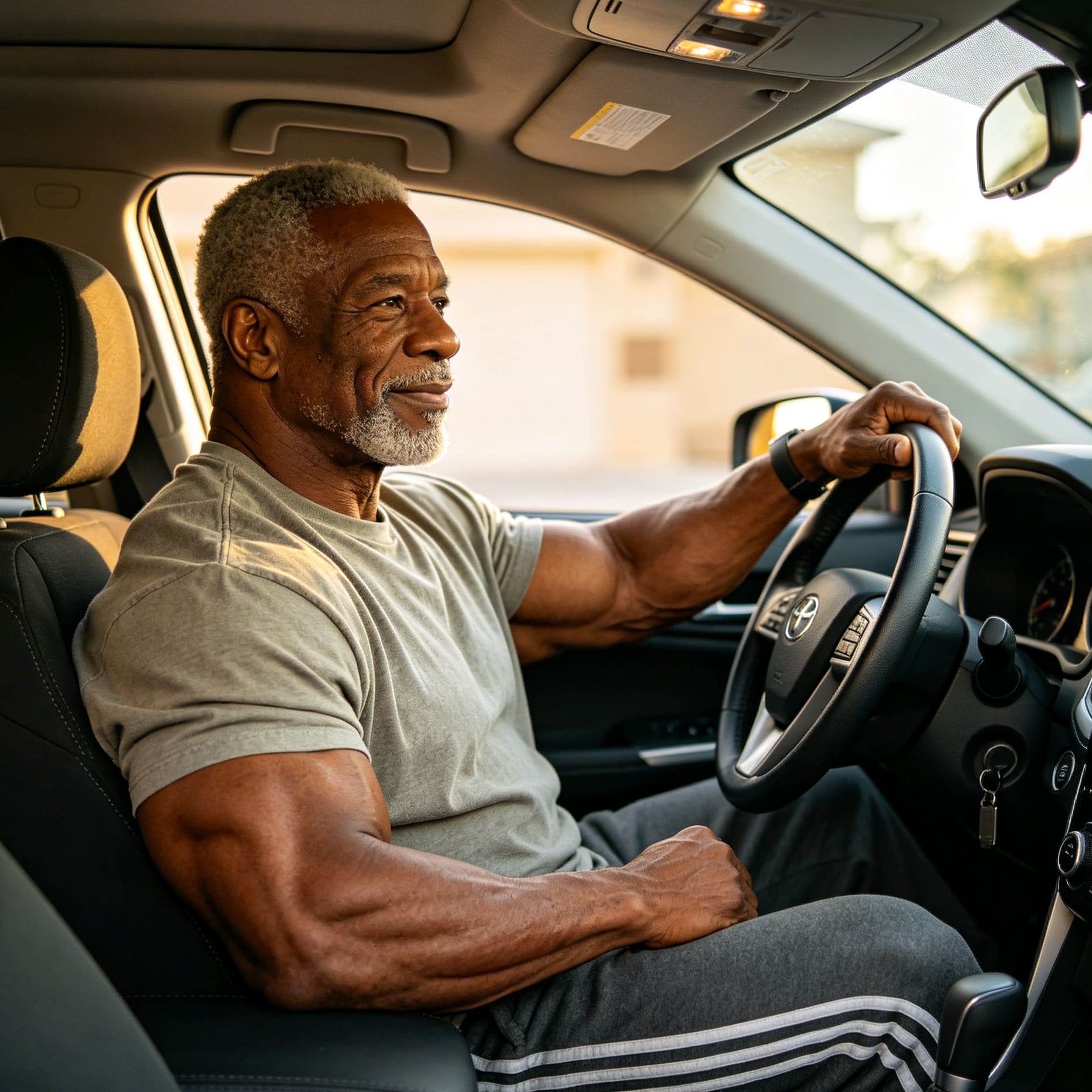
AI image generators represent a paradigm shift in digital asset creation, leveraging machine learning architectures to synthesize original imagery from simple natural language descriptions. These systems have evolved from experimental laboratory curiosities into sophisticated creative engines capable of producing photorealistic textures, complex lighting environments, and specific artistic styles that previously required hours of manual labor in traditional design software.
The Underlying Technology of Modern Image Generation
Understanding how these systems function requires a look into the convergence of natural language processing (NLP) and computer vision. Most contemporary platforms rely on a specific class of AI known as generative models, specifically diffusion models.
How Diffusion Models Function
Diffusion models operate on the principle of reverse destruction. The process begins during the training phase, where a neural network is exposed to millions of images. In this phase, noise is systematically added to an image until it becomes pure static. The model's primary task is to learn how to reverse this process, predicting the original pixel structure from the noise.
When a user inputs a prompt like "a futuristic cityscape in a cyberpunk style at sunset," the model starts with a canvas of random Gaussian noise. It then uses its training to "de-noise" the canvas in iterative steps, guided by the semantic meaning of the text prompt. Each iteration refines the shapes, colors, and compositions until a coherent high-resolution image emerges that aligns with the user's intent.
Neural Networks and Latent Space
At the heart of this process is the "latent space." Instead of processing images at a pixel-by-pixel level—which would be computationally prohibitive—modern generators like Stable Diffusion work in a compressed mathematical representation of imagery. The AI maps concepts like "sunset," "cityscape," and "cyberpunk" into high-dimensional vectors. The generator finds the intersection of these vectors in latent space and then translates that mathematical coordinate back into a visual representation that the human eye can interpret.
The Role of CLIP (Contrastive Language-Image Pre-training)
CLIP is the bridge between human language and visual pixels. Developed by researchers to understand the relationship between text and images, CLIP ensures that the AI understands that the word "dog" corresponds to a specific set of visual patterns. Without this alignment, a generator would be unable to follow instructions accurately. Higher prompt adherence in modern models is largely due to more advanced CLIP implementations that can handle complex sentence structures and nested adjectives.
Essential Features of Professional AI Design Tools
Modern AI image generators offer more than a simple "generate" button. Professional workflows now require granular control over every aspect of the output.
Prompt Adherence and Weighting
The ability of a model to follow specific constraints—such as camera angles, lighting types (e.g., volumetric lighting), and specific object counts—is known as prompt adherence. Advanced users often employ "weighting" to tell the AI which parts of a prompt are most important. For example, using syntax like (sunset:1.5) in certain interfaces instructs the model to prioritize the lighting conditions over other secondary elements in the description.
Inpainting and Localized Editing
Inpainting is a transformative feature for professional retouching. It allows a user to mask a specific area of an existing image and ask the AI to generate something new only within that mask. If a generated portrait is perfect except for the eyewear, inpainting allows the user to swap glasses without altering the face, hair, or background. This level of precision makes AI a viable tool for commercial photography workflows.
Outpainting and Canvas Extension
Outpainting, or generative fill, enables the extension of an image beyond its original borders. By analyzing the textures, lighting, and composition of the source image, the AI can imagine what lies outside the frame. This is particularly useful for converting vertical social media images into wide-screen banners while maintaining visual consistency.
Image-to-Image Synthesis
Image-to-image (Img2Img) allows a user to provide a reference image along with a text prompt. The AI uses the structure and color palette of the reference image as a foundation, applying the text prompt's style or modifications to it. This is frequently used for architectural visualization, where a rough sketch can be transformed into a realistic 3D render.
Consistency and Style Reference
One of the historical challenges of AI generation was character and style consistency across multiple images. Modern tools have introduced "Style References" or "Character References," where a user can input a specific image, and the AI will extract the stylistic DNA—such as brushstroke patterns or facial features—to apply to subsequent generations. This is critical for comic book creation, branding, and game design.
A Comparative Analysis of Leading AI Image Platforms
The current market is divided into several major ecosystems, each serving different professional needs. Selecting the right tool depends on the balance between ease of use, artistic quality, and technical control.
Midjourney: The Benchmark for Artistic Quality
Midjourney has established itself as the preferred tool for concept artists and designers who prioritize aesthetic excellence. Unlike other tools that run as standalone applications, Midjourney operates primarily through Discord, though a web-based interface is now becoming standard.
- Strengths: Exceptional handling of light, texture, and composition. It often produces "ready-to-use" art that requires minimal post-processing.
- Version Evolution: With the release of versions like v6 and v6.1, the model has significantly improved its understanding of long, descriptive prompts and its ability to render legible text within images.
- User Experience: The "upscale" and "variation" buttons allow for rapid iteration, making it ideal for the brainstorming phase of creative projects.
DALL-E 3: Semantic Understanding and Ease of Use
Integrated directly into the ChatGPT ecosystem by OpenAI, DALL-E 3 is designed for accessibility. Its greatest strength lies in its ability to understand the nuances of human conversation.
- Strengths: High prompt adherence. If a user asks for "three green apples and one blue orange on a wooden table," DALL-E 3 is highly likely to get the counts and colors correct, where other models might struggle.
- Workflow: Because it lives inside ChatGPT, users can use the chatbot to refine prompts, brainstorm ideas, and ask for specific adjustments in a conversational manner.
- Safety: It includes robust filters to prevent the generation of copyrighted content or harmful imagery, making it a safe choice for corporate environments.
Stable Diffusion: The Choice for Power Users and Developers
Developed by Stability AI, Stable Diffusion is an open-source model that can be run locally on a user's hardware. This provides a level of freedom and privacy that cloud-based models cannot match.
- Strengths: Total control. Users can install custom models (checkpoints), fine-tune the AI using their own images (via LoRA or Dreambooth), and use advanced plugins like ControlNet to dictate the exact pose of a character or the lines of a building.
- Hardware Requirements: Running Stable Diffusion locally typically requires an NVIDIA GPU with at least 8GB of VRAM for basic tasks, though 24GB (such as an RTX 3090 or 4090) is recommended for high-resolution workflows and training.
- Interfaces: Advanced users gravitate toward ComfyUI, a node-based interface that allows for the creation of complex, automated image generation pipelines.
Adobe Firefly: Commercial Safety and Integration
Adobe Firefly is built specifically for the creative professional already embedded in the Adobe Creative Cloud ecosystem.
- Strengths: Firefly is trained on Adobe Stock images, openly licensed content, and public domain works. This ensures that the generated outputs are commercially safe and do not infringe on the intellectual property of individual artists.
- Integration: Its presence within Photoshop (Generative Fill) and Illustrator (Text to Vector) allows designers to use AI as a feature within their existing tools rather than as a separate workflow.
- Precision: Features like "Structure Reference" allow users to upload a template and ensure the AI-generated content follows that exact layout.
Flux.1: The New Frontier of Text and Realism
Flux has recently emerged as a formidable competitor, particularly in its "Pro" and "Dev" iterations. It has gained notoriety for its ability to render human hands and complex text with unprecedented accuracy.
- Strengths: It bridges the gap between the artistic flair of Midjourney and the prompt adherence of DALL-E 3. It is currently considered one of the best models for generating photorealistic humans without the common "uncanny valley" artifacts.
- Availability: It can be accessed via APIs on platforms like Fal.ai or run locally for those with significant VRAM.
Strategic Prompt Engineering for Professional Results
The quality of an AI-generated image is directly proportional to the quality of the prompt. Effective prompt engineering is less about "hacking" the AI and more about providing clear, structured information.
The Anatomy of a Successful Prompt
A professional prompt typically follows a specific hierarchy:
- Subject: The primary focus (e.g., "A weathered mountaineer").
- Action/Context: What the subject is doing (e.g., "scaling a sheer ice wall").
- Environment: The background and surroundings (e.g., "during a fierce blizzard, jagged peaks in the distance").
- Lighting and Atmosphere: The mood (e.g., "harsh cinematic lighting, high contrast, cool blue tones").
- Technical Specs: Camera settings or art styles (e.g., "shot on 35mm film, f/2.8, grain, photorealistic").
Avoiding Common Prompting Pitfalls
Vague prompts lead to generic results. Instead of using words like "beautiful" or "detailed"—which the AI interprets subjectively—users should use descriptive adjectives that imply detail. For example, instead of "a detailed city," use "a city with intricate neo-gothic architecture, visible steam vents, and weathered brick textures."
Contradictory elements should also be avoided. Asking for a "dark, moody scene with bright, cheerful sunshine" will confuse the latent space mapping, often resulting in a muddy, incoherent image.
Using Negative Prompts
In tools like Stable Diffusion and Leonardo AI, negative prompts allow users to specify what they do not want to see. Common negative prompts include "blurry," "distorted hands," "watermark," or "low resolution." This acts as a filter, pushing the AI away from common generation errors.
Commercial Viability and Ethical Considerations
As AI image generators enter the mainstream, the legal and ethical landscape is shifting.
Copyright and Ownership
In many jurisdictions, AI-generated images without significant human intervention are not currently eligible for copyright protection. This presents a challenge for brands looking to own their visual assets. Adobe’s approach with Firefly provides a partial solution by offering indemnification for commercial users, but the broader legal framework is still evolving.
Ethical Training Data
The "black box" nature of training data has led to criticism regarding the use of artists' work without consent. While models like Stable Diffusion 3 and Adobe Firefly are moving toward more transparent or licensed datasets, the industry remains in a period of transition. Ethical users often look for platforms that offer "opt-out" mechanisms for artists or those that contribute to the creator community.
Deepfakes and Misinformation
The ability to generate photorealistic images of real events or people has raised concerns about misinformation. Most reputable platforms have implemented strict blocks on generating public figures or sensitive political content. Furthermore, many tools now embed invisible watermarks or metadata (such as C2PA standards) to identify images as AI-generated.
Advanced Workflows: Beyond the Basic Generation
To achieve professional-grade results, generation is often just the first step.
Upscaling for Print and High-Res Displays
Most AI models generate images at resolutions around 1024x1024 pixels. While sufficient for web use, this is inadequate for print. Professional workflows involve using dedicated AI upscalers like Topaz Photo AI or the built-in "Creative Upscale" features in Midjourney and Leonardo AI. These tools don't just stretch the pixels; they use secondary neural networks to add texture and detail that wasn't present in the original low-res generation.
Integrating AI with Traditional Design
The most effective use of AI image generators is as a component of a larger design process. A designer might use Midjourney to generate a unique background texture, DALL-E 3 to brainstorm a logo concept, and Photoshop’s Generative Fill to seamlessly blend these elements into a final composition. This hybrid approach leverages the speed of AI while maintaining the creative intent of the human designer.
The Future of Visual AI
We are moving toward a future where "image generation" is no longer a static process.
Real-Time Generation
Newer models are becoming fast enough to generate images in real-time as a user types. This "Latent Consistency Model" (LCM) technology allows for an interactive creative process where the image morphs instantly with every character keyed into the prompt box.
3D and Video Integration
The boundaries between 2D images and 3D environments are blurring. We are seeing the rise of "Image-to-3D" generators that can take a single AI-generated portrait and turn it into a textured 3D mesh for use in game engines like Unreal Engine 5. Similarly, video generation models are now using generated images as "keyframes" to ensure visual stability in animation.
Summary
AI image generators have matured into indispensable tools for modern creators. By utilizing diffusion models and latent space, these platforms can translate complex human ideas into vivid visual realities. Whether through the artistic depth of Midjourney, the conversational ease of DALL-E 3, or the technical flexibility of Stable Diffusion, the key to success lies in understanding the mechanics of prompting and the specific strengths of each model. As the technology moves toward real-time synthesis and commercially safe training, the focus for users will shift from how to generate an image to how to best integrate these powerful tools into a professional creative vision.
FAQ
What is the best AI image generator for beginners?
DALL-E 3 is widely considered the best for beginners due to its integration with ChatGPT. It allows users to use natural conversational language rather than complex technical prompts, and it excels at understanding exactly what the user is asking for.
Can I use AI-generated images for my business?
Yes, but with caveats. Tools like Adobe Firefly are specifically designed for commercial safety. However, you should check the Terms of Service of your specific tool, as some free tiers prohibit commercial use. Additionally, be aware that you may not be able to claim full copyright ownership of the generated image.
Do I need a powerful computer to run an AI image generator?
Not necessarily. Most popular tools like Midjourney, DALL-E 3, and Adobe Firefly are cloud-based, meaning all the heavy processing happens on their servers. You only need a powerful computer (specifically a high-end NVIDIA GPU) if you plan to run open-source models like Stable Diffusion locally on your own machine.
Why does AI struggle with hands and text?
AI doesn't "understand" the anatomy of a hand or the logic of spelling; it understands patterns. Because hands are complex and can appear in thousands of different poses and angles, the AI sometimes struggles to map the pattern correctly. However, newer models like Flux.1 and Midjourney v6 have largely solved these issues through better training and higher-resolution datasets.
How can I make my AI images look more realistic?
To achieve photorealism, include technical photographic terms in your prompt. Phrases like "shot on 85mm lens," "f/1.8 aperture," "depth of field," "natural sunlight," and "hyper-realistic textures" guide the AI toward a photographic aesthetic rather than an illustrative one.
-
Topic: AI Image Generation 101: Create, Customize, and Innovatehttps://hitcases.com/wp-content/uploads/2025/02/Ai-image-generation-101.pdf
-
Topic: The 8 best AI image generators in 2026 | Zapierhttps://zapier.com/blog/best-ai-image-generator/#:~:text=It
-
Topic: Free AI text to image generator for creating stunning visuals.https://www.adobe.com/ca/products/firefly/features/text-to-image.html