Home
Home
How AI Image Style Changers Are Redefining Digital Artistry
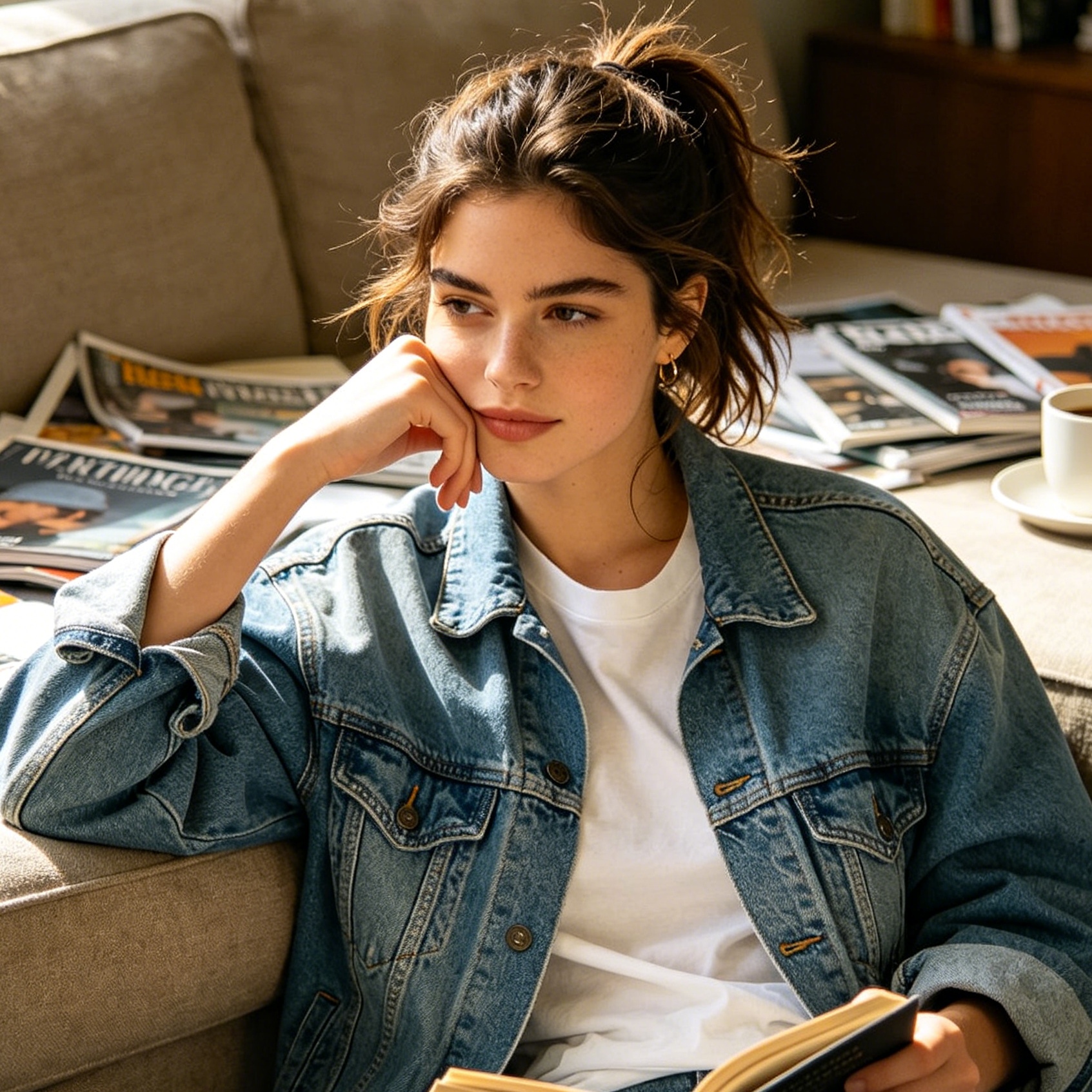
An AI image style changer is a sophisticated software tool that utilizes deep learning algorithms to modify the aesthetic appearance of a photograph or graphic while preserving its underlying structure. By disentangling the "content" of an image—its shapes, objects, and composition—from its "style"—the textures, colors, and brushstrokes—these tools allow creators to apply the visual language of one artwork to another. This technology has evolved from simple digital filters into generative engines capable of producing studio-quality art in seconds.
The Technical Evolution of Style Transformation
The journey of changing image styles through artificial intelligence did not begin with modern generative models. To understand the current landscape, it is essential to look at the progression of neural architectures.
Neural Style Transfer (NST) and CNNs
In 2015, the field was revolutionized by the introduction of Neural Style Transfer. This method uses Convolutional Neural Networks (CNNs), typically those pre-trained on massive datasets like ImageNet. The core idea is to use the different layers of the network to extract features. Lower layers represent fine details and textures (style), while deeper layers capture high-level objects and layout (content). By minimizing the distance between the content representation of a target photo and the style representation of a reference artwork, the AI merges the two into a new, stylized output.
Generative Adversarial Networks (GANs)
Following NST, Generative Adversarial Networks (GANs) introduced a "competition" between two models: a generator that creates images and a discriminator that critiques them. GAN-based style changers are exceptionally good at specific domain translations, such as turning a photo of a human into a high-fidelity 3D cartoon character or a Japanese anime-style illustration. These models are fast and efficient but often require specific training for each style.
The Rise of Diffusion Models
Today, the most advanced AI image style changers leverage Diffusion Models. Unlike GANs, these models work by adding noise to an image and then learning to reverse that process to recover the data. During the denoising phase, the AI can be guided by either a reference image or a text prompt. This is the technology behind industry leaders like Stable Diffusion and Midjourney. It allows for a much higher degree of creative control, enabling the user to adjust how much the "style" should dominate the original image.
Core Mechanisms of Modern AI Style Changers
When utilizing an AI image style changer, the process generally falls into two operational categories. Each serves a different creative intent and offers varying levels of precision.
Image-to-Image (I2I) Style Transfer
In this mode, the user provides two visual inputs: a content image (the source) and a style reference (the target aesthetic). The AI analyzes the textures, color palettes, and lighting of the reference and maps them onto the geometry of the source. This is the most popular method for photographers who want to give a modern portrait a vintage film look or for illustrators who wish to see their sketches rendered in watercolor.
Text-to-Image (T2I) Guided Modification
Some tools allow users to change styles using natural language descriptions. For instance, uploading a photo of a cityscape and typing "in the style of a cyberpunk neon noir film" instructs the AI to reinterpret the scene. This method relies on the CLIP (Contrastive Language-Image Pre-training) model, which understands the relationship between visual concepts and words, allowing for highly flexible but sometimes less predictable results.
Experience-Driven Review of Leading Style Changer Tools
Navigating the sea of AI tools requires an understanding of their practical performance. Based on extensive testing within professional design workflows, here is an analysis of how current platforms handle style transformation.
Adobe Firefly: The Professional Workflow Integration
Adobe Firefly introduces a feature called "Generative Match," which is built directly into the Creative Cloud ecosystem. In practical application, Firefly excels at maintaining brand consistency.
During our testing phases, we observed that Firefly’s "Style Strength" slider is its most powerful asset. When set to a lower value (around 20-30%), the tool acts as a subtle color grader, aligning a new photo with the existing color palette of a brand. When pushed to 80% or higher, the transformation becomes radical, capable of turning a flat product shot into a textured, hand-drawn illustration. One major advantage of Firefly is its focus on commercially safe data, ensuring that the styles generated are not infringing on specific artists' copyrighted works.
Fotor: Accessibility and One-Click Solutions
For casual creators and social media managers, Fotor offers a more streamlined experience. It relies heavily on pre-set neural art styles. In our tests, Fotor’s "3D Cartoon" and "Sketch" filters proved remarkably consistent at preserving facial identity. While professional tools sometimes distort the subject's features, Fotor’s algorithms prioritize the structural integrity of the main subject. It is an ideal tool for generating avatars or quick thematic variations for Instagram or Pinterest.
Advanced Research Models: DreamStyler and Style Inversion
For those seeking the absolute cutting edge, frameworks like DreamStyler (often implemented in open-source environments like Stable Diffusion) represent the future of this tech. Traditional style transfer often struggles with intricate brushwork or unique lighting. DreamStyler uses a technique called "Style Inversion," where the AI spends a few moments "learning" the unique artistic fingerprint of a single reference image before applying it. This results in a much more faithful reproduction of a specific artist's light and shadow patterns compared to generic filters.
How to Select the Right Reference Image for Style Transfer
The success of a style change depends heavily on the compatibility between the source and the reference. Professional results are rarely a matter of luck; they require strategic selection.
- Compositional Harmony: If the source image is a wide-angle landscape, choosing a reference image that is also a landscape—rather than a tight portrait—will yield better results. The AI will find it easier to map the sky and ground textures correctly.
- Color Palette Density: If the source photo is very dark, applying a style reference that is bright and pastel might lead to muddy artifacts. It is best to choose references that share a similar tonal range.
- Texture Complexity: A highly detailed oil painting reference might overwhelm a simple logo design. For clean graphics, minimal style references like "Bauhaus" or "Flat Vector" work more effectively.
Practical Applications Across Industries
AI image style changers are no longer just for creating "cool" social media posts. They are becoming integrated into professional value chains.
Marketing and Branding
Consistency is the cornerstone of branding. A company may have thousands of product photos taken by different photographers over several years. Using an AI style changer, a marketing team can apply a unified "Signature Style" to all historical assets, ensuring the entire website looks cohesive without the cost of a new photoshoot.
Game Development and Concept Art
Concept artists use these tools for "Mood Exploration." By taking a basic 3D block-out of a level and running it through different style changers (e.g., "Gothic Architecture," "Sci-Fi Industrial," "Overgrown Nature"), they can quickly visualize different creative directions. This rapid prototyping saves hundreds of hours in the early stages of production.
Architecture and Interior Design
Architects use style transfer to show clients how a building might look in different environments or lighting conditions. A simple daytime sketch can be transformed into a "Golden Hour" render or a "Winter Night" scene instantly, helping clients connect emotionally with the design.
Technical Challenges and Limitations
Despite the rapid progress, AI image style changers are not without their flaws. Users should be aware of these common hurdles:
- Structural Distortion: At high style intensities, the AI may lose the original shape of the object. A person's fingers might blend into the background, or a building's straight lines might become wavy.
- Resolution Constraints: Many web-based style changers limit the output resolution to 1024px or 2048px. For print-quality work, users often need to use a secondary AI upscaler.
- Computational Requirements: Running advanced diffusion-based style changers locally requires significant GPU power (often 8GB of VRAM or more). Cloud-based services bypass this but often involve subscription costs or credit systems.
The Ethical Landscape of Style Reproduction
The ability to "copy" the style of any artist raises important questions. While the "content" of an image (the specific arrangement of pixels) is protected by copyright, "style" (the general aesthetic) has traditionally been harder to legally define. AI tools make it possible to mimic the brushstrokes of a living artist with frightening accuracy.
Responsible use of an AI image style changer involves:
- Using references for which you have the rights or that are in the public domain.
- Using the technology to augment one's own creativity rather than purely replicating another's identity.
- Transparency in disclosing when an image has been significantly altered by AI.
Future Trends in AI Style Transformation
The next frontier for this technology is Real-Time Style Transfer. We are beginning to see mobile applications that can apply complex artistic styles to live video feeds at 60 frames per second. This will revolutionize augmented reality (AR) and live streaming, allowing creators to exist within a "living painting" in real-time.
Furthermore, Semantic Style Transfer is becoming more precise. Instead of applying one style to the whole image, future tools will allow you to apply a "Watercolor" style to the background while keeping the "Photorealistic" style for the human subject, all within a single automated pass.
Conclusion
The AI image style changer has transitioned from a technical curiosity into an indispensable tool for the modern creative toolkit. By bridging the gap between imagination and technical execution, it allows anyone to experiment with visual aesthetics that previously required years of specialized training. Whether you are a professional designer seeking brand consistency or an enthusiast exploring the boundaries of digital art, understanding the mechanics and nuances of these tools is essential for navigating the future of visual content creation.
Frequently Asked Questions
What is the difference between an AI style changer and a traditional photo filter?
Traditional filters apply a uniform overlay of color or contrast across the entire image. An AI style changer uses a neural network to understand the content of the image and redraws it from scratch using the aesthetic principles of the style reference, resulting in much more complex and integrated textures.
Can I keep the person in the photo recognizable while changing the style?
Yes. Most modern tools like Fotor and Adobe Firefly have "Identity Preservation" algorithms or sliders. By adjusting the "Style Strength," you can find a balance where the artistic effect is clear, but the person's unique facial features remain intact.
Is AI style transfer free to use?
Many platforms like Fotor and AI Ease offer free versions with limited daily credits or watermarks. More advanced tools like Adobe Firefly are part of paid subscriptions, while open-source models like Stable Diffusion are free to use if you have the hardware to run them locally.
How does an AI image style changer handle lighting?
Sophisticated models analyze the light source in the reference image. If the style reference has dramatic, high-contrast lighting (like Caravaggio's paintings), the AI will attempt to re-light the content image to match that dramatic effect, even if the original photo was taken in flat, overcast light.
What are the best prompts for text-based style changes?
When using text to guide the style, be specific about the medium (e.g., "oil on canvas," "charcoal sketch," "digital vector"), the lighting (e.g., "volumetric lighting," "soft bokeh"), and the artistic movement (e.g., "Impressionism," "Surrealism"). Combining these elements produces the most accurate results.
-
Topic: DreamStyler: Paint by Style Inversion with Text-to-Image Diffusion Modelshttps://ojs.aaai.org/index.php/AAAI/article/download/27824/27678
-
Topic: Image Style Transfer AI: Stylise Images - Adobe Fireflyhttps://www.adobe.com/au/products/firefly/features/generative-match.html
-
Topic: AI Style Transfer: AI Image Style Changer Online Free | Fotorhttps://www.fotor.com/features/style-transfer/#:~:text=Make