Home
Home
How AI Image Upscaling Transforms Low Resolution Photos Into High Quality 4K Assets Online
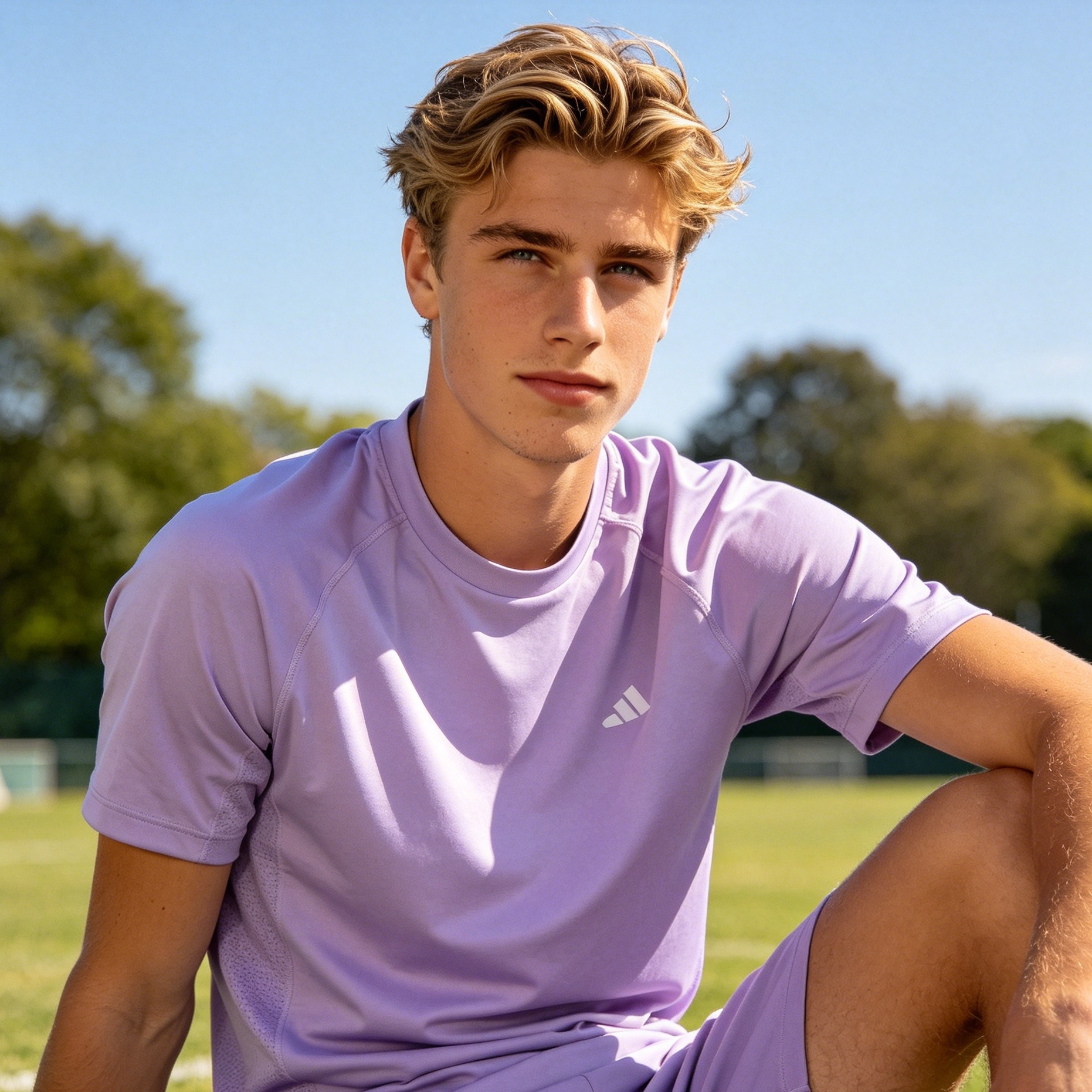
Artificial Intelligence has fundamentally redefined the boundaries of digital imaging, particularly through a process known as image upscaling. Unlike traditional methods of enlarging photos, which often result in pixelation and blurriness, modern AI upscalers use sophisticated neural networks to reconstruct lost data and enhance resolution. This technological shift allows users to take low-quality, compressed, or vintage photographs and transform them into high-definition assets suitable for professional printing, large-screen displays, and modern social media standards.
Online image upscaling services leverage deep learning models trained on millions of high-resolution pairs. These models analyze the structure, textures, and edges within a low-resolution image to intelligently "predict" and draw the missing pixels. The result is not just a larger version of the original file, but a reconstructed image with improved clarity, reduced noise, and sharper details.
The Evolution from Interpolation to Neural Reconstruction
To understand why online AI upscaling is so effective, it is necessary to differentiate it from the legacy methods used in graphic design for decades. Traditional resizing techniques, such as Nearest Neighbor or Bicubic Interpolation, work by averaging the color values of existing pixels to fill the gaps created during enlargement. This math-based approach inherently leads to a loss of sharpness because it cannot create new information; it simply stretches what is already there.
In contrast, AI-driven upscaling utilizes Generative Adversarial Networks (GANs) and Convolutional Neural Networks (CNNs). These systems do not just stretch pixels; they interpret the content of the image. For instance, if the AI identifies a pattern as "human skin," it applies its learned knowledge of skin textures—pores, fine lines, and subtle color variations—to fill in the gaps. If it identifies "brickwork" or "textile fibers," it reconstructs those specific patterns with a level of realism that traditional algorithms can never achieve.
Critical Analysis of Leading Online Upscaling Platforms
The market for online image enhancement is diverse, with tools catering to different needs, ranging from casual social media posts to high-end commercial photography. Selecting the right platform requires an understanding of their underlying strengths and processing logic.
Professional Grade Detail and Restoration
Services like Let’s Enhance and Vance AI are designed for users who require significant control over the output. These platforms often feature specific "models" for different types of imagery. For example, a "Face Refinement" model is optimized to preserve the unique characteristics of human features while smoothing out artifacts caused by JPG compression. In professional workflows, these tools are indispensable for restoring old family archives where the original film may have degraded over time.
A key feature in these high-end tools is the "Creativity" or "Texture Generation" slider. When set correctly, this allows the AI to add subtle micro-details that were never captured by the original lens. However, professional experience suggests that keeping these settings at a medium level is crucial for maintaining the authenticity of the subject. Over-leveraging the AI's creativity can lead to "hallucinations," where the software interprets a blur as a physical object, potentially altering the identity of a person in a portrait.
Rapid Processing for Social Media and Web Design
For users focused on efficiency, tools such as Upscale Media and PixelCut provide a streamlined, "one-click" experience. These services are optimized for speed, making them ideal for web designers who need to quickly prepare small product photos for a high-resolution e-commerce storefront. The primary advantage here is the removal of "mosquito noise"—those grainy, blocky patterns often found around the edges of objects in compressed images. By cleaning these artifacts while doubling or quadrupling the resolution, these tools ensure that images look sharp on high-pixel-density displays like Retina screens.
Open Source and Specialized Graphical Upscaling
Waifu2x represents a unique segment of the upscaling world. Originally developed to enhance anime-style illustrations and flat-color graphics, its underlying algorithm proved exceptionally capable at handling clear lines and vibrant color gradients. For digital artists and those working with logos or vectorized-style graphics, Waifu2x remains a gold standard because it avoids the "over-smoothing" that sometimes plagues photo-centric AI models. It maintains the integrity of hard edges, which is vital for maintaining the professional look of graphic design elements.
Technical Mechanisms Behind the AI Processing Pipeline
When an image is uploaded to an online upscaler, it undergoes a multi-stage transformation process. Understanding this pipeline helps users manage their expectations and prepare their source files for the best possible results.
Feature Detection and Semantic Analysis
The first stage is not upscaling, but understanding. The AI segments the image into different zones: foreground subjects, background textures, and structural edges. This semantic analysis ensures that a different set of rules is applied to a human eye versus a blade of grass. Without this stage, the entire image would be sharpened uniformly, leading to "halos" or unnatural-looking textures in the background.
Denoising and Artifact Removal
Most low-resolution images suffer from compression artifacts, particularly those in the JPG format. The AI must first "clean" the image by identifying and removing these blocks of color and digital grain. This is a delicate process; if the denoising is too aggressive, the image can look like a wax painting. Modern online tools solve this by using residual learning, where the AI learns the difference between "natural grain" (which adds to the photo's realism) and "digital noise" (which detracts from it).
Super-Resolution Reconstruction
The core of the process is the Super-Resolution (SR) phase. Here, the neural network expands the canvas. It references its massive training database to place new pixels in a way that aligns with the detected structures. If the AI detects a diagonal line, it ensures that the line remains straight and sharp across the new, larger pixel grid, preventing the "staircase effect" common in traditional resizing.
Strategic Workflow for Achieving 4K Results
Achieving a professional-grade 4K output from a small thumbnail is not always a linear process. Experienced users often employ a "multi-pass" strategy to maintain the highest level of fidelity.
The Multi-Stage Scaling Approach
Rather than attempting to upscale a 500-pixel image to 4000 pixels in a single step, it is often more effective to perform the upscale in increments. For example, a 2x upscale followed by a secondary 2x upscale can sometimes yield more natural results. This allows the AI to refine the details at a manageable scale before the final high-resolution pass. It minimizes the risk of the AI "guessing" too much information at once, which is the primary cause of warped textures and unnatural shapes.
Source File Preparation
The quality of the input significantly dictates the ceiling of the output. Whenever possible, users should upload images in lossless formats like PNG or high-quality WebP. If only a JPG is available, ensuring it has not been repeatedly saved (which compound compression artifacts) is essential. The AI is a reconstruction tool, but it requires a logical base. A photo that is completely out of focus or severely motion-blurred will rarely become a perfect high-resolution shot, as the AI has no structural data to rebuild from.
Privacy Considerations and Browser-Based Processing
A growing concern in the digital age is the privacy of uploaded data. Most traditional online upscalers process images on their own servers. This means the user's photo is transmitted to a third party, processed in the cloud, and stored temporarily. While reputable services have strict deletion policies, this workflow may not be suitable for sensitive documents or private family photos.
The emergence of "Client-Side" AI upscaling, utilized by platforms like Toolschimp, offers a solution. These tools use the user's own browser resources (JavaScript and the WebGL/WebGPU API) to perform the calculations locally on the user's computer. The image never leaves the device. While this may be slower for users with older hardware, it provides a level of data sovereignty that is increasingly valued by security-conscious professionals.
Common Pitfalls and How to Avoid Them
Even with advanced AI, certain challenges can compromise the final image quality. Identifying these "tells" of AI processing is the first step toward correcting them.
Managing AI Hallucinations
Hallucination occurs when the AI misidentifies a texture. For instance, a pattern on a shirt might be interpreted as a complex geometric design, or light reflecting off an eye might be reshaped into an unnatural pupil. To avoid this, it is recommended to compare the original and upscaled versions at 100% zoom. If details look "alien" or "swirly," reducing the creative intensity settings or switching to a more "conservative" AI model is the standard fix.
Over-Sharpening and the "Soap Opera" Effect
When an AI tries too hard to define edges, it can create a "cut-out" look where subjects appear to be pasted onto the background. This is often caused by high sharpness settings combined with aggressive denoising. To maintain a cinematic and professional look, a slight amount of natural film grain can be added back to the image after the upscaling process. This masks the "too-perfect" look that AI sometimes produces and makes the image feel more like a photograph and less like a digital render.
The Future of Online Image Enhancement
The field of AI upscaling is moving toward "Contextual Awareness." Future models will not just look at pixels, but will understand the context of the scene—such as the time of day, the specific lens used (simulated), and the lighting conditions. This will allow the AI to reconstruct shadows and highlights with even greater accuracy. We are also seeing the integration of "Prompt-Based" upscaling, where a user can tell the AI, "Upscale this photo and make the grass look greener and more detailed," combining upscaling with generative editing.
Summary of Online AI Upscaling Best Practices
To maximize the value of online photo upscaling, users should follow a structured approach:
- Select the model based on content: Use specialized face models for portraits and structural models for architecture or products.
- Prioritize source quality: Use the least compressed version of the image available.
- Monitor creative settings: Avoid maxing out "creativity" or "detail" sliders to prevent the AI from inventing unrealistic features.
- Consider privacy: Use local browser-based tools for sensitive or personal content.
- Iterate if necessary: If the first tool doesn't yield a satisfactory result, try a different platform, as different neural networks are trained on different data sets and will "see" the image differently.
Frequently Asked Questions
What is the difference between AI upscaling and traditional resizing?
Traditional resizing uses mathematical formulas to stretch existing pixels, which often results in blurriness. AI upscaling uses neural networks trained on millions of images to reconstruct missing details, creating a sharper and more realistic high-resolution output.
Is it possible to upscale a photo to 4K for free online?
Yes, many platforms like Upscale Media and Waifu2x offer free upscaling options. However, free versions may have limits on the maximum resolution, file size, or the number of images you can process per day. Professional tools like Let’s Enhance often provide a limited number of free "credits" upon registration.
Will AI upscaling remove blur from my photos?
AI upscalers are excellent at removing "softness" and "compression blur," but they cannot fully fix photos that are significantly out of focus or have severe motion blur. They work best on images that are clear but simply lack resolution.
Can I upscale photos on my smartphone?
Most online AI upscaling tools are web-based and fully responsive, meaning they work in mobile browsers. Some services also offer dedicated apps for iOS and Android, which may provide more optimized processing for mobile hardware.
Why do some upscaled images look like "paintings"?
This "waxy" or "painterly" effect happens when the AI's denoising settings are too high, causing it to smooth out natural textures in an attempt to remove noise. Reducing the denoising strength or adding a small amount of digital grain afterward can help restore a natural photographic look.
Are my photos safe when using an online upscaler?
Reputable services usually have privacy policies stating that images are deleted after a certain period (e.g., 24 hours). For maximum privacy, look for tools that offer "local processing," which means the image is processed within your browser and never uploaded to a server.
-
Topic: Upscayl AI Image Upscaler : AI Image Upscaler Online Free,Enhance & Unblur Photoshttps://www.upscayl.app/
-
Topic: Upscale Image Online - Free AI Image Enlargerhttps://www.toolschimp.com/tools/image-tools/image-upscale
-
Topic: Free AI Photo Upscaler – Instantly Upscale & Enhance Your Photoshttps://www.topazlabs.com/tools/upscale?srsltid=AfmBOopWQYWKCcuMvrqqOwbvACtjkzxdknboW-kBjpr8VfyvhpDRA4kC