 Home
Home
How AI Is Changing the Way We Create Pictures in 2025
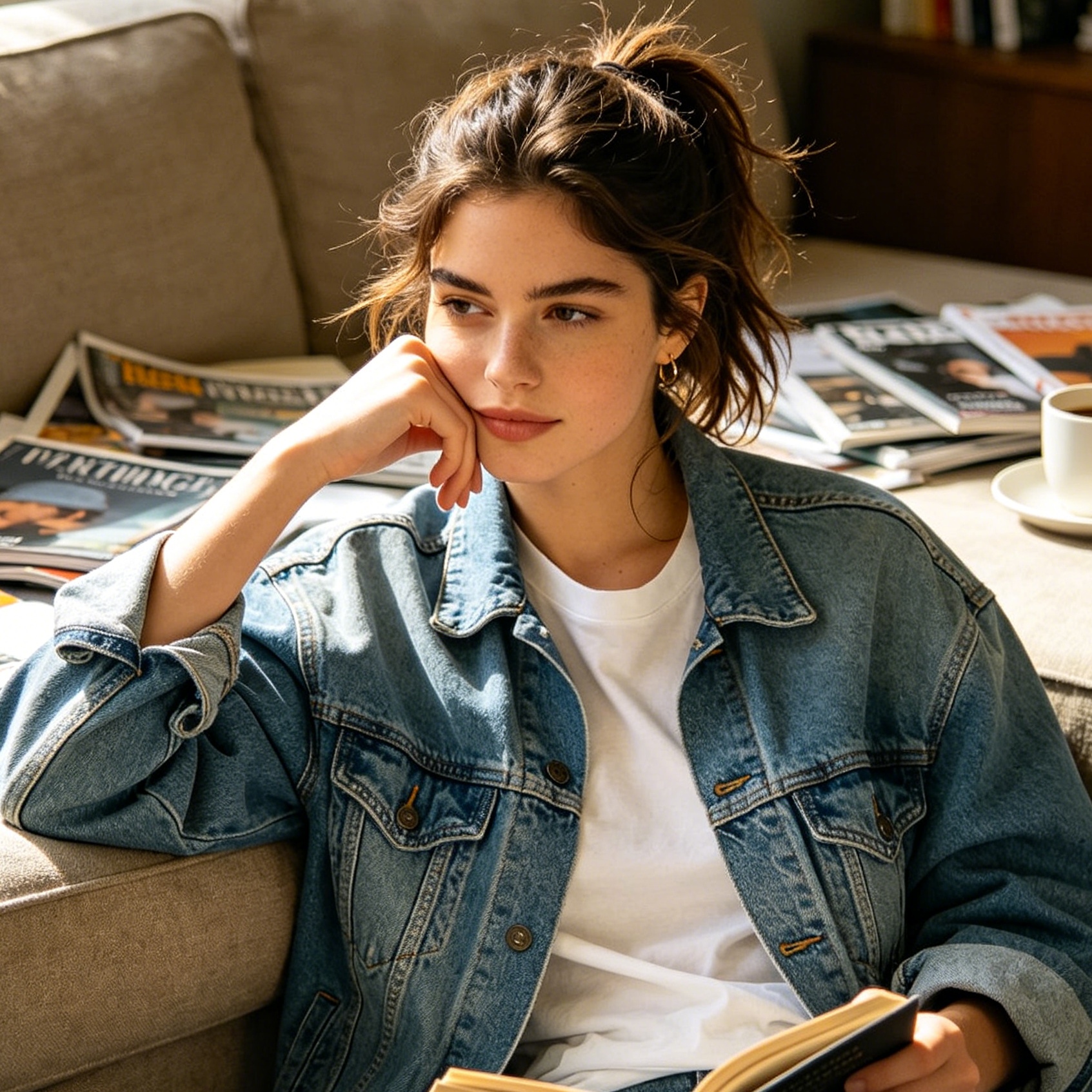
The landscape of visual creation has undergone a tectonic shift. What started as blurry, unrecognizable blobs of color just a few years ago has evolved into a sophisticated technology capable of producing hyper-realistic photographs, intricate digital paintings, and complex 3D renders in seconds. The process of AI making pictures is no longer a niche experiment for computer scientists; it has become a fundamental tool for designers, marketers, and storytellers worldwide.
At its core, artificial intelligence image generation is the synthesis of vast amounts of human knowledge and artistic history, condensed into mathematical models that "understand" the relationship between words and visual concepts. When a user enters a description, the AI doesn't simply search for an existing image. Instead, it creates something entirely new from a blank digital canvas.
The Science Behind the Canvas: How Diffusion Models Work
To understand how AI creates pictures, one must look past the interface and into the underlying architecture. Most modern systems, including Midjourney and Stable Diffusion, utilize a process known as "Diffusion."
What is the Diffusion Process?
Think of the diffusion process as a sculptor starting with a block of marble, but in reverse. The process begins with "noise"—a chaotic field of static, similar to the "snow" on an old television screen.
- Training Phase: During training, the AI is shown billions of images. Each image is progressively destroyed by adding random pixels (noise) until it is unrecognizable. The AI's job is to learn the mathematical path taken to add that noise and, more importantly, how to reverse it.
- Reverse Diffusion: When a user provides a prompt like "a golden retriever wearing a tuxedo in a library," the AI starts with pure noise. It then looks at those random pixels and asks, "Based on my training, which of these pixels are most likely to be part of a tuxedo, and which are part of a golden retriever?"
- Iterative Refinement: Over dozens of steps, the AI removes the "noise" and replaces it with coherent patterns. It refines the shapes, textures, and lighting until a clear image emerges that aligns with the user's text description.
Understanding Latent Space
A crucial concept in professional AI image generation is "Latent Space." This is a multidimensional mathematical environment where the AI stores every visual concept it has learned. In this space, the concept of "dog" might be geographically close to "fur" and "tail." When you prompt the AI, you are essentially giving it a set of coordinates to navigate this space and find the intersection of all the concepts you requested.
Leading Tools for AI Picture Generation in 2025
The market for AI image tools has matured, with distinct players catering to different needs. Based on extensive testing in professional workflows, here is how the top contenders currently stack up.
Midjourney: The Artistic Powerhouse
Midjourney remains the gold standard for pure aesthetic quality. Unlike other models that strive for literal accuracy, Midjourney has a built-in "opinion" on what looks good. It excels at lighting, texture, and composition without requiring overly complex prompts.
- Best for: Concept art, mood boards, and high-end digital illustration.
- Experience Note: In our creative studio, Midjourney is the "vibe" tool. If we need something that looks like it belongs in a high-fashion magazine or a cinematic epic, we start here. Its latest versions have significantly improved at handling human anatomy and skin textures, reducing the "plastic" look common in earlier AI iterations.
DALL-E 3: The Logic Master
Integrated into ChatGPT, DALL-E 3 is perhaps the most user-friendly tool because of its superior "prompt adherence." It understands complex instructions and spatial relationships better than almost any other model. If you ask for "a red ball on top of a blue cube to the left of a yellow pyramid," DALL-E 3 will likely get the placement exactly right.
- Best for: Clear illustrations, specific diagrams, and users who prefer conversational interaction.
- Limitation: It can sometimes feel too "stiff" or "stock-photo-like" compared to the more painterly Midjourney.
Flux.1: The New King of Realism and Text
Flux.1 has recently disrupted the industry by offering incredible detail and, most impressively, perfect text rendering. While older AI models would produce gibberish or "alien languages" when asked to include words, Flux can accurately generate complex signage, book covers, and labels.
- Best for: Photorealistic portraits and designs requiring legible typography.
- Technical Requirement: Running the full "Dev" or "Pro" versions of Flux often requires significant VRAM (24GB+) if hosted locally, though cloud versions are widely available.
Adobe Firefly: The Commercially Safe Choice
Adobe has taken a different approach by training Firefly exclusively on Adobe Stock images and public domain content. This makes it the only major tool that offers a degree of legal indemnity for commercial users.
- Best for: Corporate design, advertising, and integration with Photoshop via "Generative Fill."
- Experience Note: The ability to select a small part of an existing photo and say "add a coffee cup here" while maintaining the exact lighting of the original scene is a game-changer for professional retouching.
The Art of Professional Prompting
Creating a high-quality picture with AI isn't just about typing a sentence; it's about "Prompt Engineering." To get professional results, a prompt should be structured with specific layers of information.
How to Write a High-Value Prompt
A basic prompt might be "a mountain landscape." A professional prompt follows a formula: Subject + Action + Environment + Lighting + Camera/Style + Technical Parameters.
- Subject: Instead of "a cat," try "a Maine Coon cat with long, silver fur."
- Environment: Instead of "in the woods," try "in a misty redwood forest at dawn."
- Lighting: Use terms like "volumetric lighting," "golden hour," "rim lighting," or "chiaroscuro" to define the mood.
- Style: Mention specific mediums like "35mm film photography," "macro lens," "watercolor on cold-press paper," or "octane render."
The Power of Negative Prompts and Parameters
In tools like Stable Diffusion, "Negative Prompts" are just as important as the positive ones. By telling the AI what not to include (e.g., "extra fingers," "deformed limbs," "blurry," "low resolution"), you significantly increase the success rate.
Parameters also play a role. Using tags like --ar 16:9 (for aspect ratio) or --stylize 250 in Midjourney allows for fine-tuning that words alone cannot achieve.
Navigating the Technical Hurdles and Limitations
Despite the rapid progress, AI is not a magic "make art" button. It still struggles with several key areas that require human intervention.
The Problem of Anatomy and Spatial Awareness
AI models do not have a 3D model of the world in their "heads." They operate on 2D patterns. This is why AI often struggles with:
- Hands and Feet: Calculating the correct number of fingers and how they interlock is a mathematical nightmare for current models.
- Complex Interactions: Asking an AI to show "a person putting a key into a lock" is surprisingly difficult because the AI understands the look of a key and a lock, but not the physical mechanics of the interaction.
The "Glossy" AI Look
Many users notice that AI images have a certain "sheen" or "glossy" texture. This happens because diffusion models often mistake fine, gritty textures (like skin pores or fabric weave) for "noise" and smooth them out during the denoising process. To counter this, professional creators often add "film grain" or "raw texture" to their prompts.
Ethical, Legal, and Copyright Realities
The rise of AI-generated imagery has brought significant controversy, particularly regarding how these models are trained and who owns the output.
Who Owns the Copyright?
As of 2024 and 2025, the legal consensus in many jurisdictions, including the United States, is that AI-generated images without significant human modification cannot be copyrighted. The U.S. Copyright Office has ruled that because the "creative spark" comes from a machine, not a human, the work belongs in the public domain.
However, this is a grey area. If an artist uses AI to generate a base image and then spends hours repainting it, adding elements, and adjusting the composition in Photoshop, the resulting "hybrid" work may be eligible for protection.
The Training Data Debate
Most AI models were trained by "scraping" the internet. This includes billions of images created by human artists who did not give explicit permission for their work to be used to train a competitor. This has led to ongoing lawsuits and the development of "opt-out" systems and "data poisoning" tools like Nightshade, which artists use to protect their work from being scraped.
The Future of Visual Creation: Beyond Static Images
We are currently moving into the era of "Real-Time Generation." We are seeing tools where the AI generates a picture as you type or as you sketch. This eliminates the "lottery" aspect of prompting and allows for a truly collaborative experience between human and machine.
Furthermore, the boundaries between 2D pictures, 3D models, and video are blurring. Soon, the same prompt that generates a static picture will be able to generate a 360-degree environment for VR or a 10-second cinematic clip.
Summary
AI is not replacing the "need" for pictures; it is democratizing the "ability" to create them. While a professional artist brings years of anatomical knowledge and color theory to the table, an AI brings the collective visual history of the internet. The most successful creators of the future will be those who can bridge the gap—using AI to handle the heavy lifting of rendering while providing the human taste, soul, and direction that a machine cannot replicate.
FAQ
What is the best AI for making realistic pictures? Currently, Flux.1 and Midjourney (v6.1+) are considered the leaders in photorealism. Flux.1 is particularly noted for its ability to handle skin textures and text, while Midjourney is praised for its cinematic lighting and "expensive" look.
Can I use AI-generated pictures for my business? Yes, but with caveats. If you need commercial safety, Adobe Firefly is the recommended choice as it is trained on licensed content. For other tools, you should check the terms of service (e.g., Midjourney requires a paid subscription for commercial rights). Be aware that you may not have full copyright ownership of the images.
Why does AI struggle with drawing hands? AI doesn't understand that a hand has a skeleton and specific joints. It only sees patterns of pixels. Because hands are very expressive and look different from every angle, the AI often gets confused about which finger belongs where in a 2D space.
Is AI-generated art "real" art? This is a philosophical question. While the machine executes the image, the human provides the intent, the prompt, and the curation. Many see it as a new medium, similar to how photography was viewed when it first appeared in the 19th century.
How can I make my AI images look less "fake"? Avoid generic prompts. Add specific technical details like "f/1.8 aperture," "80mm lens," "film grain," and "natural daylight." Avoid words like "perfect," "ultra-high-def," or "masterpiece," as these often trigger the overly-saturated "AI look."
-
Topic: AI art - Wikipediahttps://en.wikipedia.org/wiki/AI_art
-
Topic: AI Art Prompting Guide: Genres Styles | Microsoft Copilothttps://www.microsoft.com/en-us/microsoft-copilot/for-individuals/do-more-with-ai/ai-art-prompting-guide/ai-genres-and-styles
-
Topic: Free AI image generator - Turn text into images with AI | Adobe Firefly (New Zealand)https://www.adobe.com/nz/products/firefly/features/text-to-image.html









