Home
Home
How AI Is Reshaping Television Content and Display Technology
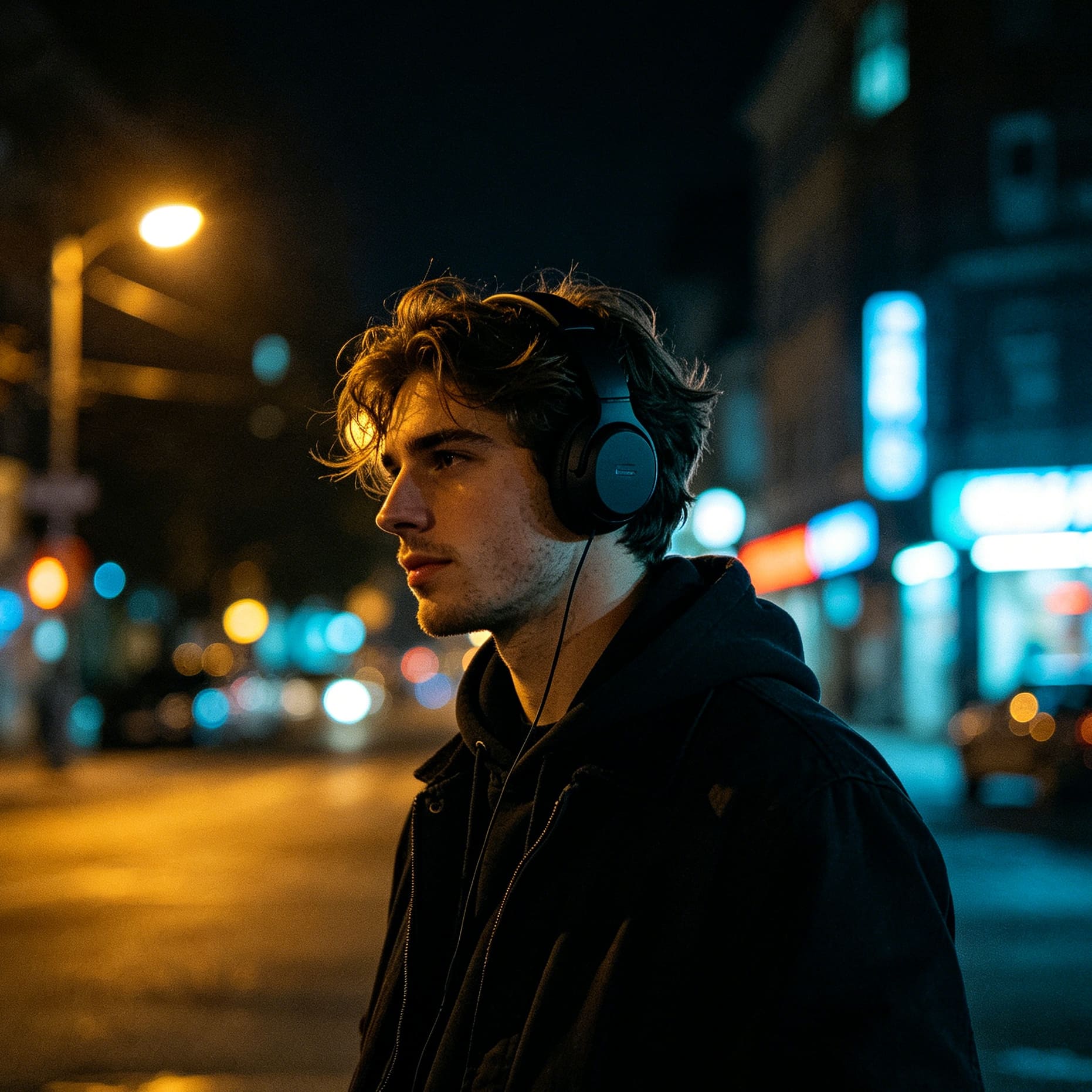
The landscape of television is undergoing its most significant transformation since the transition from analog to digital. The term "AI generated television" no longer describes a futuristic concept or a niche experiment. Instead, it defines a dual-track evolution occurring simultaneously in living rooms and production studios. On one side, television hardware is becoming intelligent, using neural processing to redefine picture quality. On the other, the creation of the content itself is being augmented, and in some cases entirely driven, by generative artificial intelligence. Understanding this shift requires looking beyond the marketing buzzwords to see how silicon, algorithms, and creative workflows are converging to change how stories are told and consumed.
The Intelligence Inside the Panel
Modern television sets are no longer passive display devices; they have evolved into high-performance computing platforms. When major manufacturers like Samsung, LG, and Sony market an "AI TV," they are referring to the integration of dedicated Neural Processing Units (NPUs) within the television's chipset. These processors are designed to handle massive amounts of visual data in real-time, performing tasks that were previously impossible for standard image processors.
The Science of AI Upscaling
AI upscaling is perhaps the most visible application of artificial intelligence in hardware. Standard 4K or 8K televisions often face a content gap—most broadcast and streaming content is still delivered in 1080p or even 720p. In the past, upscaling relied on basic interpolation, which often resulted in blurry edges and digital noise.
Contemporary AI upscaling uses deep learning models that have been trained on millions of high-resolution images. These models analyze low-resolution input frame-by-frame, identifying textures, edges, and fine details. The NPU then "generates" missing pixels based on its training. For example, if the TV detects the texture of human skin or the blades of grass in a football match, it applies specific neural networks optimized for those textures. The result is a picture that appears native to the display's resolution, with sharp edges and realistic depth that traditional scaling could never achieve.
Real Time Object and Scene Recognition
Advanced AI processors, such as LG’s α11 AI processor or Samsung’s NQ8 AI Gen3, possess the capability to recognize specific objects within a scene. By identifying a moving ball in a sports broadcast, the TV can apply targeted motion compensation only to that object, reducing blur without introducing the dreaded "soap opera effect" to the entire scene.
Furthermore, scene recognition allows the television to adjust its backlight and color mapping dynamically. If the AI detects a dark cinematic scene, it prioritizes contrast and shadow detail. If it identifies a bright animated film, it enhances color saturation and peak brightness. This real-time optimization ensures that the viewer sees the content as intended by the director, regardless of the limitations of the original broadcast signal.
AI Audio Optimization and Spatial Mapping
Television sound has historically been limited by the physical constraints of thin-profile designs. AI is circumventing these physical barriers through soundstage virtualization. By using AI to analyze the acoustic environment of a room via the remote control's microphone, modern TVs can calibrate their audio output to match the room's layout.
Object-tracking sound technology uses AI to pinpoint where an action is happening on screen and direct the audio to follow it. If a jet flies across the screen from left to right, the AI calculates the necessary phase shifts and timing to make the sound seem as if it is physically moving across the room. Additionally, AI voice enhancement algorithms can separate dialogue from background music and sound effects, ensuring that speech remains clear even in bass-heavy action sequences.
The Revolution in Content Production
While hardware focuses on the viewing experience, the television industry is fundamentally altering how content is produced. Generative AI (Gen-AI) and machine learning are being integrated into every stage of the production pipeline, from scriptwriting and pre-visualization to post-production and global distribution.
Pre-Production and Script Analysis
Data-driven decision-making is not new to Hollywood, but AI has brought a new level of granularity to pre-production. Studios now use AI to analyze scripts for pacing, narrative structure, and potential audience appeal. These tools can compare a new script against decades of historical television data to predict which tropes might resonate and which plot points might cause viewers to tune out.
In pre-visualization (pre-viz), AI-generated concept art and storyboards allow directors to "see" a show before a single frame is filmed. Tools that generate high-fidelity environments from text prompts enable production designers to experiment with different aesthetics in seconds, a process that used to take weeks of manual sketching.
Enhancing Visual Effects and Backgrounds
The cost of high-quality visual effects (VFX) has long been a barrier for mid-budget television series. AI is democratizing these capabilities. AI-driven rotoscoping and background removal tools allow editors to isolate subjects from their surroundings with a few clicks, eliminating the need for tedious manual masking.
Moreover, AI is playing a crucial role in "digital makeup" and de-aging. In the past, de-aging an actor required an army of VFX artists and months of work. Now, neural networks can analyze an actor's current performance and map the facial features of their younger self onto the footage in a fraction of the time. This technology is also used to fix minor errors, such as an actor looking at the wrong camera or a stray piece of equipment in the frame, saving millions in potential reshoots.
AI Dubbing and The End of the Language Barrier
Globalization is a primary goal for streaming giants like Netflix and Disney+. Traditionally, dubbing has been a clunky experience, with audio often failing to match the lip movements of the actors. AI-driven voice synthesis and lip-sync technology are solving this problem.
Sophisticated AI models can now clone an actor's original voice—preserving their unique timbre, emotion, and inflection—and "speak" a different language. Simultaneously, AI video manipulation tools can subtly alter the actor's lip movements to match the phonemes of the new language. This creates a localized viewing experience that feels natural and immersive, allowing high-quality international television to travel more easily across borders.
The Rise of Fully AI-Generated Series
Beyond assisting human creators, we are seeing the birth of content that is substantially or entirely generated by AI. This movement, often referred to as "Freeform TV," utilizes advanced video generation models to create narrative content from scratch.
The Power of Diffusion and Transformer Models
The emergence of models like OpenAI’s Sora, Runway’s Gen-3, and Kling AI has demonstrated that AI can generate coherent, high-definition video sequences from simple text prompts. These models operate by understanding the physics of the world and the nuances of cinematic language. For a television creator, this means the ability to render complex scenes—a bustling futuristic city, a deep-sea exploration, or a historical battle—without a physical set or a massive crew.
The challenge for AI-generated television has always been consistency. If a character appears in one scene, the AI must ensure they look exactly the same in the next. New techniques, such as "multi-image fusion" and "character consistency adapters," are addressing this. Creators can now train custom models on a specific character design, ensuring that the AI maintains the integrity of the cast throughout an entire episode.
AI Native Storytelling and Interactive Content
AI enables a new kind of "interactive" television where the narrative could potentially adapt to the viewer. While still in its infancy, the concept of a show that changes its plot based on viewer preferences or real-time feedback is becoming technically feasible. Imagine a mystery series where the identity of the killer changes based on the clues you choose to follow, with the AI generating the necessary scenes on the fly.
Platforms like ReelMind are already experimenting with "AI agents" that act as virtual directors. These agents can take a creator's high-level vision and handle the technical aspects of cinematography, lighting, and editing, allowing a single individual to produce a series with the production values of a professional studio.
The Case of Mainstream Media Transformation
Large-scale media organizations are not sitting on the sidelines. The China Media Group (CMG) serves as a prominent case study for how national broadcasters are integrating AI at scale. Their "CMG Media GPT" and productions like Poems of Timeless Acclaim use AI to breathe life into historical artifacts and cultural heritage.
By using text-to-video large models, CMG has been able to transform ancient Chinese poetry into vibrant, animated shorts. This isn't just about efficiency; it's about using AI to create a new aesthetic that blends traditional art styles with modern cinematic fluidity. This transformation indicates that AI is becoming a core component of the "media productivity" toolkit, enabling broadcasters to produce more culturally rich content at a faster pace.
The Controversies: AI Slop and Creative Integrity
The rapid adoption of AI in television has not been without significant pushback. The industry is currently grappling with the distinction between "professional AI assistance" and "AI Slop."
Defining "AI Slop"
"AI Slop" refers to the flood of low-quality, mass-produced AI videos that have begun to saturate social media and low-end streaming platforms. These videos often feature uncanny, hyper-realistic imagery that lacks human artistic intent or narrative logic. Critics argue that this content devalues the medium of television and creates a "noisy" environment where high-quality human work is harder to find.
Labor Strikes and Ethical Boundaries
The use of AI was a central point of contention in the 2023 strikes by the Writers Guild of America (WGA) and the Screen Actors Guild (SAG-AFTRA). Creative professionals are rightly concerned about the unauthorized use of their likenesses and work to train AI models. There is a fear that AI could be used to replace background actors, script doctors, and junior writers, effectively "hollowing out" the career ladder in the television industry.
The ethical debate also extends to copyright. If a television series is generated by an AI, who owns the copyright? Current legal frameworks in many jurisdictions require "human authorship" for copyright protection. This creates a complex landscape for studios who want to use AI but also need to protect their intellectual property.
The Role of the AI Director
One of the most intriguing developments is the emergence of AI tools that act as "creative partners" rather than just automation engines. Tools like Nolan AI or other specialized agents allow creators to maintain a high-level directorial role while delegating the technical minutiae to the AI.
In this workflow, the human creator remains the "soul" of the project—defining the themes, the emotional beats, and the artistic vision. The AI acts as the "crew," handling the lighting, the camera angles, and the rendering. This shift could lead to a renaissance of independent television production, where the only limit to creating a blockbuster-scale series is the creator's imagination, not their budget.
The Future: A Hybrid Reality
The future of television will likely be a hybrid reality. We will continue to see high-budget, human-led "prestige TV" that uses AI as a invisible tool for perfection. Simultaneously, a new genre of AI-native content will emerge, characterized by its rapid iteration and potentially personalized nature.
For the viewer, the benefits are clear: sharper images, more immersive sound, and a wider variety of content tailored to their interests. For the industry, the challenge will be to find a sustainable balance where AI enhances human creativity rather than replacing it.
Summary of the AI Television Landscape
| Category | Key Technologies | Primary Benefit |
|---|---|---|
| Hardware (AI TV) | NPUs, Deep Learning Upscaling, MEMC | Superior 4K/8K visuals, spatial audio, smart optimization. |
| Production Tools | AI De-aging, Digital VFX, AI Dubbing | Reduced costs, faster workflows, global reach. |
| Generative Content | Sora, Runway, Diffusion Models | New narrative forms, independent high-end production. |
| Distribution | Recommendation Algorithms, AI Transcoding | Personalized content feeds, efficient streaming. |
The evolution of AI in television is not just about making pictures prettier or production cheaper. It is about expanding the boundaries of what can be visualized and how stories can be shared across the globe. As the technology matures, the "television" of tomorrow will be an intelligent, responsive, and infinitely creative medium that looks and feels vastly different from the static screens of the past.
FAQ
What exactly is an AI TV?
An AI TV is a television equipped with a specialized processor (NPU) that uses artificial intelligence to enhance picture and sound quality in real-time. It can upscale low-resolution content, reduce noise, and optimize settings based on the type of content being watched and the lighting in the room.
Can AI write a whole television show?
While AI can generate scripts and storyboards, fully AI-written shows often lack the emotional depth, subtext, and long-term narrative consistency that human writers provide. Currently, AI is used more as a brainstorming tool or for generating short-form content.
Is AI-generated video realistic enough for TV?
As of 2025, advanced models like Sora and Gen-3 can produce remarkably realistic video. However, they still struggle with complex physics and maintaining perfect consistency over long durations. In professional TV, AI-generated footage is typically blended with real footage or heavily edited by human professionals.
How does AI help with watching foreign shows?
AI enables advanced dubbing where the voice of the original actor is cloned into a new language, and the video is altered so the actor’s lips match the new words. This makes watching foreign content much more natural compared to traditional dubbing.
Will AI replace actors and writers?
AI is changing the job descriptions of actors and writers, but it is unlikely to replace the need for human creativity. The industry is currently establishing new rules and contracts to ensure that AI is used ethically and that human creators are fairly compensated and protected.
Conclusion
Artificial Intelligence has moved from the periphery to the core of the television ecosystem. In hardware, it has pushed display technology to its physical limits, delivering breathtaking clarity through neural processing. In production, it has broken down barriers of cost and language, enabling a more global and diverse content landscape. While the rise of generative AI brings legitimate concerns regarding copyright and creative integrity, it also offers a new frontier for storytelling. The "AI generated television" era is defined by this tension—between the efficiency of the machine and the vision of the human creator—promising a future where the screen in our living room is more capable and captivating than ever before.
-
Topic: China’s Television Media Transformation: A Case Study of CMG's AI Content Production and Dissemination Systemhttps://globalcomm-repository.org/downloads/gmxte-wfd77/China%E2%80%99s%20Television%20Media%20Transformation%20A%20Case%20Study%20of%20CMG's%20AI%20Content%20Production%20and%20Dissemination%20System.pdf
-
Topic: Freeform TV Shows: AI-Generated Series Reviews and Previews | ReelMindhttps://reelmind.ai/blog/freeform-tv-shows-ai-generated-series-reviews-and-previews
-
Topic: SCTV Video Clips: AI for Television Content | ReelMindhttps://reelmind.ai/blog/sctv-video-clips-ai-for-television-content