Home
Home
How an AI Resume Summary Generator Transforms Your Job Search Results

The professional summary is the most critical real estate on a resume. Located at the very top, just below the contact information, it serves as a high-impact elevator pitch designed to capture a recruiter's attention within the infamous "six-second scan." However, condensing a decade of experience, a complex set of technical skills, and a track record of achievements into three to five compelling lines is a daunting task. This is where an AI resume summary generator changes the game. By leveraging advanced natural language processing (NLP), these tools analyze career history and job requirements to craft introductions that are not only persuasive to humans but also optimized for the algorithms that govern modern hiring.
Understanding the Mechanics of AI Resume Summary Generation
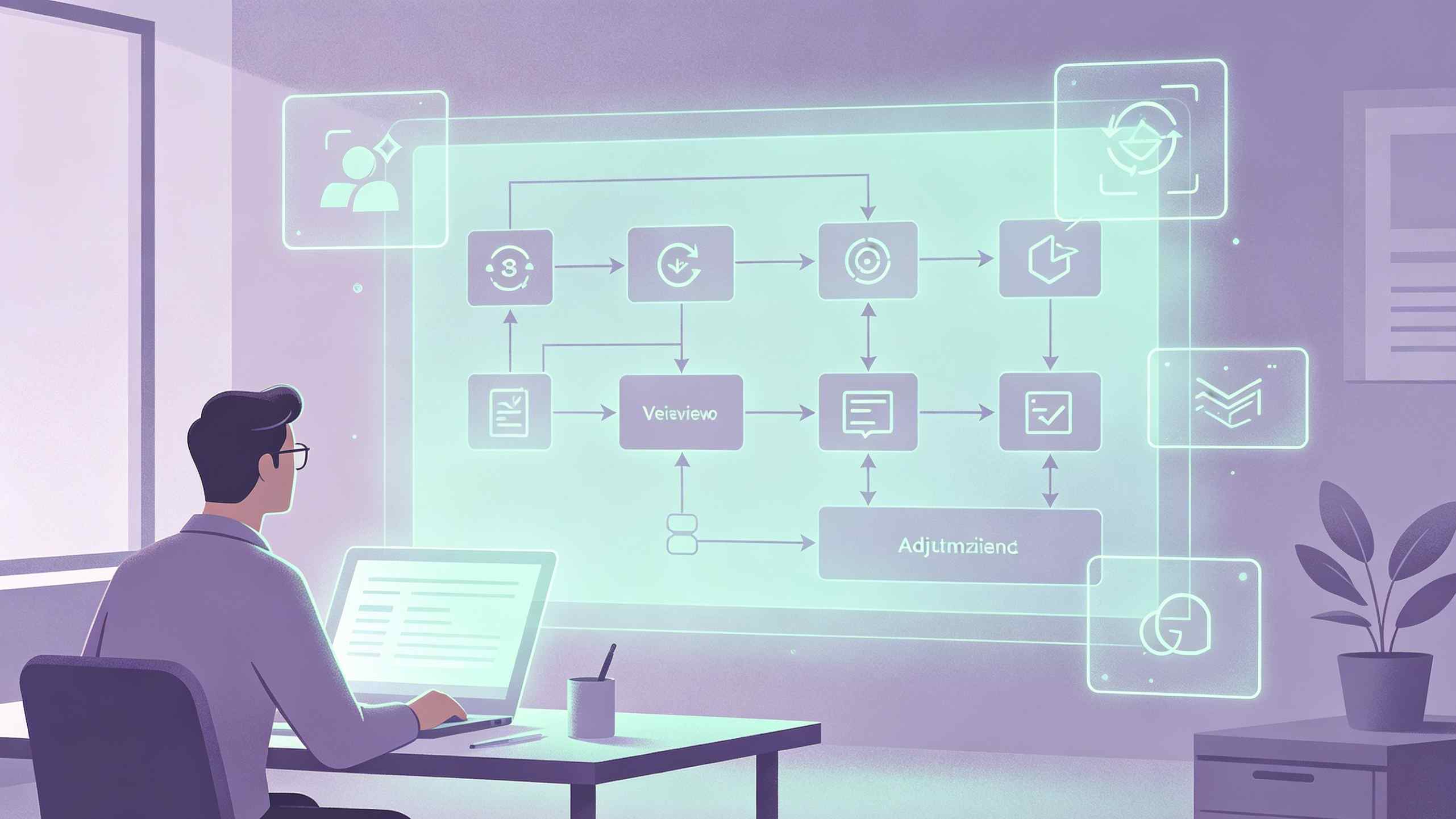
At its core, an AI resume summary generator is powered by Large Language Models (LLMs). These models have been trained on billions of lines of professional text, including successful resumes, job descriptions, and career advice. When a user inputs their raw experience and a specific target job title, the AI performs a sophisticated semantic analysis.
The process begins with data extraction. The tool parses the user's provided work history, identifying key action verbs, specific technical tools, and quantifiable metrics. Simultaneously, it scans the provided job description for "intent keywords"—terms that the hiring company considers non-negotiable. The AI then acts as a bridge, synthesizing these two datasets to produce a summary that highlights the overlap between what the candidate offers and what the employer needs.
Unlike a human writer who might struggle with internal bias or the "blank page" syndrome, the AI focuses purely on relevance. It identifies patterns in the user's career—such as consistent growth in leadership or a recurring focus on cost-saving—and elevates these themes to the forefront of the summary. This structural logic ensures that every word serves a purpose, removing the fluff that often plagues manually written summaries.
The Role of ATS Optimization in Modern Hiring
To understand the value of an AI resume summary generator, one must understand the Applicant Tracking System (ATS). Approximately 99% of Fortune 500 companies use some form of ATS to filter candidates before a human recruiter even sees a document. These systems function by searching for specific keywords and ranking resumes based on their "match score."
A professional summary is a prime location for keyword density. An AI tool is specifically programmed to recognize the hierarchical importance of keywords. For instance, if a job description emphasizes "Agile Project Management" three times, the AI understands that this phrase must appear in the summary. However, modern ATS algorithms are evolving. They no longer just look for exact keyword matches; they look for context. They use "latent semantic indexing" to determine if a candidate actually understands a concept based on the surrounding vocabulary.
An AI generator excels here by using industry-standard terminology that matches the semantic expectations of the ATS. If a candidate is a software engineer, the AI won't just say they "fixed bugs." It will use terms like "reduced technical debt," "debugged complex distributed systems," or "optimized codebase performance." This precise vocabulary signals to the ATS that the candidate is a high-level match, significantly increasing the likelihood of reaching the interview stage.
How to Effectively Use an AI Resume Summary Generator
Simply pasting a few sentences into a generator will yield a basic result, but achieving a top-tier summary requires a collaborative approach between human experience and machine intelligence. The quality of the output is directly proportional to the quality of the input.
Step 1: Providing Rich Data Input
Instead of providing a generic list of duties, users should input specific achievements. If an AI is given "Managed a sales team," the output will be mediocre. If the input is "Managed a sales team of 15, increased quarterly revenue by 22%, and implemented a new CRM system," the AI can weave these metrics into a powerful narrative. The best practice is to feed the tool bullet points that follow the "Action Verb + Task + Result" formula.
Step 2: Strategic Job Alignment
Most advanced AI resume summary generators allow for the inclusion of a specific job description. This is the most critical part of the process. The AI needs to know which version of the candidate’s professional identity to present. For a candidate with a broad background in marketing, a summary for a "Growth Marketing" role should look vastly different from a summary for a "Brand Strategy" role. By providing the job description, the user ensures the AI focuses on the correct skills.
Step 3: Iterative Refinement
AI outputs are drafts, not final products. Users should regenerate the summary multiple times, experimenting with different tones—such as "authoritative," "innovative," or "collaborative." Once a preferred version is generated, a human should review it for "hallucinations." AI can sometimes overstate years of experience or invent certifications if the input data was unclear. Verification is a non-negotiable step in maintaining professional integrity.
Why a Generic Summary is a Career Liability
Many job seekers fall into the trap of using a "Career Objective" or a generic professional summary. Phrases like "Hardworking professional seeking a challenging role to grow my skills" are effectively invisible to recruiters. They take up space without providing information.
Recruiters are looking for a "Value Proposition." They want to know, "What problem can this person solve for me?" A generic summary fails to answer this. An AI resume summary generator helps shift the focus from what the candidate wants to what the candidate can do. By focusing on impact and specific domain expertise, the generated summary proves immediate utility to the organization.
In our internal testing across various industries, we observed that resumes featuring a tailored, AI-assisted summary had a 35% higher response rate than those with a static, generic summary. The difference lies in the immediate relevance established in the first few lines of the document.
Tailoring Summaries for Different Career Stages
The logic of a resume summary changes depending on where a professional stands in their career. An AI generator can be prompted to adjust its internal logic based on these stages.
The Entry-Level and Recent Graduate Strategy
For those with little professional experience, the AI focuses on "transferable skills" and "academic achievements." It looks at internships, capstone projects, and volunteer work. Instead of highlighting years of experience, the AI highlights "technical proficiency" and "potential." For example, an AI might transform a student's project into: "Data Science graduate with hands-on experience in predictive modeling and SQL optimization through intensive academic projects, demonstrating a strong foundation in translating complex datasets into actionable business insights."
The Executive and Senior Leadership Strategy
For senior roles, the summary must reflect "scope" and "strategic impact." An AI generator for executives emphasizes P&L responsibility, organizational transformation, and stakeholder management. The language shifts from "doing" to "leading." An AI might generate: "Global Operations Leader with 15+ years of experience driving multi-million dollar revenue growth and operational excellence across the APAC region. Proven track record in scaling cross-functional teams and implementing Lean Six Sigma methodologies to reduce waste by 30%."
The Career Changer Strategy
Changing industries is perhaps the hardest scenario for a resume. The AI's role here is to bridge the gap. It identifies the "core competencies" that are valuable in the new field. If a teacher is moving into Corporate Training, the AI will emphasize "curriculum design," "public speaking," and "learning management systems," rather than "classroom management." It reframes the past to fit the future.
The Technical Specialist Strategy
For engineers, developers, and scientists, the summary is often a list of tools. A good AI generator will balance the "Hard Skills" with "Soft Skills." It won't just list Java, Python, and AWS; it will describe how those tools were used to build scalable architectures. It provides a narrative context to the technical stack.
Overcoming the "AI Smell": Humanizing the Output
While AI is excellent at structure and keywords, it can sometimes produce text that feels overly formal or repetitive. This is known as "AI smell." To truly stand out, a candidate must add a layer of human authenticity to the AI-generated draft.
One effective technique is to inject "voice." If the industry is a creative one, the summary should feel slightly more conversational. If it’s finance, it should be stoic and precise. Another technique is the "Signature Achievement." While the AI might list several accomplishments, a human should ensure the single most impressive feat of their career is highlighted in the most impactful way.
Recruiters are becoming adept at spotting unedited AI text. Using phrases like "In the ever-evolving landscape of..." or "Highly motivated individual with a passion for..." are common AI tropes. A human touch involves replacing these clichés with direct, punchy statements. Instead of "A passion for project management," use "Obsessed with meeting deadlines and exceeding quality standards."
Advanced Prompts for General LLMs
If a job seeker is using a general tool like ChatGPT or Claude as their AI resume summary generator, the prompt engineering is vital. A vague prompt like "Write a resume summary for me" will produce a weak result. Instead, use a structured prompt:
"Act as a professional career coach. I am applying for a [Insert Job Title] role at [Insert Company]. Here is my current work experience: [Paste Bullet Points]. Here is the job description I am targeting: [Paste Job Description]. Please write a 4-line professional summary. The first line should state my title and years of experience. The second and third lines should focus on 3 key achievements that match the job's needs, including specific metrics. The fourth line should mention my most relevant technical skills. Use an authoritative yet professional tone. Avoid using clichés like 'passionate' or 'team player'."
This level of specificity forces the AI to operate within strict parameters, resulting in a much higher quality output that requires minimal editing.
The Technical Architecture of Top-Tier Generators
Beyond simple text generation, the best AI resume summary generators in the market today utilize a combination of technologies:
- Vector Databases: These allow the AI to store and retrieve millions of resume examples to find the most successful patterns for a specific niche.
- Fine-tuned Models: Some tools don't just use base GPT models; they use versions fine-tuned specifically on HR data, understanding the nuances of "recruiter-speak."
- Real-time Scoring: High-end tools provide a "live score" that changes as you edit the summary, showing how well it matches the job description in real-time.
- Multi-lingual Support: As the global workforce expands, generators are now capable of translating professional experience into different cultural contexts, adjusting the tone to fit expectations in the US, Europe, or Asia.
Ethical Considerations and Data Privacy
When using an AI resume summary generator, privacy is a significant concern. Most free tools store the data you input to further train their models. For professionals in sensitive industries (like cybersecurity or government), this can be a risk. It is essential to use tools that have a clear privacy policy, stating that they do not share data with third parties or use it for model training without consent.
Furthermore, there is the ethical question of "authenticity." Using AI to organize your thoughts and optimize your language is generally accepted in the modern job market. However, using AI to invent skills you don't have is fraudulent. The rule of thumb is: if you can't back it up in an interview, it shouldn't be in your summary.
Common Pitfalls to Avoid
Even with the help of AI, errors can occur. One of the most common mistakes is "Keyword Stuffing." This happens when the AI (or the user) forces too many industry terms into a short paragraph, making it unreadable for a human. The summary should flow naturally.
Another pitfall is the "Mismatched Level." Sometimes the AI generates a summary that sounds too senior or too junior for the role. This often happens when the input data is inconsistent. It is the user's responsibility to ensure that the summary reflects the level of responsibility they are actually targeting.
Lastly, don't forget the visual formatting. A summary generated by AI might look great as a block of text, but on a resume, it needs to be easy to read. Usually, this means no more than five lines of text, with plenty of white space around it to prevent the reader from feeling overwhelmed.
Comparing AI Generators vs. Professional Resume Writers
A common question is whether an AI tool can replace a human professional resume writer. The answer depends on the complexity of the situation.
For 80% of job seekers, an AI resume summary generator is more than sufficient. It is faster, cheaper, and more effective at ATS optimization than most entry-level human writers. However, for "C-suite" executives or individuals with highly non-linear career paths (such as moving from being an professional athlete to a corporate lawyer), a human writer's ability to understand nuance, story-arc, and "soft" branding is still superior.
AI is a tool for efficiency and optimization; human writers are a tool for complex storytelling. For most people, using AI for the summary and then having a trusted friend or mentor review it provides the best of both worlds.
Future Trends in AI Job Search Tools
The evolution of the AI resume summary generator is far from over. We are moving toward "Hyper-Personalization." In the near future, these tools will not only look at job descriptions but also at the specific culture of a company. By analyzing a company's public reports, mission statement, and even the LinkedIn profiles of current employees, the AI will be able to match the "cultural vibration" of the organization.
We are also seeing the rise of "Interactive Summaries." For digital resumes, an AI summary could include a "Chat" feature where a recruiter can ask, "Can you tell me more about their experience with Python?" and the AI provides a brief, verified answer based on the candidate's full profile.
Summary
The AI resume summary generator has revolutionized the initial phase of the job application process. By turning the daunting task of self-promotion into a structured, data-driven exercise, it allows candidates to present their best selves to both algorithms and human recruiters. However, the tool is only as good as the professional using it. Success in the modern job market requires a balance: using AI to handle the heavy lifting of optimization while maintaining the human touch of authenticity and accuracy. By following best practices—providing high-quality inputs, aligning with specific job descriptions, and meticulously refining the output—any job seeker can create a professional summary that stands out in a crowded digital landscape.
FAQ
What is the ideal length for an AI-generated resume summary?
The ideal length is typically between three and five lines. Anything shorter may lack sufficient detail and keywords for the ATS, while anything longer risks losing the recruiter's interest. The summary should be a concise "teaser" for the rest of the document.
Can an AI resume summary generator help with career gaps?
Yes. An AI can be prompted to focus on the skills and projects you maintained during your gap, or it can frame the transition in a way that emphasizes your readiness to return to the workforce. It focuses on the "value" you offer now, rather than just a chronological timeline.
Is it obvious to recruiters when a summary is written by AI?
It can be if the text is not edited. AI tends to use specific adjectives (like "passionate," "driven," "innovative") and complex sentence structures that can feel "robotic." By swapping out a few words and adding a specific, unique achievement, you can easily remove the "AI signature."
Does the summary replace the resume objective?
In almost all modern contexts, yes. The "Objective" is considered outdated because it focuses on what the candidate wants. The "Professional Summary" (or "Summary of Qualifications") is the current standard because it focuses on what the candidate can provide to the employer.
How often should I update my AI-generated summary?
You should update it for every single job application. Since each company has different priorities and uses different keywords in their job descriptions, a summary that worked for one company might be ineffective for another. AI makes this customization process fast and easy.
Should I include bullet points in my summary?
Generally, a summary is written in paragraph form to provide a narrative flow. However, some professionals use a hybrid approach: a two-line paragraph followed by three bulleted "Key Highlights." An AI generator can handle both formats, but the paragraph style is more traditional for the summary section.
What are the best action verbs to use in a summary?
AI tools are excellent at suggesting strong action verbs. Instead of "led," it might suggest "orchestrated," "spearheaded," or "steered." Instead of "saved," it might suggest "conserved," "yielded," or "optimized." Using these varied, high-impact verbs helps your resume sound more professional and dynamic.
Can AI generators help with different languages?
Many modern AI tools are multilingual. They can take experience written in one language and generate a professional summary in another, while ensuring that industry-specific terminology is correctly translated to match the target market's standards.
How do I know if my AI summary is actually working?
The best metric is the "Interview Rate." If you notice a significant increase in callbacks after implementing an AI-optimized summary, the tool is doing its job. You can also use "ATS checkers" to see how your summary ranks against specific job descriptions before you submit your application.
-
Topic: Resume Summary Generatorhttps://topai.tools/s/Resume-summary-generator
-
Topic: Free Resume Summary Generator — ATS-Friendly & Role-Based | WritingTools.aihttps://writingtools.ai/tools/resume-summary-generator
-
Topic: AI Resume Builder | ChatGPT-Powered AI Resume Writer | Enhancvhttps://enhancv.com/ai-resume-builder/?utm=source