Home
Home
How Intangible AI Uses Spatial Intelligence to Bridge 3D Layouts and Generative Art

Intangible AI is a browser-based creative platform designed to integrate generative artificial intelligence with professional 3D scene construction. Founded in 2024 by a team of veterans from Pixar, Apple, Unity, and Industrial Light & Magic (ILM), the platform introduces the concept of "spatial intelligence" to solve the inherent unpredictability of text-based AI prompting. By allowing users to build a foundational 3D structure—or "block out" a scene—before applying AI rendering, Intangible AI provides a bridge between low-fidelity spatial layouts and high-fidelity cinematic outputs. Unlike traditional 2D AI generators that rely on "prompt roulette," Intangible offers professional creators in film, advertising, and game design precise control over composition, lighting, and asset consistency.
The Limitation of Text-to-Image in Professional Workflows
For professional artists and directors, the primary obstacle to adopting tools like Midjourney or DALL-E 3 in production environments is the lack of structural control. In a high-stakes creative pipeline, a director needs more than just a "beautiful image"; they need the character to stand in a specific spot, the camera to use a specific focal length, and the architecture to remain consistent across multiple shots.
Traditional generative AI models operate on a "black box" principle. When a user enters a prompt, the model guesses the spatial relationships between objects. This often leads to "AI hallucinations," where limbs are misplaced, perspectives are warped, and objects shift positions between frames. For industries like film pre-visualization (pre-vis) or retail architecture, these inaccuracies make text-based AI unusable for anything beyond initial brainstorming.
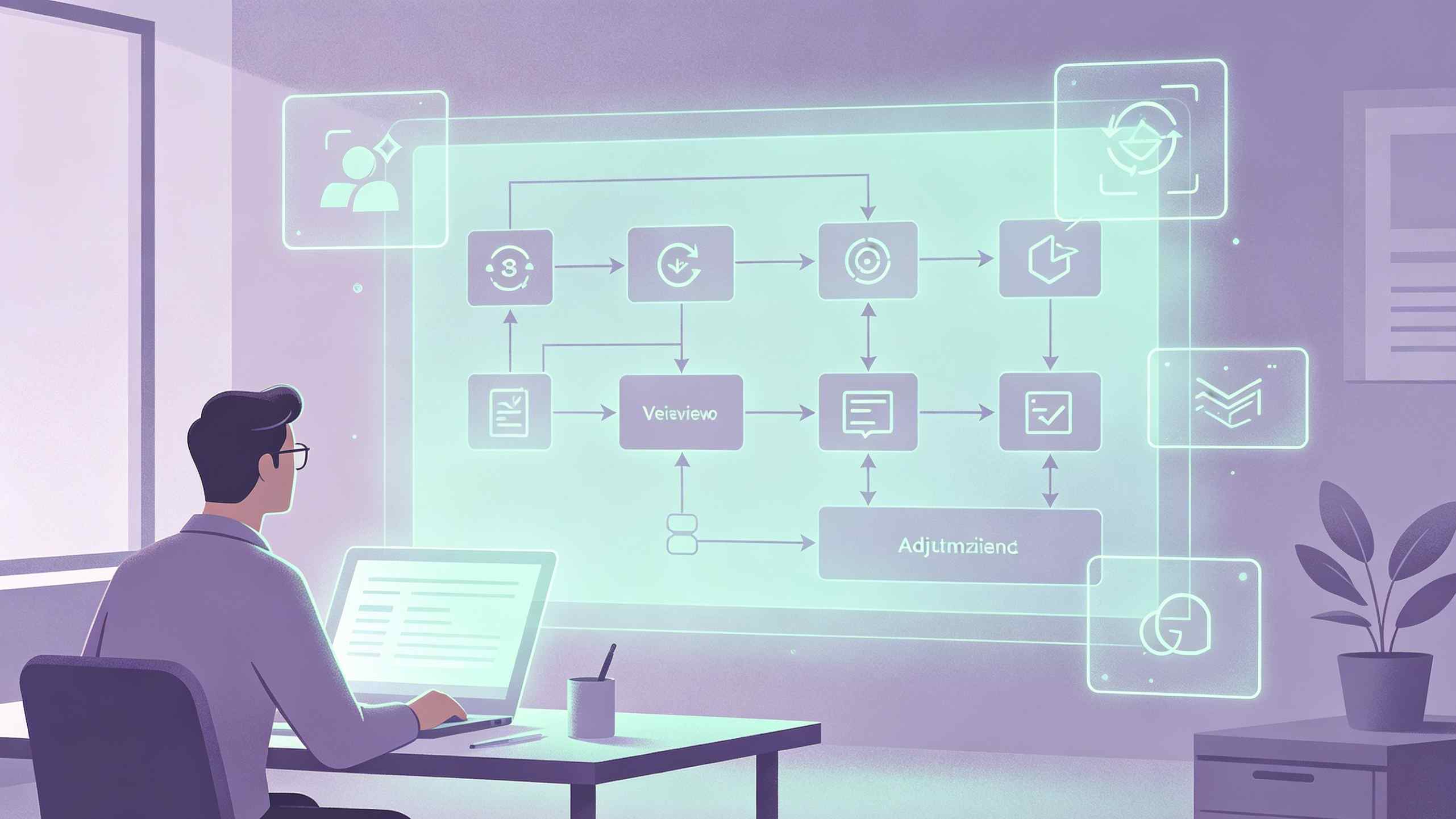
Intangible AI addresses this by shifting the creative process from "prompting" to "directing." Instead of describing a scene and hoping for the best, users build the scene in a 3D environment. This 3D layout serves as the "ground truth" for the AI, ensuring that the spatial logic is locked in before the aesthetic layer is applied.
Defining Spatial Intelligence in the AI Era
Spatial intelligence, as defined by the creators of Intangible, is the ability for an AI model to reason about the three-dimensional world rather than just pixel patterns. While standard Large Language Models (LLMs) understand the relationship between words, a spatial intelligence model understands the relationship between volumes, distances, and lighting in a 3D space.
In practical terms, Intangible AI uses a 3D interface as the input method. When you place a 3D model of a building or a character in the browser-based editor, the AI sees the depth map, the wireframe, and the spatial coordinates. When you then ask the AI to render that scene in a "cyberpunk style" or "golden hour lighting," the AI is constrained by the geometry you have provided. It cannot move the building two feet to the left because the 3D layout forbids it. This constraint is exactly what professional creators need to maintain creative intent.
Core Features of the Intangible Platform
The platform is built to be a "Canva for 3D," focusing on accessibility without sacrificing the depth required for professional work.
Browser-Based 3D Scene Building
One of the most significant technical achievements of Intangible is its performance within a standard web browser. Traditional 3D software like Blender or Maya requires heavy local hardware and complex installations. Intangible runs entirely in the cloud, allowing teams to collaborate in real-time via simple web links. Users can drag and drop from a library of over 6,000 assets—ranging from human characters to environmental props—to build a set in minutes.
Precise Camera and Viewfinder Controls
In professional cinematography, the camera is as much a character as the actors. Intangible provides viewfinder-level control, allowing users to set specific camera paths, lens types, and angles. Because the scene is built in 3D, moving the camera doesn't require "re-rolling" a prompt. The user simply pans or zooms, and the spatial intelligence model updates the view while maintaining the integrity of the environment. This is a massive leap forward for storyboarding and pre-visualization.
CAD and 3D Asset Import
For industries like architecture and product design, brand accuracy is non-negotiable. Intangible allows users to import their own CAD files (supporting formats like FBX, OBJ, DXF, and GLB). If a shoe manufacturer wants to see their latest design in a virtual forest, they can import the exact 3D mesh of the shoe. The AI then textures and lights the shoe to match the environment, but the physical lines and CMF (Color, Material, Finish) of the product remain technically accurate.
Transforming Industry Workflows: Film, Advertising, and Beyond
The shift from 2D prompting to 3D directing has immediate implications for several high-cost industries.
Film Pre-visualization and Storyboarding
In traditional film production, pre-vis can cost anywhere from $5,000 to $50,000 per project. It involves hiring specialized CGI teams to build low-poly versions of sets to plan camera movements. Intangible AI allows a director or cinematographer to perform this task personally in a single afternoon. By blocking out the scene with AI-assisted 3D tools, they can export production-ready storyboards that are spatially accurate, saving weeks of back-and-forth with external agencies.
Advertising and Marketing Pitches
Agencies often struggle to communicate complex visual concepts to clients using static mood boards. With Intangible, an agency can create an explorable 3D walkthrough of a campaign concept. If a client asks, "What if we looked at this from the opposite angle?", the creative team can move the virtual camera in real-time, rather than having to commission new sketches.
Retail and Event Planning
Planning the layout of a retail end-cap or a corporate event stage requires a deep understanding of scale. Intangible’s "Brand Asset Binding" ensures that logos and specific structural elements stay faithful across dozens of layout variations. Event planners can simulate lighting conditions and crowd flows within the 3D scene, providing a level of immersion that 2D mockups cannot match.
Maintaining Consistency: The Role of LoRAs and World Models
One of the biggest critiques of AI art is the "character drift"—the fact that a character looks different in every generated image. Intangible solves this through the integration of LoRAs (Low-Rank Adaptation) and spatial anchors.
When a professional team creates a character design, they can "bind" that likeness to a 3D primitive in Intangible. Because the 3D model provides a consistent skeleton and volume, the AI renderer has a fixed reference point for every shot. Whether the camera is a close-up on the face or a wide shot from the back, the spatial intelligence model understands how that specific character should appear from that specific angle. This level of shot-to-shot coherence is the "holy grail" of AI-assisted filmmaking.
Comparing Intangible AI with Traditional Tools
To understand where Intangible fits in the market, it is helpful to compare it to existing workflows:
| Feature | Midjourney / DALL-E | Blender / Unity | Intangible AI |
|---|---|---|---|
| Control Method | Text Prompts | Manual Vertex Editing | 3D Blocking + AI Direction |
| Learning Curve | Low (Minutes) | High (Months/Years) | Medium (Hours) |
| Spatial Accuracy | Very Low (Hallucinations) | Absolute | High (AI-constrained 3D) |
| Consistency | Low (Random) | Absolute | High (LoRA + Spatial) |
| Hardware Requirement | Any Device | High-end GPU | Browser-based |
In our evaluation, Intangible AI does not aim to replace Blender for final-frame rendering in a Marvel movie. Instead, it aims to replace the "messy middle"—the phase of creation where ideas are iterated, pitched, and refined. It offers 90% of the control of professional 3D software at 10% of the technical complexity.
Frequently Asked Questions (FAQ)
What is the best free AI image generator for 3D work?
While many prompt-based generators are free, Intangible is specifically built as a free AI 3D studio for high-stakes creative work. It differs from standard generators by allowing you to build the scene in 3D rather than just typing a description.
Can I use Intangible AI without any coding or 3D experience?
Yes. The platform is designed as a no-code tool. It uses a drag-and-drop interface combined with natural language processing, meaning you can build complex environments by simply selecting assets and giving simple directions to the AI.
Does Intangible AI support CAD file imports?
Intangible supports the import of industry-standard 3D formats, including FBX, OBJ, DXF, and GLB. This allows professionals to bring their own branded products and architectural models into the AI workflow.
How does Intangible ensure character consistency?
Consistency is maintained because every shot is generated from the same underlying 3D scene. By using LoRAs and fixing the character's spatial geometry, the platform ensures that facial features, wardrobe, and proportions stay the same across every camera angle.
Is there a software download required for Intangible AI?
No. Intangible is entirely browser-based. This means all the heavy lifting and AI rendering happens on their cloud servers, allowing users to work on laptops or tablets without high-end local hardware.
How is Intangible AI different from Unity or Unreal Engine?
While Unity and Unreal are full-scale game engines capable of building interactive software, Intangible is a "lighter" alternative focused specifically on visual storytelling and scene creation. It prioritizes ease of use and AI integration over game-logic programming.
Conclusion: The Democratization of Spatial Storytelling
The rise of Intangible AI represents a pivot point in the evolution of creative technology. For decades, the ability to work in 3D was a "technical tax" that creators had to pay, requiring years of training in complex software. By combining the intuitive nature of 3D layout with the transformative power of generative AI, Intangible is removing that barrier.
The platform’s focus on spatial intelligence ensures that AI remains a tool for the artist, not a replacement for them. By providing a framework where geometry and intent come first, Intangible AI allows creative teams to explore layouts, scale, and cinematic moods with unprecedented speed. Whether it is a filmmaker planning a complex tracking shot or a marketer visualizing a retail activation, the ability to "build the reality" before "generating the image" is a fundamental shift that will define the next decade of visual production.
-
Topic: Build · Intangiblehttps://www.intangible.ai/build
-
Topic: Intangible Ai — AI-powered 3D content creation platform for teams, no coding required | ListmyAI | ListmyAIhttps://listmyai.com/tools/intangible-ai
-
Topic: Intangible AI:A no-code 3D creation platform enabling fast, professional-quality visualization and collaboration for creatives across film, games, marketing, and events. - MOGEhttps://moge.ai/product/intangible-ai