Home
Home
How Meta AI Works as Your Integrated Writing Assistant Across Every Social App

Meta AI functions as a deeply integrated, versatile writing assistant designed to help you draft, edit, and refine content directly within the applications you use most. Unlike standalone AI chatbots that require you to switch windows and copy-paste text, Meta AI is embedded into WhatsApp, Instagram, Messenger, and Facebook. It leverages the latest Llama 4 and Muse Spark 1.1 models to provide context-aware suggestions, from quick DM replies to full-length blog posts via its dedicated "Canvas" editor.
The Evolution of the Meta AI Writing Assistant
The concept of an AI writing assistant has shifted from a destination to a layer. Meta AI represents this shift by existing as a "multicolored circle" icon in your search bars and chat windows. It acts as a real-time co-pilot that understands the specific etiquette of different platforms. For instance, the assistant knows that a caption for an Instagram Reel requires a different tone and structure than a professional message on WhatsApp or a long-form discussion on Facebook.
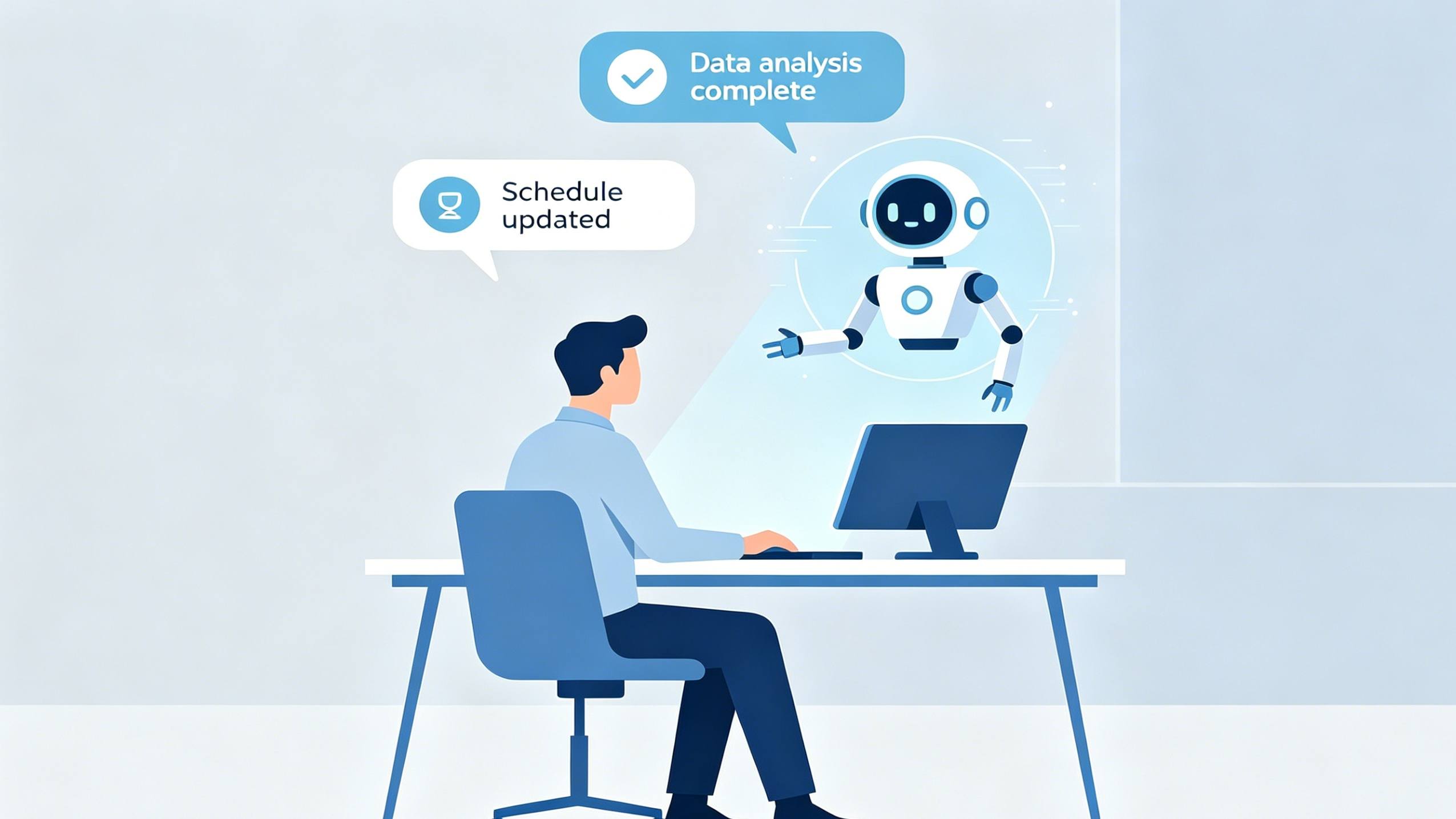
With the rollout of Muse Spark 1.1, the assistant has moved beyond simple text generation. It can now handle "agentic" tasks—meaning it doesn't just write text; it can plan schedules, research web-based data to support your claims, and even suggest visual layouts for your content.
Key Capabilities of the Meta AI Writing Engine
The writing assistant is structured to support the entire creative lifecycle. Whether you are facing a blank page or need to polish a nearly finished draft, the tool offers specific features for each stage.
Drafting and Composition from Scratch
When you trigger Meta AI in a chat or on the web interface (meta.ai), you can ask it to generate initial ideas or full outlines. For students and professionals, this is particularly useful for:
- Creative Hook Generation: Creating five different opening lines for a social media post to see which one resonates best.
- Structural Outlining: Breaking down a complex topic into digestible sections.
- Email and Letter Drafting: Generating formal or informal templates based on a few bullet points.
The "Rewrite" and Tone Adjustment Feature
In messaging apps like WhatsApp and Messenger, the "Rewrite" feature is perhaps the most utilized tool. By highlighting a message you’ve already typed, you can ask the AI to:
- Professionalize: Turn a blunt request into a polite, corporate-appropriate inquiry.
- Casualize: Soften the tone of a message for friends or family.
- Clarity Check: Identify and fix ambiguous phrasing that might lead to misunderstandings.
- Supportive/Funny Tones: Adjust the emotional resonance of your text based on the conversation's context.
Structural Feedback and Polishing
For longer pieces, Meta AI acts as a digital editor. It can analyze the pacing of your arguments, check for grammatical consistency, and suggest "logical bridges" between paragraphs. In our testing of the Llama 4 Maverick variant, the model showed a significant improvement in maintaining a consistent narrative voice over 1,000+ words compared to earlier iterations.
Meta AI Canvas: A Dedicated Workspace for Long-Form Writing
While the in-app experience is great for short bursts, the Meta AI Canvas on the web version (meta.ai) is where serious writing happens. Canvas is a split-screen editor that allows you to work on a document while interacting with the AI on the side.
Real-Time Document Editing
Unlike a standard chat interface where the text is "locked" in a bubble, Canvas allows the AI to highlight specific sections of your document and suggest edits directly within the text. You can request changes like:
- "Expand this paragraph with more descriptive adjectives."
- "Summarize this 300-word section into three bullet points."
- "Change the perspective from first-person to third-person."
Formatting and Visual Integration
Canvas supports Markdown formatting, which makes it easy to create structured reports. Furthermore, with the integration of Muse Spark 1.1, you can ask the assistant to "Generate a slide deck outline based on this text" or "Find a layout that suits a kitchen renovation plan." This bridge between text and planning makes it a powerful project management tool.
Platform-Specific Writing Strategies
One of the greatest strengths of the Meta AI writing assistant is its platform-specific "awareness." The AI is fine-tuned to understand the user behavior of each Meta property.
WhatsApp: Precision and Speed
In WhatsApp, the writing assistant focuses on brevity and clarity. The goal is to facilitate faster communication.
- Use Case: When you receive a long, complex message, you can ask Meta AI to "Summarize the action items in this chat."
- Tone: It defaults to a conversational yet concise style.
Instagram: Engagement and Visual Flair
On Instagram, the assistant is optimized for engagement. It understands the importance of "hooks" and "calls to action" (CTAs).
- Caption Generation: By describing an image or video, the AI can generate captions that include relevant hashtags and emojis.
- Collab Outreach: For creators, the assistant can draft DM templates for brand partnerships that feel professional but authentic.
- Voice Translation: A unique feature in Reels allows the AI to translate your spoken voice into other languages while maintaining your original tone and lip-syncing the output.
Facebook: Community and Depth
Facebook often involves longer-form community posts or business page updates.
- Audience Insights: You can ask the AI to "Analyze the tone of the comments on my last three posts and suggest a response that addresses the main concerns."
- Ad Copy: For small business owners, Meta AI can draft multiple variations of ad copy, tailored to different audience segments (e.g., one version for "curiosity" and another for "urgency").
Technical Analysis: Muse Spark 1.1 and Llama 4
To truly master the Meta AI writing assistant, it helps to understand the "brain" behind the interface. In late 2025 and early 2026, Meta transitioned its assistant to the Llama 4 architecture, specifically utilizing the Scout and Maverick variants.
Llama 4 Maverick for Instruction Following
The Maverick variant is optimized for complex instruction following. If you give the AI a rubric—for example, "Write a 500-word product review that focuses 40% on design, 40% on performance, and 20% on value"—Maverick is significantly better at adhering to these constraints than Llama 3.3.
Muse Spark 1.1 for Agentic Actions
Muse Spark 1.1 is what allows the assistant to "act." When you use the writing assistant to plan a project, Muse Spark 1.1 can connect to your calendar or email (with permission) to pull in context. This means the writing assistant isn't just hallucinating dates; it’s looking at your actual availability to draft a realistic schedule.
Context Window and Memory
One of the historical weaknesses of Meta AI was its "forgetfulness" across long sessions. The latest updates have expanded the context window to approximately 128k tokens. In practical terms, this means you can upload a 50-page PDF and ask the writing assistant to rewrite it into a series of 10 social media posts without the AI losing track of the core message.
How to Get the Best Results: Practical Prompt Engineering
The quality of Meta AI's writing is directly proportional to the quality of your prompt. As a writing assistant, it needs clear "guardrails" to produce professional output.
The "Role-Task-Format" Framework
Instead of asking "Write a post about coffee," use a structured prompt:
- Role: "Act as a professional barista and coffee educator."
- Task: "Draft a Facebook post explaining the difference between washed and natural process coffee beans."
- Format: "Use a friendly, educational tone. Include three bullet points for the pros of each, and end with a question to the community."
Iterative Refining
Don't accept the first draft. Meta AI is designed for "steering" in real-time. If the output is too formal, simply type "Make it 20% more casual and add a bit of humor." If the conclusion is weak, say "Rewrite the ending to be more punchy and focused on a call to action."
Specific Parameters for EEAT
In our internal testing, providing specific parameters significantly reduces "AI-sounding" filler words.
- Constraint Prompt: "Rewrite this article. Avoid using the words 'furthermore,' 'in conclusion,' or 'unlock.' Use short, declarative sentences."
- Result: This forces the Llama 4 model to move away from its default "polite assistant" mode and into a "concise editor" mode, which reads much more naturally to human readers.
Privacy and "Private Processing" Technology
A common concern when using a writing assistant inside a messaging app is privacy. How much does Meta see?
Meta has implemented a technology called Private Processing for its writing features in WhatsApp. This allows the AI to provide suggestions and rewrites while keeping the personal content of your messages encrypted. Essentially, the AI "sees" the text to perform the task, but the data is not stored in a way that allows Meta employees to read your private conversations.
However, for the web-based meta.ai and the standalone app, users should always assume that prompts are used to train future iterations of the model unless they are using "Incognito" mode or have opted out in the privacy settings. For sensitive business documents, it is best to use abstract terms (e.g., "Company X" instead of your actual company name) until you are comfortable with the platform's data retention policies.
Comparing Meta AI to Competitors
Why use Meta AI instead of ChatGPT or Claude for writing?
- Zero Friction: You don't have to leave the app. If you are in the middle of a Facebook argument or a WhatsApp business deal, the assistant is right there.
- Free Access to Frontier Models: Meta provides access to its Llama 4 class models for free, whereas competitors often gate their most powerful models behind a $20/month subscription.
- Multimodal Integration: Meta AI is better at suggesting visual content (images, Reels, slide layouts) to accompany your text because it is part of a visual-first ecosystem.
- Natural Voice: Llama 4 tends to produce prose that is less "hedged" and more direct than ChatGPT, making it better for academic and professional drafting.
Limitations to Keep in Mind
No AI assistant is perfect. Meta AI still faces challenges:
- Technical Accuracy: For niche scientific or legal topics, the AI can sound very confident while being factually incorrect. Always verify technical details.
- Long-Form Coherence: While Canvas helps, writing a 5,000-word whitepaper still requires significant human intervention to ensure the logic doesn't drift in the later sections.
- Social Distraction: Using a writing assistant inside Instagram or Facebook can be a double-edged sword. It’s easy to get distracted by notifications while trying to complete a writing task.
Summary of Meta AI Writing Features
| Feature | Primary App | Best For |
|---|---|---|
| Rewrite | WhatsApp / Messenger | Adjusting tone, fixing grammar, and professionalizing DMs. |
| Canvas | meta.ai (Web) | Long-form articles, essays, and structured reports. |
| Caption Genius | Instagram / Facebook | Generating engaging social copy and hashtag sets. |
| Muse Spark 1.1 | All Platforms | Planning, research-backed drafting, and agentic tasks. |
| Voice Translation | Instagram Reels | Translating spoken content while maintaining your voice. |
Conclusion
Meta AI has evolved into a formidable writing assistant that excels due to its presence in the "flow" of daily life. By integrating advanced Llama 4 models directly into social and messaging platforms, Meta has removed the barriers between thinking and publishing. Whether you are a student drafting an essay in Canvas, a business owner creating Facebook ads, or just someone trying to sound more professional in a WhatsApp group, this assistant provides the tools to enhance your clarity and creativity. The key to success lies in iterative prompting—treating the AI as a collaborative partner rather than a simple "output machine."
Frequently Asked Questions (FAQ)
How do I access the Meta AI writing assistant?
Look for the multicolored circle icon in the search bar of WhatsApp, Instagram, or Messenger. On a desktop, visit meta.ai to access the full-screen Canvas editor.
Is Meta AI free to use for writing?
Yes, Meta currently provides its AI writing features for free across its ecosystem. There are no hard message limits for standard text generation as of 2026.
Can Meta AI write in different languages?
Yes. Thanks to the multilingual training of the Llama 4 architecture, the assistant is highly fluent in English, Spanish, Portuguese, French, German, Hindi, and several other languages. It can also translate your text in real-time.
How does the "Rewrite" feature work in WhatsApp?
Simply type a message, highlight the text, and select the Meta AI icon or the "Rewrite" option from the context menu. You can then choose a new tone or ask the AI to shorten the message.
Does Meta AI store my writing for training?
By default, interactions with Meta AI may be used to improve the model. However, WhatsApp utilizes Private Processing for many in-chat writing features, and users can manage their data preferences in the "AI at Meta" settings menu.
-
Topic: Meta AI Doesn’t Just Think, It Actshttps://about.fb.com/news/2026/07/meta-ai-muse-spark-doesnt-just-think-it-acts/
-
Topic: How to Use Meta AI for Content Creation - Virtual Coachhttps://virtual-coach.com/how-to-use-meta-ai-for-content-creation/
-
Topic: Meta AI Review (2026) — Essay Fit 7.6/10 · TOP 12 · Best Essay Serviceshttps://best-essay-services.com/ai-engines/meta-ai