Home
Home
How Modern AI Art Generators Turn Simple Prompts Into Professional Visuals
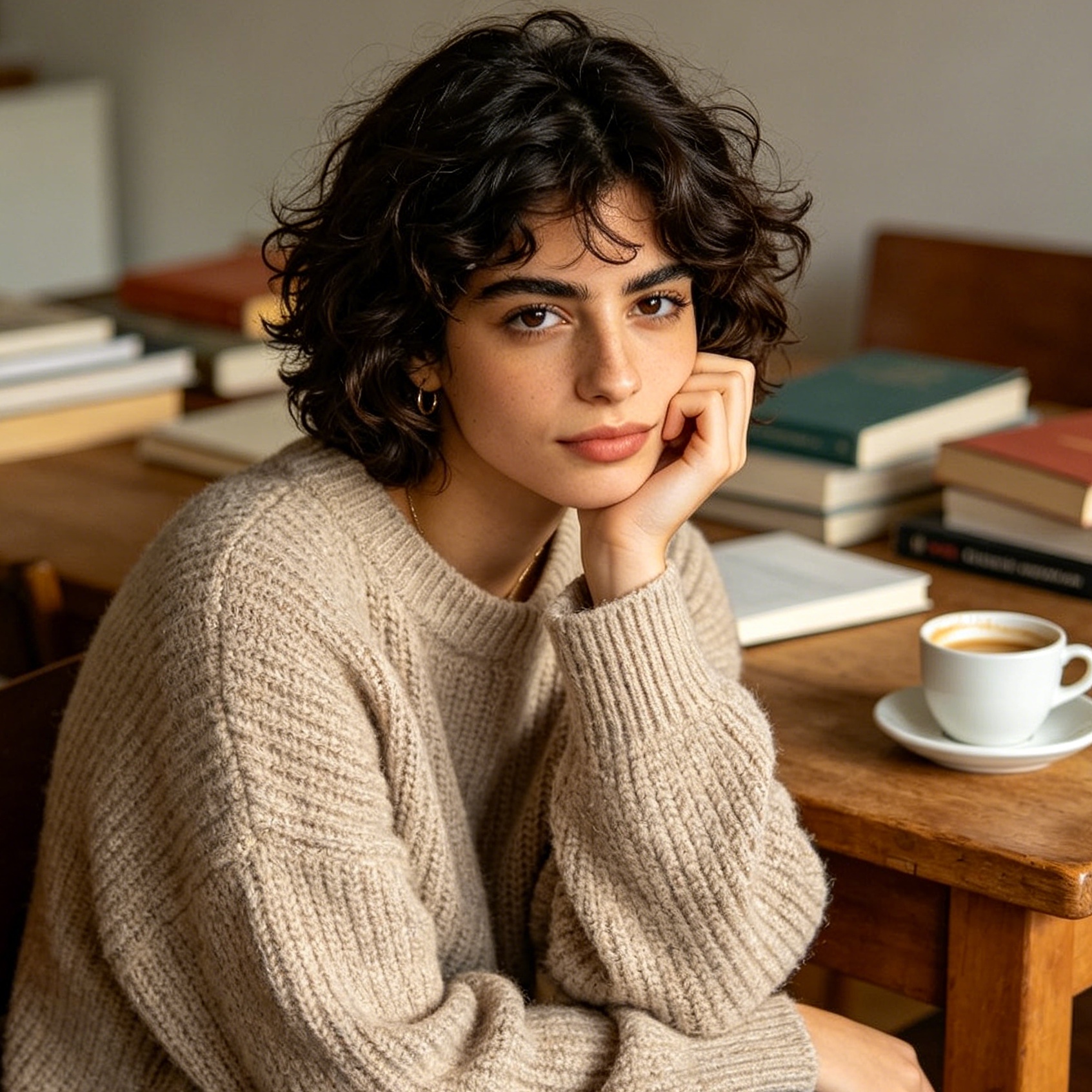
The landscape of visual creation has undergone a seismic shift since the emergence of sophisticated artificial intelligence. An AI art generator is no longer just a novelty for creating surreal internet memes; it has evolved into a robust software category that utilizes complex neural networks to transform text descriptions, known as prompts, into high-fidelity images, illustrations, and designs. By bridging the gap between human imagination and digital execution, these tools are redefining the boundaries of graphic design, concept art, and digital marketing.
Understanding the mechanics, applications, and ethical implications of this technology is essential for anyone looking to navigate the modern creative economy. From the mathematical precision of diffusion models to the artistic nuances of platforms like Midjourney, the era of machine-aided creativity is here, and it is reshaping how the world visualizes ideas.
The Technological Foundation of Modern Image Synthesis
To appreciate the capabilities of an AI art generator, one must look beneath the user interface at the algorithms driving the pixels. Most contemporary generators rely on two primary types of models: Diffusion and Autoregression.
The Diffusion Process Explained
Diffusion models, which include industry leaders like DALL-E 3 and Stable Diffusion, operate on a principle that mirrors a sculptor finding a statue within a block of marble. The process begins with pure Gaussian noise—a chaotic field of random pixels that looks like television static.
During the training phase, the AI learns to reverse this process. It takes a clear image, gradually adds noise until it is unrecognizable, and then studies how to "de-noise" it step-by-step. When a user inputs a prompt such as "a Victorian-style laboratory lit by glowing neon mushrooms," the AI starts with a blank field of noise and iteratively refines it. Through dozens of steps, it removes the "noise" that doesn't match the patterns associated with "Victorian," "laboratory," and "neon," eventually revealing a structured, high-resolution image.
The Rise of Autoregressive Models
While diffusion has dominated the early 2020s, a new generation of autoregressive models, such as Nano Banana 2 and GPT Image 2, is gaining traction. Unlike diffusion models that refine the whole image at once, autoregressive models predict and generate chunks of an image sequentially, much like how a Large Language Model (LLM) predicts the next word in a sentence.
This approach often results in a deeper understanding of complex spatial relationships and text rendering. In our comparative tests, autoregressive models frequently outperform traditional diffusion models when the prompt requires specific, legible text or highly logical architectural layouts. However, they typically require significant computational power, often demanding high-end enterprise GPUs for optimal speed.
Top AI Art Generators for Professional and Personal Use
The current market is saturated with platforms, each catering to different niches and skill levels. Choosing the right tool depends on whether a user values artistic flair, literal prompt adherence, or local control.
Midjourney and the Quest for Aesthetic Excellence
Midjourney remains the premier choice for artists and designers who prioritize "vibe" and lighting. Operating primarily through Discord, it has built a community-driven feedback loop that has refined its output into something uniquely painterly and cinematic.
In professional testing, Midjourney v6 and its successors demonstrate an uncanny ability to understand lighting terms like "volumetric fog" or "chiaroscuro." While it occasionally takes creative liberties that deviate from the literal prompt, the results are almost always visually stunning. For concept artists needing rapid ideation for film or gaming, Midjourney is the current industry benchmark.
DALL-E 3 and GPT Image 2 Logic and Accessibility
Developed by OpenAI, DALL-E 3 is integrated directly into the ChatGPT interface, making it perhaps the most accessible AI art generator available. Its greatest strength lies in its "semantic adherence." If a user asks for "a red square inside a blue circle held by a robot with three fingers," DALL-E 3 is remarkably precise at following those specific instructions.
The newer GPT Image 2 models have further enhanced this by allowing users to upload existing photos and request modifications in specific styles—such as transforming a family portrait into a Studio Ghibli-inspired animation—with high consistency. This makes it an invaluable tool for social media managers and content creators who need specific visuals without mastering complex prompt syntax.
Stable Diffusion and the Power of Local Control
For those who require absolute privacy and customization, Stable Diffusion is the open-source champion. Unlike web-based services, Stable Diffusion can be installed on a local machine (typically requiring at least 8GB to 24GB of VRAM depending on the model, such as the high-end Flux.1).
The true power of Stable Diffusion lies in its ecosystem of extensions, such as ControlNet. ControlNet allows users to provide a "sketch" or a "pose" that the AI must follow, giving the user granular control over the final composition that is currently unmatched by closed systems like DALL-E. This is the preferred tool for industrial designers and professional illustrators who need the AI to follow a strict blueprint.
Adobe Firefly and Professional Workflows
Adobe has taken a different route by focusing on "commercial safety." Firefly is trained exclusively on Adobe Stock images, openly licensed content, and public domain content where the copyright has expired. This integration within Photoshop and Illustrator allows professional designers to use "Generative Fill" to expand images or swap elements within a familiar interface, knowing the outputs are legally safer for corporate use.
The Art of Prompt Engineering
Regardless of the tool used, the quality of the output is heavily dependent on the "prompt"—the text instruction given to the AI. Prompt engineering has emerged as a crucial skill set, involving a blend of descriptive vocabulary and technical parameters.
Structuring a Successful Prompt
A professional-grade prompt usually follows a structured hierarchy:
- Subject: The primary focus (e.g., "An ancient dragon").
- Action/Context: What the subject is doing (e.g., "slumbering on a pile of gold coins").
- Style: The artistic medium (e.g., "oil painting in the style of Rembrandt" or "8k photorealistic hyper-detail").
- Lighting and Atmosphere: The mood (e.g., "golden hour," "dramatic shadows," "bioluminescent glow").
- Technical Parameters: Aspect ratios, seed numbers, or stylize values (e.g., "--ar 16:9" in Midjourney).
The Role of Negative Prompts
In tools like Leonardo.ai or Stable Diffusion, negative prompts are equally important. These tell the AI what not to include, such as "extra fingers," "blurry backgrounds," or "low resolution." Mastering the balance between positive and negative instructions is what separates casual users from professional AI artists.
Practical Applications Across Industries
The utility of an AI art generator extends far beyond creating pretty pictures. It is becoming an integral part of various professional pipelines.
Concept Development and Game Design
In the early stages of game development, creating concept art for characters and environments used to take weeks. Designers now use AI to generate hundreds of iterations in hours. While the AI-generated image may not be the final asset, it serves as a highly detailed mood board that informs the 3D modelers and environmental artists.
Marketing and Social Media
Marketing agencies use AI to generate tailored visuals for ad concepts and social media content. The ability to create a "unique fashion style" or a "product mock-up in a tropical setting" without a physical photo shoot has drastically reduced costs and turnaround times for small to medium-sized enterprises.
Industrial Design and Architecture
Architects use AI to visualize how a building might look in different settings or under various weather conditions. By feeding a basic architectural sketch into a generator with a prompt for "brutalist architecture in a snowy forest," they can quickly present multiple aesthetic directions to clients.
Understanding the Limitations and Challenges
Despite the rapid advancements, AI art generators are far from perfect. Users must be aware of several recurring technical issues.
The Problem of Anatomy and Text
One of the most persistent challenges for diffusion models is human anatomy, particularly hands and feet. AI often struggles with the correct number of fingers or the way joints bend. Similarly, while newer models like Flux.1 and DALL-E 3 are improving, many generators still produce "gibberish" text when asked to include specific words in an image.
Bias and Stereotyping
Because these models are trained on massive datasets scraped from the internet, they inherently inherit human biases. If a user prompts for "a CEO" or "a nurse" without specifying gender or ethnicity, the AI will often default to stereotypes prevalent in its training data. This requires conscious effort from users to write inclusive prompts to avoid reinforcing harmful social biases.
Safety Filters and Hyper-vigilance
Most web-based services employ strict safety filters to prevent the generation of unsafe, inappropriate, or copyrighted imagery. While these systems are necessary for legal and ethical reasons, they can sometimes be "hyper-vigilant," blocking harmless prompts because a single word triggers a sensitive category.
Ethical and Legal Crossroads
The rise of AI art has sparked a global debate regarding copyright, ownership, and the future of human labor.
The Question of Authorship
The legal status of AI-generated content is currently in flux. In 2023, the US Supreme Court and the US Copyright Office ruled that AI-generated art is generally ineligible for copyright protection because it lacks "human authorship." This means that while you can generate an image, you might not legally "own" it in the same way you would a hand-drawn illustration, which has significant implications for commercial use.
Data Sourcing and Artist Rights
Many artists have criticized AI companies for "scraping" their work without consent or compensation to train these models. This has led to ongoing class-action lawsuits. Some platforms are responding by creating "opt-out" mechanisms or, in the case of Adobe, using licensed datasets to ensure a more ethical approach to data sourcing.
The Impact on the Creative Job Market
There is a legitimate concern that the speed and low cost of AI will devalue human artistic labor. However, many industry experts argue that AI will not replace artists but will instead become a new tool in their kit. The role of the artist is shifting from "executor" to "curator" and "director," where the ability to guide the AI and refine its output becomes the primary creative act.
The Future of AI Art Generation
As we look toward the future, the integration of AI art tools will only deepen. We are already seeing "Realtime Canvas" features where an AI generates an image as a user draws a simple sketch, providing instant feedback. The boundary between static images and video is also blurring, with tools like Leonardo.ai allowing users to add motion to their generated art with a single click.
The evolution of AI art generators represents a democratization of visual expression. While the ethical and technical hurdles are significant, the potential for these tools to unlock new forms of human creativity is unparalleled. As the models become more logical, inclusive, and controllable, the AI art generator will likely become as ubiquitous and essential as the digital camera or the word processor.
Summary
AI art generators use neural networks—primarily through diffusion or autoregressive processes—to convert text prompts into images. While tools like Midjourney lead in aesthetics and DALL-E 3 in logic, Stable Diffusion offers professional-grade control. Despite their power, these tools face challenges regarding anatomical accuracy, inherent bias, and complex legal questions about copyright and authorship. As the technology matures, it is moving from a creative experiment to a fundamental tool in professional design, marketing, and conceptual workflows.
FAQ
What is the best AI art generator for beginners?
DALL-E 3 (via ChatGPT) is widely considered the best for beginners due to its ease of use and ability to understand plain English instructions without needing complex technical parameters.
Can I sell art created by an AI?
The legality depends on the platform's terms of service and your local jurisdiction. In the US, AI art currently cannot be copyrighted, meaning you may not have exclusive rights to prevent others from using the image. However, many platforms allow commercial use for paid subscribers.
Why does AI struggle with drawing hands?
AI models don't "understand" the 3D structure or functional anatomy of a hand. They only recognize patterns of pixels that look like hands. Because hands are complex and appear in many different positions in training data, the AI often gets confused about the number and placement of fingers.
What is a negative prompt?
A negative prompt is a list of elements you want the AI to exclude from the image. Common negative prompts include "blurry," "distorted," "extra limbs," or "watermark."
Is Stable Diffusion free to use?
Stable Diffusion is open-source and free to download and run on your own hardware. However, you need a computer with a powerful GPU (Graphics Processing Unit) to run it effectively. Web-based versions of Stable Diffusion usually require a subscription or a per-image fee.
-
Topic: Introduction to Image Generation AIhttps://aisandbox.org.nz/wp-content/uploads/2025/04/Curated-Stream-Intro-to-Image-Generation.pdf
-
Topic: AI art - Wikipediahttps://en.wikipedia.org/wiki/AI_image_generator
-
Topic: The 20+ top AI art generators in 2026 | Zapierhttps://www.zapier.com/blog/ai-art-generator/