Home
Home
How Modern Authors Use AI to Elevate Creative Writing Without Losing Their Voice
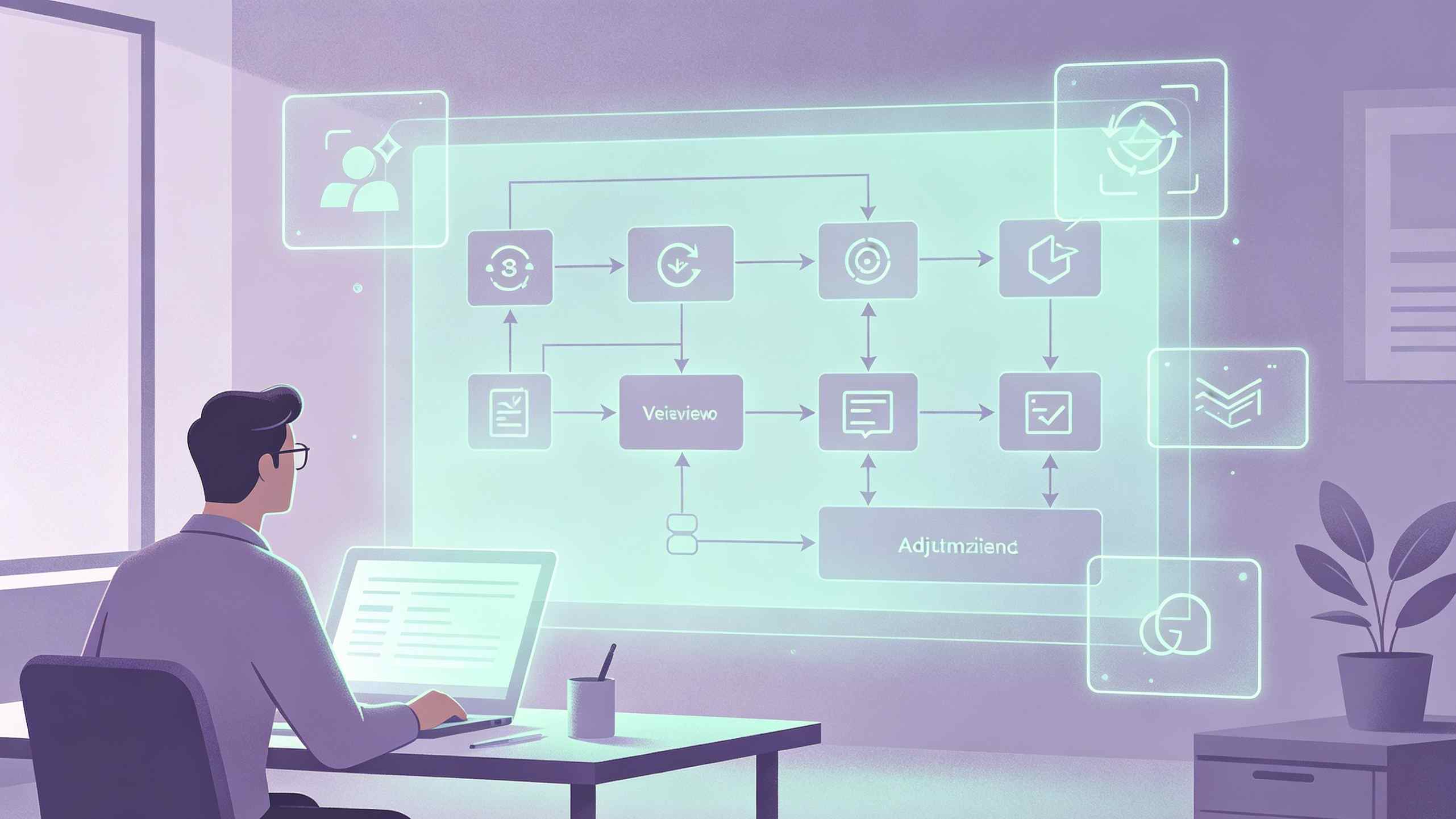
The blank page has always been the writer’s greatest adversary. For decades, the process of moving from a fleeting thought to a finished manuscript was a solitary battle fought with caffeine and sheer willpower. However, the emergence of Large Language Models (LLMs) has fundamentally shifted this dynamic. Today, artificial intelligence is no longer a futuristic concept but a functional "co-pilot" for creative writers.
The integration of AI into creative writing is not about clicking a button to generate a novel. Instead, it is an intricate dance between human intent and machine pattern recognition. This collaboration allows authors to offload the cognitive burden of logistics—such as tracking complex plot timelines or brainstorming character names—so they can focus on the elements that require a human soul: emotional nuance, original subtext, and the "why" behind the story.
The Paradigm Shift from Generation to Collaboration
The initial fear surrounding AI in the arts was that machines would replace creators. However, experienced authors have discovered that AI is remarkably poor at being an "author" but exceptionally gifted at being a "sounding board."
In a traditional workflow, a writer might spend weeks stuck on a plot hole. In an AI-enhanced workflow, that same writer can use an LLM to simulate a "writers' room" environment. By feeding the AI the existing context of a story, a writer can ask for ten different ways a character might escape a locked room, using each suggestion as a stepping stone to find an eleventh, purely human idea. This transition from "AI as a generator" to "AI as a collaborator" is the cornerstone of modern creative writing.
Transforming the Spark of an Idea into a Narrative World
Every great story begins with a "What if?" but many of those sparks die before they hit the page because the world-building feels too daunting. AI excels at the logistical heavy lifting of creation.
How to use AI for world-building and lore consistency?
One of the most exhausting parts of writing fantasy or science fiction is maintaining consistency. If a magic system has specific rules established in Chapter 2, those rules must still apply in Chapter 20. AI tools like Sudowrite and NovelCrafter now offer "Story Bibles" or "Codex" features. These act as a digital memory where you can store:
- Geographical details: Climate, trade routes, and city layouts.
- Magic/Tech systems: Rules, limitations, and costs.
- Historical timelines: Key events that happened before the story began.
During our testing of these workflows, we found that the most effective way to build a world is not to ask the AI to "create a world," but to use "Reverse Interviewing." Instead of giving a prompt, tell the AI: "I want to build a dystopian city based on underwater geothermal energy. Ask me ten probing questions about its economy, social hierarchy, and daily life to help me flesh it out." This keeps the creative agency firmly in the hands of the writer while the AI acts as a sophisticated investigative journalist.
Brainstorming beyond clichés
AI is trained on the sum of human knowledge, which means its first instinct is often a cliché. If you ask for a "noir detective," it will give you a man in a trench coat drinking whiskey in the rain. To break through this, writers must use "Negative Prompting" or "Juxtaposition."
For example, asking an AI to "describe a detective scene" results in generic prose. However, asking it to "describe a detective scene where the detective is a retired botanist who solves crimes using plant forensic evidence, written in the style of a whimsical children’s book but for an adult audience" forces the model out of its standard patterns. This is where the synergy happens: the writer provides the unique constraints, and the AI provides the linguistic variations to explore them.
Structuring the Narrative Skeleton
A brilliant idea without a structure is just a collection of scenes. Most creative writers struggle with the "Middle Muddle"—that period 40% into a book where the momentum stalls. AI is an expert in narrative architecture, capable of applying classical structures like the Hero's Journey, the Three-Act Structure, or the Fichtean Curve to your messy ideas.
What is the best way to outline a novel with AI?
The most effective method is "Recursive Outlining." You start with a one-sentence summary, then ask the AI to expand that into a three-paragraph summary, then a chapter-by-chapter beat sheet.
In our experience, the key is to intervene at every step. If the AI suggests a plot twist in Chapter 5 that feels unearned, you must correct it immediately. Modern tools allow you to "lock" certain plot points while asking the AI to brainstorm others. This ensures the story follows the emotional arc you intended while the AI handles the pacing logic. For instance, you might realize your protagonist hasn't faced enough conflict in the second act; the AI can quickly identify "beats" where tension could be heightened based on the character's established flaws.
The Art of the Scene: Drafting and Expansion
Drafting is where the "AI smell" is most likely to occur. Generic AI prose tends to be overly flowery, uses too many adjectives, and often ends scenes with a "moral of the story" summary. To avoid this, successful authors use AI for "Scene Expansion" rather than "Scene Generation."
How to avoid the "AI-isms" in creative prose?
When using AI to help write a scene, the prompt is everything. A novice prompt like "Write a scene where two people argue" will produce garbage. A professional prompt looks more like this:
"Expand the following beat: 'John discovers Mary lied about the letter.' Use a tense, minimalist tone. Focus on sensory details like the smell of burnt toast and the sound of the ticking clock. Avoid using adverbs. Ensure John’s dialogue is evasive while Mary’s is sharp and accusatory."
By providing the "Creative Direction," you treat the AI like a skilled but unimaginative ghostwriter. You provide the soul; the AI provides the initial draft of the muscle.
Furthermore, we recommend a "Zero-Draft" approach. Write a very rough, ugly version of the scene yourself—just the dialogue and the basic actions. Then, ask the AI to "Fill in the sensory descriptions and atmospheric details based on the character's current emotional state." This ensures the core of the scene is yours, while the AI helps with the "set dressing" that often slows down a first draft.
Character Development and the "Heart" of the Story
Characters are the reason readers stay. AI can be surprisingly good at helping develop "Character Voices." If you have a character who is a 1920s jazz musician and another who is a 2050s bio-hacker, you can ask the AI to "Analyze these two characters and suggest how their slang, sentence length, and metaphors would differ."
Creating complex character profiles
A common mistake is creating "cardboard" characters. Use AI to find the contradictions. Ask: "Here is my protagonist’s main goal and their greatest fear. Suggest three secret shames they might have that would conflict with their goal."
In our testing, we found that Claude 3.5 Sonnet is particularly adept at this type of psychological profiling. It can identify "internal friction" that a writer might have missed. You can even "chat" with your character. By prompting the AI to "Act as [Character Name], a cynical war veteran who hates authority," you can interview them to find their voice. What does this character think about love? What would they do if they found a lost dog? These exercises build a "mental model" for the writer to use when they return to the actual manuscript.
A Comparative Analysis of AI Tools for Creative Writing
Not all AI is created equal. Using the wrong tool for the wrong task is a frequent source of frustration for authors.
| Tool | Best For | Why it stands out |
|---|---|---|
| Claude 3.5 Sonnet | Prose and Nuance | It has a more "human" and less repetitive writing style compared to GPT-4o. It excels at subtext. |
| Sudowrite | Fiction-Specific Features | The "Sensory" and "Describe" buttons are game-changers for adding depth to scenes without heavy prompting. |
| NovelCrafter | Long-form Management | Its "Codex" system is the best in the industry for keeping track of characters and world-building across a 100k-word novel. |
| ChatGPT (GPT-4o) | Logic and Outlining | Excellent for brainstorming plot twists and checking the logical consistency of a complex mystery. |
| Grammarly/ProWritingAid | Final Polish | These are essential for catching the rhythmic issues and "echoes" (repeating the same word) that AI often introduces. |
Technical Considerations for Writers
For those concerned about privacy and copyright, running a "Local LLM" is becoming a viable option. Models like Llama 3 or Mistral can be run on a personal computer with a decent GPU (at least 12GB to 24GB of VRAM). While these models might not be as "smart" as Claude or GPT-4, they offer 100% privacy for your intellectual property and have no "censorship" filters that might prevent you from writing gritty or adult-themed fiction.
The Ethical Frontier: Copyright and the "Human Touch"
The elephant in the room is the question of authorship. If an AI helps you write a book, is it still yours? The current consensus in the creative community (and most legal frameworks) is that the "Creative Engine" must be the human.
Does AI-generated text count as plagiarism?
Technically, LLMs do not "copy and paste" from their training data. They predict the next most likely token. However, they can inadvertently mimic the style of a famous author if prompted to do so. To protect your work:
- Never prompt with "In the style of [Author Name]." Instead, describe the style (e.g., "minimalist, gritty, short sentences").
- Edit everything. Use AI for the first 50% of the work, but the final 50% must be your own hand.
- Disclose when necessary. Many publishers and platforms (like Amazon KDP) now require you to check a box indicating if your content is "AI-generated" or "AI-assisted."
The "Human Touch" is what prevents "AI-slop"—content that looks like a story but has no emotional resonance. AI cannot feel grief, nor can it understand the specific ache of a childhood memory. It can only simulate the description of those things. As a writer, your job is to take the simulated description and inject it with the truth of your own experience.
Refining the Voice: The Post-AI Polish
Once you have a draft assisted by AI, the work is only half done. AI-assisted drafts often suffer from "Pacing Compression"—where the AI tries to resolve conflict too quickly.
How to polish AI-assisted writing?
We recommend a three-pass editing process:
- The "Cliché Cull": Search for words like "shimmering," "tapestry," "testament," and "dance of shadows." These are the hallmarks of AI prose. Replace them with specific, concrete imagery.
- The Rhythm Check: AI often writes sentences of similar lengths. Manually break them up. Add fragments. Use long, flowing run-ons. Create a cadence that feels like a human heart beating, not a metronome.
- The Emotional Audit: Read the scene and ask, "Does this character's reaction feel earned?" If the AI made the character cry too easily, pull it back. Human emotion is often messy and suppressed; make sure your story reflects that.
Summary
AI for creative writing is a transformative tool that, when used correctly, acts as a force multiplier for human imagination. It can banish writer's block, manage complex world-building, and help authors reach a finished draft faster than ever before. However, the technology is a mirror, not a creator. It reflects the quality of the prompts and the depth of the vision provided by the human author. The future of literature belongs to the "Centaur Writer"—the creator who can seamlessly blend the vast, lightning-fast processing of AI with the irreplaceable depth of the human experience.
FAQ
Is there a free AI for creative writing?
Yes, ChatGPT (GPT-4o mini) and Claude 3.5 Sonnet (limited daily messages) offer free tiers that are highly capable. For a more focused experience, Sudowrite offers a free trial that allows you to test fiction-specific features.
Can AI write a whole book for me?
While you can technically prompt an AI to "write a 50,000-word novel," the result will almost certainly be repetitive, logically inconsistent, and emotionally hollow. AI is best used chapter-by-chapter, or even scene-by-scene, with heavy human intervention.
Will using AI make me a worse writer?
On the contrary, many writers find that AI makes them better by acting as a tutor. By seeing how an AI expands a scene or suggests a metaphor, writers can learn new techniques. However, it is vital to keep practicing "manual" writing to ensure your creative muscles don't atrophy.
What is the most "human-sounding" AI for writers?
In current benchmarks and writer testimonials, Claude 3.5 Sonnet is widely considered the most "literary" AI. It tends to avoid the "robot-speak" and repetitive structures common in other models, making it the preferred choice for prose and dialogue.
Is AI writing copyrighted?
Current US Copyright Office guidance suggests that purely AI-generated text cannot be copyrighted. However, work that contains "significant human creative input"—where the human has selected, arranged, and edited the material—can be protected. This is why the "co-pilot" model is safer for professional authors than the "generator" model.
-
Topic: Writing with AI | OpenAIhttps://openai.com/chatgpt/use-cases/writing-with-ai/
-
Topic: ai-writing · GitHub Topics · GitHubhttps://github.com/topics/ai-writing?o=asc
-
Topic: Find Your AI Scribe for Creative Writers: Essential Tools | AFFiNEhttps://affine.pro/blog/ai-scribe-for-creative-writers