Home
Home
How to Choose the Best AI for Generating Images for Every Creative Need
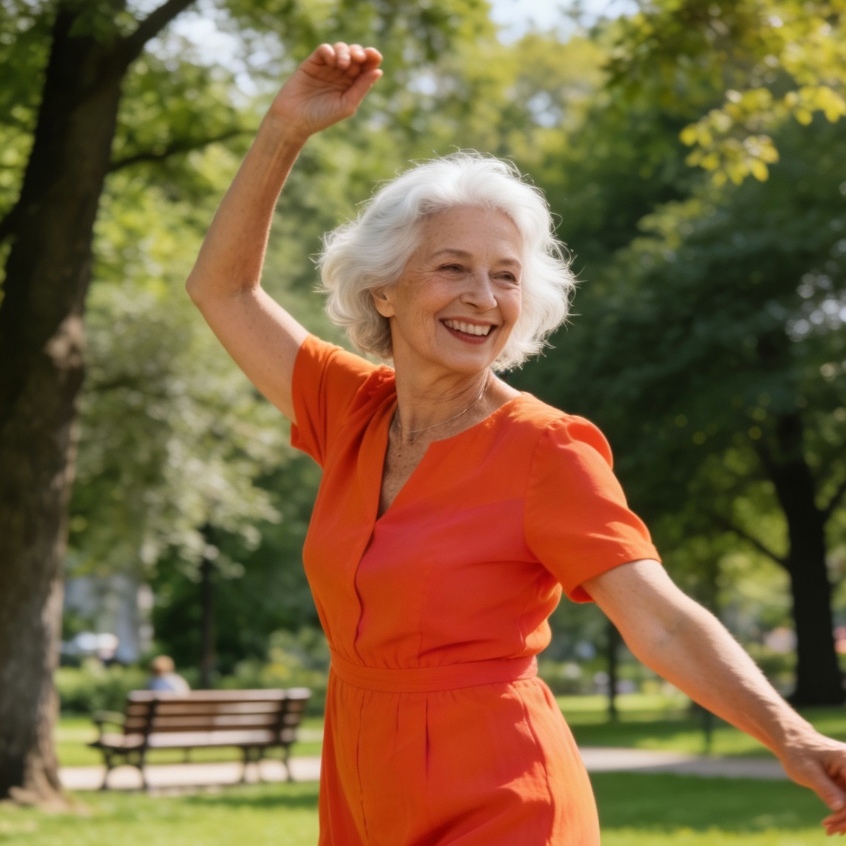
The landscape of visual content creation has undergone a seismic shift with the emergence of generative artificial intelligence. These systems, capable of translating simple text descriptions into complex, high-fidelity visuals, have moved from experimental novelties to essential tools for designers, marketers, and digital artists. Understanding the underlying technology and the nuanced differences between competing platforms is crucial for anyone looking to integrate AI into their creative workflow.
The Evolution of Image Generation Technology
Image generation via artificial intelligence is not a monolithic development. It has evolved through distinct technological epochs. In the early stages, Generative Adversarial Networks (GANs) were the primary architecture. GANs operate through a competitive process where two neural networks—a generator and a discriminator—work against each other. The generator creates images, and the discriminator attempts to distinguish them from real photographs. While effective for generating faces or specific objects, GANs often struggled with diverse, complex scenes.
The current "golden age" of AI image generation is defined by the Diffusion Model. Unlike GANs, diffusion models work by adding Gaussian noise to training data and then learning to reverse this process. During generation, the AI starts with a field of random static and iteratively refines it, guided by textual embeddings, until a coherent image emerges. This approach allows for significantly higher diversity, better adherence to complex prompts, and superior texture rendering. Recent advancements have further integrated Transformer architectures—the same technology behind Large Language Models like GPT-4—to improve the AI’s semantic understanding of user instructions.
Core Mechanisms of Modern AI Image Generators
To use these tools effectively, it is necessary to understand the three-step process they follow when a user hits "generate."
1. Training and Data Ingestion
AI models are trained on datasets containing billions of image-text pairs. These datasets, such as LAION-5B, allow the model to learn the visual characteristics of everything from "a vintage Leica camera" to "the brushwork of Vincent van Gogh." The AI does not store these images; rather, it learns the mathematical relationships between visual concepts.
2. Text Encoding and Semantic Mapping
When a prompt like "a neon-drenched cyberpunk alleyway in the rain" is entered, a text encoder (often a CLIP model or a T5 encoder) converts these words into high-dimensional vectors. This mathematical representation tells the model which visual features need to be prioritized and how they should relate to one another spatially.
3. The Iterative Denoising Process
The model begins with pure noise. Over a series of "sampling steps," it predicts which bits of noise to remove to make the image look more like the prompt’s description. In our tests, most models require between 20 and 50 steps to reach a balance between detail and processing speed. Too few steps results in blurry artifacts; too many steps can lead to "over-cooked" images with unnatural sharpness.
Leading Platforms and Their Specific Strengths
Not all AI image generators are created equal. Different models are optimized for different output styles and technical requirements.
Midjourney: The Artistic Standard
Midjourney is widely regarded as the most "aesthetic" model on the market. It excels in lighting, texture, and composition. Unlike other tools that aim for literal photorealism, Midjourney has a built-in "opinion" on what looks good, often producing cinematic results even with short, vague prompts.
- Best For: Concept art, editorial illustrations, and high-end visual storytelling.
- Operational Note: It primarily operates through Discord, which can be a barrier for those seeking a traditional web interface, though a dedicated web version is in rolling release.
DALL-E 3 (OpenAI): The Semantic Leader
DALL-E 3, integrated into ChatGPT, is arguably the most user-friendly. Its greatest strength is "prompt following." If you ask for "a red ball on top of a blue cube to the left of a yellow pyramid," DALL-E 3 is more likely than any other model to get the spatial relationships and colors exactly right.
- Best For: Complex scenes requiring precise placement of multiple objects and beginners who don't want to learn technical prompt jargon.
- Operational Note: It automatically "expands" user prompts via GPT-4 to add descriptive detail, ensuring high-quality results even from simple inputs.
Flux.1: The New Open-Source Powerhouse
Developed by Black Forest Labs (the original creators of Stable Diffusion), Flux.1 has recently taken the industry by storm. It matches Midjourney’s quality while offering superior text rendering and human anatomy (particularly hands).
- Best For: Photorealism and users who require the flexibility of open-source models for local deployment or fine-tuning.
- Technical Requirement: Running the "Dev" or "Schnell" versions locally typically requires high-end hardware, specifically 24GB of VRAM for optimal performance.
Adobe Firefly: The Professional Workflow Choice
Firefly is unique because it is trained on Adobe Stock images and public domain content, making it "commercially safe." Its real power lies in its integration with Photoshop. Features like "Generative Fill" allow users to select a part of an image and replace it with AI-generated content that matches the existing lighting and perspective perfectly.
- Best For: Graphic designers and corporate marketing teams who need to edit existing assets or ensure legal compliance.
Ideogram 2.0: Typography Specialist
Historically, AI has struggled with rendering legible text. Ideogram 2.0 has solved this. It can generate posters, logos, and greeting cards with perfect spelling and beautiful typography.
- Best For: Logo design, social media graphics, and any project where text is a central element of the image.
Essential Features Beyond Simple Text to Image
Modern AI for generating images offers tools that go far beyond the initial generation.
What is Inpainting?
Inpainting allows a user to "brush over" a specific area of a generated or uploaded image and describe what should be there instead. For example, if you generate a portrait but don't like the subject’s hat, you can use inpainting to change it to a crown without regenerating the entire image.
How to use Outpainting for Canvas Expansion?
Outpainting (or Generative Expansion) allows the AI to "imagine" what lies beyond the borders of an image. If you have a portrait-oriented photo that you need to turn into a landscape-oriented hero banner for a website, outpainting can fill in the background scenery seamlessly.
ControlNet and Structured Guidance
For professional applications, "text-to-image" is often too random. ControlNet is a technical framework used primarily with Stable Diffusion that allows users to provide a structural guide—such as a line drawing, a depth map, or a human pose skeleton. This ensures the AI-generated image follows a specific layout or body posture.
Mastering the Art of Prompt Engineering
The quality of AI output is directly proportional to the clarity of the prompt. A professional-grade prompt typically follows a specific hierarchy.
1. The Subject
Be specific. Instead of "a dog," use "a rugged Alaskan Malamute with thick grey fur."
2. Context and Background
Where is the subject? "Standing on a jagged cliffside during a blizzard" provides much more "atmospheric data" for the AI than a blank background.
3. Lighting and Color Palette
Lighting defines the mood. Keywords like "Golden Hour," "Volumetric Lighting," "Cyberpunk Neon," or "Soft Studio Lighting" drastically change the final output.
4. Style and Medium
Specify the medium to avoid the generic "AI look."
- Photography: "35mm film photography, f/1.8 aperture, grainy texture."
- Art: "Oil painting in the style of the Impressionists, heavy impasto brushstrokes."
- Digital: "Octane Render, 3D isometric view, Unreal Engine 5 aesthetic."
5. Technical Parameters
Many models allow for specific configurations. For instance, adding --ar 16:9 in Midjourney changes the aspect ratio, while Google’s Imagen model supports parameters like sample_count and person_generation filters (e.g., allow_adult vs dont_allow).
Ethical Considerations and the Future of Visual AI
As AI for generating images becomes more pervasive, several challenges remain.
Copyright and Ownership: Currently, in many jurisdictions (including the US), AI-generated images cannot be copyrighted because they lack "human authorship." Furthermore, the use of artist-copyrighted data for training remains a point of intense legal debate. Users should consult the Terms of Service of each platform; for example, Adobe Firefly offers indemnification for enterprise users, whereas open-source models leave the legal risk to the user.
Deepfakes and Authenticity: The ability to generate photorealistic images of real people has led to concerns regarding misinformation. Most major platforms now implement "Invisible Watermarking" (like Google’s SynthID) to identify AI-generated content.
The Rise of Multi-Modality: The future of image generation is moving toward multi-modality. This means AI will not just generate a static image from text, but will be able to turn a sketch into a 3D model, or a 2D image into a high-quality video clip. Models like Sora and Kling are already showing the potential of this "next step" in generative media.
Summary
Selecting the right AI for generating images depends entirely on your end goal. If you prioritize artistic flair and "vibe," Midjourney is the industry leader. For complex scenes and ease of use, DALL-E 3 is unparalleled. Professional designers will find the most value in Adobe Firefly’s integration, while those requiring precision and text rendering should look to Ideogram or Flux.1. By mastering prompt structure and understanding the technical nuances of these models, creators can unlock levels of productivity and visual quality that were previously impossible without massive budgets or weeks of manual labor.
FAQ
Can AI generate text inside images accurately? Yes, newer models like Ideogram 2.0, Flux.1, and DALL-E 3 have significantly improved text rendering. However, it is still recommended to keep text phrases short (under 25 characters) for the best results.
Do I need a powerful computer to run AI image generators? For cloud-based tools like Midjourney, DALL-E 3, and Adobe Firefly, you only need a web browser or the Discord app. Local models like Stable Diffusion or Flux.1 require a powerful GPU (Nvidia RTX 3060 or higher is recommended).
What is a "Negative Prompt"? A negative prompt tells the AI what not to include in the image. Common negative keywords include "blurry," "extra fingers," "low resolution," or "watermark." Note that DALL-E 3 does not use negative prompts; it relies on descriptive positive instructions.
Are AI-generated images free to use commercially? This varies by platform. Paid subscribers to Midjourney and DALL-E 3 generally own the rights to the images they create, but the lack of copyright protection means others might be able to use your images without permission. Always check the specific license of the tool you are using.
-
Topic: A Review on AI-Powered Image Generation System using AIhttps://ijarsct.co.in/Paper29528.pdf
-
Topic: Generate images using Imagen | Gemini API | Google AI for Developershttps://ai.google.dev/gemini-api/docs/imagen#:~:text=aspectRatio%20%3A%20Changes%20the%20aspect%20ratio,is%20%221%3A1%22%20.
-
Topic: Quickstart: Generate images with Azure OpenAI in Azure AI Foundry Models - Azure OpenAI | Microsoft Learnhttps://learn.microsoft.com/en-us/azure/ai-services/openai/dall-e-quickstart