Home
Home
How to Effortlessly Expand Your Photos Using Generative AI Outpainting
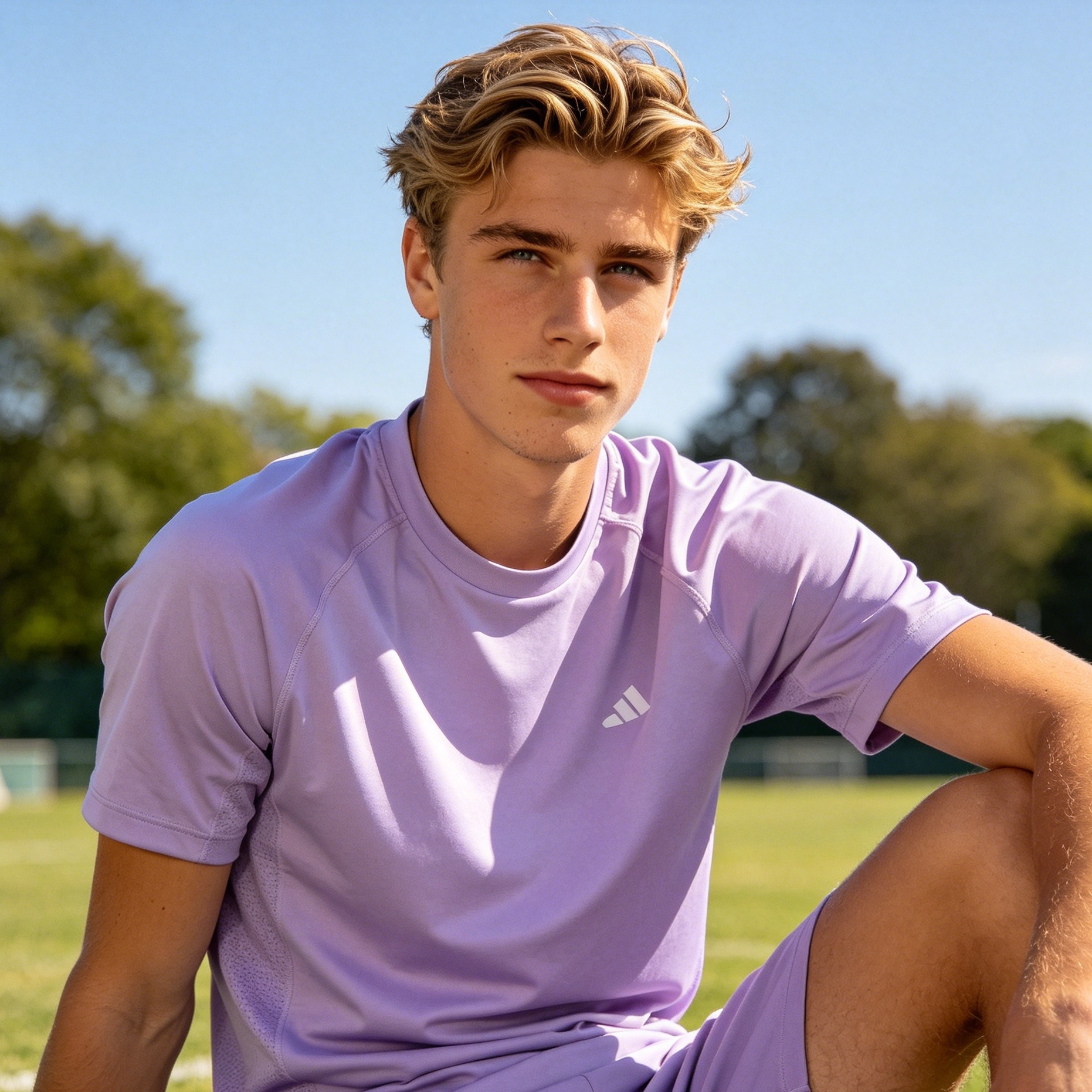
AI image expansion, scientifically known as outpainting, has fundamentally altered the landscape of digital photography and graphic design. Whether you are dealing with a portrait that is cropped too tightly or a breathtaking landscape that needs a wider aspect ratio for a website banner, generative AI now allows you to "see" beyond the original frame.
Instead of traditional scaling or stretching—which distorts pixels—modern AI analyzed the textures, lighting, and composition of your original image to generate entirely new, seamless content. By the end of this deep dive, you will understand how this technology works, which tools offer the highest fidelity, and how to master the art of expanding your canvas without leaving a trace of digital manipulation.
What Exactly Is AI Image Expansion?
At its core, AI image expansion is the process of using generative models to extend an image's canvas while filling the new space with contextually relevant content. Unlike "inpainting," which replaces or fills gaps inside an existing image, "outpainting" focuses on everything outside the original borders.
The Science Behind the Pixels
Modern expansion tools primarily rely on Diffusion Models. These AI architectures are trained on billions of images, learning the mathematical relationship between different visual elements. When you ask an AI to expand a photo of a beach, it doesn't just copy the sand; it understands the trajectory of the waves, the gradient of the sunset, and the biological structure of a palm tree to "predict" what would logically exist in the adjacent space.
Why Outpainting Surpasses Traditional Cropping
In the past, if a photo didn't fit a specific format, you had two choices: crop it (losing valuable detail) or stretch it (ruining the aspect ratio). Outpainting introduces a third, superior option. It maintains the integrity of the original subject while building a surrounding environment that feels as if it were captured by the same camera lens at the same moment.
Practical Use Cases for Modern Creators
The demand for AI expansion isn't just a trend; it's a practical response to the fragmentation of digital media platforms. Each platform requires different dimensions, and capturing a unique shot for every single one is often impossible.
Transforming Aspect Ratios for Social Media
One of the most common challenges for social media managers is turning a vertical 9:16 Instagram Reel cover into a horizontal 16:9 YouTube thumbnail. With AI expansion, you can take a central portrait and generate a vast landscape around it, making the same piece of content viable across multiple channels without losing the subject's prominence.
Creating "Breathing Room" in Composition
Even professional photographers sometimes "miss the shot" by framing a subject too closely. If a bird's wing is clipped at the edge of the frame or a mountain peak is cut off, AI outpainting can reconstruct those missing elements. This provides the "breathing room" necessary for a balanced, aesthetically pleasing composition.
Designing Hero Banners and Backgrounds
Graphic designers often need wide-format images for website headers, but high-quality stock photos are frequently in 4:3 or 3:2 ratios. By expanding these images, designers can create enough negative space to overlay text or call-to-action buttons without cluttering the main focal point of the visual.
A Comparative Review of Top AI Image Expanders
Not all expansion tools are created equal. Depending on your professional needs, budget, and technical skill, the "best" tool can vary significantly. In our hands-on testing, we evaluated the most popular platforms based on their output quality, speed, and ease of use.
Adobe Photoshop: The Professional Standard
Adobe integrated its "Generative Expand" feature directly into the Crop tool, powered by the Firefly model. This is perhaps the most seamless implementation available today.
- User Experience: When you drag the crop handles outside the image border, a "Generate" button appears. Within seconds, it provides three distinct variations of the expansion.
- Performance: Photoshop excels at maintaining "pixel continuity." If you are expanding a textured wall or a complex forest, the transitions are nearly invisible.
- Caveats: It requires a Creative Cloud subscription and uses "Generative Credits." However, for professional-grade resolution and color matching, it remains the benchmark.
Canva Magic Expand: The Accessibility King
Canva has democratized AI tools for non-designers. Their "Magic Expand" feature is built for speed and simplicity.
- User Experience: You simply select an image, click "Magic Edit," and choose the aspect ratio you want to fill. It is particularly effective for flat designs and simple backgrounds.
- Performance: While it might struggle with hyper-realistic human anatomy at the edges, it is excellent for social media graphics and presentation slides.
- Pros: It is incredibly fast and integrated into an environment where you are already likely designing your layouts.
CapCut Web: The All-in-One Free Alternative
CapCut has evolved far beyond video editing. Its AI design suite includes a surprisingly robust image expander that is free to use (with some limitations).
- User Experience: The "AI Expand" tool allows users to set a specific scale (e.g., 150%, 200%) or a target aspect ratio.
- Performance: In our tests, CapCut handled landscape shots with impressive accuracy, though it occasionally introduces "hallucinations"—small, nonsensical objects—in highly detailed urban environments.
- Value: For creators on a budget, the price-to-performance ratio here is unbeatable.
Specialized Online Tools (Fotor, Picsart, and others)
Platforms like Fotor and Picsart offer browser-based solutions that don't require heavy software installations. These are ideal for quick, one-off tasks. They often provide a more "guided" experience, making them perfect for beginners who want to expand a photo in just two clicks.
Step-by-Step Tutorial: How to Expand Your Images Successfully
While each software has a unique interface, the logical workflow for AI outpainting remains consistent. Follow these steps to ensure a high-quality result.
Step 1: Upload and Analyze
Upload your high-resolution original. The AI needs a clear "seed" to understand the style. If your original is blurry or pixelated, the expanded area will also look poor.
Step 2: Set the New Boundary
Increase your canvas size. In most tools, this is done by using the Crop tool and pulling the handles outward. If you have a specific destination in mind (like a 1920x1080 banner), set that aspect ratio now.
Step 3: Use (or Skip) the Text Prompt
Most pro-level tools allow you to guide the AI.
- Empty Prompt: If you leave the box empty, the AI will try to naturally continue the existing pattern (e.g., more grass, more sky).
- Descriptive Prompt: If you want something specific, type it in. For example, "expand with a mountain range in the distance" or "continue the cobblestone street with vintage street lamps."
Step 4: Generate and Iterate
Click "Generate" and wait. Most tools will give you 2 to 4 options. Look closely at the "seam"—the area where the original meets the new content. If you see blurriness or a shift in lighting, try another variation or refine your prompt.
Step 5: Post-Processing Cleanup
AI isn't perfect. Sometimes the expanded area might be slightly softer than the original. Use a sharpening tool or an AI upscaler (like the one built into CapCut or Topaz) to unify the resolution across the entire frame.
Advanced Tips for Seamless Outpainting Results
Achieving a "perfect" expansion requires more than just clicking a button. Professional editors use several psychological and technical tricks to make AI-generated content look authentic.
Watch the Perspective
AI sometimes struggles with "vanishing points" in architectural photography. If you are expanding a hallway or a street, ensure the lines generated by the AI follow the same geometric logic as the original. If they don't, use a "transform" tool to manually nudge the perspective after generation.
Lighting Consistency is Key
Shadows are often the "tell" of an AI-generated image. Check if the shadows in the expanded area match the direction and softness of the light source in your original photo. If the original sun is on the left, but the AI generates a shadow falling to the left, the image will look "uncanny" to the human eye.
Avoid "Prompt Overloading"
When using text prompts for expansion, less is often more. If you describe too many objects, the AI might try to cram them all into the new space, creating a cluttered look that doesn't match the simplicity of your original shot. Stick to describing the environment, not the objects.
Handle Resolution Mismatches
Some web-based AI expanders generate the new content at a lower DPI than your original upload. This creates a "sharp center, blurry edges" effect. To fix this, always export the expanded image and run it through a dedicated upscaling model to "re-bake" the textures into a uniform sharpness.
The Pitfalls: When AI Image Expansion Fails
Despite the impressive progress, outpainting is not a magic wand for every scenario. Understanding its limitations will save you hours of frustration.
- Complex Human Anatomy: If you try to expand a portrait to show the person's hands or feet, the AI frequently fails. Human limbs require a level of structural logic that current generative models often miss, resulting in "spaghetti fingers" or extra joints.
- Specific Text and Branding: AI cannot "continue" a specific logo or readable text across an expansion. It will generate gibberish that looks like characters but means nothing.
- Busy Patterns: While AI is great at grass and clouds, it struggles with highly specific repeating patterns like a plaid shirt or intricate lace. The pattern will likely "break" at the seam.
Future Trends: What’s Next for AI Outpainting?
As we move through 2025 and beyond, we are seeing the emergence of "Real-Time Outpainting" and "Video Expansion."
- Infinite Canvases: Future design tools may move away from fixed resolutions entirely. You will work on an "infinite" canvas where the background generates dynamically as you pan and zoom.
- Temporal Consistency: We are already seeing the first stages of AI being used to expand the borders of video frames. This requires the AI to maintain consistency not just across space, but across time (frame by frame), which is significantly more complex.
- Local Processing: With the rise of AI-capable chips in laptops (like the NPU-equipped processors), we will soon be able to perform high-resolution outpainting locally, without the need for cloud-based "generative credits" or an internet connection.
Frequently Asked Questions (FAQ)
What is the difference between AI image expansion and upscaling?
Upscaling increases the resolution and size of the existing pixels to make an image sharper. Expansion (Outpainting) creates entirely new pixels and content to increase the physical dimensions of the canvas.
Is there a free AI image expander without watermarks?
Tools like CapCut Web and some open-source versions of Stable Diffusion allow for expansion without intrusive watermarks. However, most professional platforms like Photoshop or Canva Magic Expand require a subscription or use a credit system.
Can I use AI-expanded images for commercial purposes?
This depends on the tool's Terms of Service. For example, Adobe Firefly is designed to be commercially safe because it was trained on Adobe Stock and public domain images. Always check the specific license of the AI tool you are using before using the output in an advertisement or product.
Why does my expanded image look blurry at the edges?
This is usually due to the AI model's output resolution limits. Many models generate content in 1024x1024 chunks. If your original image is 4K, the 1024px expansion will look blurry by comparison. Using an AI upscaler after expanding is the best way to fix this.
Does AI outpainting work on drawings and illustrations?
Yes! Most modern models are trained on both photography and art. In many cases, AI expansion is actually more successful with illustrations because the "rules" of lighting and texture are less rigid than in realistic photography.
Summary
AI image expansion has turned the "impossible" task of un-cropping a photo into a three-second reality. By leveraging tools like Adobe Photoshop for professional precision, or Canva and CapCut for social media agility, creators can now adapt their visuals to any platform with ease. The key to success lies in choosing the right tool for the job, paying close attention to perspective and lighting, and using post-processing to ensure a high-resolution finish. As the technology continues to evolve, the boundaries of your photos will no longer be defined by your camera lens, but only by the limits of your imagination.
-
Topic: AI Image Expander Tool – Extend Images Instantly – Adobe Fireflyhttps://www.adobe.com/products/firefly/features/ai-image-expander.html
-
Topic: Expand Image AI | AI Image Expander to Extend Your Photoshttps://expandimage.app/
-
Topic: 7 Best AI Image Expanders to Expand Photos by AI outpainting (2025)https://www.capcut.com/resource/ai-image-expander