Home
Home
How to Generate Professional Quality Digital Images With AI Precision
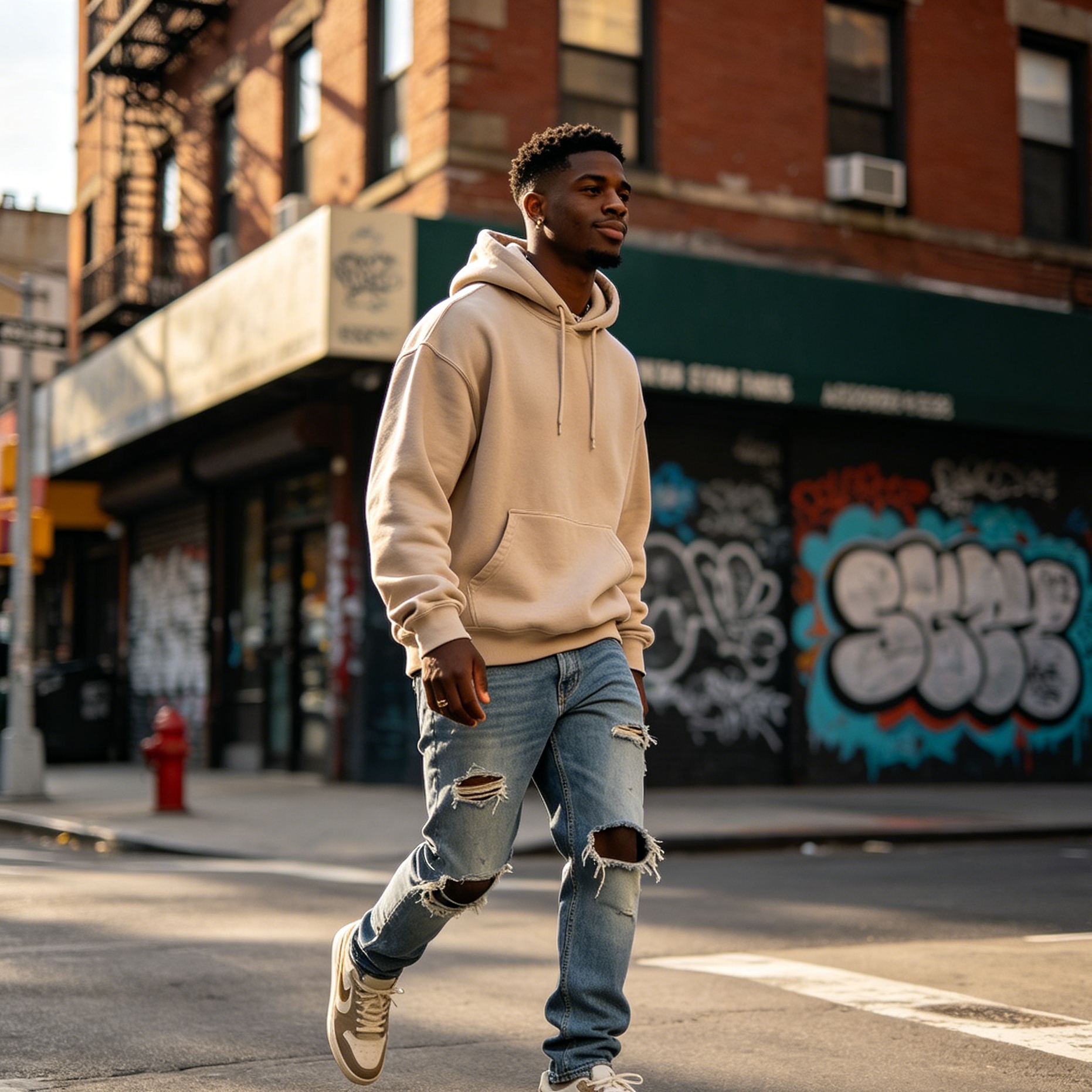
Digital images serve as the fundamental currency of modern communication, evolving from simple grid-based representations to complex outputs generated by latent diffusion models. To achieve high-quality results in the current landscape, the most effective approach combines a deep understanding of technical fundamentals—such as resolution and file formats—with the strategic use of generative AI prompting. A successful digital image is defined by the synergy of technical clarity (PPI and color depth) and conceptual precision (subject coherence and stylistic consistency).
The Technical Foundation of Digital Images
Understanding what constitutes a digital image is the first step toward creating professional-grade visual content. At its core, a digital image is a collection of bits organized into a specific format that software interprets as a visual representation. These are generally categorized into two distinct types: raster and vector.
Raster Images and the Role of Pixels
Raster images, or bitmaps, are the most common form of digital photography and AI-generated art. They consist of a grid of individual colored dots known as pixels. Each pixel contains specific color information, and when viewed together, they form a cohesive scene.
In professional environments, the quality of a raster image is determined by its resolution. This is expressed as the total number of pixels across the width and height (e.g., 3840 x 2160 for 4K). When preparing images for physical display or professional web use, the following technical standards are essential:
- Web Standard: Most digital displays operate effectively at a resolution that fills the screen without excessive overhead. While 72 PPI (pixels per inch) was the historical standard, modern high-density displays (Retina/OLED) often require assets that are 2x or 3x the base resolution to maintain sharpness.
- Print Standard: For high-quality physical printing, a density of 300 PPI is the industry baseline. This means a 6-megapixel image is sufficient for a 9x7 inch print, but anything lower may result in visible "pixelation" or softness.
- Bit Depth: This determines the color precision. An 8-bit image provides 256 levels of brightness per color channel, whereas 16-bit or "Deep Color" images allow for millions of gradations, which is critical for preventing banding in gradients during post-processing.
Vector Images for Graphic Precision
Unlike raster images, vector images are based on mathematical equations defining lines, points, and curves. This format is indispensable for logos, icons, and typography because it is infinitely scalable. A vector image of a logo can be scaled from the size of a postage stamp to a highway billboard without losing a single degree of clarity. For creators, tools that handle SVG (Scalable Vector Graphics) or AI formats are the primary choice when the output needs to remain sharp across multiple dimensions.
Mastering AI Image Generation through Strategic Prompting
The shift toward AI-assisted image creation has introduced a new layer of complexity: the prompt. Generating a professional image today is less about manual brushstrokes and more about linguistic precision. To move beyond generic outputs, a structured framework is required.
The Five-Pillar Prompting Framework
In our extensive testing with high-end models like Midjourney v6 and Flux.1, we found that the most consistent results come from a structured hierarchical prompt. The priority of descriptors significantly impacts the final render.
- The Subject (Core Identity): Define the primary focus with absolute clarity. Instead of "a dog," use "a rugged Alaskan Malamute with thick grey fur."
- The Action (Dynamic State): What is the subject doing? "Sprinting through a dense pine forest" provides more kinetic energy than a static description.
- The Environment (Setting and Context): Establish the background. "Under a heavy snowstorm at twilight" sets a specific geographical and temporal stage.
- The Style and Medium (Aesthetic Direction): This is where you dictate the visual "soul." Options range from "National Geographic wildlife photography" to "19th-century oil painting with heavy impasto."
- Lighting and Mood (Atmospheric Control): Lighting is the difference between a flat image and a cinematic one. Specifying "Rembrandt lighting," "volumetric fog," or "golden hour rim lighting" creates depth and professional polish.
Practical Application Case Study
If a user requires a high-end architectural visualization, a weak prompt would be "a modern house in the woods." A professional-grade prompt would look like this:
"Architectural photography of a minimalist glass villa nestled in a redwood forest, dusk, interior warm lights glowing through floor-to-ceiling windows, rainy atmosphere with wet pavement reflections, shot on 35mm f/1.8 lens, cinematic teal and orange color grading, 8k resolution, photorealistic textures."
By specifying the lens (35mm) and the aperture (f/1.8), the AI is instructed to simulate a shallow depth of field, which is a hallmark of professional photography.
Technical Nuances in AI Image Workflows
Achieving a high-quality digital image involves more than just the initial generation; it requires an understanding of the underlying hardware and software parameters.
Hardware Requirements for Local Execution
While cloud-based tools are accessible, local execution using Stable Diffusion or Flux.1 [dev] allows for greater privacy and control. Based on our performance benchmarks:
- VRAM (Video RAM): Generating high-resolution images (1024x1024 and above) locally requires significant VRAM. For the Flux.1 [dev] model, 24GB of VRAM (such as an RTX 3090 or 4090) is the recommended baseline to avoid significant slowdowns or "Out of Memory" errors.
- Sampling Steps: Higher is not always better. Most modern schedulers (like DPM++ 2M Karras) reach diminishing returns after 25–30 steps. Pushing to 100 steps often adds "noise" rather than detail.
- CFG Scale (Classifier-Free Guidance): This controls how closely the AI follows your prompt. A value between 3.5 and 7.0 is usually the "sweet spot." Setting this too high often results in oversaturated colors and "fried" looking pixels.
Aspect Ratios and Compositional Integrity
The default square 1:1 aspect ratio is rarely the best choice for professional content.
- Cinematic Content: Use 16:9 or 21:9 to simulate the feel of a motion picture.
- Social Media: Use 4:5 or 9:16 for vertical engagement.
- Portraiture: Use 3:2 to mimic the sensor of a traditional DSLR camera.
Changing the aspect ratio isn't just about cropping; the AI model will actually change the composition of the scene to fit the frame, placing subjects differently based on the available "real estate."
Analyzing Image Quality and Visual Artifacts
A critical skill for any digital creator is the ability to analyze and critique an image. Professional images are free from distracting "artifacts" and maintain logical consistency.
Identifying Common Flaws
- Anatomical Incoherence: In AI-generated images, check the extremities. Extra fingers, merged limbs, or inconsistent eye colors are common "hallucinations" that require manual in-painting or regeneration.
- Edge Halos: Low-quality compression or over-sharpening often results in white or dark halos around high-contrast edges. Professional workflows prioritize high-bitrate formats like PNG or TIFF to avoid these issues.
- Color Banding: In smooth areas like skies, look for stair-step transitions in color. This indicates a lack of bit depth or excessive compression.
- Perspective Logic: Ensure that the vanishing points in the image align. AI sometimes struggles with complex geometry, creating "impossible" architectural features.
The Semiotics of the Image
Beyond the pixels, images carry meaning. According to semiotic theory, an image functions as a "sign" through three primary modes:
- The Icon: A direct resemblance. A photo of a tree is an icon of a tree.
- The Index: A logical connection. Smoke is an index of fire. In digital terms, a "Loading" spinner is an index of background processing.
- The Symbol: An arbitrary cultural association. A red octagonal sign is a symbol for "Stop."
Professional designers leverage these modes to communicate information instantly without the need for text.
Future Trends in Digital Imagery
The landscape of digital images is moving toward "multi-modal" interaction. We are entering an era where images are not just static files but interactive assets.
- Generative Fill and In-painting: Tools now allow for the seamless replacement of specific elements within an image while maintaining the original lighting and texture.
- Upscaling and Detail Injection: High-resolution upscalers (like Topaz Photo AI or Magnific) can take a low-resolution 512px image and "hallucinate" realistic skin pores, fabric weaves, and environmental details, bringing it to a 4k or 8k professional standard.
- 3D Gaussian Splatting: This emerging technology allows for the creation of 3D scenes from a series of 2D images, blurring the line between photography and 3D modeling.
Conclusion
Mastering digital images in the modern era requires a dual-track expertise. One must respect the rigid mathematics of the pixel—understanding resolution, PPI, and compression—while simultaneously embracing the fluid, creative potential of AI generation. By structuring prompts with a hierarchical framework and meticulously checking for technical artifacts, creators can produce visual content that stands up to professional scrutiny. As the technology evolves, the most valuable skill will remain the ability to translate a mental vision into a precise technical description, bridging the gap between imagination and digital reality.
Summary of Key Takeaways
| Feature | Technical Requirement | Strategic Advice |
|---|---|---|
| Resolution | 300 PPI for print; 72-150 PPI for web | Always design at 2x the target display size. |
| AI Prompting | Subject + Action + Setting + Style + Mood | Place the most critical elements at the start. |
| Formats | PNG/TIFF for quality; JPEG/WebP for speed | Use WebP for modern web performance optimization. |
| Hardware | 8GB+ VRAM (Basic); 24GB+ VRAM (Pro) | Prioritize VRAM over clock speed for local AI. |
| Composition | Rule of Thirds / Golden Ratio | Use specific aspect ratios (--ar 16:9) to set the mood. |
FAQ
What is the difference between PPI and DPI?
PPI (Pixels Per Inch) refers to the density of pixels on a digital screen. DPI (Dots Per Inch) is a physical printing term referring to the number of ink dots a printer places on paper. While often used interchangeably, PPI is for digital creation, and DPI is for physical output.
How do I fix "blurry" AI images?
Blurriness is often caused by low sampling steps or low resolution. To fix this, use an "AI Upscaler" to increase the pixel count while injecting new detail, or increase the "Hires. fix" settings during the initial generation.
Can I turn a raster image into a vector?
Yes, through a process called "Vectorization" or "Tracing." Software analyzes the pixel clusters and converts them into mathematical paths. This works best for high-contrast logos but is poor for complex photographs.
Why do AI-generated images sometimes have distorted text?
Older AI models struggle with the specific spatial arrangement of letters. Newer models like DALL-E 3 and Flux are significantly better at this, but still require the text to be enclosed in quotation marks within the prompt for the best chance of success.
What is the best file format for high-quality images?
For lossless quality, PNG or TIFF is preferred. For high-efficiency web use where loading speed is critical, WebP or AVIF offers the best balance of small file size and high visual fidelity.