Home
Home
How to Use AI to Make Better Pictures From Text Prompts in 2025
The ability to generate high-fidelity images using artificial intelligence has shifted from a niche experimental tool to a core component of modern digital creativity. In 2025, the barrier to entry for creating professional-grade visuals is lower than ever, yet the gap between a generic AI output and a masterpiece lies in the user’s ability to choose the right model and master the art of prompting. This article explores the current state of AI image generation, providing a strategic framework for turning descriptive text into precise visual assets.
Understanding the Landscape of AI Image Generation in 2025
Artificial intelligence creates images primarily through a process known as diffusion. These models are trained on massive datasets containing billions of image-text pairs, learning the relationship between visual patterns and human language. When a user provides a prompt, the AI starts with a field of random noise and gradually refines it, subtractively "guiding" the pixels to form a coherent image that matches the textual description.
In the current technological cycle, several major architectures dominate the field:
- Diffusion Models (e.g., Stable Diffusion, DALL-E 3): These remain the industry standard for their balance of speed and photorealism.
- Flow-based Models (e.g., FLUX.1): A newer class of models that offers superior prompt adherence and image quality, particularly in handling human anatomy and complex spatial relationships.
- Transformer-based Visual Models: These integrate the deep language understanding of LLMs (Large Language Models) with visual generation, allowing for much more conversational and nuanced prompting.
The market has moved beyond simple "text-to-image" generation. Today, tools offer multi-modal capabilities where sketches, depth maps, and even reference photos serve as additional guidance layers to ensure the output matches a specific creative vision.
Best AI Tools to Make Pictures Based on Your Specific Needs
Choosing the right tool is the first critical decision in the creative workflow. Not all AI generators are built for the same purpose; some prioritize ease of use, while others offer granular control for professional designers.
Best for Seamless Creative Flow: DALL-E 3 (Integrated in ChatGPT)
DALL-E 3 is widely regarded as the most user-friendly tool because of its exceptional semantic understanding. It does not require complex "prompt engineering" jargon. If a user describes a scene in natural language, DALL-E 3 interprets the intent accurately. It is the ideal choice for rapid prototyping, brainstorming, and social media content where speed is more important than minute artistic control.
Best for High-End Aesthetic Quality: Midjourney v6
Midjourney continues to be the benchmark for artistic flair. Its proprietary training yields images with a distinct "photographic" or "painterly" quality that often feels less "AI-generated" than its competitors. In our comparative testing, Midjourney consistently outperformed other tools in rendering complex lighting, atmospheric effects, and textures. However, it operates primarily through Discord, which may pose a learning curve for some users.
Best for Text Accuracy and Graphic Design: Ideogram 2.0
A long-standing struggle for AI has been rendering coherent text within images. Ideogram has solved this pain point, making it the premier choice for logo design, posters, and book covers. While other models might produce "gibberish" characters, Ideogram handles typography with high precision, allowing designers to specify fonts and placements directly within the prompt.
Best for Pro-Level Customization: FLUX.1 and Stable Diffusion
For those who require absolute control, open-weights models like FLUX or Stable Diffusion are indispensable. These can be run locally on powerful hardware (typically requiring at least 16GB to 24GB of VRAM) or through cloud-based interfaces. They support "ControlNets," which allow users to lock in a specific composition or pose, ensuring the AI doesn't deviate from a predefined structural layout.
The Science of Prompt Engineering: How to Communicate With AI
A prompt is more than just a description; it is a set of parameters that tells the AI how to interpret light, lens, style, and subject. Professional AI artists use a structured matrix to build their prompts.
The Five-Pillar Prompt Formula
To get a high-quality result on the first attempt, a prompt should ideally include the following five elements:
- Subject: The core focus (e.g., "A nomadic traveler," "a futuristic electric motorcycle," "a minimalist glass vase").
- Action/Context: What is happening and where? (e.g., "crossing a salt flat under a double moon," "parked in a rain-slicked neon alley").
- Style & Medium: The artistic DNA (e.g., "National Geographic photography," "1920s oil painting," "isometric 3D render," "cyberpunk concept art").
- Lighting & Atmosphere: The emotional tone (e.g., "golden hour," "harsh cinematic shadows," "ethereal morning mist," "volumetric lighting").
- Technical Parameters: Camera specs or resolution notes (e.g., "shot on 35mm lens, f/1.8," "macro photography," "wide-angle lens," "high-key lighting").
Example Evolution
- Basic Prompt: "A cat in a forest."
- Advanced Prompt: "A macro shot of a ginger forest cat with bright green eyes, peeking through vibrant autumn ferns, dappled sunlight filtering through the canopy, bokeh background, hyper-realistic, 8k resolution, shot on Sony A7R IV."
By adding specific technical descriptors, the user moves the AI away from a generic "clipart" look toward a sophisticated, professional aesthetic.
Step-by-Step Workflow for Generating Professional AI Art
Success in AI art generation is rarely the result of a single click. It is an iterative process that involves refinement and post-processing.
Step 1: Concept and Base Generation
Start with a broad prompt to see how the AI interprets the basic composition. At this stage, do not worry about minor errors like extra fingers or slightly blurred backgrounds. Focus on whether the colors and overall layout match the original vision.
Step 2: Parameter Tuning
Most advanced tools allow for specific parameter adjustments.
- Aspect Ratio: Use commands like
--ar 16:9in Midjourney or select the "Landscape" setting in DALL-E to ensure the image fits its intended platform. - Stylize/Chaos: Adjust the "creativity" levels. High chaos values lead to more unexpected results, while low values stay closer to the prompt's literal meaning.
Step 3: Upscaling
AI models typically generate base images at lower resolutions (e.g., 1024x1024 pixels). To use these for print or high-resolution displays, an upscaler is required. Modern AI upscalers do more than just enlarge pixels; they "hallucinate" new details, sharpening edges and adding texture that wasn't present in the original low-res version.
Troubleshooting Common AI Artifacts and Limitations
Even the best AI models in 2025 have limitations. Identifying these early can save hours of frustration.
Solving the "Anatomy Problem"
AI often struggles with complex human anatomy, particularly hands, feet, and joints. In our experience, if an image is perfect except for a six-fingered hand, it is often better to use an "Inpainting" tool rather than regenerating the entire image. By masking the hand and typing "a relaxed human hand with five fingers," the AI can fix the specific error while keeping the rest of the image intact.
Correcting "Prompt Drift"
Sometimes the AI ignores a specific part of the prompt. This is known as prompt drift. To combat this, place the most important words at the beginning of the prompt. AI models generally give higher "weight" to the first few words they read. If the AI is ignoring the "red hat" on your character, move "red hat" to the very front: "Red hat, a man standing in a crowded market..."
The "Uncanny Valley" in Photorealism
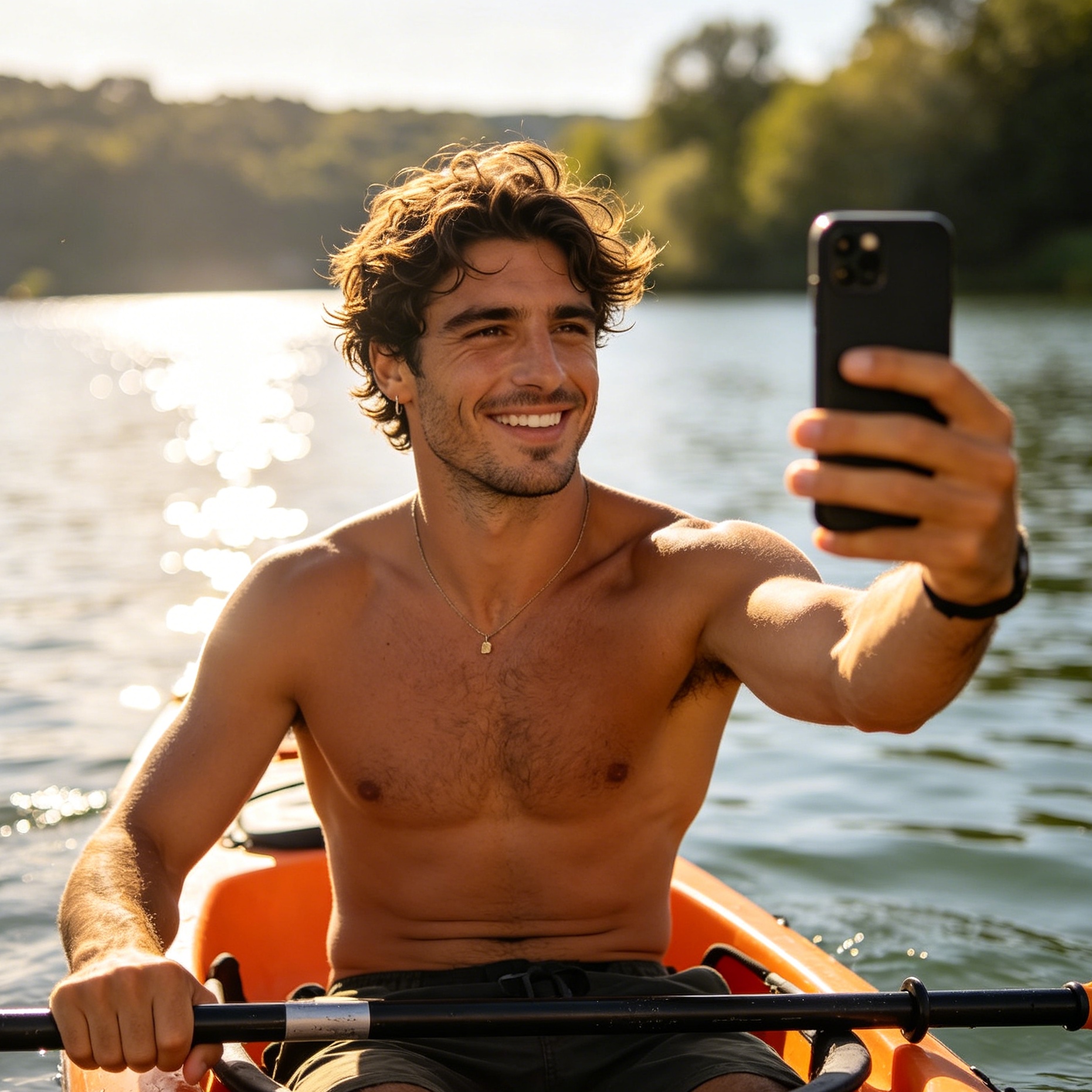
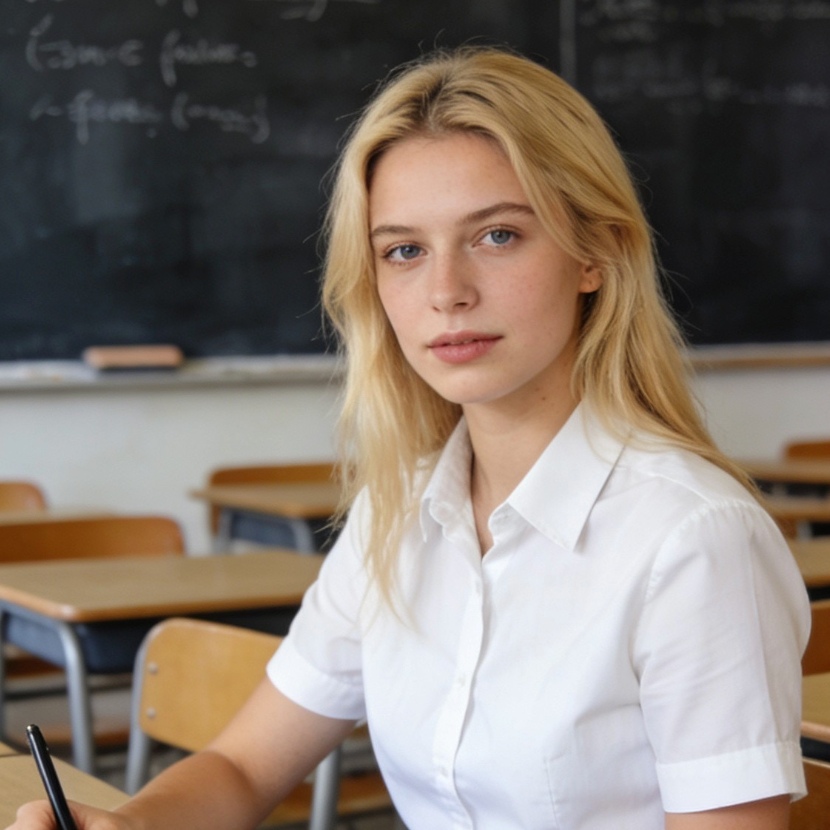
When generating portraits, AI can sometimes create skin that looks too smooth or "plastic." To achieve true photorealism, add descriptors like "skin pores," "slight imperfections," "fine peach fuzz," or "natural skin texture." This forces the AI to move away from the idealized, airbrushed look that is common in default settings.
What is the best AI for making realistic pictures?
For pure photorealism, the current leaders are Midjourney v6 and FLUX.1 [dev]. These models have been trained extensively on photographic datasets, understanding the physics of how light interacts with different surfaces (subsurface scattering). FLUX.1, in particular, has gained traction for its ability to render realistic human skin and hair without the "waxy" finish often seen in earlier AI models.
Can I use AI-generated pictures for commercial purposes?
The legal landscape for AI art is still evolving. In most jurisdictions, AI-generated images cannot be copyrighted because they lack "human authorship." However, most paid AI services (like Adobe Firefly or Midjourney's Pro plan) grant users the right to use the generated images for commercial projects. Adobe Firefly is specifically marketed as "commercially safe" because it is trained on Adobe Stock images, reducing the risk of infringing on existing intellectual property. Users should always review the Terms of Service of their specific tool before using images in a commercial campaign.
Advanced Techniques: Inpainting, Outpainting, and ControlNets
To truly master AI image generation, one must move beyond the "Generate" button.
Inpainting (Generative Fill)
Inpainting allows you to select a specific area of an image and change it. For example, if you have a photo of a living room but want to change the coffee table, you brush over the table and prompt the AI for a "modern marble coffee table." The AI will render the new object, ensuring the lighting and shadows match the rest of the room.
Outpainting (Canvas Expansion)
Outpainting is the process of extending an image beyond its original borders. If you have a portrait but need a landscape version, the AI can "imagine" what the rest of the environment looks like, maintaining the style and continuity of the original shot.
ControlNet: Compositional Locking
For professional workflows, "ControlNets" are the ultimate tool. They allow a user to provide a "guide" image—such as a stick figure for a pose or a line drawing for a building's shape. The AI then fills in the details while strictly adhering to that structure. This is essential for brand consistency, where a character must maintain the same pose across different backgrounds.
Summary
Generating pictures with AI in 2025 is a blend of linguistic precision and technical understanding. By selecting the appropriate tool—be it DALL-E 3 for ease, Midjourney for artistry, or FLUX for control—and applying a structured prompting framework, anyone can produce high-value visual content. The key to success lies in iteration: using base generations as a starting point and employing advanced techniques like inpainting and upscaling to polish the final output. As models continue to evolve, the focus is shifting from "making an image" to "directing an image," where the human creator acts as the creative director over a highly capable digital artist.
FAQ
How do I make AI pictures for free? Several platforms offer free tiers or daily credits. Microsoft Designer (using DALL-E 3) and Google Gemini provide high-quality generation at no cost. Additionally, platforms like SeaArt and Leonardo.ai offer a set number of free daily tokens for users to experiment with various models.
Why does AI struggle with text in pictures? AI doesn't "read" text the way humans do; it views characters as visual patterns. While older models struggled to keep letters in the correct order, 2025-era models like Ideogram 2.0 and DALL-E 3 have significantly improved by using larger language encoders that understand the spelling of words before they are rendered into pixels.
What is a negative prompt? A negative prompt is a list of things you don't want to see in the image. Common negative prompts include "blurry," "deformed limbs," "extra fingers," "low resolution," or "watermark." This helps the AI filter out undesirable traits during the diffusion process.
Do I need a powerful computer to make AI pictures? Not necessarily. Most popular tools (ChatGPT, Midjourney, Canva) run on the cloud, meaning all the heavy processing is done on their servers. You only need a powerful computer (specifically a high-end NVIDIA GPU) if you want to run open-source models like Stable Diffusion or FLUX locally for privacy or unlimited free generation.
-
Topic: AI-GENERATED PHOTOShttps://journalstar.in/wp-content/uploads/2025/06/202561167.pdf
-
Topic: How to Use AI for Pictures in 2025: Easy, Fast Guidehttps://pixelfox.ai/blog/how-to-use-ai-for-pictures-in-2025-easy-fast-guide
-
Topic: Imagen on Vertex AI | AI Image Generator | Generative AI on Vertex AI | Google Cloud Documentationhttps://docs.cloud.google.com/vertex-ai/generative-ai/docs/image/overview?authuser=002