Home
Home
How to Use AI to Reclaim Your Work Week and Focus on What Matters

Artificial Intelligence has transitioned from a futuristic concept to a functional force multiplier in the modern workplace. It functions as a digital librarian, a tireless research assistant, and a sophisticated drafting tool that operates 24/7. To move beyond the initial curiosity of AI and integrate it into a professional workflow, it is essential to categorize its impact by function rather than job title. By offloading repetitive, low-value tasks to AI, professionals can refocus their mental energy on strategic decision-making, relationship building, and creative problem-solving.
Transformative Applications of AI in Daily Work
The most immediate value of AI at work lies in its ability to handle "shallow work"—the necessary but time-consuming tasks that drain cognitive resources. Understanding where AI excels allows for a more surgical application of the technology.
Redefining Writing and Professional Communication
Writing remains the primary currency of the professional world. However, the "blank page" problem often causes significant delays in project timelines. AI acts as a collaborative drafting partner that helps bridge the gap between ideas and polished output.
- Email Synthesis and Drafting: Instead of spending twenty minutes crafting a delicate response to a client regarding a project delay, you can provide an AI with three bullet points: the reason for the delay, the new deadline, and a reassurance of quality. The AI can generate a professional, empathetic draft in seconds, which you can then refine.
- Tone Transformation: Communication often fails not because of the content, but the delivery. AI tools can analyze a draft and rewrite it to be more diplomatic for a superior, more encouraging for a direct report, or more persuasive for a sales lead.
- Content Repurposing: In our internal tests, we found that a single forty-minute meeting transcript can be transformed by AI into a structured summary, a set of action items, three LinkedIn posts, and a brief internal newsletter in under five minutes. This eliminates the need for manual synthesis, ensuring that information flows across the organization without friction.
Information Management and the Digital Librarian Role
In an age of information pervasiveness, the bottleneck is no longer access to data, but the ability to synthesize it. AI serves as a high-speed filter for vast quantities of text.
- Document Summarization: Faced with a sixty-page industry report or a dense legal contract, you can utilize AI to extract the "top five risks" or "three key opportunities for our department." This allows for rapid triage—deciding which documents require a deep human read and which only need a high-level understanding.
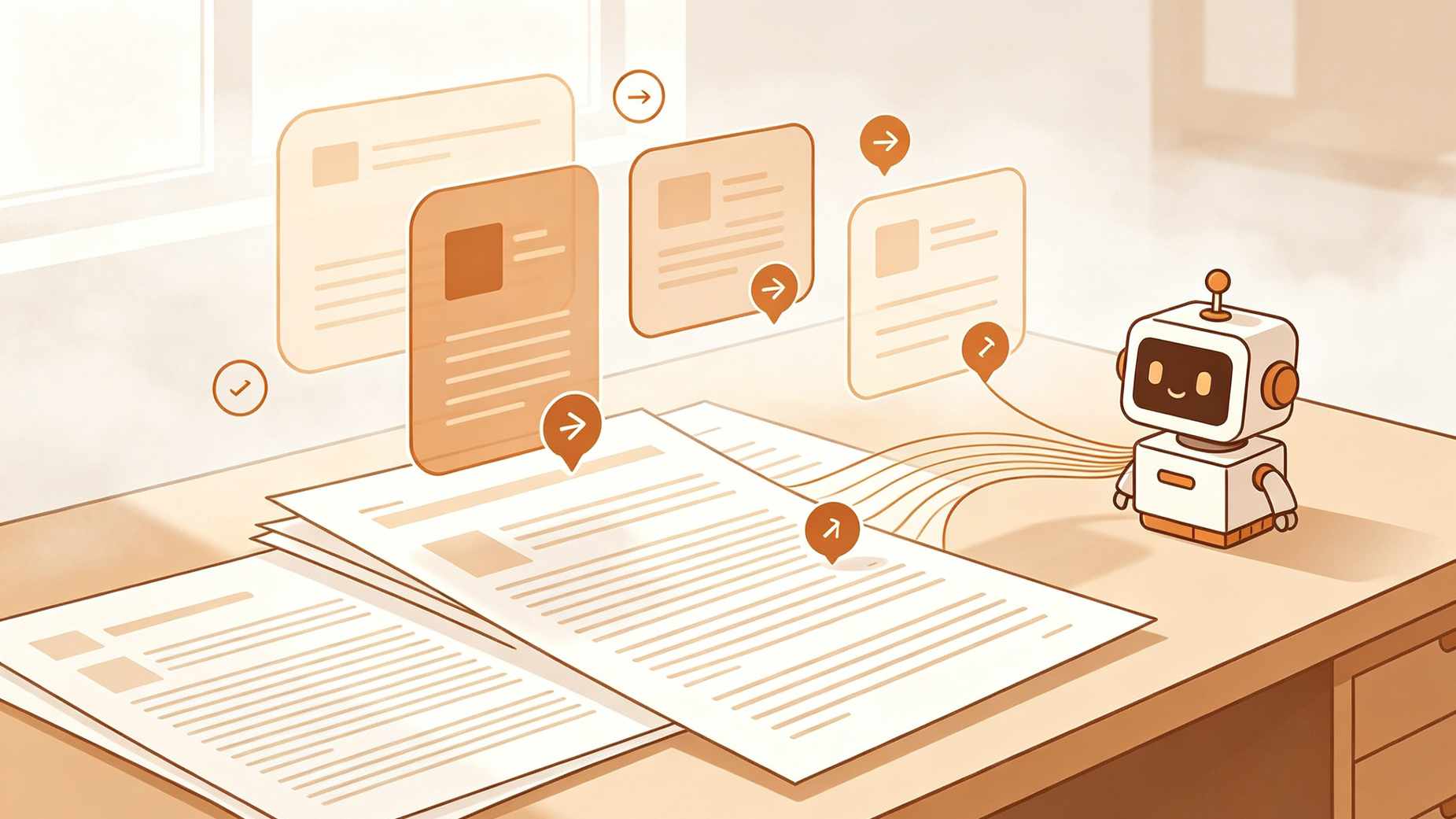
- Cross-Document Synthesis: Modern AI tools can compare data across multiple PDFs. For instance, you can upload three different competitor proposals and ask the AI to create a comparison table based on pricing, service level agreements (SLAs), and implementation timelines.
- Intelligent Meeting Assistance: Tools that record and transcribe meetings have evolved. They no longer just provide text; they identify decisions made, assign owners to tasks, and even flag moments of unresolved conflict. This allows participants to be fully present in the conversation rather than distracted by note-taking.
Data Analysis and Spreadsheet Mastery
You do not need to be a data scientist to derive actionable insights from complex datasets. AI has democratized data analysis by acting as an intermediary between the user and the software.
- Complex Formula Generation: Instead of searching through forums for the correct nested IF and VLOOKUP combination in Excel, you can describe your goal in natural language: "Compare Column A and B, find the duplicates, and calculate the percentage increase in Column C only if the date in Column D is in the first quarter." The AI provides the exact formula and explains how it works.
- Automated Data Cleaning: Messy data—inconsistent date formats, duplicate entries, or missing headers—often consumes hours of a weekend. AI can identify these patterns and suggest cleaning scripts or directly reformat the data, ensuring that the foundation of your analysis is sound.
- Trend Identification and Visualization: When presented with raw sales data, an AI can identify non-obvious correlations, such as a specific product's performance peaking every third Tuesday of the month. It can then suggest the most effective chart type to communicate this finding to stakeholders.
A Framework for Identifying AI Opportunities
To effectively integrate AI, you must perform a "task audit." Not every task is suitable for automation, and misapplying AI can lead to errors or a loss of the "human touch" where it matters most. We recommend sorting your weekly responsibilities into three distinct buckets.
The Automation Bucket (AI Alone)
These are routine, predictable, and low-stakes tasks. They include:
- Initial data entry.
- Formatting documents according to a specific style guide.
- Scheduling recurring meetings based on calendar availability.
- Translating technical documentation for internal use.
- Drafting basic status updates.
The Collaborative Bucket (AI + Human)
These are tasks where AI does the heavy lifting, but human oversight is non-negotiable for quality control and strategic alignment. Examples include:
- Strategic Analysis: AI identifies trends in market data, but a human determines if those trends align with the company's five-year vision.
- Creative Content: AI generates five different headlines or concepts for a marketing campaign, but a human selects the one that best captures the brand's unique "voice."
- Complex Problem Solving: AI brainstorms potential solutions to a logistics bottleneck, but a human assesses the feasibility based on unrecorded "tribal knowledge" within the team.
The Uniquely Human Bucket (Human Only)
These tasks involve high-stakes ethical judgment, deep empathy, or complex interpersonal dynamics. AI should generally stay out of:
- Delivering sensitive performance reviews or terminating employment.
- Building high-level trust and rapport with key clients over dinner or during negotiations.
- Making final ethical calls on product safety or legal compliance.
- Navigating "office politics" and reading the unsaid emotions in a high-pressure boardroom.
Master the Input: The Science of Prompt Engineering
The quality of AI assistance is directly proportional to the quality of the instructions provided. Moving from "simple queries" to "structured prompts" is the hallmark of an AI-fluent professional.
The Context-Task-Constraint Framework
Instead of asking "Write a report," which yields a generic and often useless result, utilize a structured framework to get a high-fidelity output.
- Role/Context: Tell the AI who it is. "Act as a Senior Project Manager with fifteen years of experience in the renewable energy sector."
- Specific Task: Define exactly what needs to be done. "Draft an executive summary for our Q3 solar farm implementation project."
- Target Audience: Who is reading this? "The audience is the Board of Directors, who prefer high-level strategic insights over granular technical details."
- Constraints/Format: "Keep the summary under 500 words. Use bullet points for the three primary risks. Maintain a professional yet optimistic tone."
- Data Input: "Use the following bullet points of raw data as your primary source..."
Iterative Prompting
Professional AI use is a conversation, not a single command. If the first output isn't perfect, refine it. You might say: "This is good, but the tone is too aggressive. Soften the section on budget overruns and emphasize the long-term ROI instead." This "human-in-the-loop" approach ensures the final product reflects your professional standards.
Security, Ethics, and the "Human-in-the-Loop" Rule
While AI offers immense benefits, it introduces risks that must be managed with professional rigor.
Data Privacy and Proprietary Information
The "Golden Rule" of workplace AI is: Never input what you wouldn't post on a public forum. Public AI models often use input data for training. If you are handling sensitive client data, trade secrets, or non-public financial information, you must ensure you are using an Enterprise-grade, secure version of the AI tool that guarantees data siloization. Always check your company’s IT policy before pasting internal documents into an AI.
The Hallucination Risk
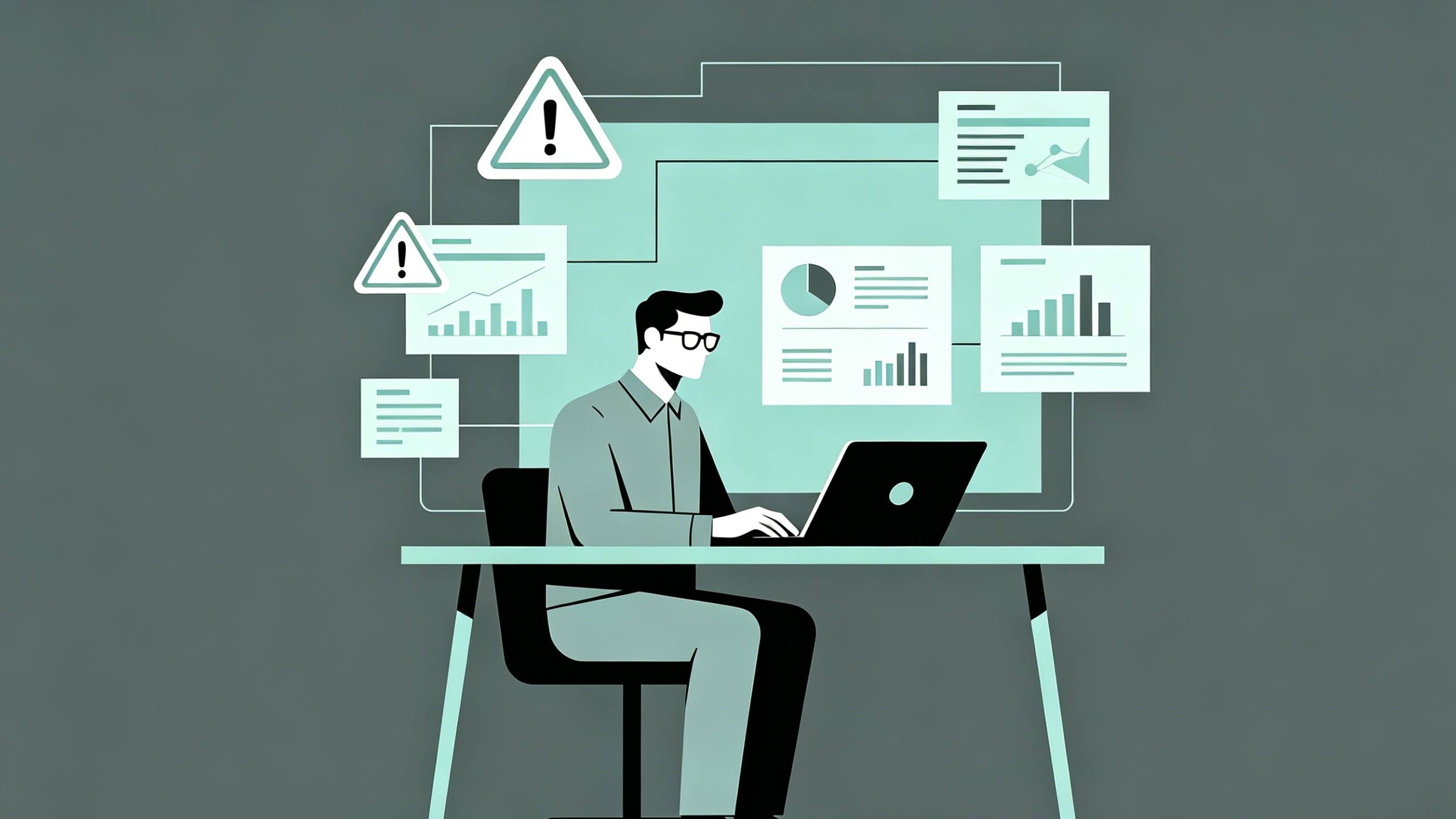
AI models operate on probability, not "truth." They can occasionally generate "hallucinations"—facts, citations, or data points that sound authoritative but are entirely fabricated.
- Verification is Mandatory: Always double-check names, dates, legal citations, and mathematical calculations.
- Expert Oversight: Use AI for tasks where you are already an expert. This allows you to spot a mistake immediately. If you use AI for a subject you know nothing about, you are at the mercy of its potential errors.
A 90-Day Implementation Roadmap
Becoming AI-fluent is a marathon, not a sprint. A phased approach prevents "tool fatigue" and ensures that the habits you build are sustainable.
Days 1–30: Building the Foundation
Focus on a single, high-friction task that you perform daily. For many, this is email management.
- Action: Use an AI to draft every non-trivial email for one month.
- Goal: Learn how to prompt for tone, brevity, and clarity.
- Measurement: Track how much time you save on your "inbox zero" quest.
Days 31–60: Expanding the Toolkit
Move into the "Collaborative Bucket." Start using AI for synthesis and brainstorming.
- Action: Before every meeting, ask AI to summarize the previous meeting's notes. After every meeting, use it to generate action items. Use AI to brainstorm "five potential objections" a client might have before a big presentation.
- Goal: Integrate AI into your strategic preparation.
Days 61–90: Optimization and Leadership
At this stage, you are no longer just using AI; you are optimizing workflows.
- Action: Create a library of "Power Prompts" for your specific role and share them with your team. Identify a complex workflow (like monthly reporting) and see if you can reduce the human effort required by 50% through AI-assisted data cleaning and drafting.
- Goal: Transition from a solo AI user to an AI leader within your department.
Summary
AI is not a replacement for professional judgment; it is the most sophisticated tool ever created to augment it. By mastering writing assistance, information synthesis, and data analysis, you can eliminate the "drudgery" of your role. The key to success lies in maintaining a "human-in-the-loop" philosophy—leveraging AI for its speed and scale while providing the empathy, ethics, and strategic oversight that only a human can offer.
Frequently Asked Questions
Can AI replace my job entirely?
In most professional fields, AI replaces tasks, not jobs. Roles that require complex relationship management, ethical decision-making, and high-level strategy are safe, but the nature of those roles will shift toward managing AI outputs rather than performing manual data processing.
Which AI tool is best for workplace use?
The "best" tool depends on your ecosystem. Microsoft 365 users benefit from Copilot’s deep integration with Excel and Word. Those requiring heavy research and long-document analysis often find Claude or Gemini more effective due to their large context windows. Always prioritize the tool that offers the highest level of data security for your organization.
How do I explain my AI use to my manager?
Frame AI use in terms of "efficiency and ROI." Instead of saying "I use AI to write my emails," say "I am leveraging AI tools to automate routine drafting, which has allowed me to reallocate five hours a week toward the [High-Value Project] we discussed." Transparency focused on results is generally well-received.
What if the AI gives me wrong information?
This is why the "Human-in-the-Loop" rule is critical. You are the ultimate editor. Think of the AI as a very fast, very junior intern. You wouldn't send an intern's first draft to a CEO without checking the facts; the same applies to AI.
-
Topic: AI FOR WORKPLACE PRODUCTIVITY: GETTING STARTED GUIDEhttps://www.pnnl.gov/sites/default/files/media/file/AIforGood-Workplace.pdf
-
Topic: Identifying and scaling AI use cases | OpenAIhttps://openai.com/business/guides-and-resources/identifying-and-scaling-ai-use-cases/
-
Topic: Using AI at work: A practical 90-day guide | Microsoft Signal Blog | Microsofthttps://news.microsoft.com/signal/articles/work-smarter-in-90-days-a-real-world-guide-to-using-ai