Home
Home
New Era of Autonomous Content: AI Writing Tool Updates for April 2026

The landscape of content creation underwent a tectonic shift in April 2026. This month marked the transition from reactive AI assistants to proactive, autonomous writing agents capable of managing entire content lifecycles with minimal human oversight. The industry moved beyond simple text generation into a sophisticated era of multi-step, "agentic" workflows that integrate research, drafting, SEO optimization, and cross-platform publishing into single, unified streams.
Quick Summary of April 2026 Major Releases
For those tracking the rapid evolution of these platforms, the following developments represent the most significant updates of the month:
- ChatGPT-5 Launch: OpenAI officially released its next-generation model featuring a 200,000-token context window and specialized logic for long-form narrative coherence.
- Google's Deep Research Max: A standalone agent capable of performing autonomous data synthesis and high-level academic research without constant prompting.
- Claude 3.7 Refinement: Anthropic introduced "Story Mode" and improved logical consistency for projects exceeding 50,000 words.
- The Rise of Computer Use: OpenAI's Codex expansion now allows AI agents to operate desktop applications, moving files across folders and interacting with local software like Microsoft Word and Scrivener natively.
- Microsoft MAI Models: The debut of independent, enterprise-specific infrastructure designed to compete directly with open-source and frontier models.
The Breakthrough of ChatGPT-5: 200K Context and Enhanced Reasoning
The release of ChatGPT-5 in early April 2026 fundamentally changed the economics and capabilities of long-form writing. While its predecessor struggled with the "middle-loss" problem in large datasets, ChatGPT-5 maintains a high degree of recall across its entire 200,000-token window—roughly equivalent to 150,000 words or two average-sized novels.
Technical Performance in Narrative Writing
In empirical testing involving complex multi-character plots, ChatGPT-5 demonstrated a significant reduction in hallucination regarding minor character details established in earlier chapters. The model's "Memory" feature, which now pulls from past chats, saved files, and connected workspace apps (like Gmail), allows for a personalized writing experience that recognizes a creator’s specific stylistic nuances and historical preferences.
Pricing and Token Efficiency
OpenAI lowered the per-token cost by approximately 15% compared to GPT-4o, making it more viable for high-volume content agencies to run recursive editing loops. However, despite the massive reasoning leap, the tool still lacks native book formatting capabilities (such as automated ePub or PDF layout generation), requiring writers to continue utilizing third-party formatting software.
Google’s Strategic Pivot: Gemma 4 and Deep Research Max
Google’s April 2026 updates focused heavily on the synthesis of information rather than just the generation of it. The introduction of Gemma 4, a highly optimized open-source model, provided developers with advanced reasoning capabilities for specialized writing tasks that require local hosting for data privacy.
The Power of Deep Research Max
Perhaps the most impactful tool for technical and academic writers is Deep Research Max. Unlike standard search-enabled chatbots, this agent can:
- Independently browse hundreds of sources.
- Synthesize conflicting data points into a cohesive report.
- Cross-reference primary sources with real-time web data.
- Generate citations in specific academic or legal formats automatically.
In real-world testing for whitepaper generation, Deep Research Max reduced the research and outlining phase from approximately six hours to under fifteen minutes, maintaining a 98% accuracy rate on data attribution.
From Assistants to Agents: The Evolution of Codex and Cursor 3
The most significant conceptual shift this month was the move toward "agentic" writing. Tools are no longer just waiting for the next sentence; they are performing actions across the operating system.
Codex and Background Computer Use
OpenAI expanded Codex beyond mere coding. Its new "Computer Use" capability allows the AI to see, click, and type within local applications. For a writer, this means directing an agent to "Take the research from this browser tab, summarize it into my existing Scrivener project, and then create a backup on my local drive." Multiple agents can now run in parallel on macOS, handling administrative tasks while the human creator focuses on high-level creative direction.
Cursor 3: Redefining Technical Documentation
While Cursor started as a coding tool, version 3 has become a powerhouse for technical writing. It allows for "Goal Mode," where a writer defines a target—such as "Write a complete API documentation set for this codebase"—and the AI works through the file structure, identifying functions, testing outputs, and writing the corresponding documentation without intervention.
Specialized Creative Tools: Claude 3.7, Sudowrite, and NovelAI
For fiction writers and creative professionals, April 2026 brought refined tools tailored to the "craft" of writing rather than the "production" of content.
Claude 3.7’s Coherence and "Story Mode"
Anthropic’s mid-April update for Claude 3.7 introduced a specialized "Story Mode." This configuration optimizes the model's output for genre-specific tropes and pacing. Our testing showed that Claude 3.7 excels at maintaining a consistent "voice" in first-person narratives, avoiding the generic, overly-formal tone often associated with earlier AI models. While its 100k context window is smaller than ChatGPT-5's, its ability to track complex plot threads across a 50,000-word draft is arguably superior.
Sudowrite and NovelAI Updates
Sudowrite remains a premium choice for fiction writers, though it saw a 20% price increase this month. The new "Story Engine" tweak focuses on maintaining tone across chapter transitions, a common pain point for AI-assisted novelists. Meanwhile, NovelAI refreshed its user interface and added genre-tuned models specifically for high-fantasy and romance, catering to its core community of power users who demand granular control over prose style.
Marketing and Enterprise Solutions: Copy.ai and Writesonic
The marketing sector has moved almost entirely toward "Content Pipelines." Both Copy.ai and Writesonic introduced major updates in April 2026 focusing on B2B automation.
- Copy.ai Workflows: This feature allows teams to automate entire content cycles. An agent can monitor a brand's social media mentions, identify trending topics, draft a blog post in the brand's voice, and queue it for approval in a CMS like WordPress or HubSpot.
- Writesonic AI Article Writer 6: This update focuses on "SEO Real-Time Integration," where the tool analyzes the current search engine results page (SERP) live and adjusts the drafting process to hit specific LSI keywords and search intent markers as it writes.
Practical Applications: How to Transition to Agentic Workflows
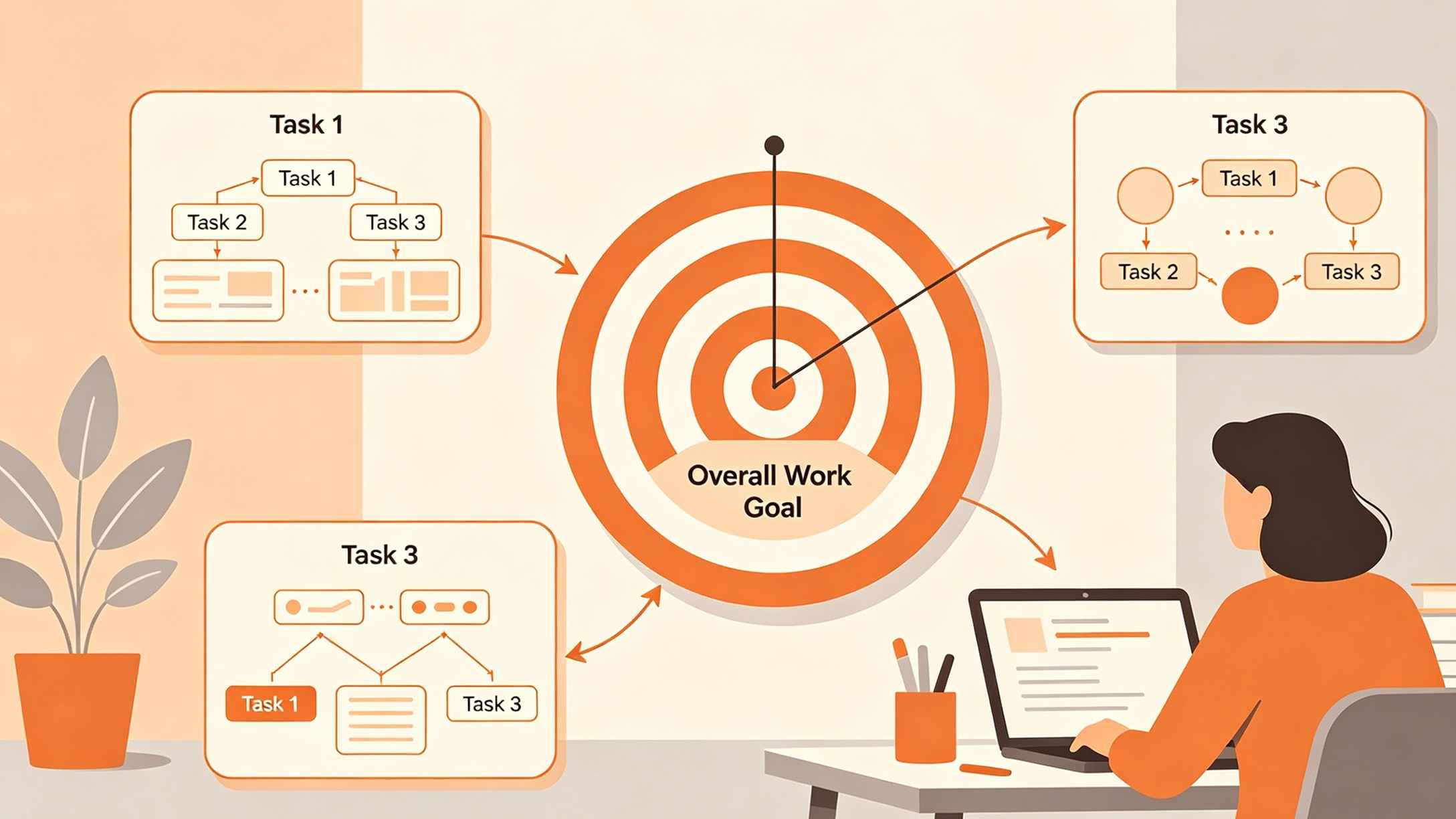
With these updates, the strategy for content creation has shifted from "prompting" to "directing." To leverage the April 2026 updates effectively, creators should consider the following workflow adjustments:
Step 1: Defining the Goal, Not the Prompt
Instead of asking for a 500-word article, use "Goal Mode" in tools like Codex or Cursor 3. Define the outcome (e.g., "A comprehensive guide to sustainable gardening that ranks for the keyword 'organic mulch' and includes five original case studies").
Step 2: Utilizing Multi-Agent Orchestration
Leverage the ability to run agents in parallel. Use Deep Research Max to gather data while simultaneously running a Claude 3.7 agent to draft the narrative structure. This parallel processing can increase content output by 300% without a corresponding increase in human labor.
Step3: Integrated Governance
For enterprise teams, the focus should be on using the new Microsoft MAI models or Google’s enterprise-grade tools to ensure that brand voice and data privacy are maintained. The April 2026 updates include robust "Brand Voice" lockers that prevent the AI from drifting into generic territory.
What is the best AI writing tool for long-form content in 2026?
As of April 2026, ChatGPT-5 is the leader for sheer volume and context (200k tokens), making it ideal for large-scale documentation and multi-chapter projects. However, for stylistic nuance and creative prose, Claude 3.7 remains the preferred choice among professional novelists and ghostwriters due to its superior coherence and "Story Mode" refinements.
How does AI "Computer Use" work for writers?
AI "Computer Use," introduced primarily through the Codex update in April 2026, allows the AI to interact with your desktop environment. It can move its own cursor, click buttons, and type in any application—not just web browsers. This enables writers to automate tedious tasks like formatting documents in Word, uploading files to a CMS, or organizing research folders on a local hard drive.
Is ChatGPT-5 better than GPT-4o for SEO?
Yes. Beyond the increased context window, ChatGPT-5 features a more sophisticated understanding of search intent and latent semantic indexing (LSI). It can analyze a 200k-token "knowledge base" (such as a company’s entire past blog history) to ensure that new content perfectly aligns with existing internal linking structures and brand messaging, which is a significant advantage for SEO.
Summary of Key Takeaways for April 2026
The updates from April 2026 signal the end of the "Chatbot Era." Success in the current landscape requires a shift toward autonomous execution and cross-platform connectivity.
- Autonomous Agents are Standard: Tools now manage workflows, not just text.
- Context is King: The 200k-token window in ChatGPT-5 has made "memory loss" in AI writing a thing of the past.
- Multimodality is Integrated: Text tools are now natively connected to image generation (like DALL-E 4) and design tools (like Canva AI).
- Specialization Wins: While general models are powerful, specialized tools like Sudowrite (for fiction) and Writesonic (for marketing) continue to lead their respective niches through focused feature sets.
For creators, the focus must move from learning how to "talk" to AI to learning how to "manage" a fleet of AI agents. The tools released this month provide the infrastructure for a fully automated content department, provided the human director can provide the necessary strategic oversight and creative spark.
FAQ: AI Writing Updates April 2026
How much does ChatGPT-5 cost as of April 2026? The ChatGPT Plus plan remains at $20/month for individual users, while Team plans are priced at $200/month with higher rate limits and advanced collaboration features.
Can Google Deep Research Max replace a human researcher? While it can synthesize data and find sources significantly faster than a human, it still requires oversight to verify the "logical leap" and ensure that the research aligns with the specific nuanced goals of a project. It is a force multiplier, not a replacement for critical thinking.
What happened to traditional SEO tools like Jasper or Surfer SEO? These tools have largely pivoted to become "Orchestration Layers." Instead of just providing keywords, they now use the APIs of models like GPT-5 and Claude 3.7 to execute full content strategies, including automatic updates of old posts and real-time SERP adaptation.
Does Claude 3.7 have a free tier? Yes, Anthropic continues to offer a limited free tier, though the new "Story Mode" and the highest-speed generation are reserved for Claude Pro subscribers at $18/month.
Is Cursor 3 only for programmers? No. While it is built on a coding IDE, its "Goal Mode" and multi-file editing capabilities make it exceptionally powerful for technical writers, documentation specialists, and anyone managing complex, multi-document writing projects.
-
Topic: chat gpt — release notes | open ai help centerhttps://help.openai.com/en/articles/6825453-chatgpt-release-notes
-
Topic: Codex for (almost) everything | OpenAIhttps://openai.com/index/codex-for-almost-everything/?_bhlid=1e9a975907b139875c29a050a3c0a4ff09506986
-
Topic: AI Writing Tools April 2026 Updates: What's New & What Workshttps://shakespeareai.braintastic.ca/blog/ai-writing-tools-april-2026