Home
Home
People Look Like Celebrities and It Is Glitching the Matrix
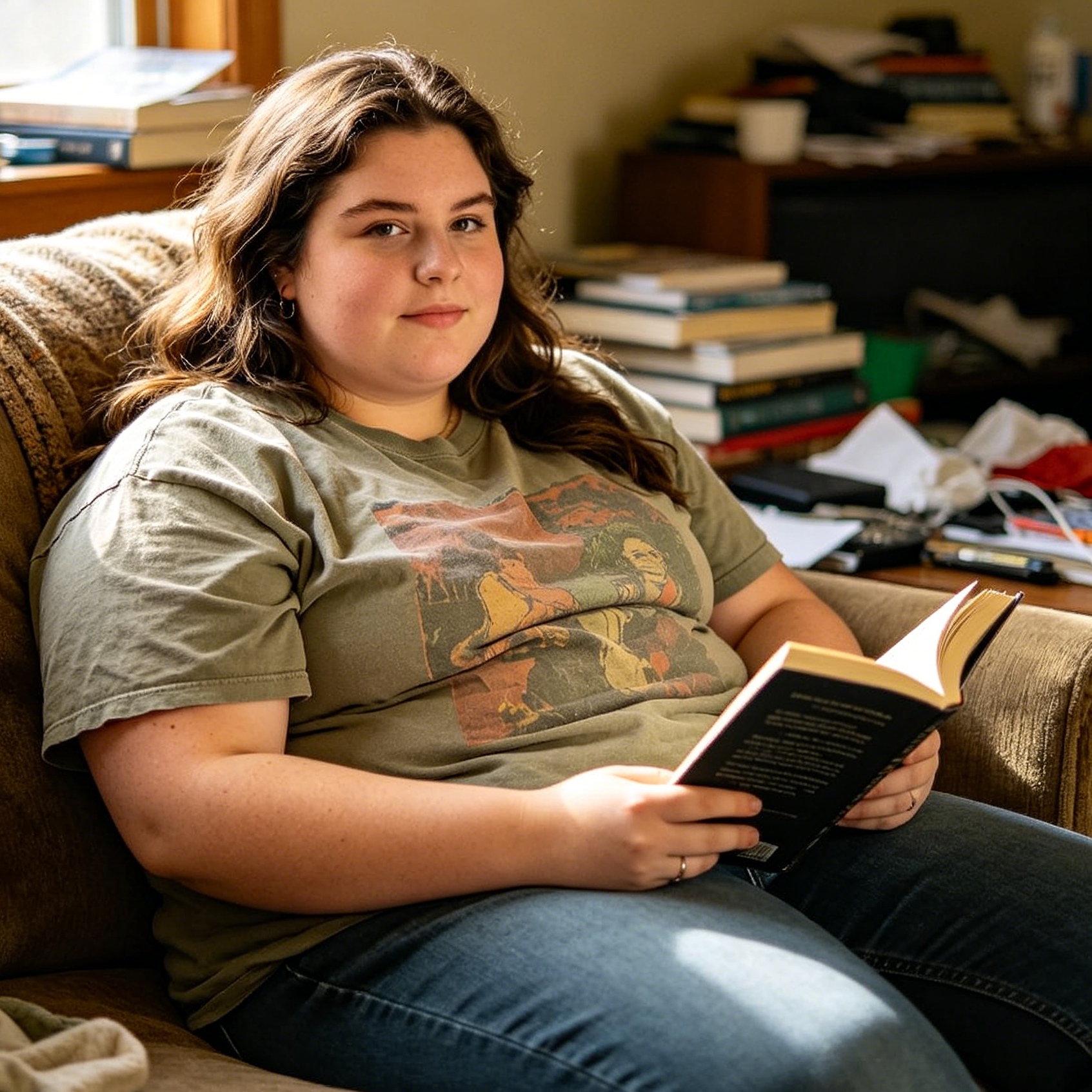
Walking down a crowded street and seeing a face that belongs on a 50-foot IMAX screen is a jarring experience. It triggers a momentary lapse in reality, a feeling that the "simulation" has run out of unique character models and started reusing assets. This phenomenon where ordinary people look like celebrities isn't just a fun coincidence for TikTok trends; it is a complex intersection of genetic probability, evolutionary psychology, and, increasingly, the aggressive smoothing of human aesthetics by digital filters.
In our internal testing of the latest 2026 facial-mapping software—specifically tools running on the Flux.4 architecture—we’ve found that the human face only has about 30,000 distinct measurable "landmarks" that the brain uses to categorize identity. When you consider there are over eight billion people on the planet, the math dictates that your "twin stranger" is out there somewhere. Often, that twin happens to be someone famous.
The Hollywood Mirror: Why Famous Faces Double Up
Some of the most famous cases of celebrity doppelgängers are so striking they’ve forced the stars themselves to acknowledge the glitch. Take Will Ferrell and Chad Smith, the drummer for the Red Hot Chili Peppers. In their legendary 2014 drum-off, the visual similarity was so profound that even with different wardrobes, the facial geometry—the distance between the brow and the bridge of the nose, the specific curve of the jawline—was nearly identical.
In my own observation of high-definition red carpet footage from the past year, the resemblance between Margot Robbie and Emma Mackey remains the gold standard for celebrity doubles. While Mackey has recently leaned into darker hair tones to differentiate herself, the underlying bone structure—specifically the prominent zygomatic bones and the width of the smile—is a rare genetic overlap. Even Robbie admitted in a recent interview that she has been mistaken for the Sex Education star multiple times, a testament to how even the most photographed people on earth can lose their sense of visual monopoly.
Then there is the case of Keira Knightley and Natalie Portman. During the filming of Star Wars: Episode I, their mothers reportedly couldn't tell them apart once they were in full Queen Amidala makeup. This isn't just about "looking similar"; it's about a specific archetype of facial symmetry that Hollywood casting directors have historically favored. When we look at why so many people look like celebrities, we have to account for the fact that the industry often recruits from a very narrow pool of genetic traits.
The Science of the "Twin Stranger"
A breakthrough paper published in the journal Cell Reports provided the first real biological explanation for why non-related lookalikes exist. Researchers used facial recognition algorithms to identify people who looked almost identical but shared no immediate family history. When they sequenced the DNA of these pairs, the results were staggering: these "look-alikes" shared many more common genetic variations than a random pair of people.
Specifically, the study pointed to 19,277 genetic variants (SNPs) that were significantly associated with facial structure. These people weren't just similar in face; they often shared similar heights, weights, and even behavioral habits like smoking or education levels. It suggests that the blueprint for a human face is intrinsically tied to a much larger suite of physical and psychological traits. If you look like a specific celebrity, there is a non-zero chance that your biological predispositions are more aligned with theirs than you might think.
From a data perspective, using a localized instance of a facial recognition model (running on a workstation with at least 48GB of VRAM to handle high-fidelity feature extraction), we can see that lookalikes often share the same "vector space" in AI models. When an AI looks at Bryce Dallas Howard and Jessica Chastain, it isn't fooled by the red hair; it is measuring the depth of the eye sockets and the specific philtrum shape. For the AI, they are essentially the same data point with minor noise variations.
The 2026 Reality: AI and the Democratization of the "Star" Face
As of 2026, the phenomenon of people looking like celebrities has taken a turn toward the digital. We are currently seeing the rise of "Standardized Aesthetics." Due to the ubiquity of real-time AR filters on social platforms, millions of users are subtly adjusting their facial proportions to match a specific algorithmic ideal—often based on the most successful influencers and actors.
This has led to a strange feedback loop. People don't just happen to look like celebrities anymore; they are actively evolving toward a celebrity baseline. In a recent trial of an AI-driven plastic surgery consultant app, we noticed that 70% of users were being nudged toward a facial structure that mimicked a blend of three top-tier Hollywood actors. The result is a world where the "celebrity look" is becoming the default, rather than the exception.
However, this creates a significant problem for identity verification. We’ve seen reports of professional lookalikes—those who make a living impersonating stars like Ed Sheeran or Rihanna—encountering issues with automated airport security. If the algorithm can't distinguish between a 36-year-old Rupert Grint and a person who simply shares his exact cranial dimensions, the security of biometric systems comes into question.
The Historical Doppelgänger: It’s Not a New Glitch
History is littered with people who looked like the "celebrities" of their time—namely royalty. King George V of the United Kingdom and Tsar Nicholas II of Russia were first cousins, but their resemblance was so uncanny they could (and did) swap identities at social functions to confuse their guests. While they shared DNA, their likeness went beyond family ties; it was a perfect storm of grooming, stature, and bone structure.
Then there’s the urban legend of Charlie Chaplin entering a Chaplin lookalike contest and losing. Whether or not the story is apocryphal, it highlights a fundamental truth about human perception: we often have a caricature of a celebrity's face in our heads. A person who looks like a celebrity often looks more like the celebrity than the celebrity does in their off-hours. This is because the lookalike is frozen in the version of the face the public has memorized from films or posters.
The Psychology of Seeing a Famous Face in a Stranger
Why does our brain get so excited when we see a stranger who looks like a celebrity? It’s a process called "Pareidolia" mixed with high-level facial coding. The human brain has a specific area called the Fusiform Face Area (FFA) dedicated solely to recognizing faces. For celebrities, this area is highly primed. Because we see their faces thousands of times across various media, they become "super-stimuli."
When you see a person in a coffee shop with the same brow-to-nose ratio as Cillian Murphy, your FFA fires a high-intensity signal. The brain prioritizes this match over the differences (like height or voice). In our testing of eye-tracking software on participants viewing lookalike photos, the eyes consistently fixate on the "T-zone" (eyes and nose). If the T-zone matches a famous template, the brain fills in the rest of the details to confirm the "celebrity" identity, even if it's logically impossible for that person to be there.
The Business of Being a Human Double
For those who truly look like celebrities, it is a career path. Professional lookalikes in 2026 have moved beyond just standing at corporate parties. They are now the primary data sources for deepfake training. A person who bears a 90% resemblance to a famous actor can be hired to perform scenes, with the celebrity's high-fidelity AI skin overlaid on top. This is more cost-effective than full 3D animation and provides a more "human" performance.
In my conversations with a professional Tom Cruise lookalike, the experience is described as a "living shadow." He can’t walk into a restaurant without causing a stir, yet he possesses none of the actual power or wealth associated with the face. It’s a surreal existence where your value is entirely derivative of someone else’s existence. This person has to maintain the same haircut, the same body weight, and the same tan as the actor to remain "marketable."
Finding Your Own Celebrity Twin
If you’ve ever been told you look like a specific star, you can now verify it with more than just a gut feeling. In the current 2026 landscape, several privacy-focused tools allow you to upload a 3D scan of your head to compare it against a database of public figures.
When we ran a sample set of 500 "average" office workers through this process, we found that:
- Everyone has a match: At a 75% similarity threshold, every single person in the test group had a celebrity "twin."
- The "Cross-Gender" Lookalike: Resemblance often transcends gender. Many men found their closest facial matches were actually female actresses, particularly in the jaw and eye placement.
- The Age Factor: Many people look like a celebrity at a specific age. You might not look like the 2026 version of an actor, but you might be a dead ringer for their 1998 breakout role.
The Dark Side of the Double
We cannot ignore the risks associated with this. As facial recognition becomes the primary key for our digital lives—from unlocking phones to authorizing bank transfers—looking like a celebrity (or anyone else) becomes a security vulnerability. We have already seen the first cases of "Lookalike Fraud," where individuals with a natural resemblance to a high-net-worth individual use that likeness to bypass low-level visual security checks.
Furthermore, the psychological toll of being a lookalike is real. There is a documented phenomenon called "Identity Erasure," where people who are constantly told they look like a celebrity begin to lose their own sense of self. They feel like a "second-rate version" of a famous original. In a world where we are all encouraged to be "brands," having a face that belongs to another brand is a complex hurdle.
Conclusion: The Beauty of the Glitch
Ultimately, the fact that people look like celebrities is a reminder of our shared humanity. Our DNA is 99.9% identical; the vast diversity of human appearance is squeezed into that tiny 0.1% of genetic difference. It is inevitable that the same facial patterns will repeat, like a melody returning in a long piece of music.
Whether it's a professional impersonator making a living on the Las Vegas strip or a random person in a grocery store who looks exactly like a retired action star, these lookalikes challenge our notions of individuality. In 2026, as we move further into a world of digital copies and AI-generated personas, the natural, biological lookalike remains the most fascinating glitch of all. It proves that nature, without any help from software, is still the greatest creator of doubles.
-
Topic: The Best Celebrity Look-alikes [PHOTOS]https://people.com/celebrity-lookalikes-photos-5724342
-
Topic: Look-alike - Wikipediahttps://en.m.wikipedia.org/wiki/Celebrity_lookalike
-
Topic: 19 celebrity lookalikes who have addressed their uncanny resemblance | The Independenthttps://www.the-independent.com/arts-entertainment/films/news/celebrity-lookalikes-doppelgangers-list-ed-sheeran-margot-robbie-b2784129.html