Home
Sample Observation Questions to Master Professional and Classroom Research

Observation is far more than the act of looking. In professional research, whether it occurs in a high-tech lab, a primary school classroom, or a fast-paced corporate office, observation is a systematic data collection method. The quality of the insights derived from this method depends entirely on the questions the observer asks themselves while watching the subject. Without a structured set of sample observation questions, data often becomes biased, anecdotal, or superficial.
The transition from passive watching to active research requires a robust framework. This involves identifying specific behaviors, environmental factors, and interaction patterns that would otherwise go unnoticed. The following sections provide detailed sample observation questions across multiple domains, designed to help researchers, educators, and analysts extract high-value insights from any environment.
Strategic Observation Questions for Workplace and Productivity Audits
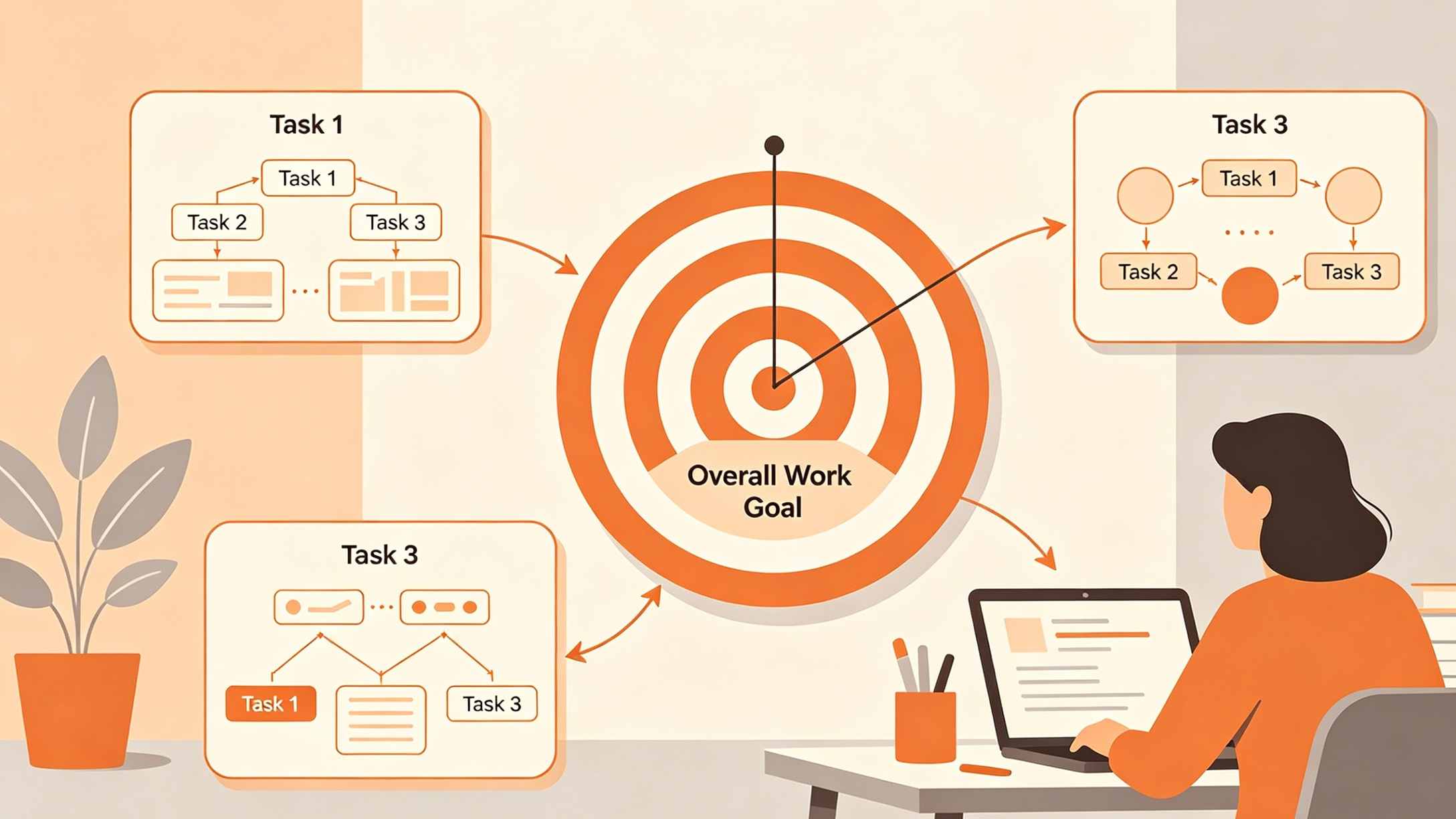
In a corporate or industrial setting, observation is often used to conduct "Gemba walks" or productivity audits. The goal is to identify bottlenecks, cultural dynamics, and opportunities for process improvement. Effective workplace observation focuses on the intersection of human behavior and operational systems.
Analyzing Workflow Efficiency and Process Flow
When observing a team or an individual performing a task, the focus should be on the sequence of actions and the friction points between them.
- What is the precise trigger that starts this specific task? Understanding whether a task begins due to a scheduled alert, a verbal request, or a backlog item helps define the workflow's reactive or proactive nature.
- Where do the pauses occur in the sequence of actions? A pause often indicates a cognitive load issue or a technical delay, such as waiting for a software interface to load or searching for a physical tool.
- Are there redundant movements or digital steps? In our recent audit of a logistics firm, we observed that employees were manually entering data into three separate systems. Identifying this through observation led to a 20% reduction in processing time through automation.
- How does the individual handle the transition between high-concentration tasks and administrative tasks? This reveals much about the mental switching costs present in the environment.
Assessing Communication Patterns and Team Dynamics
Observation questions in a team setting should look past the formal organizational chart to find how information actually flows.
- Who initiates communication most frequently, and what is the medium used? Does the team rely on instant messaging for complex problems that require a face-to-face meeting, or vice versa?
- Is the communication proactive or reactive? Proactive communication sounds like "I am starting Task A now," whereas reactive is "Why isn't Task A done yet?"
- How are conflicts or misunderstandings resolved in real-time? Note whether the participants seek a consensus or if a single authority figure dictates the solution without input.
- What non-verbal cues are present during meetings? Eye contact, posture, and the frequency of interruptions provide a clearer picture of psychological safety than any employee survey ever could.
Sample Observation Questions for Educational and Classroom Settings
Classroom observation is essential for teacher development and for understanding student learning styles. The questions here focus on engagement levels, the clarity of instruction, and the physical learning environment.
Measuring Student Engagement and Peer Interaction
Engagement is not just "being quiet." It is an active participation in the learning process.
- What percentage of the class is actively participating in the discussion versus those who are passive observers? We often use a 5-minute interval check to tally active behaviors like hand-raising, note-taking, and peer-to-peer questioning.
- What specific behaviors indicate a lack of engagement? Is it "off-task" behavior (distracting others) or "disengaged" behavior (staring out the window)? The distinction is vital for intervention strategies.
- How do students interact when assigned a group task? Is there a clear leader, or is the work divided equitably? Observing these interactions helps identify social skill development needs.
- How long does it take for the majority of the class to focus after a transition? If transitions between subjects take more than three minutes, it suggests a need for better classroom management protocols.
Evaluating Instructional Clarity and Teacher Adaptation
Observers should look at how the instructor modulates their delivery based on real-time feedback from the students.
- How does the teacher check for understanding during the lesson? Do they ask "Does everyone understand?" (which usually gets a default "yes") or do they use targeted questions that require a demonstration of knowledge?
- What is the instructor's response when a student provides an incorrect answer? Is it a quick correction, or is it used as a "teachable moment" to explore the logic behind the mistake?
- In what ways does the physical layout of the room support or hinder the lesson? For example, if a teacher is using a collaborative learning model but the desks are all in rigid rows, the physical environment is working against the instructional goal.
- How does the teacher adapt to different learning speeds? Do they provide extension activities for fast finishers or additional scaffolding for those who are struggling?
User Experience (UX) and Product Testing Observation Questions
In UX research, observation is the "Gold Standard." What users say in interviews often contradicts what they actually do when interacting with a product. These questions are designed to bridge that gap.
First Impressions and Navigation Path Discovery
The first 30 seconds of a user's interaction with a new interface are the most telling.
- What is the very first element the user’s eyes land on, and what is their first click? This determines if the visual hierarchy of the design aligns with the intended user flow.
- Does the user hesitate before clicking a primary Call to Action (CTA)? Hesitation usually signals a lack of trust or a confusing label. In our testing of a new AI-powered creative tool, we noticed users hovered over the "Generate" button for an average of 4 seconds, indicating they were unsure what would happen next.
- What path does the user take to reach the goal? If the intended path is A-B-C, but the user goes A-D-F-C, there is a fundamental disconnect in the information architecture.
- How does the user react to the initial loading state? If the interface takes longer than 2 seconds to respond (a common issue with heavy LLM integrations), does the user refresh the page, or do they wait patiently?
Identifying Friction Points and Error Recovery
Observation questions should focus on the "recovery" phase—what happens when things go wrong.
- When an error occurs, does the user realize it immediately? Or do they continue to perform actions that are no longer valid? This tests the effectiveness of the system's feedback loops.
- How does the user attempt to solve a problem? Do they look for a "Help" section, try to undo their action, or simply close the application?
- Does the user’s verbal feedback match their physical behavior? A user might say, "The interface is very clean," while their brow is furrowed and they are clicking the same button repeatedly. This "cognitive dissonance" is a critical finding for any UX report.
- Are there "hidden" interactions the user expects that aren't there? For example, do they try to right-click on an element or swipe a card that isn't swipeable?
Scientific Observation Questions for Laboratory and Process Skills
Scientific observation requires a different level of precision. It is the foundation of the scientific method, focusing on measurable and classifiable data.
Questions for Measuring and Classifying Phenomena
- What are the observable physical properties of the subject before the experiment begins? This includes color, texture, state of matter, and precise measurements (mass, volume, temperature).
- What specific changes occur at the exact moment of intervention? For instance, in a chemical reaction, does the color change gradually or instantaneously? Is there a release of gas or heat?
- How can these observations be categorized? Are the observed traits shared with other known specimens? (e.g., classifying a plant based on leaf structure—pointed vs. rounded).
- What tools are required to make the observation more precise? If a human eye sees a "cloudy liquid," would a spectrophotometer see a specific level of turbidity?
Distinguishing Between Observation and Inference
A critical skill in scientific research is knowing the difference between what is seen (observation) and what is assumed (inference).
- What is the raw data? (e.g., "The grass is wet.")
- What is the logical conclusion based on that data? (e.g., "It rained," or "The sprinklers were on.")
- What evidence is missing to turn the inference into a fact? By asking this, researchers avoid the trap of "leaping to conclusions" and instead look for secondary observations to confirm their theories.
The AEIOU Framework for General Field Observations
When an observer enters a new or complex environment without a specific rubric, the AEIOU Framework provides a comprehensive structure. This is widely used in ethnographic research and design thinking.
| Category | Sample Observation Questions |
|---|---|
| Activities | What are the primary goals of the people here? What pathways do they take to complete a task? What are the informal "hacks" or workarounds they have created? |
| Environments | How does the lighting, noise level, or temperature affect behavior? Is the space cramped or open? How does the "vibe" of the room change throughout the day? |
| Interactions | Are the interactions between people formal or informal? How do people interact with the technology? Is there a "gatekeeper" who controls the flow of information? |
| Objects | What tools are central to the environment? What items are present but never used? Are people using objects in ways they weren't intended (e.g., using a chair as a doorstop)? |
| Users | Who is present, and what are their apparent roles? What are their demographics? How do their motivations seem to differ based on their actions? |
Cognitive and Design Sensitivity Observation Questions
These questions test the observer's own ability to perceive patterns and anomalies. This is often used in professional exams for designers and architects (like the UCEED or CEED).
- How many intersections or points of contact exist within this complex structure? This requires the observer to break down a 3D object into its geometric components.
- Which element in this sequence does not fit the established pattern? This looks for font inconsistencies, color shifts, or logical breaks in a series.
- If this object were viewed from a different perspective (top-down vs. side-view), how would the silhouette change? This tests spatial reasoning and mental rotation.
- What is the minimum number of moves required to solve this spatial puzzle? This combines observation with strategic planning.
Best Practices for Conducting Unbiased Observations
Even with the best sample observation questions, the "Observer Effect" (or Hawthorne Effect) can skew results. People tend to change their behavior when they know they are being watched.
Separating Fact from Inference in Real-Time
One of the most important rules in professional observation is to record only the facts during the session.
- Fact: "The participant looked at the 'Submit' button for 15 seconds, then moved the cursor to the 'Cancel' button."
- Inference: "The participant was confused and wanted to quit." By recording the fact, you allow for multiple interpretations during the analysis phase. If you only record the inference, you have already filtered the data through your own bias.
Recording Contextual Variables
Observation does not happen in a vacuum. A workplace observation on a Friday afternoon will yield vastly different results than one on a Monday morning.
- What is the external environment like? (e.g., "The office is unusually loud today due to construction outside.")
- Who else is in the room? The presence of a supervisor often increases "performative productivity" while decreasing genuine risk-taking.
- What was the state of the subject prior to the observation? If a student just came from a high-energy gym class, their focus in a math lesson will be affected.
The Ethics of Observation
In any professional setting, the ethics of observation must be considered.
- Has informed consent been obtained? Subjects should know they are being observed and for what purpose, unless the study is a covert public observation.
- How is the data being anonymized? Ensure that personal identifiers are removed from the observation notes to protect the privacy of the participants.
- Are the observations being used for "surveillance" or "improvement"? There is a thin line between a productivity audit and employee spying. The goal should always be the improvement of the system, not the punishment of the individual.
Summary
Mastering the art of observation requires a shift from passive looking to intentional questioning. By using these sample observation questions across workplace, educational, UX, and scientific contexts, you can transform raw sensory input into actionable data. Whether you are using the AEIOU framework for ethnographic research or specific UX metrics to refine an app, the key lies in focusing on the "Why" and the "How" of human and system behavior. Remember to always separate fact from inference and to account for environmental context to ensure your findings are both accurate and impactful.
Frequently Asked Questions About Observation Methods
What is the most common mistake in professional observation?
The most common mistake is failing to separate observation from inference. Observers often record their "feelings" about a situation (e.g., "the team was happy") rather than the specific behaviors that led to that feeling (e.g., "members were smiling and using positive reinforcements").
How long should an observation session last?
This depends on the "cycle time" of what you are observing. In a classroom, a full 45-minute lesson is usually required. In a workplace productivity audit, you might observe a specific 10-minute task multiple times throughout the day to account for fatigue and environmental changes.
Can I use these questions for remote observation?
Yes. When observing remote teams via video call or screen sharing, the same questions apply, but you must pay closer attention to digital cues, such as "lag time" in responses, the use of "mute" buttons, and the presence of digital distractions in the background.
How do I handle the Hawthorne Effect?
The best way to minimize the Hawthorne Effect is through "habituation." Spend time in the environment before you start formally recording data. Once the subjects become accustomed to your presence, they are more likely to revert to their natural behaviors.
-
Topic: Worksheets on Basic Science Process Skills (BSC101) - Studocuhttps://www.studocu.com/ph/document/west-visayas-state-university/bachelor-of-secondary-education-major-in-english/basic-science-process-skills-worksheets/85973133
-
Topic: Test Your Observation Skills With This Quiz - Quiz & Triviahttps://www.proprofs.com/quiz-school/story.php?title=pp-mjk2ode3nqgm10
-
Topic: List of top Observation and design sensitivity Questionshttps://questions.collegedunia.com/exams/observation-and-design-sensitivity-questions/page-6