Home
Home
Sora Video Generation in ChatGPT: It’s More Than Just Text-to-Video Now
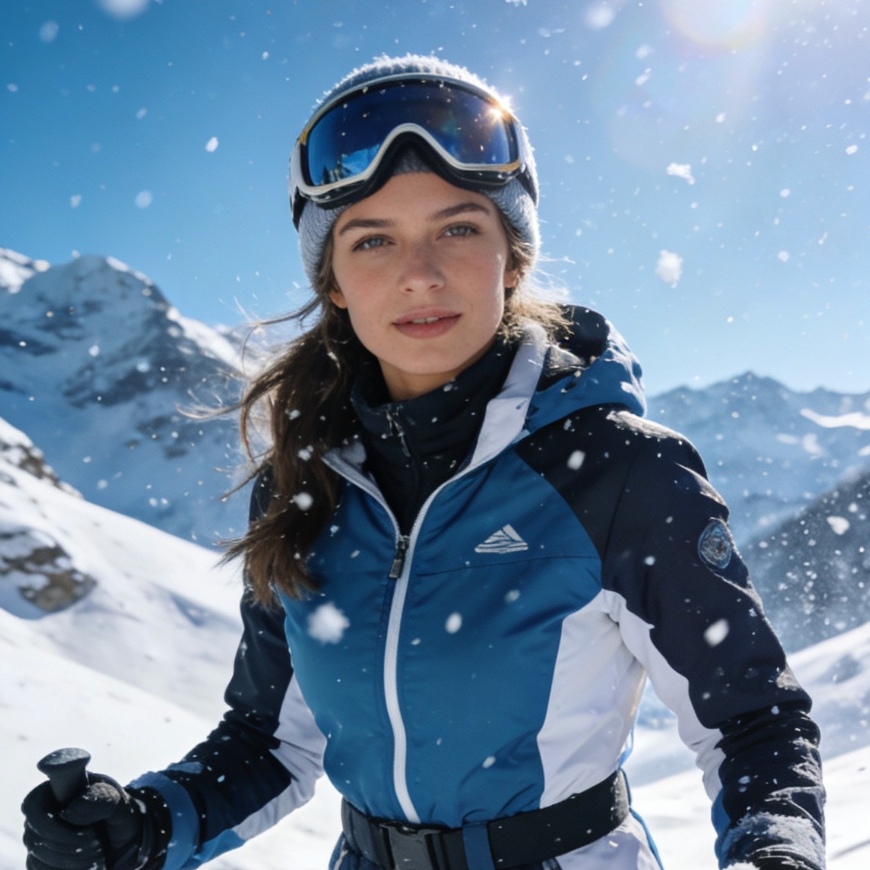
Sora video generation in ChatGPT is the integration of OpenAI’s advanced diffusion transformer model directly into the conversational interface and the dedicated sora.com workspace. By April 2026, Sora has evolved from a research curiosity into a multi-functional production tool capable of generating 20-second clips at 1080p resolution. It is no longer just a "prompt and pray" experience; it now functions as a generative video editor that allows users to extend, remix, and blend visual assets using both text and image inputs.
The Shift from Research to Daily Tool
In our daily workflows, the introduction of Sora Turbo has fundamentally changed the speed of creative iteration. Unlike the early previews that took several minutes to render a single low-resolution clip, the current Sora Turbo model integrated into ChatGPT Plus and Pro accounts can deliver high-definition previews in under a minute. The core technology remains a diffusion transformer—a model that treats video as sequences of 3D "patches"—but the optimization in 2026 allows for much better temporal consistency than we saw in the initial 2024 announcements.
When you open the Sora interface within ChatGPT today, you aren't just met with a text box. You see a comprehensive creative suite. The "Experience" of using it feels less like chatting with a bot and more like working with a highly skilled, albeit sometimes physically confused, junior cinematographer.
Breaking Down the Editing Suite: Storyboard, Remix, and Blend
The real power of Sora video generation in ChatGPT lies in its editing features. Most users start with a simple text-to-video prompt, but the pros rely on the secondary manipulation tools.
1. The Storyboard Tool
One of the most significant upgrades in Sora 2 is the Storyboard editor. This feature allows you to specify inputs for individual frames or segments of a sequence. In my testing, using the Storyboard is the only reliable way to create a narrative that spans more than 20 seconds. You can generate a 10-second establishment shot of a cyberpunk city, then use the Storyboard to anchor the next 10 seconds to a specific character's movement. It solves the "character drifting" problem that plagued early generative video models.
2. Remixing and Style Presets
The Remix feature allows for local or global modifications to an existing video. For instance, if you have a video of a golden retriever running through a park, you can apply a "Film Noir" preset or describe a change like "make it a rainy night with neon reflections." In our tests, the "Remix Strength" slider (Subtle, Mild, Strong) provides decent control, though "Strong" often hallucinates entirely new objects that weren't in the original footage.
3. The Blend Feature
Blending is perhaps the most experimental tool in the ChatGPT Sora toolkit. It takes two distinct video assets and merges them into a single transition. When blending a shot of a blooming flower with a shot of a sprawling galaxy, Sora attempts to find a mathematical middle ground in the latent space. The results are often hallucinatory and surreal, making it a favorite for music video creators but less useful for realistic commercial work.
Technical Specs and Performance Metrics
To understand the value proposition of Sora video generation in ChatGPT, you need to look at the hard numbers we are seeing in 2026:
- Maximum Resolution: 1080p for Pro users; 720p for Plus users.
- Maximum Duration: 20 seconds per generation. To create longer videos, you must use the "Extend" tool, which adds segments in 5 to 10-second increments.
- Aspect Ratios: Native support for 16:9 (Widescreen), 9:16 (Vertical for TikTok/Reels), and 1:1 (Square).
- Frame Consistency: High. The model now uses the recaptioning technique from DALL-E 3, meaning it follows complex instructions (like "a camera tracking a red ball that rolls behind a tree and reappears on the other side") with about 85% accuracy.
The Cost of Creativity: Plus vs. Pro
OpenAI has tiered the access to Sora video generation in ChatGPT to manage the massive compute requirements. This is a point of contention for many hobbyists.
- ChatGPT Plus ($20/month): You get roughly 50 priority generations per month. These are capped at 720p and 10 seconds. Once you run out of priority credits, you are moved to a "relaxed" queue, which, during peak hours, can feel like waiting for a 2005 dial-up connection to download a movie.
- ChatGPT Pro ($200/month): This is clearly aimed at small studios. You get 500 priority generations, 1080p resolution, 20-second durations, and the ability to run up to 5 concurrent generations. Most importantly, Pro users can remove the default moving watermark in certain jurisdictions (though C2PA metadata remains embedded).
In my subjective view, the $200 price tag is only justifiable if you are using Sora for professional storyboarding or social media ad production. For the casual user, the Plus plan’s 50 clips are more than enough to explore the "wow" factor.
The "Hallucination" Problem: What Sora Still Can't Do
Despite the leaps in Sora 2, the model still struggles with the laws of physics. We call these "Sora-isms." For example, in a prompt involving a person eating a sandwich, the sandwich might remain intact after a bite is taken, or the person’s hand might merge with the bread.
Causality is another weak point. If a glass falls off a table in a Sora-generated video, it might shatter a split second before it hits the ground, or the liquid might flow upward. These errors occur because Sora isn't a physics engine; it's a statistical predictor of what pixels should look like based on its training data. It doesn't "know" that gravity exists; it just knows that objects usually move downward in its dataset.
Safety, Watermarking, and the C2PA Standard
Every video generated via Sora in ChatGPT comes with multiple layers of provenance. There is a visible watermark (which looks like a small, translucent OpenAI logo) and, more importantly, C2PA metadata. This metadata is an industry standard that allows platforms like YouTube or Instagram to label the content as "AI-generated."
OpenAI has also implemented strict safety filters. You cannot generate likenesses of public figures, nor can you generate content that is sexually explicit, excessively violent, or promotes hate speech. If you try to prompt for a specific celebrity, ChatGPT will politely refuse or suggest a "generic person" instead. This is a necessary guardrail, though it sometimes leads to over-moderation where even innocent prompts (like "a person in a red dress") are occasionally flagged if the model interprets the "red" or the "fit" as potentially suggestive.
How to Get the Best Results: A Quick Guide to Prompting
If you are just starting with Sora video generation in ChatGPT, your prompts need to be more descriptive than your DALL-E prompts. You are directing a scene, not just describing a still image.
- Bad Prompt: "A cat flying through space."
- Good Prompt: "A cinematic close-up shot of a fluffy orange tabby cat wearing a miniature glass space helmet. The cat is floating weightlessly inside a futuristic spaceship cockpit. Outside the window, a vibrant purple nebula swirls. Soft blue lighting from the control panel reflects in the cat's eyes. The camera slowly zooms in on the cat's face as it blinks in wonder."
The more you specify camera movement (tracking, panning, zooming) and lighting (volumetric, neon, golden hour), the less room you leave for the model to make weird stylistic choices.
Integration with Other ChatGPT Tools
The real magic happens when you use GPT-4o to write your Sora prompts. You can ask ChatGPT: "I want to make a 15-second teaser for a sci-fi short film about a lonely robot on Mars. Give me three different visual concepts and then generate the best one using Sora."
ChatGPT will then act as your creative director, fleshing out the details of the robot's texture, the shade of the Martian dust, and the lens flare effects before sending the final instruction to the Sora engine. This synergy is what makes Sora in ChatGPT more powerful than standalone competitors like Runway or Luma; it has the best "brain" attached to the "eyes."
Final Thoughts: Is It a Filmmaker Killer?
As of April 2026, the answer is no. Sora is a phenomenal tool for pre-visualization (pre-viz). It allows directors to see a rough version of a shot before spending thousands on a real set. It’s also a game-changer for social media creators who need high-quality B-roll without a subscription to expensive stock footage sites.
However, the lack of precise control—the inability to say "move this specific glass two inches to the left"—means that traditional filmmaking and 3D animation (CGI) aren't going anywhere. Sora video generation in ChatGPT is an additive tool. It fills the gap between static images and high-budget video production, making the medium of video as accessible as the written word once was.
Whether you are using it to visualize a dream or to create a background for a presentation, Sora is the most impressive piece of the ChatGPT ecosystem right now. Just don't expect it to get the physics of a falling glass right every time.