Home
Home
Testing Every Major Image Creator AI to See Which One Actually Delivers
Generative AI has moved past the novelty phase. In 2026, an image creator ai isn't judged by whether it can make a picture of a cat, but by how it handles subsurface scattering on human skin, complex spatial physics, and the perfect rendering of tiny, legible text. We are no longer in the era of 'good enough'—we are in the era of professional integration. After spending hundreds of hours stress-testing the current landscape of tools, from cloud-based giants to local-run open-weights models, it is clear that the market has bifurcated into two categories: artistic dreamscapes and hyper-realistic precision tools.
The Real-World Performance of Midjourney v7
Midjourney remains the industry benchmark for what we call 'aesthetic intuition.' While other models require highly technical prompting, Midjourney v7 seems to understand the vibe of a request with minimal input. In our latest tests, we used a deceptively simple prompt: 'A cinematic shot of a rainy street in a neon-noir city, 35mm film grain, heavy bokeh.'
In our subjective evaluation, Midjourney v7 still beats Flux or DALL-E in terms of lighting composition. The way it handles reflections in puddles feels more like a deliberate choice by a cinematographer rather than a random calculation by a neural network. However, the limitation remains its closed ecosystem. If you are looking for an image creator ai that fits into a complex API-driven workflow, Midjourney’s Discord-centric roots—even with their web alpha—remain a friction point for enterprise users.
Technical Observation: We noticed that Midjourney v7 has significantly reduced 'over-smoothing.' Previous versions often made skin look like plastic; the current iteration introduces micro-textures that make high-resolution upscaling far more convincing for print media.
Flux.1 and the Rise of Local Precision
If Midjourney is the artist, Flux is the architect. For those running local hardware, specifically setups with at least 24GB of VRAM (like the RTX 5090 or high-end workstation cards), Flux.1 Dev has changed the game for prompt adherence.
One of the biggest frustrations with any image creator ai has historically been the 'prompt drift'—where the AI ignores the third or fourth adjective in your sequence. Flux doesn't do that. When we prompted for 'A man in a red velvet suit holding a glass of green liquid while standing on a blue pier at sunset,' Flux rendered every specific color and object precisely where they were requested.
Why Flux is Winning in 2026:
- Typography: It is arguably the best image creator ai for text. It can render full paragraphs of legible text without the dreaded 'AI gibberish' that plagued early models.
- ControlNet Integration: The ability to use depth maps and Canny edges to guide the generation is unparalleled for graphic designers.
- Hardware Demand: Be warned—to run the 'Pro' version locally without quantization loss, you need a serious rig. On a machine with only 16GB VRAM, we saw generation times climb from 10 seconds to nearly two minutes as it swapped to system RAM.
ChatGPT and DALL-E: The Semantic Powerhouse
For the average user, the best image creator ai is often the one they can talk to. ChatGPT (utilizing DALL-E 4) remains the king of semantic understanding. You don't need to know what 'octane render' or '8k' means. You simply describe a story, and it builds the visual.
In our testing, DALL-E 4 excels at complex narrative scenes. If you ask for 'A visual metaphor for the feeling of losing your keys when you're already late for a wedding,' ChatGPT brainstorms the scene—the blurred clock in the background, the frantic hands, the spilled coffee—and executes it with high emotional resonance. The downside? It still feels 'too AI' at times. There is a distinct digital sheen to DALL-E 4 images that makes them easily identifiable compared to the raw photographic output of Flux or the painterly touch of Midjourney.
Understanding the Tech: Diffusion vs. Autoregression
To choose the right image creator ai, you have to understand what’s happening under the hood. Most of the tools we use today are based on one of two architectures:
- Diffusion Models: These work by taking a field of random noise and gradually 'denoising' it until an image emerges. This is how Midjourney and Stable Diffusion operate. It’s excellent for textures and lighting but can sometimes struggle with global structure (the 'extra finger' problem).
- Autoregressive Models: This is the newer trend in 2026. These models treat pixels or image tokens like words in a sentence, predicting the next part of the image based on what came before. This leads to much better spatial logic—the AI knows that if a person is behind a table, their legs shouldn't be visible through the wood unless it’s glass.
Breaking the 'Instagram Model' Bias
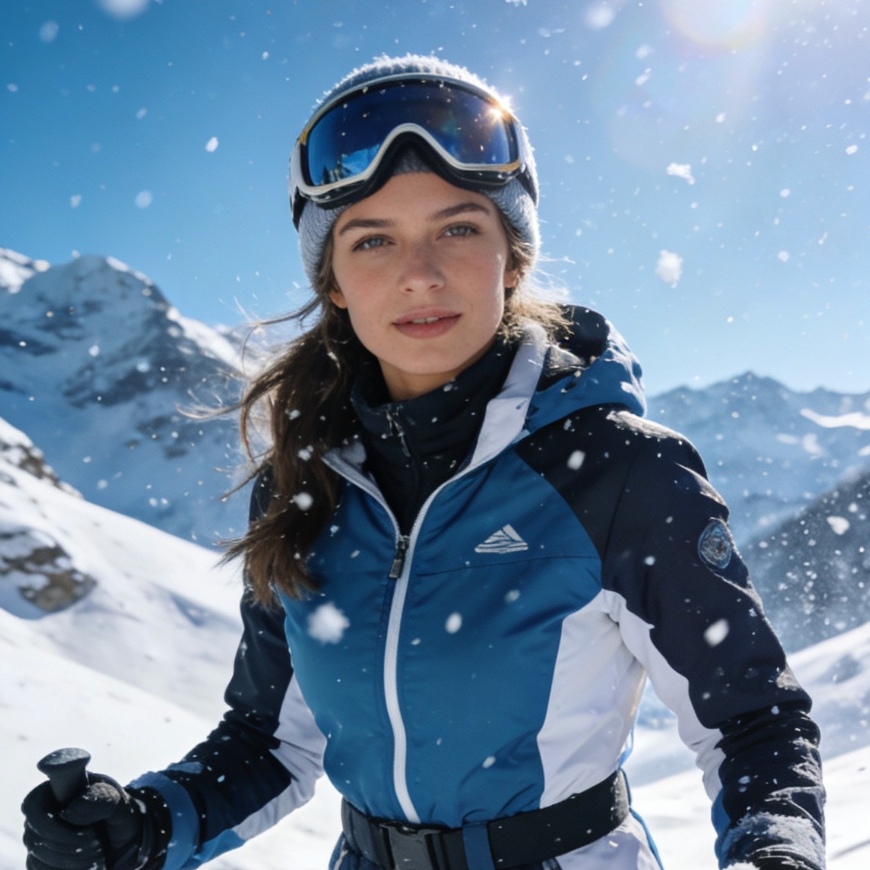
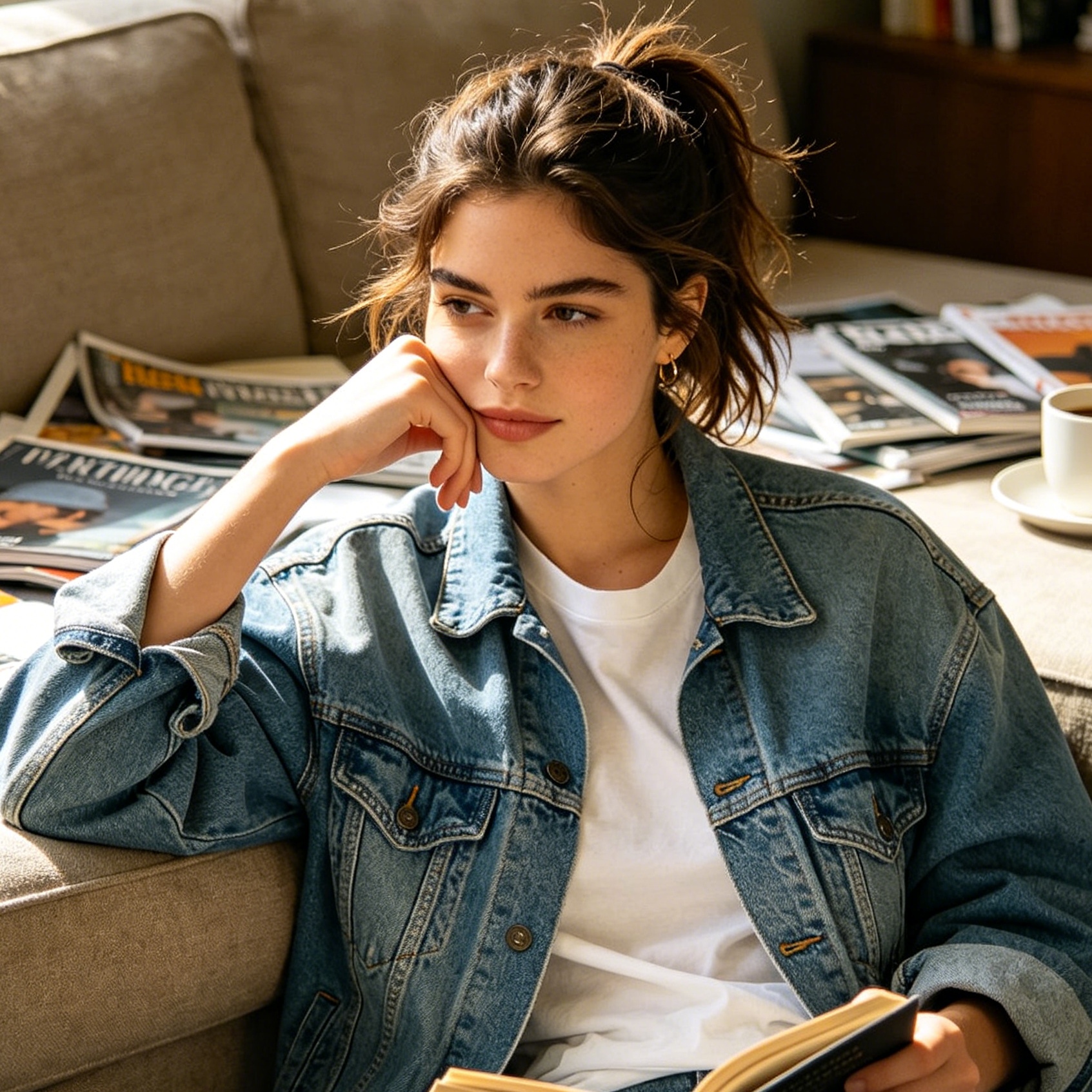
A significant issue we’ve observed across almost every image creator ai in 2026 is the inherent bias in training data. If you prompt for a 'beautiful person,' the AI almost exclusively defaults to a specific, narrow standard of beauty—often resembling high-fashion influencers.
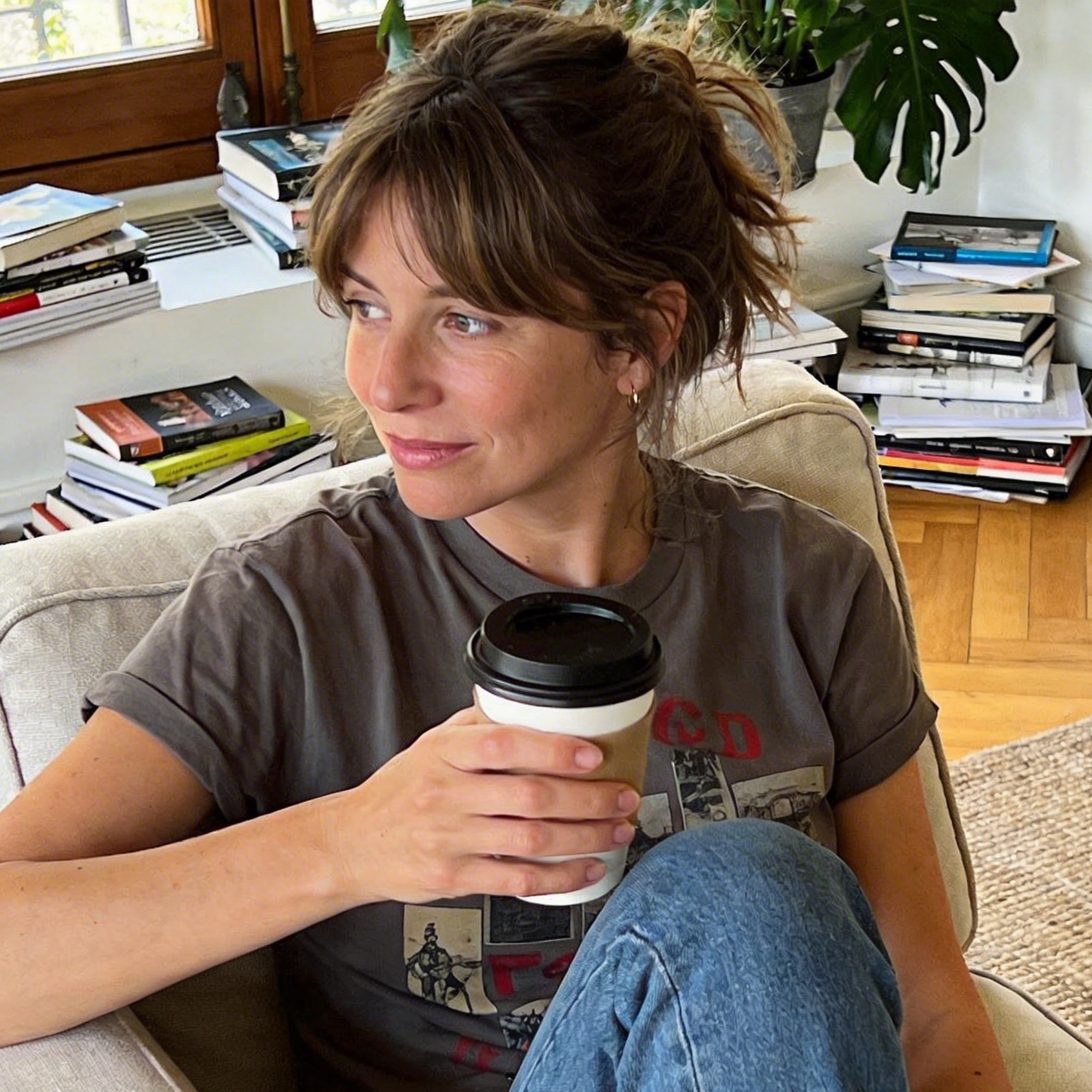
This 'bias of the average' means that without specific prompting, your images can start to look generic. In our workflow, we’ve found that adding descriptors like 'authentic skin texture,' 'asymmetrical features,' or 'candid photography' is essential to break the AI out of its habit of creating 'perfect' humans. If you don't provide enough detail, the AI will 'fill in the blanks' with stereotypes it learned during training.
Prompt Engineering for Professional Results
The secret to mastering an image creator ai in 2026 isn't just a list of keywords; it’s about providing context, action, and technical specifications. Here is a breakdown of how we structure a professional-grade prompt:
- The Subject: Be specific. Instead of 'a dog,' use 'a senior Golden Retriever with grey fur around the muzzle.'
- The Action: What is happening? 'Running through a field' is fine, but 'mid-leap through tall wheat during a thunderstorm' is better.
- The Environment: Set the scene. 'In a kitchen' vs. 'In a dimly lit 1950s diner with neon reflections on the chrome counter.'
- The Technicals: This is where you control the look. Mention the lens (e.g., '85mm f/1.8'), the lighting ('Rembrandt lighting,' 'golden hour'), and the media ('kodachrome film,' 'digital matte painting').
Example of a High-Performance Prompt:
"A close-up portrait of a weathered sailor, 85mm lens, f/2.8. Harsh side-lighting to emphasize deep wrinkles and salt-crusted skin. Background is a blurred ocean at dusk with a stormy atmosphere. Cinematic color grading, high contrast, photorealistic texture."
Safety Filters and the Responsibility of Creation
As these tools become more powerful, the 'guardrails' have become more stringent. Every web-based image creator ai now uses hyper-vigilant detection systems to prevent the generation of unsafe or copyrighted content. While these are necessary by law and for safety, they can often lead to 'false positives.'
In our experience, using words like 'explosion' or even 'shot' (as in a camera shot) can occasionally trigger a safety block in more restrictive environments like Bing Image Creator or Adobe Firefly. Professional users are increasingly moving toward local models like Flux precisely because they offer an 'unfiltered' environment where creative freedom isn't accidentally stifled by over-sensitive algorithms.
The Verdict: Which Tool Should You Use?
Choosing the right image creator ai depends entirely on your observation boundary and your project's pressure:
- For Marketing and Social Media: Use ChatGPT/DALL-E. The speed of ideation and the ability to iterate through conversation make it the most efficient tool for rapid content creation.
- For High-End Visual Arts: Use Midjourney v7. No other tool has the same 'artistic soul' or the ability to create compositions that feel like they were made by a human painter or photographer.
- For Graphic Design and Branding: Use Flux.1. The precision in text rendering and the ability to follow complex layout instructions make it the only viable choice for logos, posters, and technical illustrations.
- For Integration into Photography: Use Adobe Firefly. Its deep integration with Photoshop's 'Generative Fill' makes it the best choice for professionals who need to extend a photo or change a background without leaving their editing suite.
In 2026, the 'image creator ai' is no longer a toy. It is a sophisticated engine that requires a blend of creative vision and technical knowledge. Whether you are generating a quick mockup for a client or a full-scale digital masterpiece, the tools are now capable of matching your imagination—provided you know how to talk to them.
-
Topic: Introduction to Image Generation AIhttps://aisandbox.org.nz/wp-content/uploads/2025/04/Curated-Stream-Intro-to-Image-Generation.pdf
-
Topic: Free AI Image Generator - Bing Image Creatorhttps://copilot.microsoft.com/images/create?cc=mk
-
Topic: The 8 best AI image generators in 2026 | Zapierhttps://zapier.com/blog/best-ai-image-generator/