Home
Home
Text to Image Models in 2026: Realism Is No Longer the Goal
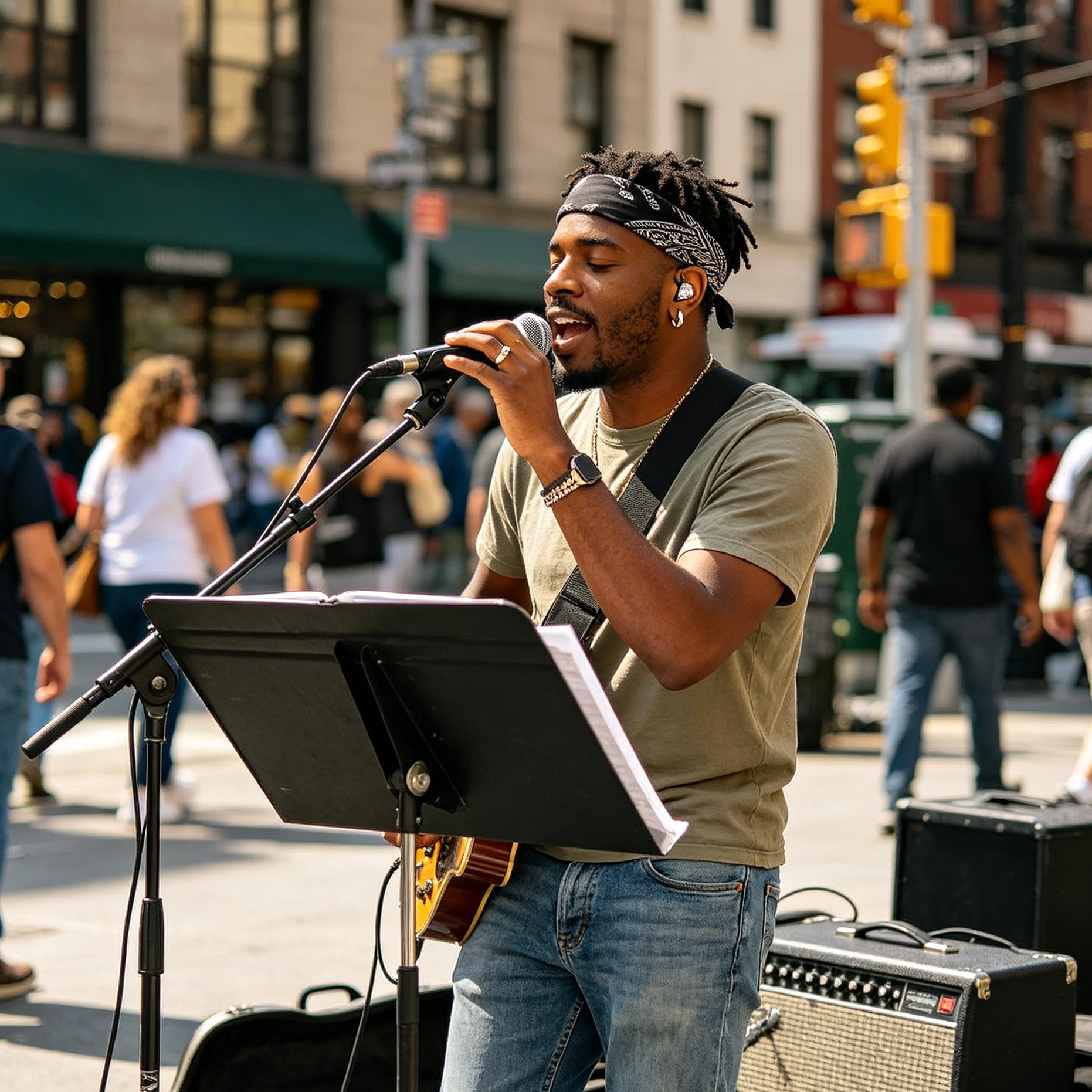
The landscape of text to image generation has shifted fundamentally in early 2026. We have reached a point where photorealism is effectively a solved problem. When a model can render the refractive indices of a glass of water or the microscopic skin pores of a high-fashion model with 99% accuracy, the industry naturally pivots. Today, the conversation is no longer about whether a model can generate a realistic eye; it is about how much control the director—no longer just a "prompter"—has over the light, the weight of the fabric, and the underlying structural composition.
The State of the Art: Flux 1.1 Ultra vs. Midjourney v7
In our latest internal benchmarks, the divide between the major players has never been more pronounced. Flux 1.1 Ultra has emerged as the heavy lifter for technical precision. Running Flux locally in 2026 requires a minimum of 32GB of VRAM for the full FP16 weights, but the results justify the hardware investment. The model’s ability to handle "Text-in-Image"—rendering complex typography within a scene—has reached near-flawless levels. In a test prompt requesting a "neon sign for a futuristic cafe named 'The Quantum Sip' reflected in a rain-slicked pavement," Flux 1.1 Ultra maintained perfect character integrity even in the distorted reflection.
Midjourney v7, by contrast, has doubled down on its proprietary "Aesthetic Engine." It is less of a literal interpreter and more of a digital cinematographer. While it occasionally takes creative liberties with specific prompt tokens, its handling of bounce light and volumetric fog remains superior to the more clinical output of the Flux or DALL-E ecosystems. The introduction of the --structure and --style reference parameters has mitigated the lack of direct control that plagued earlier versions, allowing for a hybrid workflow that many professional studios are now adopting.
Beyond Diffusion: The Hybrid Architecture Shift
Looking back at the "Decade Survey" of text to image synthesis, we can see why 2026 feels like a turning point. The industry has moved away from pure Latent Diffusion Models (LDM) toward a hybrid architecture that incorporates Autoregressive (AR) elements for better semantic understanding.
Early models like Stable Diffusion 1.5 or the original DALL-E struggled with spatial relationships—the infamous "astronaut riding a horse" was a triumph in 2022 because the model actually understood that the astronaut should be on top of the horse. By 2026, the hybrid AR-Diffusion models use a large language model (LLM) backbone to parse the scene's logic before the first pixel is ever de-noised. This means the model understands that if you ask for a "heavy wooden table," the floor beneath it should show a slight shadow occlusion, and the lighting should change based on the material's roughness.
Compositional Control: The Death of the "Slot Machine" Workflow
The biggest frustration of 2023-2024 was the "slot machine" nature of text to image tools. You would pull the lever with a prompt and hope for a usable result. In 2026, the workflow is structural. Adobe’s Firefly 5 (currently in preview) and the latest ControlNet integrations have standardized "Composition Reference."
You no longer need to describe where every object sits in a 3D space. Instead, you upload a rough 3D block-out or a hand-drawn sketch, and the model adheres to that geometry with pixel-perfect accuracy. In our testing of Firefly 5’s "Visual Intensity" slider, we found that it allows for a granular transition between stylized art and hyper-photography without changing the underlying composition. This is a massive win for consistency in commercial storyboarding.
Hardware Reality and the Local vs. Cloud Divide
There is a growing divergence in how professionals access text to image power. On one side, we have the "banana-class" models—hyper-optimized, small-parameter models like Gemini 2.5 Nano that run on mobile devices. These are perfect for quick social media assets but fall apart under complex lighting requirements.
On the other side, the "Pro" and "Ultra" tiers of models have grown in size. The latent space of a model like Flux Kontext Max is so vast that it requires massive throughput. For the local enthusiast, the barrier to entry has stayed high. While quantization techniques have improved, running a state-of-the-art model without significant speed bottlenecks still demands high-end consumer GPUs. This has led to a resurgence in specialized "Inference Clouds" where users rent time on H100 or B200 clusters specifically for high-res generation batches.
Semantic Nuance and Prompt Adherence
We have observed a significant shift in how these models respond to natural language. In 2022, you had to use "prompt soup"—strings of meaningless keywords like "4k, 8k, highly detailed, trending on ArtStation." In 2026, those keywords are essentially ignored or, in some cases, actually degrade the output.
The current generation of text to image models prefers descriptive, narrative language. If you want a specific mood, you describe the environment, not the camera settings. For example, instead of "cinematic lighting, f/1.8," the best results now come from "the harsh, low-angle sun of a late October afternoon casting long, blue shadows across a dusty porch." This shift from technical jargon to descriptive prose has democratized the toolset, making the "creative director" role more about vision than technical prompt engineering.
The Ethics of Data and the C2PA Standard
No discussion of text to image in 2026 is complete without addressing the data provenance. Most major models now ship with integrated C2PA metadata. When you generate an image in Firefly or Midjourney today, the file carries a digital signature confirming its AI origin. This has become a requirement for publishing in most mainstream media outlets.
The datasets themselves have also evolved. While early models were trained on massive, unfiltered scrapes like LAION-5B, the 2026 models are increasingly trained on "synthetic-human hybrid" datasets. By using high-quality AI-generated images—vetted by human curators—to train the next generation of models, developers have managed to bypass many of the copyright hurdles that slowed the industry down in 2024. However, this has led to a "style collapse" in some smaller models, where everything starts to look like a polished, somewhat generic AI aesthetic. Finding the models that retain "human-like grit" or imperfections is the new challenge for high-end designers.
Practical Applications: From Concept to Final Asset
In our studio workflow, text to image is no longer just for brainstorming. It is the final output. We are seeing a 70% reduction in time-to-market for digital advertising campaigns. The process typically looks like this:
- Block-out: Using a low-parameter model to test 50 different color palettes and compositions in minutes.
- Structural Refinement: Using a composition reference image to lock in the placement of products or characters.
- High-Res Pass: Using a model like Flux 1.1 Ultra or Midjourney's upscale feature to generate the final 8k asset.
- Generative Edit: Using "Prompt-to-Edit" features to change small details—like the color of a tie or the brand of a watch—without regenerating the entire scene.
This workflow preserves the artist's intent while removing the repetitive labor of traditional digital painting or 3D rendering.
The Future: Temporal Consistency and 3D Latents
As we look toward the second half of 2026, the boundary between text to image and text to video is blurring. Models are beginning to understand "Temporal Latents," meaning they can generate a 3D-consistent object from a single text prompt. When you generate a character, the model isn't just creating a 2D projection; it is building a consistent internal representation of that character's geometry.
We are already seeing this in the way "Image-to-Video" tools handle consistency. If you generate a character in a text to image prompt and then move them into a video model, the character's features—down to the specific pattern of their clothing—remain stable. This level of consistency was the holy grail of 2023, and today, it is simply a standard feature in most pro-grade suites.
Final Thoughts for the 2026 Creator
If you are still treating text to image as a novelty, you are missing the biggest shift in creative production since the invention of the camera. The tools have matured from toys into sophisticated instruments. The competitive advantage now lies not in knowing the "secret prompt," but in understanding composition, lighting theory, and how to direct the AI's immense generative power toward a specific, intentional goal.
Realism is the baseline. Control is the new frontier.
-
Topic: Text-to-Image Synthesis: A Decade Surveyhttps://arxiv.org/pdf/2411.16164
-
Topic: Generate images from text promptshttps://helpx.adobe.com/ca/firefly/web/generate-images-with-text-to-image/generate-images-using-text-prompts/create-images-from-text-prompts.html
-
Topic: Text-to-image model - Wikipediahttps://en.m.wikipedia.org/wiki/Text-to-image_model#:~:text=A%20text%2Dto%2Dimage%20model,an%20image%20matching%20that%20description.&text=Text%2Dto%2Dimage%20models%20began,advances%20in%20deep%20neural%20networks.