 Home
Home
The Inimitable Human: What Artists Do That AI Still Can’t in 2025
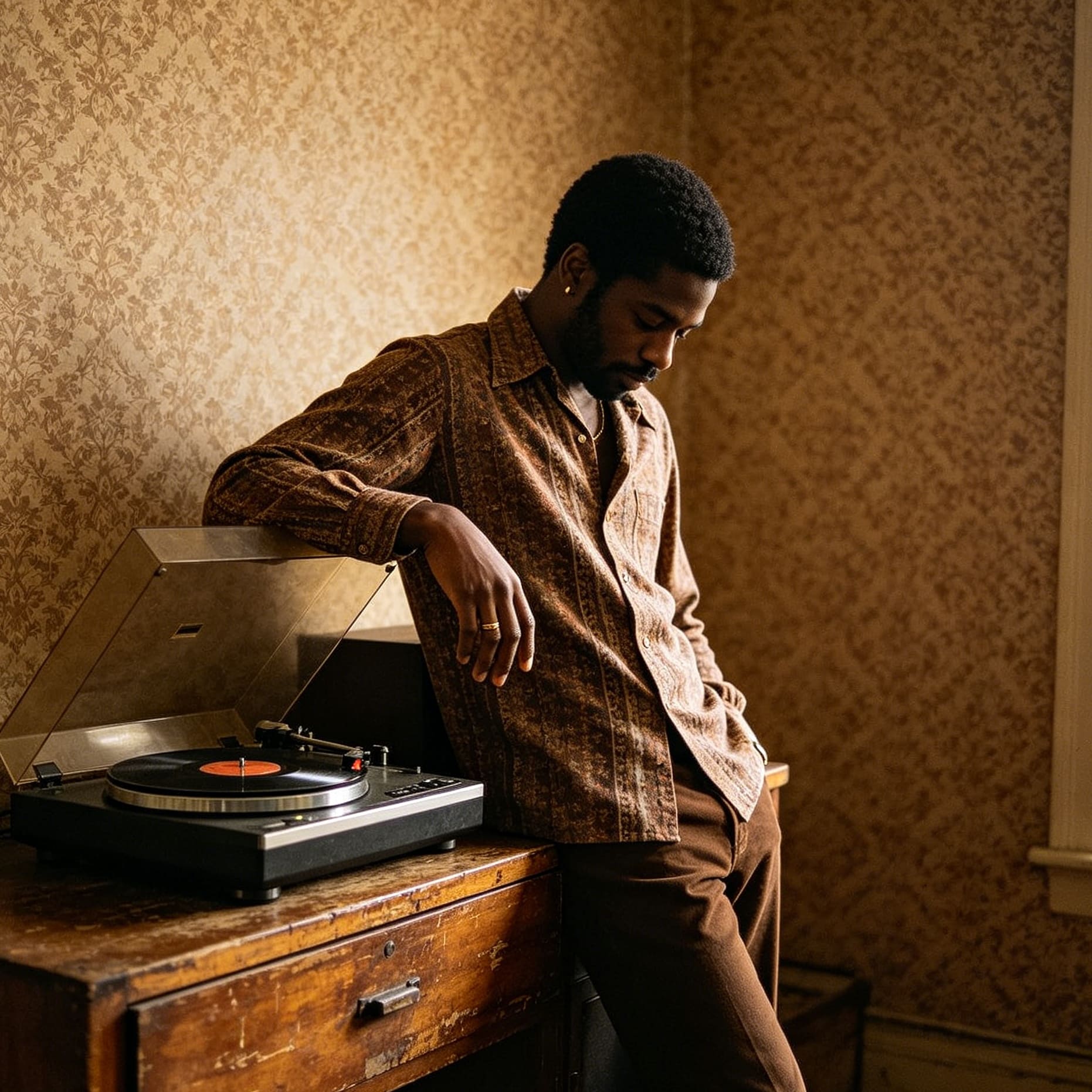
As we navigate the creative landscape of 2025, the boundary between machine-generated imagery and human-made art has become increasingly blurred. Generative AI models can now produce hyper-realistic landscapes, complex symphonies, and poetic verses in a matter of seconds. For many, this technological leap feels like an existential threat to the very concept of the "artist." However, the reality is far more nuanced. While AI has mastered the art of pattern matching and statistical recombination, it has fundamentally failed to capture the essence of what makes art meaningful to the human soul.
In 2025, the value of a human artist has not diminished; it has been redefined. The distinction between a prompt-engineered output and a work of human genius lies in qualities that are non-algorithmic by nature: lived experience, conscious intentionality, physical presence, and the moral courage to challenge social structures.
Why is emotional authenticity impossible for AI to replicate?
The most profound difference between a human artist and a generative model lies in the source of their "emotion." AI mimics the appearance of emotion by analyzing millions of data points. It knows that "grief" in a painting often involves dark hues, downward strokes, and specific facial contortions. It can reproduce these patterns with stunning accuracy, but it does not feel the grief it depicts.
The Weight of Lived History
Human art is an externalization of internal experience. When an artist creates a piece reflecting loss, it carries the invisible weight of their personal history—the sleepless nights, the visceral ache in the chest, and the slow process of healing. This "lived history" creates a resonance that transcends the visual.
In our 2025 market observations, we see a growing "recoil effect" among audiences. When a viewer learns a deeply moving portrait was generated by a machine in five seconds, the emotional connection often snaps. Why? Because the viewer is not just looking at colors; they are looking for a witness to the human condition. A machine cannot be a witness because it has never lived, never suffered, and never loved.
Vulnerability as a Creative Force
Human artists operate from a place of vulnerability. They take risks, exposing their inner worlds to public judgment. This act of bravery is part of the art's value. AI, by definition, cannot be vulnerable. It cannot fail in a way that matters to its identity. The "struggle" of the artist—the drafts that were burned, the years spent mastering a technique, the frustration of a vision that won't quite manifest—is what imbues the final product with soul. In 2025, collectors are increasingly paying for the "journey" and the human behind the work rather than just the aesthetic output.
How do human artists break creative patterns that AI relies on?
AI is a backward-looking technology. It is trained on the past—vast datasets of everything humans have already created. By its very architecture, AI is designed to find the "most likely" or "most statistically probable" next pixel or note. This makes it an incredible tool for pastiche and imitation, but a poor engine for radical revolution.
Defying the Statistical Average
True artistic breakthroughs rarely come from following the most probable path. They come from subverting it. Throughout history, movements like Cubism or Surrealism didn't happen because they were the next logical step in a dataset; they happened because human artists reached a point of intuitive rebellion against existing norms.
In 2025, we see AI producing "infinite variations of the known." It can give you a million paintings in the style of Van Gogh, but it cannot decide that the world no longer needs Van Gogh and instead needs something entirely new that hasn't been defined yet. Human intuition—that "gut feeling" that a certain rule needs to be broken—is something that an algorithm, which thrives on rule-following and probability, simply cannot simulate.
Radical Intentionality and the "Why"
Every brushstroke a human artist makes is a choice. It is driven by a specific intent, whether political, philosophical, or personal. If you ask a human artist why they chose a specific shade of red, they might tell you it reminds them of their childhood home or symbolizes a specific social injustice.
AI does not have a "why." It has a "how." It produces an image because it was prompted to do so. It does not choose to be provocative; it merely follows a command to include provocative elements. This lack of conscious intent means that AI art often feels "hollow" upon deep inspection. It lacks the internal logic and cohesive vision that a human artist maintains across a body of work.
Can AI understand the cultural sensitivity required for modern art?
Art does not exist in a vacuum. it is deeply embedded in the cultural, social, and political fabric of its time. In 2025, as global society becomes more attuned to issues of representation and ethical sensitivity, the limitations of AI become glaringly obvious.
Navigating Cultural Nuance
A human artist living within a culture understands the weight of its symbols, the history of its struggles, and the sensitivity of its traditions. When an artist from a marginalized community uses a specific motif, they are engaging in an act of cultural continuity or reclamation.
AI, however, treats all cultural symbols as mere "data points." It scrapes and remixes sacred symbols, traditional patterns, and historical imagery without any awareness of their meaning or the ethics of their use. This leads to frequent instances of cultural appropriation or harmful misrepresentation. In 2025, the demand for "authentic voices" has surged precisely because AI cannot be authentic to a culture it does not belong to.
Ethical Agency and Social Provocative
Artists have historically functioned as the conscience of society. They use their platforms to protest, to challenge power, and to spark discourse. This requires a moral compass and the willingness to face consequences—qualities no algorithm possesses.
Consider a street artist creating a mural against a repressive regime. The power of that art comes from the fact that the artist is a citizen taking a stand, often at great personal risk. If an AI generates a similar "rebellious" image, it is a hollow gesture. It lacks the ethical agency that gives protest art its teeth. AI cannot be brave; it can only execute a script.
Why is the artistic journey more valuable than the final output in 2025?
In an era where "perfect" images are a dime a dozen, the process of creation has become a luxury good. The "how" has become more important than the "what."
The Appeal of Physicality and Performance
There is a tactile reality to human art that digital AI outputs cannot replicate. The texture of oil paint on a canvas, the smell of charcoal, the physical presence of a sculptor working with stone—these are sensory experiences that connect the audience to the physical world.
In 2025, we have seen a massive resurgence in "Live Art" and performance pieces. Audiences want to watch the artist struggle in real-time. They want to see the sweat, the hesitation, and the physical mastery of a craft. This physicality provides a level of "inimitability." You can prompt an AI to create a picture of a mural, but you cannot prompt it to be the mural being painted in a public square, interacting with the wind, the light, and the passing crowd.
The Value of Imperfection
AI is programmed to avoid "errors" unless specifically told to include them. However, in human art, some of the most beautiful moments are the result of "happy accidents"—a slip of the hand, a bleed of ink, or a cracked glaze. These imperfections are markers of humanity. They tell the story of a physical being interacting with a physical medium. In 2025, "AI-clean" has become a derogatory term in some high-end art circles, referring to work that is too polished, too symmetrical, and ultimately, too boring.
How do human artists use AI to highlight their own humanity?
Rather than being replaced, the most successful artists of 2025 have adopted the role of "Creative Director." They use AI as a high-powered assistant to handle the "drudge work," which in turn allows them to focus even more intensely on the qualities AI lacks.
Scaling Ideation While Maintaining Vision
Artists are using AI to generate fifty rough concepts in an hour, but the selection and curation of those concepts remain human acts. The artist looks at the AI's output and says, "This one has a spark of what I'm feeling, but the others are derivative." This act of curation is an expression of taste and vision.
By offloading repetitive tasks—like resizing assets, color-correcting backgrounds, or generating basic textures—artists are reclaiming time to think, to feel, and to engage with their communities. The AI handles the "production," but the human provides the "direction."
Hybrid Workflows: The Human Touch as the Final Filter
We are seeing a trend of "Paint-overs" and "Hybrid Sculpting." An artist might use an AI-generated base but then spend weeks manually adding layers, textures, and intentional "flaws." This hybrid approach ensures that the final piece has the efficiency of modern technology but the soul of human touch. In this workflow, AI is the brush, but the human is the hand and the mind.
What is the future of human art in a post-AI world?
As we look toward the later half of the 2020s, the "commodity" of art—the decorative, the functional, the generic—will likely be dominated by AI. However, "Art" as a medium of deep communication will remain a human stronghold.
Human artists are shifting away from trying to compete with AI on speed or technical perfection. Instead, they are leaning into their "human-ness." They are becoming more personal, more political, more physical, and more experimental. The future belongs to the artists who can tell stories that an algorithm doesn't even know exist.
Summary of Human Edge in 2025:
- Emotional Depth: Derived from actual suffering, joy, and history.
- Intentionality: The conscious "Why" behind every creative decision.
- Cultural Context: The ability to navigate the ethics and nuances of human society.
- Physical Presence: The irreplaceable value of the tactile, the live, and the imperfect.
- Radical Originality: The ability to rebel against patterns rather than just remixing them.
FAQ: Human Artists vs. AI in 2025
Can AI eventually learn to feel emotions like a human?
No. In 2025, AI remains a mathematical model. While it can simulate the expression of emotion with high fidelity, it lacks the biological and consciousness-based hardware required to actually experience feelings. It processes data, not sensations.
Is AI-generated art considered "original" in 2025?
This is a subject of intense legal and philosophical debate. While the specific arrangement of pixels might be "new," the underlying logic is entirely derivative of the human-made data it was trained on. Most critics in 2025 categorize AI art as "generative recombination" rather than "original creation."
How can new artists compete with AI in 2025?
By focusing on what AI cannot do: build a personal brand, share their creative process, engage in physical mediums, and tackle hyper-local or deeply personal themes that don't exist in large datasets. Authenticity and "the human story" are the most valuable currencies for a new artist today.
Does the use of AI make someone "less" of an artist?
Not necessarily. Just as the camera didn't make painters "lesser" but forced them to evolve, AI is a tool. An artist who uses AI to expand their vision and explore new frontiers is still an artist. However, someone who simply clicks "generate" without adding vision or curation is often viewed more as a "user" or "operator" than a creator.
What is the "Recoil Effect" in AI art?
The Recoil Effect is a psychological phenomenon observed in 2025 where an audience feels a sudden drop in appreciation for a piece of art once they discover it was generated by AI. This stems from the realization that the "emotional bridge" they thought they were crossing to another human's mind doesn't actually exist.
Conclusion
In 2025, the rise of AI hasn't killed art; it has acted as a mirror, showing us exactly what we value most about being human. While machines can mimic the brushstrokes of a master or the rhymes of a poet, they cannot mimic the soul that drives the hand or the heart that breaks before the pen touches the paper. The artists who will thrive are those who embrace their vulnerabilities, their cultural roots, and their radical intentionality. In a world flooded with perfect, instant, and hollow content, the messy, slow, and deeply felt work of the human spirit has never been more precious.
-
Topic: What AI Gets Right (and What It Will Never Steal from Creatives)https://creativepool.com/magazine/features/what-ai-gets-right-and-what-it-will-never-steal-from-creatives.33341
-
Topic: What Can Artists Do That AI Can't 2025? Creativity, Emotion, and Originalityhttps://voxillustration.com/blog/what-can-artists-do-that-ai-cant/
-
Topic: Will AI replace artists? The surprising truth about the future of creativity | Operahttps://www.opera.com/ai/articles/will-ai-replace-artists-the-surprising-truth-about-the-future-of-creativity









