Home
Home
Which AI Image Maker Actually Delivers the Best Results in 2025
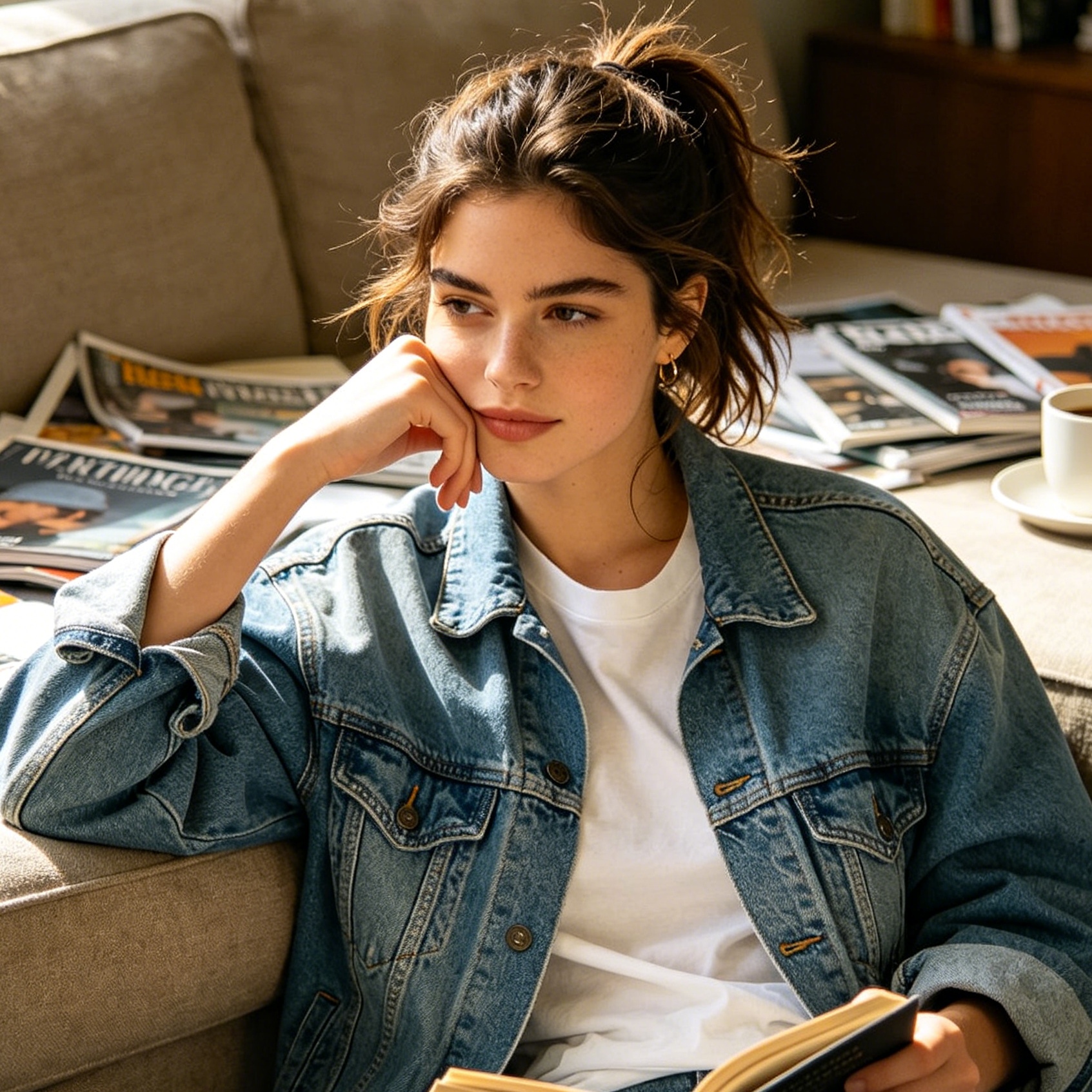
AI image generation has transitioned from a viral novelty to an essential pillar of the modern creative workflow. An AI image maker is no longer just a tool for generating random avatars; it is a sophisticated machine learning engine capable of producing high-resolution, commercially viable visuals from simple text descriptions. These systems, primarily driven by diffusion models, interpret human language and translate it into pixel-perfect compositions that range from hyper-realistic photography to abstract digital art.
The current landscape is crowded with competing models, each claiming superiority in fidelity, prompt adherence, or speed. To determine which tool truly deserves a place in your professional toolkit, it is necessary to look beyond the marketing buzz and analyze how these engines handle complex variables like lighting, anatomy, and semantic nuance.
Understanding the Mechanics of the Modern AI Image Maker
Before selecting a platform, understanding the underlying technology helps in managing expectations and refining output. Most top-tier generators today utilize a process known as diffusion.
What is the Diffusion Process?
Diffusion models do not operate by searching a database and collating existing image fragments. Instead, they are trained on billions of image-text pairs to understand the relationship between visual patterns and descriptive language. When a request is made, the AI starts with a canvas of pure Gaussian noise—essentially a field of random static. Through hundreds of iterations, the model "denoises" the canvas, guided by the text prompt, until a coherent image emerges.
The Role of Latent Space
Sophisticated AI image makers operate within "latent space," a compressed mathematical representation of visual concepts. In this space, the AI navigates between coordinates that represent different styles, subjects, and moods. This is why a simple change in a prompt, such as switching "golden hour" to "cyberpunk neon," results in a dramatic shift in the entire lighting engine of the generated image.
Key Features That Define a High-Quality AI Image Creator
A professional-grade AI image maker must offer more than just text-to-image capabilities. In 2025, several functional benchmarks determine a tool's utility in a real-world environment.
Superior Prompt Adherence
This is the ability of the model to follow complex instructions without dropping details. For instance, if a prompt specifies "a woman wearing a velvet green hat, holding a cracked porcelain teacup with a steam-shaped heart," an inferior model might forget the steam shape or the material of the hat. Leading tools like DALL-E 3 and FLUX are currently the industry leaders in semantic understanding.
Generative Fill and Inpainting
Creating an image from scratch is only half the battle. Professional workflows often require modifying specific elements within an existing frame. Inpainting allows a user to brush over a specific area—such as a person's shirt—and ask the AI to change its color or style while keeping the rest of the image intact.
Advanced Upscaling and Resolution
Native outputs from many AI models are often limited to 1024x1024 pixels. A high-quality AI image maker integrates neural upscalers that can increase resolution to 4K or higher without introducing the "waxy" texture often associated with early AI filters.
Deep Dive into the Leading AI Image Makers of 2025
The market has segmented into specific niches, from high-end artistic tools to commercially safe enterprise solutions.
Midjourney: The Artistic Gold Standard
Midjourney remains the preferred choice for creative directors and concept artists. Unlike other tools that prioritize literal interpretation, Midjourney has an inherent "opinion" on aesthetics. Its default lighting and composition tend toward the cinematic.
In our internal testing, Midjourney v6.1 demonstrated an unparalleled ability to render textures. When prompted for "a close-up of aged leather," the model correctly simulated micro-cracks and light absorption that competitors often smoothed over. However, the reliance on Discord as an interface remains a friction point for some, though the new dedicated web alpha is rapidly closing this gap.
DALL-E 3 (via ChatGPT): The King of Conversational Design
DALL-E 3's primary strength is its integration with Large Language Models (LLMs). Because it uses ChatGPT as a prompt refiner, users do not need to learn complex "prompt engineering" syntax. You can describe a scene in plain, rambling English, and the system will translate it into a highly precise visual.
From an experience standpoint, DALL-E 3 is the most "user-friendly." It excels at rendering text within images—a task that historically plagued AI generators. If you need a sign in the background of your image to say "Welcome Home," DALL-E 3 is the most likely to get the spelling right on the first try.
Adobe Firefly: The Enterprise Choice for Legal Safety
For agencies concerned with copyright and intellectual property, Adobe Firefly is the standard. Unlike Midjourney or Stable Diffusion, which were trained on vast web-scraped datasets, Firefly was trained on Adobe Stock's licensed library and public domain content.
This creates a "commercially safe" output, meaning users are less likely to encounter legal hurdles regarding the likeness of protected characters or specific artists' styles. Furthermore, its integration into Photoshop's "Generative Fill" has fundamentally changed how photographers edit images, allowing for the seamless expansion of backgrounds (outpainting) that match the original lens's bokeh and grain.
FLUX.1: The New Open-Model Powerhouse
FLUX.1 has recently disrupted the market by offering quality that rivals Midjourney while remaining accessible for local deployment. Developed by the original creators of Stable Diffusion, FLUX comes in several versions, including [dev] and [schnell].
Hardware Note: Running FLUX.1 [dev] locally for optimal results requires significant VRAM—typically 24GB or more (such as an NVIDIA RTX 3090/4090) to generate images in a reasonable timeframe. In our stress tests, FLUX.1 showed exceptional anatomical accuracy, particularly with human hands and limbs, which are notoriously difficult for AI to render. It lacks the "AI sheen" often seen in DALL-E, producing images that look more like raw photography.
Leonardo.ai: The All-in-One Creative Suite
Leonardo.ai serves as a bridge between high-end control and ease of use. It offers a variety of "fine-tuned" models specialized for different tasks, such as 3D game assets, vintage photography, or anime styles. Its "Image Guidance" feature allows users to upload a reference photo to dictate the pose or composition of the generated result, providing a level of control that text prompts alone cannot achieve.
How to Write Prompts for an AI Image Maker
The quality of your output is directly proportional to the specificity of your prompt. A common mistake is being too vague.
The Anatomy of a Perfect Prompt
- Subject: Be specific. Instead of "a dog," use "a weathered golden retriever with a grey muzzle."
- Environment: Describe the setting, weather, and time of day. "In a sun-drenched meadow during an autumn afternoon."
- Style/Medium: Is it a 35mm film photograph, a charcoal sketch, or a 3D render in Octane?
- Lighting and Mood: Use descriptive terms like "volumetric lighting," "high-contrast noir," or "soft ethereal glow."
- Composition: Mention camera angles like "low angle shot," "wide lens," or "macro focus."
Subjective Evaluation of Prompting Techniques
In our experience, "negative prompting"—telling the AI what not to include—is just as important in models like Leonardo or Stable Diffusion. Specifying "--no blurry, distorted hands, low resolution" can significantly filter out the common artifacts of the generation process.
What are the Limitations of AI Image Makers?
Despite rapid progress, several hurdles remain for even the most advanced AI image makers.
The Struggle with Temporal Consistency
If you are trying to create a series of images featuring the exact same character in different settings, most AI tools will struggle. Each generation is a "new" interpretation, and subtle features like nose shape or eye color may drift. While "Character Reference" (cref) features in Midjourney are improving this, perfect consistency for comic books or storyboards still requires significant manual post-processing.
Complex Spatial Logic
AI sometimes fails at "physical common sense." It might render a person sitting in a table rather than at it, or show a bicycle with three pedals. These spatial hallucinations occur because the AI understands what a bicycle looks like but doesn't necessarily understand the mechanical logic of how it functions.
Small Text and Detailed Typography
While DALL-E 3 and FLUX have made strides, rendering long paragraphs or small text on a distant sign often results in "gibberish" characters. For professional design, it is usually better to generate the image without text and add typography using traditional tools like Illustrator or Canva.
Ownership and Ethics in AI Generation
The legal landscape regarding AI-generated content is still being written. In many jurisdictions, AI-generated images cannot be copyrighted because they lack "human authorship." This is a critical consideration for brands looking to trademark a logo created by an AI image maker.
Furthermore, ethical concerns regarding the training data persist. Many artists feel that their styles are being used without compensation. Choosing tools like Adobe Firefly, which focuses on ethical sourcing, is one way for professionals to navigate this complex moral ground.
How to Choose the Right AI Image Maker?
The "best" tool depends entirely on your specific needs:
- For pure artistic beauty and concept art: Midjourney.
- For ease of use and complex instructions: DALL-E 3.
- For professional photography and legal safety: Adobe Firefly.
- For technical control and local privacy: FLUX.1.
- For variety and specific asset types (e.g., gaming): Leonardo.ai.
Frequently Asked Questions About AI Image Makers
Can I use AI-generated images for commercial purposes?
Most paid plans (Midjourney, ChatGPT Plus, Adobe Firefly) grant you commercial rights to the images you generate. However, you should always check the specific Terms of Service, as free tiers often restrict use to personal projects only.
Why do AI-generated hands always look strange?
Hands are anatomically complex and appear in many different positions and overlaps in training data. This makes it difficult for the AI to "map" the underlying bone structure correctly, often leading to extra fingers or impossible joints. Newer models like FLUX and Midjourney v6 have largely solved this issue.
Is there a free AI image maker available?
Yes, several platforms offer free tiers. Google Gemini provides basic image generation for free. Microsoft Designer (using DALL-E) is also accessible without a subscription, though it may have lower limits on usage and resolution.
What is the difference between an AI image maker and a photo editor?
An AI image maker creates content from scratch using generative models. A photo editor (like traditional Photoshop) modifies existing pixels. However, the lines are blurring as editors now include generative AI features to automate complex tasks.
Summary
The rise of the AI image maker has democratized high-end visual production. Whether you are a solo entrepreneur needing marketing assets or a professional designer looking for a brainstorming partner, these tools offer unprecedented creative speed. By understanding the strengths of each model—from the cinematic flair of Midjourney to the precise semantic logic of DALL-E 3—you can select the engine that best aligns with your creative vision. As these models continue to evolve, the focus will likely shift from basic image generation to more advanced controls over consistency, spatial logic, and ethical transparency.
-
Topic: The 9 Best AI Image Generators of 2025 (Tested Firsthand)https://www.semrush.com/blog/best-ai-image-generators/
-
Topic: free ai image generator online - pict aihttps://pict.ai/
-
Topic: Top 12 Best AI Image Creator Tools to Use in 2025 | ai-media-studiohttps://www.ai-media-studio.com/blog/best-ai-image-creator