Home
Home
Why AI Art Generators Are Transforming Professional Creative Workflows in 2026
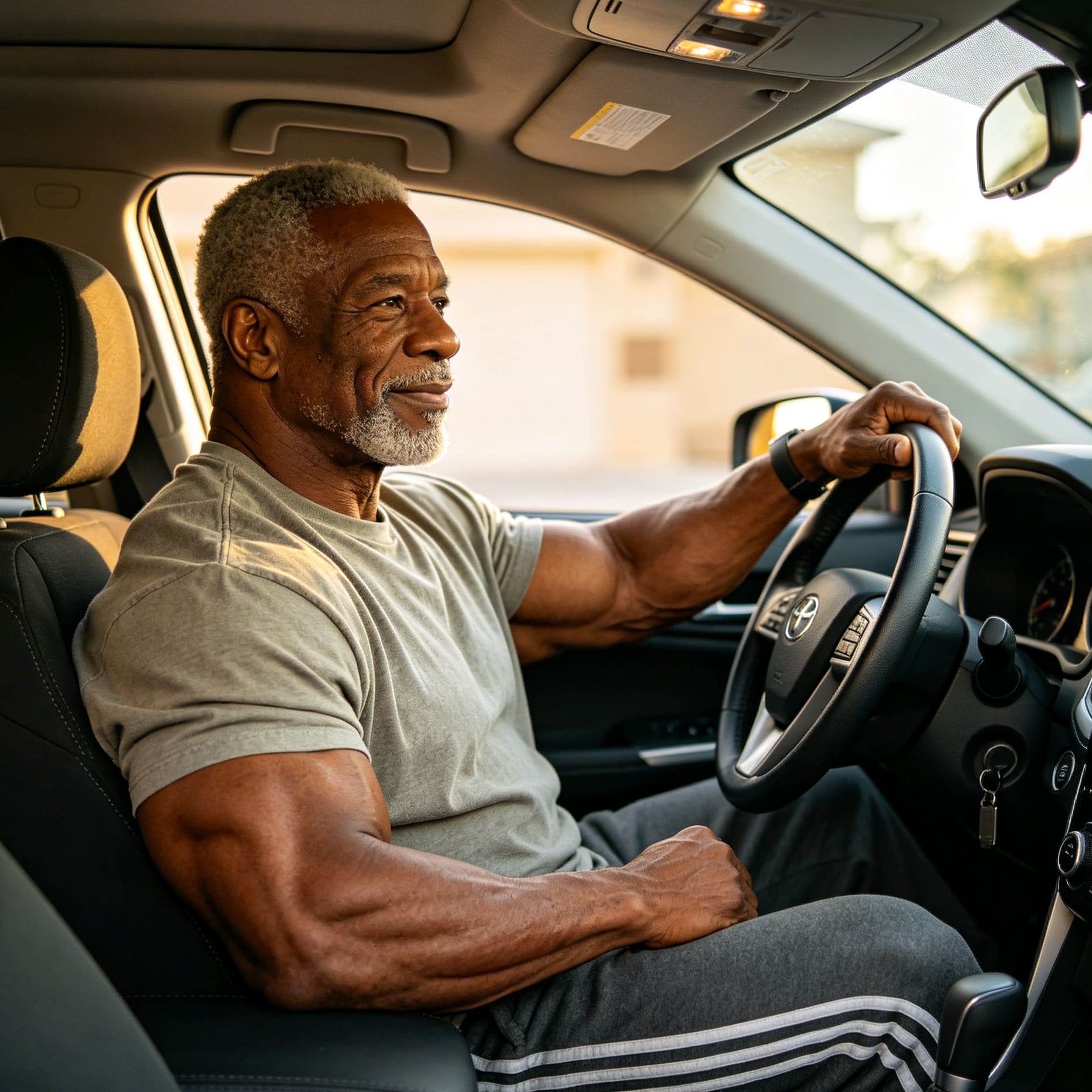
An AI art generator is a sophisticated software application that leverages generative artificial intelligence—specifically deep learning models—to create high-fidelity digital imagery from natural language descriptions known as prompts. In 2026, these tools have moved beyond simple novelties to become foundational components of modern design, marketing, and entertainment industries. By analyzing millions of image-text pairs, these models can synthesize entirely new visuals, ranging from hyper-realistic photography to complex 3D renders and classical oil paintings, all in a matter of seconds.
The rapid evolution of generative AI has produced a diverse landscape of tools, each optimized for specific creative needs. Whether it is the artistic depth of Midjourney, the pinpoint prompt adherence of OpenAI’s DALL-E 3, or the enterprise-grade commercial safety of Adobe Firefly, understanding the nuances of these platforms is essential for any professional looking to maintain a competitive edge in the digital economy.
The Technical Foundations of Modern AI Imagery
To appreciate the current capabilities of AI art generators, it is necessary to understand the dual technological pillars upon which they are built: Diffusion Models and Generative Adversarial Networks (GANs).
The Dominance of Diffusion Models
Most top-tier generators today, including the latest iterations of Flux and Gemini’s Nano Banana, utilize diffusion models. This process begins with a state of pure "noise"—resembling static on an old television screen. The AI then iteratively "denoises" the image, guided by the user’s text prompt. In each step, the model predicts what the pixels should look like to better align with the description. By the final iteration, a coherent and detailed image emerges from the randomness.
In our practical testing of the Flux.2 model, we observed that this iterative refinement allows for incredible texture density. For instance, when generating macro photography of skin textures, the diffusion process correctly identifies where to place pores, fine hairs, and light reflections, resulting in a level of realism that was unattainable just two years ago.
The Role of Generative Adversarial Networks (GANs)
While diffusion has become the standard for high-quality static imagery, GANs remain relevant in specific real-time applications and video synthesis. A GAN consists of two neural networks—the Generator and the Discriminator—engaged in a constant cycle of competition. The Generator creates an image, and the Discriminator attempts to identify if it is real or AI-generated. This "cat and mouse" game forces the Generator to improve rapidly until its output is indistinguishable from reality for the Discriminator.
Leading AI Art Generators of 2026: A Comparative Analysis
The market for AI art generation has matured significantly. Users no longer look for the "best" overall tool, but rather the best tool for their specific application.
Midjourney: The Artistic Gold Standard
Midjourney continues to hold its position as the preferred choice for concept artists and creative directors. It excels at "vibe" and atmosphere. Unlike other models that might interpret prompts literally, Midjourney adds a layer of artistic interpretation that often results in more visually stunning and "cinematic" outputs.
In professional workflows, Midjourney is the premier tool for mood boarding and initial concept exploration. However, it requires a subscription to Discord or its standalone web interface, and its learning curve for "stylize" parameters and "chaos" settings is steeper than its competitors. Our tests show that Midjourney v7 handles complex lighting—such as sub-surface scattering in translucent materials—with more nuance than almost any other model on the market.
OpenAI DALL-E 3: Precision and Text Integration
Integrated directly within the ChatGPT ecosystem, DALL-E 3 is the leader in "prompt adherence." If you ask for "a red panda wearing a blue tuxedo holding a sign that says 'Happy Birthday' while riding a unicycle on a tightrope," DALL-E 3 is the most likely to include every single element correctly.
Its standout feature is its ability to render legible text. Previous generations of AI struggled with spelling, often producing "gibberish" characters. DALL-E 3 has largely solved this, making it invaluable for social media managers and graphic designers who need to integrate copy directly into their visual assets.
Google Gemini and Nano Banana 2: Ecosystem Integration
Google’s latest image generation suite, anchored by the Nano Banana 2 model, focuses on speed and utility. Because it is integrated into the broader Google Workspace, it allows for seamless transitions from a Google Doc to an image generation sidebar.
Nano Banana 2 is particularly noted for its 4K resolution support and adjustable camera angles. In our benchmarking, we found that Google’s model produces "cleaner" images that are less "over-processed" than Midjourney, making them easier to use as base layers for further manual editing in professional software.
Flux (Black Forest Labs): The Power of Customization
Flux has emerged as the darling of the "prosumer" and developer community. As an open-weight model, it allows for significant fine-tuning. For creators running their own hardware, running Flux.1 Dev typically requires at least 24GB of VRAM to achieve optimal generation speeds.
The strength of Flux lies in its "checkpoint" system. The community has created thousands of fine-tuned versions of the model specifically designed for architectural visualization, anime, or vintage film aesthetics. This level of granular control is unmatched by closed-source platforms.
Adobe Firefly: The Enterprise Choice
For corporate clients, Adobe Firefly is the only viable option due to its training data transparency. Adobe trained Firefly exclusively on Adobe Stock images, openly licensed content, and public domain materials. This ensures that any image generated is "commercially safe," protecting brands from potential copyright litigation.
Furthermore, Firefly’s integration into Photoshop’s "Generative Fill" has revolutionized the photo editing industry. Designers can now expand the canvas of an image (out-painting) or change the clothing of a model (in-painting) with a single click, all while maintaining the lighting and perspective of the original photograph.
Advanced Prompt Engineering: Mastering the Input
The quality of AI-generated art is directly proportional to the quality of the prompt. Professional prompt engineering in 2026 has evolved into a structured methodology.
The Anatomy of a High-Performing Prompt
A professional prompt should generally follow this structure:
- Subject: The main focus (e.g., "A futuristic cyberpunk skyscraper").
- Style: The artistic medium or specific artist influence (e.g., "In the style of Zaha Hadid, rendered in Unreal Engine 5").
- Composition: Camera angle and framing (e.g., "Low-angle shot, wide-angle lens, symmetrical composition").
- Lighting: The quality and source of light (e.g., "Volumetric lighting, golden hour, neon reflections").
- Technical Parameters: Resolution and detail (e.g., "8K resolution, hyper-detailed, ray-traced shadows").
Negative Prompts and Weights
Experienced users utilize "negative prompts" to tell the AI what not to include. Common negative prompts include "deformed hands," "watermark," "blurry," or "extra limbs." Additionally, many platforms allow for "prompt weighting," where you can assign numerical values to certain words to emphasize their importance (e.g., [mountain:1.5] [snow:0.5]).
Beyond Generation: In-painting, Out-painting, and Upscaling
The "art" of AI art generation often happens after the initial image is created.
In-painting and Out-painting
"In-painting" allows a user to brush over a specific part of an image and ask the AI to replace it. For example, if a generated portrait is perfect except for the hairstyle, in-painting can swap the hair without changing the face. "Out-painting" (or canvas expansion) allows the AI to "guess" what lies beyond the frame of an existing image, which is incredibly useful for turning a portrait-oriented photo into a landscape-oriented hero banner for a website.
AI Upscaling
Most AI models generate images at a native resolution of around 1024x1024 pixels to save on computational costs. For print media or high-definition displays, this is insufficient. AI upscalers use separate neural networks to "fill in" the missing detail as the image is enlarged, allowing for crisp outputs at 4K or even 8K resolutions without the "pixelation" associated with traditional resizing.
Strategic Applications Across Industries
AI art generators are no longer just for creating "pretty pictures." They are being integrated into complex business strategies.
E-commerce and Product Photography
Brands are using AI to create high-end product mockups without the need for expensive physical photoshoots. By uploading a rough sketch or a low-quality photo of a product, AI can place that product into a professionally lit, stylized environment, saving thousands of dollars in production costs.
Game Development and Film
In the gaming industry, AI is used for rapid prototyping of character designs and environment textures. Instead of spending weeks on a single concept, artists can generate 50 variations in an afternoon, selecting the best ones to refine manually. In film, AI-driven storyboarding is allowing directors to visualize complex sequences before a single frame is shot.
Architecture and Interior Design
Architects use AI to apply different materials and lighting conditions to 3D wireframes. An architect can take a basic block model and instantly see how it would look with a glass facade during a thunderstorm versus a concrete facade in bright sunlight.
Ethical Considerations and Commercial Safety
The rise of AI art has not been without controversy. Issues regarding the "scraping" of artists' work without consent remain a central point of debate. This is why platforms like Adobe Firefly and specialized "ethical" models are gaining traction.
Furthermore, the "ownership" of AI art is a complex legal area. As of 2026, most jurisdictions do not allow AI-generated works to be copyrighted in the same way human-authored works are. However, the prompts and the human-led iterations involved in the process are increasingly being recognized as a form of creative expression.
How to Get Started with AI Art Generation
For those new to the field, the barrier to entry is lower than ever. Follow these steps to begin your journey:
- Identify Your Need: If you want artistic inspiration, start with Midjourney. If you need a quick image for a presentation, use DALL-E 3 via ChatGPT.
- Experiment with Simple Prompts: Do not overcomplicate your first few attempts. Start with a subject and a style (e.g., "A cat in the style of Van Gogh").
- Learn the Settings: Explore the aspect ratio commands (like
--ar 16:9in Midjourney) and the "variation" buttons to see how the AI iterates. - Refine and Upscale: Once you find an image you like, use the platform’s built-in upscaler to enhance the detail.
Conclusion
AI art generators have fundamentally shifted the boundaries of digital creativity. They are not a replacement for human imagination, but rather a powerful "amplifier" of it. By automating the technical execution of an image, these tools allow creators to focus more on high-level concepts, storytelling, and strategic direction. As the technology continues to evolve with models like Gemini 3 and Flux.2, the gap between "thought" and "visual representation" will continue to shrink, ushering in a new era of democratized design.
FAQ: Common Questions About AI Art Generators
What is the best AI art generator for beginners? DALL-E 3 and Adobe Firefly are generally considered the most beginner-friendly due to their simple interfaces and integration with existing popular tools like ChatGPT and Photoshop.
Is AI-generated art legal for commercial use? It depends on the platform. Adobe Firefly and Midjourney (Pro plans) allow for commercial use, but you should always review the specific terms of service. For high-stakes corporate work, a "commercially safe" model trained on licensed data is recommended.
Can AI art generators create text? Yes, models like DALL-E 3 and Ideogram specialize in rendering accurate typography within images.
Do I need a powerful computer to run an AI art generator? Most popular generators (Midjourney, DALL-E, Firefly) are cloud-based, meaning you only need a web browser. Only "open-weight" models like Flux or Stable Diffusion require a powerful local GPU (graphics card) to run on your own machine.
How do I make my AI art look more realistic? To achieve photorealism, use specific technical terms in your prompt such as "depth of field," "f/1.8 aperture," "85mm lens," and "high dynamic range (HDR)." Avoiding "stylized" words and focusing on lighting descriptions will also help.
-
Topic: Free AI Art Generator: Create Art Online - Adobe Fireflyhttps://www.adobe.com/products/firefly/features/ai-art-generator.html
-
Topic: DaVinci: Best AI Art Generatorhttps://davinci.ai/
-
Topic: 27 Top AI Art Generators Available Right Now | Built Inhttps://builtin.com/artificial-intelligence/ai-art-generators