Home
Home
Why AI Headshot Generators Are Replacing Traditional Studio Photography in 2025
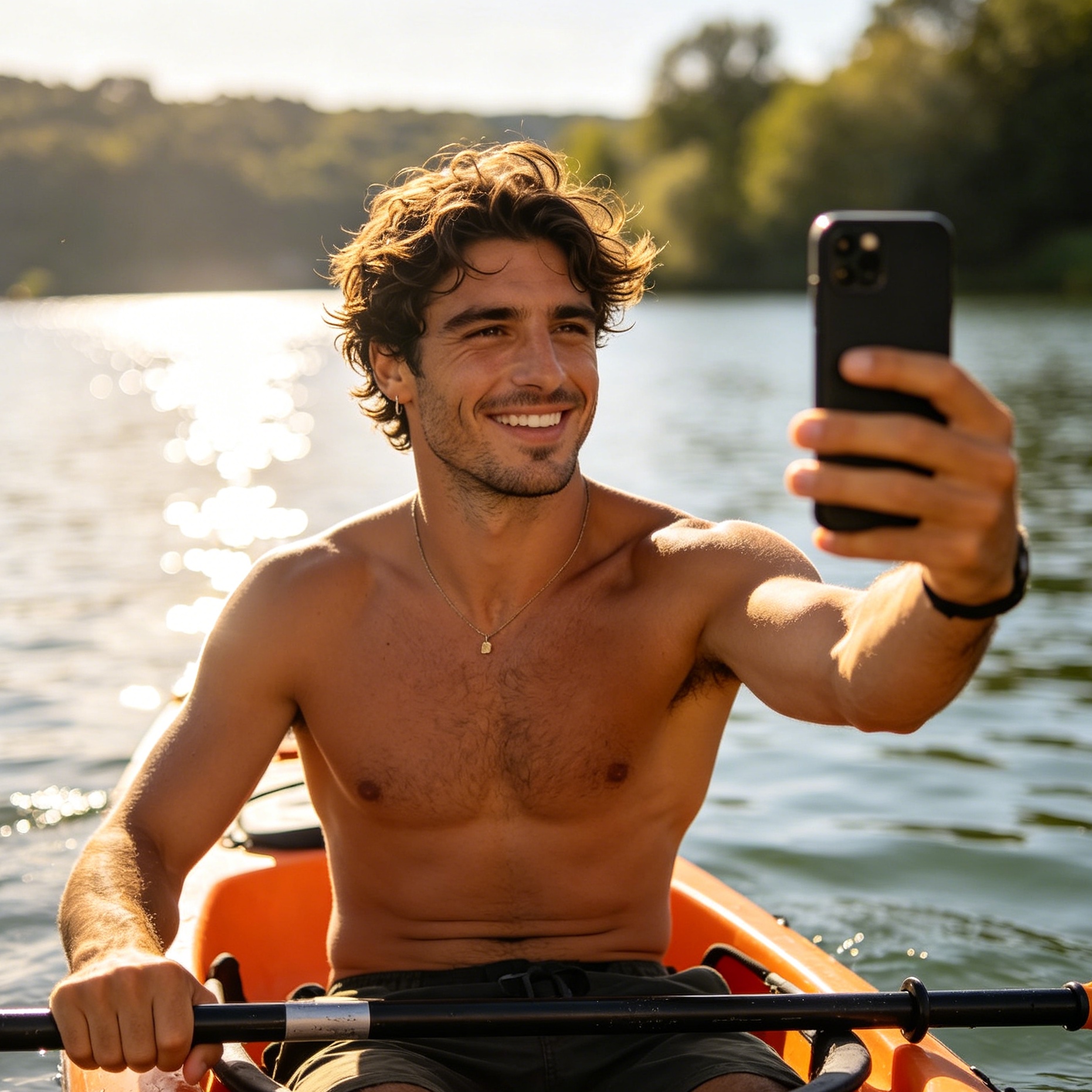
The digital identity has become the primary point of contact for professionals worldwide. Whether it is a LinkedIn profile, a corporate directory, or a personal portfolio, a high-quality headshot serves as a silent ambassador of credibility. For decades, achieving this level of professional imagery required significant investment: booking a studio, hiring a photographer, coordinating outfits, and enduring the awkwardness of posed sessions.
However, AI headshot generators have fundamentally disrupted this cycle. These tools utilize advanced machine learning to transform casual smartphone selfies into studio-grade portraits. In 2025, the technology has reached a point where the "uncanny valley" effect—that subtle sense of artificiality—has largely been overcome, making AI-generated photos indistinguishable from traditional photography to the naked eye.
What is an AI Headshot Generator?
An AI headshot generator is a specialized software application that employs deep learning models—primarily latent diffusion models—to synthesize new images of a person. Unlike simple photo filters that modify an existing image, these generators create entirely new pixels.
When you upload your photos, the AI does not just "edit" them. It performs a "training" phase where it builds a three-dimensional mathematical model of your facial geometry, skin texture, and unique features. Once the AI understands your "digital twin," it can place that identity into virtually any professional setting, wearing various outfits, with lighting that mimics a multi-thousand-dollar studio setup.
How the Technology Creates Your Professional Identity
Understanding the mechanics behind these tools helps in managing expectations and achieving the best results. The process typically involves three sophisticated stages:
1. Feature Extraction and Training
During the initial upload, the AI analyzes 8 to 20 images to identify consistent markers. It maps the distance between your eyes, the curve of your jawline, and even the specific way your hair falls. Advanced platforms now use "Low-Rank Adaptation" (LoRA) to fine-tune a massive pre-trained model on your specific face without needing hours of processing time.
2. Image Synthesis via Diffusion
Once the training is complete, the AI starts with "noise"—a grain of random pixels—and gradually shapes it into a face based on the learned model and a text prompt (e.g., "A professional woman in a navy blazer, soft office lighting, 85mm lens"). This is why the images look so crisp; they are rendered from scratch at high resolutions rather than being stretched from a low-res selfie.
3. Identity Verification and Refinement
The most advanced generators include a final step called "Facial Similarity Scoring." The system compares the newly generated image back to your original photos. If the similarity score is too low—perhaps the AI made your nose too sharp or eyes too bright—the image is discarded or sent back for automatic correction.
The Science of the Input: How to Get the Best Results
The phrase "Garbage In, Garbage Out" is the golden rule of AI headshot generation. Even the most powerful platform cannot fix a lack of data. Based on extensive testing across multiple platforms, here is how to prepare your input gallery for maximum realism.
Variety of Angles and Expressions
Do not upload ten photos from the same "good side." The AI needs to see your face in 360 degrees. Include:
- Straight-on shots.
- Three-quarter views (turned slightly).
- Profiles (if the tool requests them).
- A mix of smiling and neutral expressions.
Lighting Consistency and Quality
Avoid photos with heavy shadows or extreme filters. Natural, indirect daylight is the ideal source. If you use a photo with a heavy "beauty filter" from social media, the AI will learn the filter as if it were part of your actual skin texture, resulting in a "plastic" look in the final headshot.
Recent and Accurate Data
A common mistake is using photos from five years ago. If your hair length, weight, or facial hair has changed significantly, the AI will generate a version of you that no longer exists, defeating the purpose of a professional representation.
Top AI Headshot Generators of 2025: A Detailed Review
Choosing the right tool depends on your budget, time constraints, and the level of customization required. Here is a breakdown of the leading platforms currently dominating the market.
1. Photo AI Studio: The Leader in Speed and Simplicity
For those who lack the patience to dig through their camera roll for 20 photos, Photo AI Studio has changed the game.
- Key Advantage: It requires only a single high-quality photo to generate results.
- Performance: While other tools take an hour, this platform delivers in roughly two minutes.
- Experience: In our tests, the single-photo approach was surprisingly accurate, though it excels most when the source photo is clear and well-lit. It is the perfect "last-minute" tool for someone who realizes they need a new photo for a conference program by tomorrow morning.
2. Magic Photos: Best for Natural Realism
Magic Photos focuses on what it calls "organic rendering." It avoids the overly polished, "super-corporate" look that can sometimes feel fake.
- Key Advantage: Exceptional handling of "imperfections" like stray hairs and natural skin pores.
- Experience: When testing the "Outdoor Office" style, the AI correctly simulated the depth-of-field (bokeh) of a high-end 85mm f/1.2 lens. The light reflecting off the skin looked like genuine subsurface scattering, not just a flat color.
- Turnaround: Approximately 15 to 30 minutes.
3. Better Pic: The Power of Human-AI Hybridization
Better Pic recognizes that AI isn't perfect. Sometimes the AI gets 95% of the way there but misses a detail in the eyes or a logo on the shirt.
- Key Advantage: Offers a "Human Editor" option where a real professional retoucher reviews and fixes AI artifacts.
- Customization: Users can "remix" their results, changing backgrounds or outfits after the initial generation without re-uploading photos.
- Resolution: Provides 4K high-definition exports suitable for print.
4. HeadshotPro: The Corporate Standard for Teams
If you are a HR manager looking to unify the headshots of 50 remote employees, HeadshotPro is the logistical winner.
- Key Advantage: Bulk management and team-wide style consistency.
- Variety: Provides over 120 headshots per person in various settings.
- Experience: While the sheer volume is high, the quality can be variable. Out of 120 photos, you may find 10-15 that are truly excellent, while others might have slight distortions in the hands or background.
5. Aragon AI: Research-Driven Accuracy
Aragon AI markets itself on its machine learning pedigree. It uses more intensive training cycles to ensure the likeness is preserved across different poses.
- Key Advantage: The "Remix" feature allows for granular control over the mood and lighting.
- Pricing: Competitive tiers starting at around $35 for 20+ headshots.
- Accuracy: It tends to be more conservative with facial changes, which prevents the "I look like my more attractive cousin" syndrome often found in cheaper generators.
AI vs. Traditional Photoshoots: A Comparative Analysis
Why are professionals moving away from the studio? The decision usually comes down to three factors: cost, time, and anxiety.
| Feature | Traditional Photographer | AI Headshot Generator |
|---|---|---|
| Cost | $200 – $1,000+ | $29 – $69 |
| Time Investment | Half a day (Travel + Shoot) | 15 – 60 Minutes |
| Turnaround Time | 1 – 2 Weeks (Editing) | Under 1 Hour |
| Outfit Changes | Limited by what you bring | Unlimited (Digital) |
| Location | One or two spots | Dozens (Office, Park, Studio) |
| Social Anxiety | High for many people | Zero |
While a human photographer can provide artistic direction and "vibe" that AI cannot yet match, the sheer efficiency of AI makes it the logical choice for 90% of professional use cases.
Managing the "Uncanny Valley": Common AI Artifacts to Watch For
Even in 2025, AI can make mistakes. Before you upload your new headshot to your company website, inspect it for these common "glitches":
- The Eyes: Look for mismatched iris colors or pupils that aren't perfectly circular.
- The Teeth: AI often struggles with the exact number of teeth or the alignment of the midline.
- Earrings and Jewelry: Often, the AI will generate an earring on one ear but forget it on the other, or the metal will look "melted."
- Background Integration: Check the edges where your hair meets the background. If it looks too sharp or has a "glow," it is a giveaway of AI generation.
Privacy, Ethics, and Data Security
Uploading 20 high-resolution photos of your face to a server requires trust. Before choosing a generator, always verify their data retention policy.
- Data Deletion: Reputable services like HeadshotPro and Better Pic explicitly state that they delete your input photos and the trained model after 30 days.
- Commercial Use: Ensure you own the full copyright to the generated images. Most paid services grant you full commercial ownership, allowing you to use them on book covers, billboards, or websites.
- Ethical Use: Never use these tools to generate photos of someone else without their consent. Many platforms now use "Deepfake Detection" to prevent the unauthorized creation of images.
Summary: Is an AI Headshot Right for You?
AI headshot generators have matured from a novelty into a legitimate professional tool. They offer an unparalleled combination of speed, cost-effectiveness, and quality. If you are a freelancer, a remote worker, or a job seeker needing an immediate profile refresh, platforms like Photo AI Studio or Magic Photos offer results that rival high-end studios for a fraction of the cost.
However, if you require a highly specific artistic vision, or if your brand relies on a very high degree of "human warmth" and unique storytelling, a traditional photographer remains the gold standard. For the rest of the professional world, the AI revolution is here, and it looks better than ever.
FAQ
How many photos do I really need to upload?
While some tools like Photo AI Studio work with just one photo, most high-quality generators require 10 to 15 images to create a stable model of your face.
Will my LinkedIn network know the photo is AI-generated?
If you use a high-quality service and choose a realistic background, it is highly unlikely. Most people cannot distinguish a 2025-era AI headshot from a real studio photo.
Can I change my clothes and hair in the AI generator?
Yes. Most tools allow you to select "styles" (e.g., Casual, Creative, Corporate) which will automatically change your digital outfit and background.
What is the best file format for downloading?
Always choose PNG or high-quality JPG. If the tool offers 4K resolution, take it; it ensures the photo looks crisp on high-resolution displays like the MacBook Pro's Retina screen.
Do AI headshots work for people of all ethnicities and ages?
Earlier models had significant biases, but 2025 versions have improved dramatically. Platforms now use more diverse training sets to ensure accurate skin tones and age-appropriate features.
-
Topic: 15 Best AI Headshot Generators of 2025 (I Tried Them All) - softwareviews.nethttps://www.softwareviews.net/best-ai-business-headshot-generators/
-
Topic: 7 Best AI Headshot Generators in 2025: Tested & Comparedhttps://www.photoaistudio.com/blog/7-best-ai-headshot-generators-2025-tested-compared
-
Topic: best ai headshots generator : professional photos with ai headshot exampleshttps://bestaiheadshot.github.io/