Home
Home
Why AI Photo Mixers Are the New Standard for Professional Image Blending
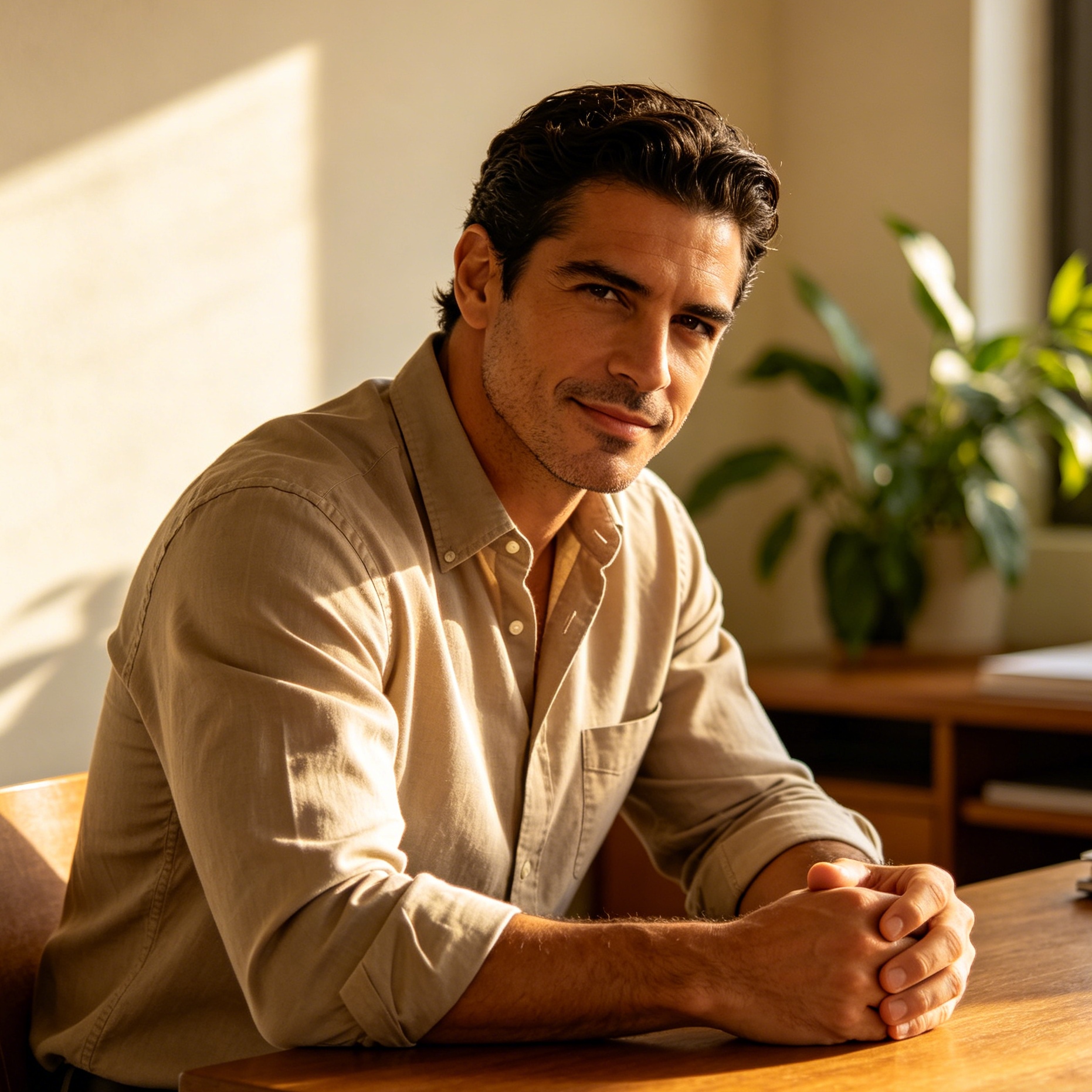
The emergence of the AI photo mixer represents a fundamental shift in digital compositing. While traditional image editing required hours of meticulous masking, color grading, and shadow reconstruction, modern artificial intelligence can now interpret the semantic content of two distinct images and fuse them into a single, cohesive scene in seconds. This technology moves beyond the rudimentary "cut and paste" mechanics of the past, leveraging neural networks to harmonize lighting, perspective, and texture, creating a final product that looks like a single, unedited photograph.
Defining the AI Photo Mixer: More Than a Simple Collage
An AI photo mixer, often referred to as an AI image combiner or merger, is a specialized tool powered by deep learning models—typically diffusion models or generative adversarial networks (GANs). Unlike a collage maker that simply arranges images in a grid or overlay, an AI mixer analyzes the underlying data of the source files to understand what it is seeing.
When a user provides a photo of a product and a photo of a mountain range, a standard editor would require manual effort to remove the background, match the mountain’s sunset lighting to the product’s surface, and adjust the camera angle. An AI photo mixer automates this by performing subject segmentation and environmental synthesis simultaneously. The result is a seamless merge where the subject appears to physically exist within the new environment, complete with accurate contact shadows and reflections.
The Technical Pillars of Seamless AI Image Merging
To understand why this technology is revolutionary, it is necessary to examine the three technical pillars that allow AI to succeed where traditional automated tools failed.
1. Intelligent Subject Segmentation
Older software relied on edge detection, which often struggled with complex boundaries like hair, fur, or translucent materials. AI photo mixers use semantic segmentation, meaning the AI knows it is looking at a "dog" or a "glass bottle." Because the model understands the physical properties of the subject, it can create a cleaner "cut" and even reconstruct missing pixels that might have been occluded in the original shot.
2. Contextual Lighting and Color Harmonization
The most common reason a composite image looks "fake" is a mismatch in lighting temperature and direction. If the subject was photographed under a cool, fluorescent office light but the background is a warm, golden-hour beach, the human eye immediately detects the inconsistency. AI photo mixers perform a process called global illumination matching. The AI redraws the highlights and shadows on the subject to correspond with the light sources present in the background image.
3. Perspective and Scale Alignment
A photo taken from a high angle cannot naturally be merged with a background shot at eye level. Advanced AI mixers detect the vanishing points and horizon lines of both images. They then warp or re-render the subject to ensure the scale and orientation match the new environment. This spatial awareness is what separates professional-grade AI tools from casual mobile filters.
AI Merging vs. Traditional Collage: A Comparative Analysis
It is essential for creators to distinguish between these two visual formats, as they serve different communication goals.
| Feature | Traditional Collage | AI Photo Merger |
|---|---|---|
| Visual Boundary | Visible borders or sharp transitions. | Seamless transitions with no visible edges. |
| Lighting | Each photo retains its original lighting. | Lighting is unified across the entire image. |
| Depth of Field | Inconsistent focus between elements. | AI adjusts blur to match the scene's depth. |
| Manual Effort | Low (mostly layout). | High (traditionally) / Low (with AI). |
| Final Result | A collection of photos. | A new, singular realistic image. |
The primary value of the AI photo mixer lies in its ability to generate "new" reality. For creative professionals, this means the end of the search for the "perfect" stock photo, as they can now synthesize the exact composition they need.
The Best AI Photo Mixers in 2025: A Tool-Specific Breakdown
As the industry matures, different tools have emerged to cater to specific user bases. Based on extensive testing and performance metrics, these are the leading platforms currently dominating the AI image blending space.
1. Google Gemini with Nano Banana Model
Gemini has integrated a specialized engine for realistic photo merging. Its primary strength is subject preservation. During testing, we found that when merging personal portraits with complex landscapes, the Nano Banana model maintained facial integrity better than general-purpose generators. It is particularly effective for users who want to place themselves or their pets into fantastical or high-end professional settings without losing recognizable features.
2. Adobe Firefly (Integrated with Photoshop)
For professional designers, Adobe Firefly remains the gold standard for commercial safety and workflow integration. Firefly’s "Generative Fill" and "Generative Expand" features act as sophisticated photo mixers. The advantage here is the ability to use manual selection tools alongside AI. You can roughly place an object, and Firefly will handle the complex blending, shadow casting, and texture matching. Since it is trained on licensed Adobe Stock, it is the safest bet for corporate marketing materials.
3. CapCut AI Design (Powered by Dream 4.0)
CapCut has pivoted from a video-first editor to a powerful visual design suite. Its AI Design tool is highly optimized for social media creators. The "Prompt-to-Design" feature allows users to upload two images and describe the hybrid result. In our tests, CapCut excelled at "Style Transfer" merges—such as taking the aesthetic of a classic oil painting and applying it to a modern portrait while merging them into a new background.
4. Stable Diffusion (Local Control)
For users with high-end hardware (typically requiring at least 24GB of VRAM for the best results), Stable Diffusion with ControlNet offers unparalleled control. Unlike web-based tools that offer a "black box" experience, Stable Diffusion allows you to dictate the exact weight of each image. You can use a "Canny" or "Depth" map from one image to define the structure, and use the colors of another image to fill the scene. This is the preferred method for concept artists and professional compositors.
Master the Craft: How to Use an AI Photo Mixer Effectively
Getting a perfect blend isn't just about clicking a button; it’s about providing the AI with the right instructions. Through practical application, we have developed a prompt formula that consistently yields high-quality results.
The Professional Prompt Formula
When using a prompt-based AI mixer, structure your request as follows:
[Subject Information] + [Action/Integration] + [Environment/Style] + [Technical Constraints]
- Example: "Merge the glass bottle from Image 1 into the wooden table scene of Image 2. Match the warm candlelight direction, ensure sharp contact shadows on the wood, and preserve the label text without distortion. Photorealistic, 8k, cinematic depth of field."
Key Strategies for Success
- Source Quality Matters: AI can improve an image, but it cannot create data out of thin air. Use high-resolution source images with clear subjects.
- Consistency in Lighting: While AI is good at matching light, the result will be much more believable if the source images aren't diametrically opposed (e.g., trying to put a night-time subject into a high-noon desert scene).
- Iterative Refinement: Most professional workflows involve generating 4 to 5 variations and using "In-painting" to fix small errors in the blend, such as finger artifacts or edge halos.
Real-World Applications of AI Photo Mixing
The impact of this technology extends far beyond hobbyist digital art. It is actively reshaping several multi-billion dollar industries.
E-commerce and Product Photography
In the past, a lifestyle photoshoot for a new product could cost thousands of dollars in studio fees, lighting, and set design. With an AI photo mixer, a brand can take a simple "hero shot" of a product and merge it into hundreds of different lifestyle environments. A skincare bottle can be placed on a bathroom marble counter, a beach towel, or a nightstand, with the AI correctly rendering the reflections and water droplets to match each scene.
Social Media Marketing and Thumbnails
Engagement on platforms like YouTube and Instagram is driven by high-contrast, high-impact visuals. Creators use AI mixers to place themselves in exaggerated action scenes or to blend multiple facial expressions into a single "reaction" shot. The speed of AI allows creators to test multiple thumbnail designs in minutes, a process that used to take an entire afternoon.
Real Estate and Interior Design
Real estate agents are using AI photo mixers to "virtually stage" empty homes. By merging photos of empty rooms with catalogs of high-end furniture, they can create realistic composites that show potential buyers what a space could look like. The AI handles the complex task of making sure the furniture matches the room's specific lighting and floor perspective.
Creative Concept Art
For filmmakers and game designers, AI photo mixers serve as a rapid prototyping tool. They can merge textures of decaying metal with photos of modern skyscrapers to create post-apocalyptic concept art. This allows for visual storytelling to happen at the speed of thought, moving from a rough idea to a high-fidelity visual in a single work session.
Challenges and Ethical Considerations
Despite the power of AI photo mixers, the technology is not without its hurdles.
- Identity Preservation: One of the greatest challenges is keeping a person's face identical across the merge. AI models sometimes "hallucinate" features, slightly changing the eye color or jawline. Tools like "FaceID" LoRAs in Stable Diffusion are being developed to combat this.
- Resolution Limits: Many web-based AI mixers cap the output at 1024px or 2048px. For professional print work, users often need to run the final mixed image through an AI Upscaler to reach 4k or 8k resolutions.
- Ownership and Copyright: The legal landscape regarding AI-generated composites is still evolving. While using your own photos as the base provides more legal standing, the generative nature of the "blending" process creates questions about who owns the final pixels.
The Future of Image Mixing: Beyond Static Pixels
As we look toward 2026 and beyond, the definition of an AI photo mixer is expanding. We are already seeing the beginning of AI Video Mixing, where subjects can be seamlessly merged into moving backgrounds with consistent temporal coherence. Furthermore, the integration of 3D Gaussian Splatting will likely allow users to merge 2D photos into 3D environments, enabling the viewer to "walk around" the mixed composite.
The "Uncanny Valley"—the point where a fake image looks disturbingly almost-human—is rapidly disappearing. As the models become more sophisticated, the distinction between a captured photograph and a synthesized AI mix will become invisible to the naked eye.
Summary
The AI photo mixer has transitioned from a niche experimental tool to a core component of the modern creative stack. By automating the most tedious aspects of digital compositing—segmentation, lighting, and perspective—it has democratized high-end visual design. Whether you are a small business owner looking to enhance your product shots or a digital artist pushing the boundaries of surrealism, understanding how to leverage these tools is no longer optional; it is a vital skill in the age of generative media.
FAQ
What is the best free AI photo mixer?
For beginners, CapCut’s AI Design tool and the web-based AI Image Combiner offer the best balance of ease-of-use and quality without requiring a subscription. They provide a certain number of free credits for high-resolution exports.
Can AI photo mixers handle more than two images?
Yes, advanced tools like Adobe Photoshop’s Firefly integration and Stable Diffusion can handle multiple layers. However, most simple web tools are optimized for merging two primary sources (a subject and a background).
Does an AI photo mixer change the original quality of my photo?
AI mixers generate new pixels based on your source. While they aim to preserve quality, some compression can occur. To maintain the highest quality, it is recommended to use "high-quality" or "lossless" export settings and avoid multiple rounds of re-uploading the same image.
Is it legal to use AI photo mixers for commercial work?
It depends on the tool's Terms of Service. Adobe Firefly is designed for commercial safety, whereas some open-source models may have restrictions or lack clear legal protections regarding their training data. Always check the license of the specific tool you are using.
How do I stop my AI-merged photos from looking fake?
Focus on the "Contact Shadows." A common mistake is not giving the subject a place where it "touches" the ground. Ensure your prompt specifically asks for "realistic contact shadows" and "ambient occlusion" to ground the subject in its new environment.
-
Topic: Best AI Image Mixers in 2025: Mix Two Images Online Fasthttps://www.capcut.com/resource/ai-image-mixer
-
Topic: AI Image Combiner – Combine Two Photos into One Freehttps://aiimgcombiner.com/
-
Topic: Best AI Image Combiners and AI Photo Mergers in 2026https://diyai.io/ai-tools/image-generation/best-ai-image-combiners/