Home
Home
Why AI Voice Agents Are Replacing Traditional IVR in Modern Call Centers

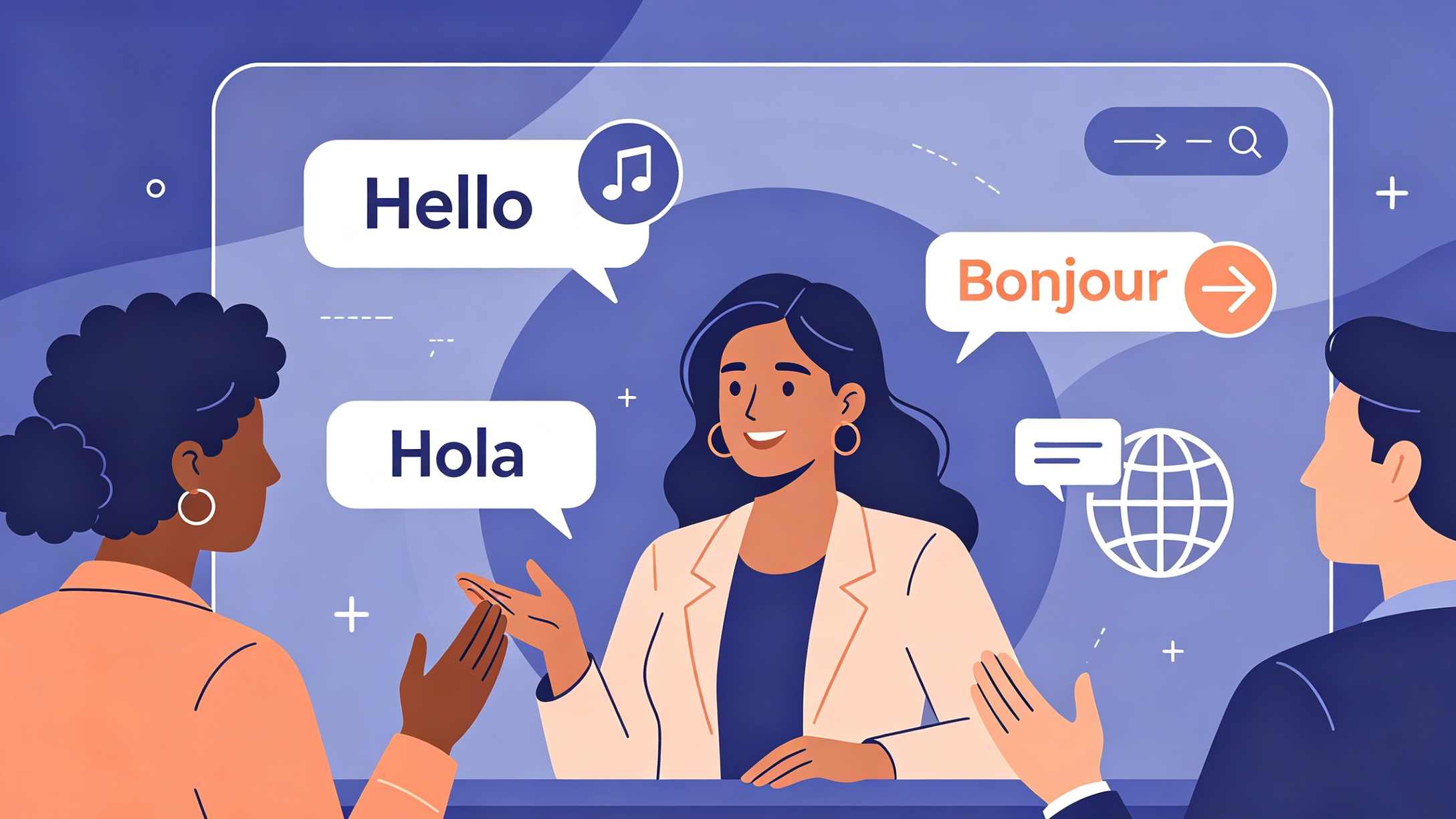
The sound of a robotic voice saying "Press 1 for sales, Press 2 for support" has long been a symbol of customer frustration. Traditional Interactive Voice Response (IVR) systems, while designed to route calls efficiently, often create a barrier between a company and its customers. These rigid, menu-driven trees struggle to handle the nuances of human speech, leading to high abandonment rates and poor customer satisfaction. However, a significant shift is occurring. Generative AI and Large Language Models (LLMs) have enabled the rise of AI voice agents—sophisticated software capable of conducting natural, real-time phone conversations that feel remarkably human.
The Technological Shift from Scripted Menus to Conversational Intelligence
At its core, the transition from IVR to AI voice agents is a move from "if-this-then-that" logic to context-aware intelligence. Traditional systems rely on pre-recorded audio files and DTMF (dual-tone multi-frequency) inputs. If a customer deviates from the script or asks a complex question, the system typically fails, necessitating a transfer to a human agent who must then start the conversation from scratch.
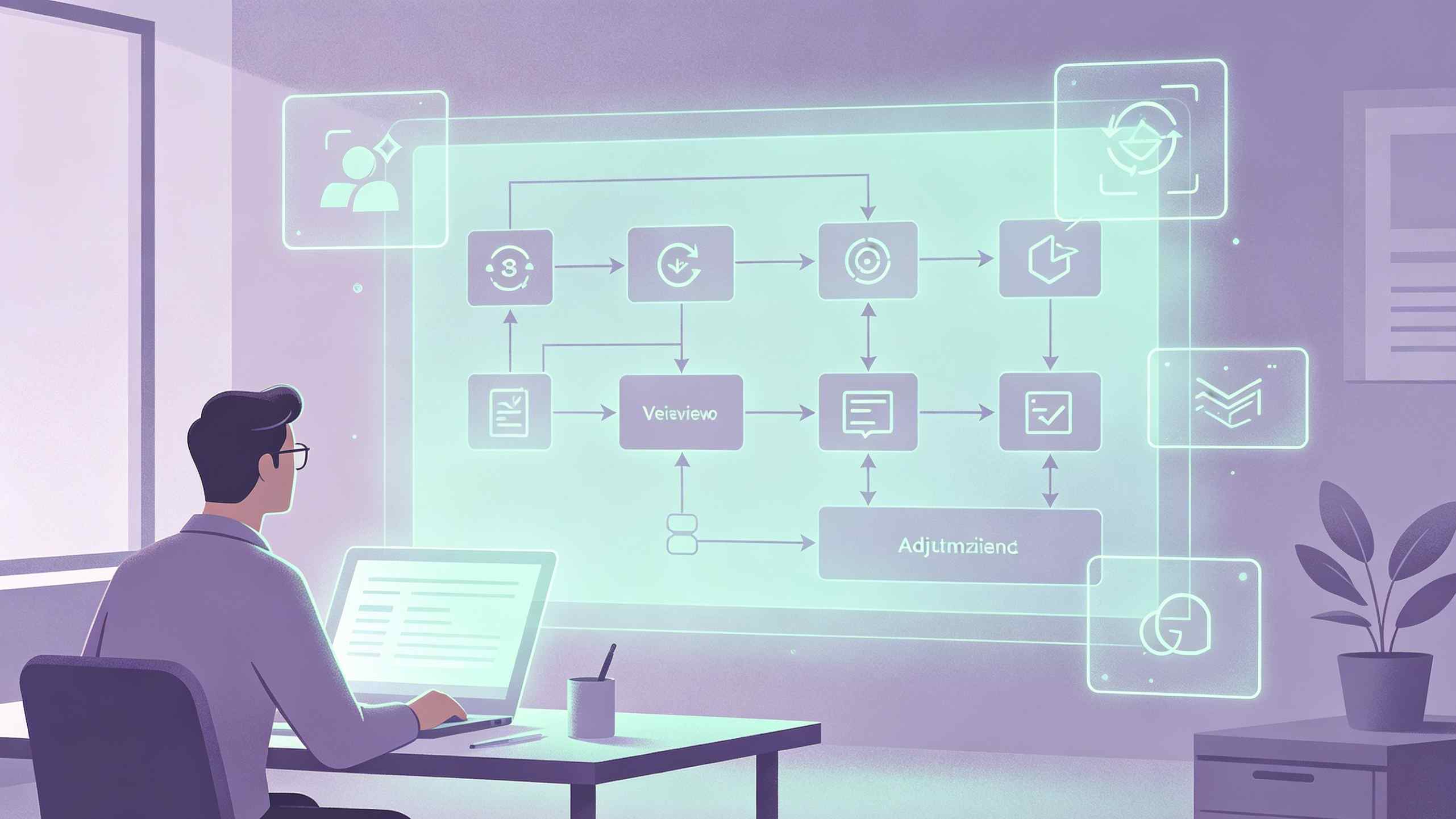
Modern AI voice agents function differently. They utilize a sophisticated stack of four primary components that work in a continuous loop, often processing information in under 500 milliseconds.
The Four Pillars of AI Voice Architecture
- Automatic Speech Recognition (ASR): This is the "ears" of the agent. Advanced models, such as Deepgram’s Nova-2 or Whisper, transcribe spoken words into text in real-time. In high-performance environments, these models are tuned to handle various accents, background noises, and the "ums" and "ahs" of natural speech.
- Large Language Models (LLM): This serves as the "brain." Once the speech is converted to text, models like GPT-4o or specialized fine-tuned versions of Llama 3 process the intent. Unlike a static script, the LLM understands context, can handle interruptions, and maintains a "memory" of the conversation flow.
- Function Calling and Integrations: This represents the "hands." An AI agent that can only talk is merely a chatbot with a voice. To be effective in customer service, the agent must be able to perform actions. Through API integrations (function calling), the agent can check order statuses in Shopify, book appointments in Calendly, or update customer records in Salesforce.
- Text-to-Speech (TTS): This is the "voice." The generated text response is converted back into natural-sounding speech. Providers like ElevenLabs, Cartesia, and PlayHT now offer ultra-low latency voices that include human-like inflections, pauses, and emotional resonance.
Why Latency Is the Critical Metric for Customer Acceptance
In our experience deploying voice systems, the single greatest factor determining whether a customer accepts an AI agent or immediately asks for a human is latency. In human conversation, the typical gap between turns is between 200ms and 500ms. If an AI agent takes 2 seconds to respond, the conversation becomes disjointed. The customer begins to talk over the agent, leading to a frustrating "double-talk" scenario.
To achieve what is considered "natural" flow, the total round-trip latency—from the moment the customer stops speaking to the moment the AI begins its response—must ideally stay below 600ms. In high-traffic environments, we have seen that every additional 100ms of latency correlates with a measurable drop in Customer Satisfaction (CSAT) scores.
Achieving this requires optimized orchestration. This means the ASR must be streaming (processing audio as it arrives), the LLM must be using "token streaming," and the TTS must be generating audio chunks before the full sentence is even completed.
Operational Efficiency and the Bottom Line
The business case for AI voice agents is no longer theoretical. Companies across industries—from healthcare and logistics to retail and hospitality—are seeing a fundamental shift in their cost structures.
24/7 Availability and Instant Scaling
Unlike human call centers, which require complex shift planning and suffer from peak-hour wait times, AI voice agents are infinitely scalable. Whether a business receives 10 calls or 10,000 calls simultaneously, the wait time remains zero. This is particularly valuable for industries with high volatility, such as airlines during a weather event or e-commerce brands during Black Friday.
Drastic Cost Reduction
While a human-staffed call center may cost anywhere from $1.00 to $5.00 per minute depending on the region and expertise required, an AI voice agent typically operates at a fraction of that cost—often between $0.10 and $0.30 per minute. Some estimates suggest that enterprise-level deployments can reduce total operational costs by 40% to 75% while simultaneously increasing the percentage of "first-call resolutions."
Revenue Generation vs. Cost Center
Historically, customer service has been viewed as a cost center. AI voice agents are changing this by acting as proactive sales assistants. Because they can access CRM data instantly, they can identify upselling opportunities during a routine support call. For instance, if a customer calls to check the status of a luxury watch repair, the agent can see the customer's purchase history and offer a personalized discount on a matching accessory, effectively turning a support interaction into a revenue-generating event.
Evaluating the Leading AI Voice Platforms
The market for AI voice platforms is fragmenting into two main categories: developer-first APIs and no-code visual builders. Choosing the right one depends heavily on your internal technical resources and the complexity of your workflows.
Retell AI: Optimized for High Volume and Speed
Retell AI has gained significant traction for its focus on ultra-low latency. In our testing, Retell’s orchestration layer is among the fastest in the industry, making it an excellent choice for high-volume call centers where every millisecond counts. It provides robust tools for monitoring call health and managing the "turn-taking" logic that prevents AI from being too aggressive or too passive in a conversation.
Vapi: The Developer’s Choice for Flexibility
Vapi is widely regarded as one of the most flexible platforms for developers who want deep control over their stack. It allows users to bring their own LLM keys (BYOK) and provides a highly modular architecture. If your team needs to implement complex logic, such as switching between different models mid-conversation or handling intricate multi-step authentications, Vapi offers the granular API control required.
Synthflow: The No-Code Powerhouse
For small to medium-sized businesses (SMBs) or marketing departments without a dedicated engineering team, Synthflow provides a powerful visual interface. You can build a functioning voice agent by dragging and dropping blocks of logic. Despite its ease of use, it doesn't sacrifice much in the way of performance, offering solid integrations with common tools like HubSpot and GoHighLevel.
PolyAI: Enterprise-Grade Customization
PolyAI typically targets larger enterprises that have massive, complex contact center infrastructures. They specialize in creating "brand voices" and have significant experience integrating with legacy telephony systems like Avaya or Cisco. Their focus is on building highly resilient agents that can navigate the "messy" reality of corporate data silos.
The Importance of the Human Handoff
No AI is perfect, and any strategy that attempts to eliminate human agents entirely is doomed to fail. The most successful deployments we have seen are those that treat the AI agent as a "First Responder."
When the AI encounters a situation it cannot handle—perhaps an extremely irate customer or a complex legal inquiry—it must be able to perform a "warm handoff." This means the call is transferred to a human agent along with a live transcript and a summary of what has already occurred. This ensures the customer does not have to repeat their problem, which is a top-three complaint in customer service surveys.
Effective AI agents use "sentiment analysis" to trigger these handoffs. If the LLM detects high levels of frustration or specific keywords indicating a high-risk situation, it can proactively offer to bring a human supervisor onto the line.
Overcoming Common Implementation Challenges
Transitioning to AI voice agents is not without its hurdles. To succeed, organizations must move beyond the "hype" and address several practical realities.
Data Privacy and Security
When a machine is handling sensitive information like credit card numbers or health records, compliance with regulations like GDPR, CCPA, and HIPAA is non-negotiable. Companies must ensure that their chosen platform offers data redaction (masking sensitive info in transcripts) and that data is not used to train the underlying public models without consent.
Voice Consistency and Branding
A company's voice is part of its identity. Choosing a "generic" AI voice can make a brand feel impersonal. Advanced platforms now allow for custom voice cloning, where a brand can create a unique, proprietary voice that reflects its personality—whether that’s professional and authoritative or warm and empathetic.
Handling "Off-Script" Conversations
Customers will often talk about things unrelated to their query, such as the weather or personal anecdotes. A rigid system will crash or give a nonsensical answer. An LLM-based agent, however, can acknowledge these side-comments gracefully ("It sounds like you're having a lovely day!") before politely steering the conversation back to the task at hand.
Summary of Key Insights
AI voice agents represent a generational leap over traditional IVR systems. By combining ASR, LLMs, and TTS with low-latency orchestration, businesses can finally offer phone support that is both efficient for the company and pleasant for the customer.
- Latency is the North Star: Aim for under 600ms total response time to maintain conversational flow.
- Action is as important as Talk: Ensure your agent is deeply integrated with your CRM and backend databases through function calling.
- Platform Fit matters: Choose Retell or Vapi for high-customization developer needs; choose Synthflow for rapid, no-code deployment.
- The Goal is Augmentation: Use AI to handle the 80% of routine queries, freeing up your human staff for the 20% of high-value, high-empathy interactions.
Frequently Asked Questions
What is the difference between a chatbot and a voice AI agent?
While both use LLMs to understand text, a voice AI agent adds layers of ASR (for listening) and TTS (for speaking). Crucially, voice agents must handle "real-time" constraints like latency and interruptions that do not exist in text-based chat.
Can AI voice agents understand different accents?
Yes, modern ASR models are trained on diverse datasets and generally outperform traditional IVR speech recognition. However, accuracy can still vary depending on background noise and the specific model used.
How long does it take to deploy an AI voice agent?
A basic "receptionist" or "appointment setter" can be deployed in a few hours using no-code tools. A complex enterprise agent with deep CRM integrations and custom logic typically takes 4 to 8 weeks to move from pilot to full production.
Will AI voice agents replace human call center workers?
The shift is more toward "augmentation." AI handles repetitive tasks like "Where is my order?" or "Reset my password," allowing human agents to focus on complex problem-solving, sales, and situations requiring high emotional intelligence.
How do I measure the success of my AI voice agent?
Key metrics include Containment Rate (how many calls were resolved without a human), First Call Resolution (FCR), Average Handle Time (AHT), and CSAT (Customer Satisfaction Score) specifically for the AI interaction.
-
Topic: 15 best AI voice assistants in 2026https://www.zendesk.com/it/service/ai/ai-voice-assistants/
-
Topic: AI Voice Agents: A Complete Guide | Salesforcehttps://www.salesforce.com/agentforce/voice/ai-voice-agents/
-
Topic: 9 Best AI Voice Tools for Improved CX in 2026https://www.nextiva.com/blog/best-ai-voice-tools.html