Home
Home
Why AI Will Never Fully Take Over Cyber Security Roles

The short answer to whether artificial intelligence will take over cyber security is a definitive no. While AI is fundamentally transforming how organizations detect and mitigate threats, it functions as a force multiplier rather than a human replacement. In the modern digital landscape, AI is the engine that handles the massive scale of data, while human experts remain the navigators who provide strategic direction, ethical judgment, and accountability.
To understand the trajectory of this technology, it is essential to distinguish between automation and autonomy. AI has already "taken over" the repetitive, high-volume tasks that previously led to massive analyst burnout. However, the complex chess match between defenders and attackers still requires human intuition. As cyber threats evolve into machine-speed operations, the relationship between humans and AI is becoming a sophisticated partnership rather than a zero-sum game of job displacement.
The Core Reality of the AI Force Multiplier
In cyber security, a force multiplier refers to a factor or a combination of factors that gives personnel the ability to accomplish greater feats than would otherwise be possible. AI excels at pattern matching and processing petabytes of data in milliseconds—a feat physically impossible for any human team.
Before the integration of advanced machine learning models, security analysts operated in a reactive state. They waited for an incident to occur, manually combed through logs, and attempted to reconstruct the timeline of an attack. Today, AI-powered systems can flag anomalies as they happen. Despite this capability, these systems lack the cognitive flexibility to understand the "why" behind an event. They can identify a deviation from the norm, but they cannot inherently understand if that deviation is a sophisticated nation-state attack or a legitimate, albeit unusual, administrative action by a senior executive.
Why Human Intelligence Remains Irreplaceable
There are structural and philosophical reasons why AI cannot operate independently in a high-stakes security environment. These reasons span from technical limitations to legal and ethical requirements.
Contextual Judgment and Nuance
AI operates on statistical probabilities. It analyzes historical data to predict the likelihood of a current event being malicious. However, security is often defined by "the exception to the rule." A machine learning model might flag a late-night login from an unusual IP address as a critical threat. A human analyst, however, can quickly cross-reference this with a known travel schedule or a critical project deadline that required after-hours work.
Without human context, AI can become a source of "false positives." If a system is tuned too aggressively, it blocks legitimate business operations, causing significant financial loss. If it is tuned too loosely, it misses subtle incursions. Humans provide the fine-tuning necessary to balance security with operational continuity.
Ethical, Legal, and Business Accountability
When a security breach occurs, the repercussions are not merely technical; they are legal and financial. Organizations must comply with regulations like GDPR, CCPA, or industry-specific standards. These frameworks require accountability. A machine cannot be held liable in a court of law, nor can it make the complex ethical decisions required when choosing between shutting down a critical infrastructure component to stop an attack and keeping it running to prevent a public safety crisis.
Strategic decision-making involves weighing risk against business value. AI cannot understand the reputational risk of a specific disclosure or the long-term strategic implications of a particular defense posture. These are high-level human responsibilities that involve empathy, social understanding, and a deep knowledge of corporate culture.
The Problem of Strategic Thinking
Attackers are not static; they are sentient, creative, and adaptive. Cyber security is an adversarial game where both sides are constantly changing their rules. AI models are trained on past data. They are excellent at identifying "known unknowns"—variants of existing threats. However, they struggle with "unknown unknowns"—entirely new methods of attack that have no historical precedent.
Human threat hunters use "lateral thinking." They can imagine how an attacker might combine three seemingly unrelated vulnerabilities to gain access. They can anticipate the psychological motivations of a threat actor. AI, currently, lacks the ability to simulate the creative malice of a human adversary.
How AI is Currently Taking Over Defensive Tasks
While AI won't replace the security professional, it is undeniably taking over specific roles and functions. This shift is actually a relief for an industry that has long suffered from a talent shortage and high turnover rates.
Automating the Security Operations Center (SOC)
Traditionally, Level 1 and Level 2 analysts spent the majority of their shifts "triaging" alerts. In a typical large enterprise, the SOC might receive over 4,000 alerts daily. Without AI, nearly 44% of these alerts go uninvestigated because there simply isn't enough time.
AI-driven Security Orchestration, Automation, and Response (SOAR) platforms have taken over this triage process. They can automatically verify if a flagged IP address is on a known blacklist, isolate a suspicious workstation, and present a curated case file to the human analyst. This reduces the Mean Time to Detect (MTTD) and allows humans to focus on high-value investigations rather than digital manual labor.
Speed and Scale in Threat Detection
Modern botnets and automated scanning tools probe networks at machine speed. Human defenders cannot possibly manually block thousands of IPs every minute. AI "takes over" the front-line defense, acting as a high-speed filter.
Statistical analysis shows that organizations with extensive AI deployment can detect breaches up to 108 days faster than those without. This speed is critical because the cost of a breach is directly proportional to the "dwell time"—the amount of time an attacker remains undetected in a network. In 2025, the average cost of a data breach saw its first decline in years, primarily driven by the efficiency of AI-assisted containment.
Phishing and Social Engineering Prevention
The surge in AI-generated phishing attacks is staggering, with some reports indicating a 1,265% increase since the emergence of sophisticated large language models (LLMs). Attackers use AI to write perfect, personalized emails that lack the typical spelling errors and grammatical mistakes that used to serve as red flags.
To fight AI, organizations must use AI. Natural Language Processing (NLP) models are now used to analyze the tone, intent, and metadata of emails. These systems can detect subtle "social engineering" cues that a human might miss in a busy afternoon. By taking over the initial filtering of the inbox, AI significantly reduces the risk of human error.
The AI Arms Race: When Attackers Use the Same Tools
The discussion of an AI takeover must include the offensive side of the equation. We are currently in a "cyber arms race." Just as defenders use AI to automate protection, cybercriminals use it to automate exploitation.
Adaptive Malware and Polymorphic Exploits
Attackers are developing malware that uses AI to analyze the defensive environment it has landed in. If it detects a sandbox or a specific antivirus agent, the malware can "mutate"—changing its code structure to remain invisible. This polymorphic nature makes signature-based detection obsolete.
Defenders are forced to move toward behavioral analytics. Instead of looking for a specific file hash, AI monitors behavior. If a calculator app suddenly starts trying to encrypt the hard drive, the AI flags it. This machine-vs-machine conflict happens in the background, far below the threshold of human reaction time.
Adversarial Manipulation and Poisoning
A significant risk in the "AI takeover" narrative is the vulnerability of the AI models themselves. Attackers can use "data poisoning" to corrupt the training data of a security model. For example, by slowly introducing malicious traffic that looks like "normal" behavior over several months, an attacker can trick the AI into ignoring a future breach.
There is also the risk of "prompt injection" or "jailbreaking" in security LLMs. If a security professional relies too heavily on an AI to summarize a threat report, an attacker could hide hidden instructions within the data that trick the AI into giving the wrong advice. Human oversight is the only effective defense against these types of manipulation. The human must audit the AI's logic to ensure it hasn't been compromised.
Economic Impact and Market Trends
The transition toward AI-centric security is not just a technical trend; it is a massive economic shift. The AI cyber security market was valued at approximately $25.35 billion in 2024 and is projected to skyrocket to over $93 billion by 2030.
This growth is fueled by the measurable Return on Investment (ROI). Organizations using extensive AI tools report saving an average of $2.09 million per year compared to those with no AI deployment. These savings come from reduced downtime, lower legal fees, and the prevention of data theft. However, this doesn't mean organizations are spending less on people. Instead, they are shifting their budget from "entry-level triage staff" to "high-level AI security engineers."
The Evolving Security Workforce
If you are a professional in the cyber security field, AI is not taking your job; it is changing your job description. The demand for security experts is actually increasing, but the required skill set is shifting toward "AI literacy."
From Hunter to Governor
The role of the security professional is moving away from manual log analysis and toward the strategic management of autonomous systems. Tomorrow's experts will spend their time:
- Model Governance: Ensuring that the AI models are accurate, unbiased, and uncompromised.
- Strategic Threat Hunting: Using AI-generated insights to find the 1% of threats that the machine missed.
- Explainability Management: In security, knowing why something was flagged is as important as the flag itself. Humans must interpret the "Black Box" of AI decisions for stakeholders and regulators.
- Incident Orchestration: Managing the high-level response to a crisis, coordinating between legal, PR, and technical teams.
Bridging the Workforce Gap
There are currently millions of unfilled cyber security positions globally. The "AI takeover" of routine tasks is the only way to bridge this gap. By making existing teams more efficient, AI allows smaller companies to maintain a security posture that was previously only available to Fortune 500 enterprises.
The Future: A Human-in-the-Loop Model
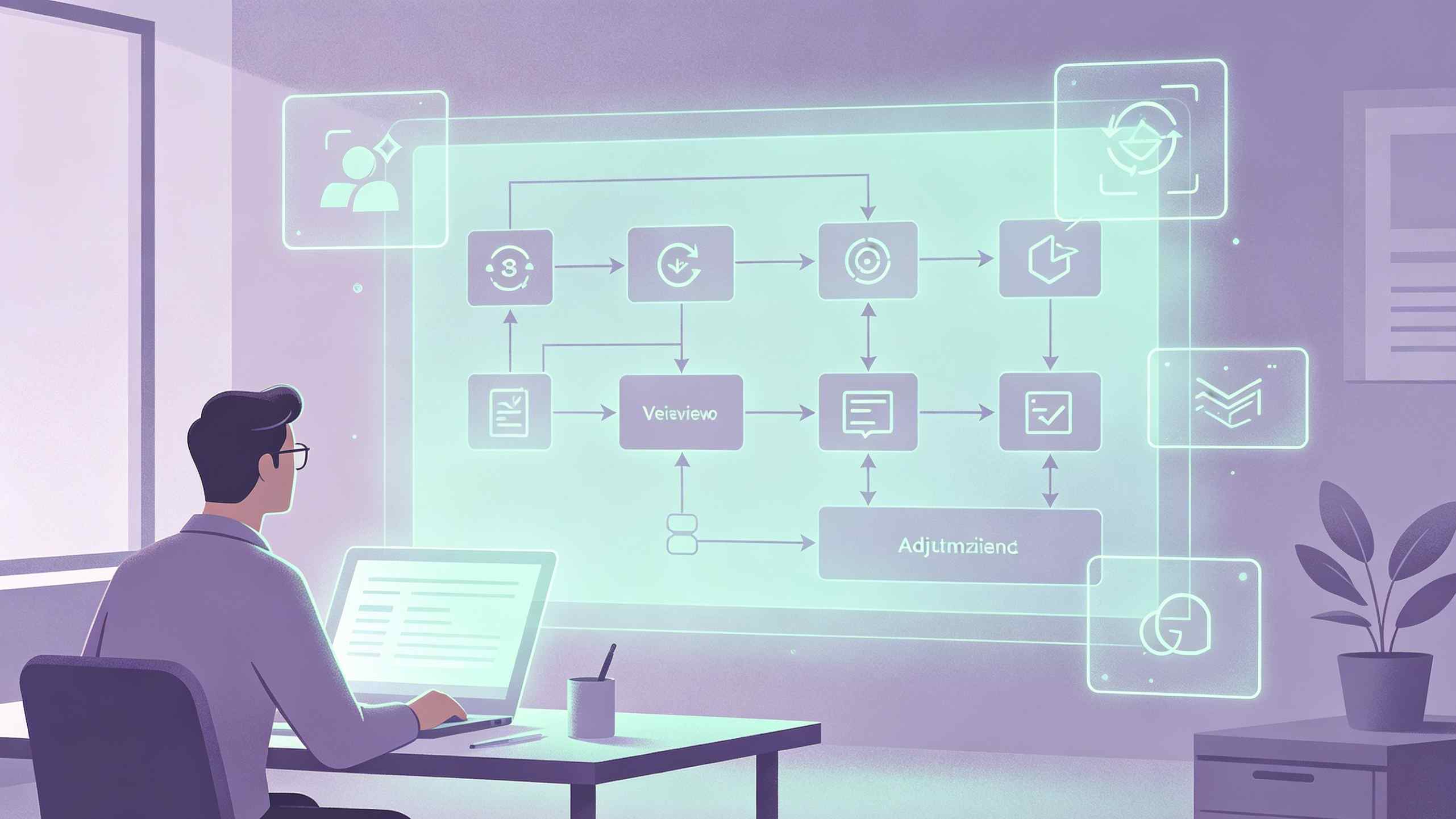
The most effective security architectures of the future will follow a "Human-in-the-Loop" (HITL) model. In this setup, AI handles the heavy lifting—scanning, filtering, and initial response—while a human provides the final verification and strategic oversight.
This partnership addresses the "Black Box" problem. If an AI blocks a critical server, a human must be there to understand the logic and override it if it was a mistake. Conversely, if an AI detects a subtle pattern of data exfiltration across six months, it presents that evidence to a human who can then initiate a full-scale forensic investigation.
Summary
AI is to cyber security what the calculator was to mathematics or the autopilot is to aviation. It does not replace the professional; it handles the complexity and scale so the professional can focus on the mission-critical elements of the task. AI provides the speed and the data processing power, but humans provide the context, the ethics, and the strategic foresight.
As we move toward 2030, we should expect to see security systems that are increasingly autonomous in their day-to-day operations. However, the "takeover" will be a functional one—taking over the drudgery, the fatigue, and the impossible scale—while leaving the most vital, high-stakes decisions in human hands. Organizations that embrace this partnership will thrive; those that attempt to replace humans entirely with AI will find themselves vulnerable to the creative and adaptive nature of modern cyber threats.
FAQ
Will AI make entry-level cyber security jobs obsolete?
Entry-level jobs are not disappearing, but they are being redefined. Instead of manual log checking, entry-level roles will focus on managing AI alerts, verifying automated reports, and learning to tune security models. The "manual" entry-level work is being automated, making these roles more technical and analytical from day one.
Can attackers use AI to bypass all current security?
No. While AI allows attackers to launch more sophisticated phishing and polymorphic malware, defensive AI is equally capable of detecting those subtle patterns. It is a continuous arms race. Security is never "solved"; it is a process of maintaining a better defense than the attacker's offense.
What is the biggest risk of using AI in cyber security?
The biggest risk is "over-reliance" or "automation bias." If a team trusts the AI blindly, they may miss "adversarial examples" or data poisoning attacks. Additionally, the lack of "explainability" in some AI models can make it difficult for humans to understand why a specific decision was made during a crisis.
Does AI increase or decrease the cost of cyber security?
In the short term, the cost increases due to the price of advanced AI tools and the need for specialized talent. In the long term, it significantly decreases the cost by preventing expensive data breaches, reducing "dwell time," and mitigating the massive financial impact of successful attacks.
Is generative AI (like ChatGPT) used in cyber security?
Yes. Generative AI is used to summarize complex threat intelligence reports, help write secure code, and even simulate phishing attacks for employee training. However, it is also used by attackers to create more convincing social engineering campaigns.
-
Topic: STATE OF AI IN CYBERSECURITY 2026https://www.secure.com/resources/state-of-ai-in-cybersecurity.pdf
-
Topic: What Are the Predictions of AI In Cybersecurity? - Palo Alto Networkshttps://www.paloaltonetworks.com/cyberpedia/predictions-of-artificial-intelligence-ai-in-cybersecurity
-
Topic: AI in Cybersecurity: How AI is Changing Threat Defensehttps://ischool.syracuse.edu/ai-in-cybersecurity/