Home
Home
Why Artificial Intelligence Cannot Master Human Soft Skills

The rapid advancement of generative artificial intelligence has led to a widespread misconception that machines are on the verge of replicating the full spectrum of human capability. While AI has achieved remarkable fluency in technical tasks—coding, data analysis, and even complex legal drafting—it faces a structural and biological wall when it comes to soft skills. The reason artificial intelligence cannot truly learn soft skills lies in the fundamental distinction between simulation and experience.
Soft skills, such as empathy, conflict resolution, leadership, and ethical judgment, are not merely sets of data points or linguistic patterns. They are "embodied" capabilities rooted in human biology, subjective consciousness, and lived history. An AI can mimic the language of a supportive manager or the tone of a persuasive negotiator, but it does not possess the underlying cognitive architecture required to understand the meaning, stakes, or emotional resonance of those interactions.
The Biological Wall and the Necessity of Embodiment
The most significant barrier to AI mastering soft skills is the lack of a physical body and a nervous system. In cognitive science, the theory of "embodied cognition" suggests that human intelligence is not a localized process in the brain but is deeply integrated with the body’s sensory and motor systems.
The Physiology of Empathy
When a human interacts with another person who is in distress, their body reacts. Mirror neurons fire, cortisol levels may rise, and there is a physical sensation of "feeling" another person’s pain. This physiological feedback loop is the foundation of genuine empathy. AI, operating on silicon and electricity, has no such mechanism. It processes the text "I am feeling overwhelmed" as a series of tokens to be matched with a statistically probable sympathetic response.
The AI does not feel a tightening in its chest; it does not have a "gut feeling" about a colleague's hidden frustration. Without this biological resonance, AI’s "empathy" is a calculated output rather than a shared experience. In professional environments where trust is paramount—such as healthcare or crisis management—this lack of genuine emotional connection makes the AI’s contributions feel hollow and ultimately unreliable in high-stakes social scenarios.
Sensory Nuance Beyond Text
Human soft skills rely heavily on reading the "unspoken" aspects of communication. Research consistently shows that a significant portion of human communication is non-verbal, involving micro-expressions, body language, vocal tonality, and even the strategic use of silence.
AI models, particularly Large Language Models (LLMs), are primarily trained on text. Even multimodal models that can "see" images or "hear" audio analyze these inputs as discrete data packets. They struggle to synthesize the subtle, real-time discrepancies between what a person says and how they act. For instance, a skilled human negotiator can sense a slight hesitation in a partner's voice that signals a lack of confidence, even if the words remain firm. An AI often misses these fleeting, non-quantifiable cues because it lacks the intuitive sensory integration that humans develop through years of physical social interaction.
Probability vs. Purpose: The Statistical Trap
To understand why AI struggles with soft skills, one must look at how these models "learn." Machine learning is essentially a process of pattern recognition and statistical prediction.
The Illusion of Fluency
When an AI provides a sophisticated answer to a complex interpersonal dilemma, it is not "thinking" about the people involved. It is predicting the next most likely sequence of words based on billions of examples of human writing. This results in "fluency"—the ability to sound human—but it lacks "substance."
In the context of leadership, substance involves having a vision, taking risks, and being accountable for outcomes. An AI cannot lead because it has no skin in the game. It does not fear failure, nor does it feel the weight of responsibility when its "advice" leads to a department-wide layoff. Leadership is a soft skill built on character and moral consistency, qualities that cannot be derived from a probability distribution.
The Problem of Novel Contexts
AI performs best when it can draw from a vast library of historical data. However, the most critical soft skills are required in novel, "messy," or ambiguous situations where no historical precedent exists.
Human judgment involves "meaning-making"—the ability to look at a unique set of circumstances and decide what the right thing to do is, based on values and long-term strategic goals. AI, by contrast, is a backward-looking technology. It optimizes for the "average" or the "most likely" response. In a unique corporate crisis or a delicate interpersonal conflict, the "statistically most likely" response is often the most generic and least effective. True soft skills require the ability to break patterns, not just follow them.
The Moral Compass and Ethical Reasoning
One of the most complex soft skills is ethical judgment. While an AI can be programmed with "safety guardrails" or "ethical guidelines," it does not possess a moral compass.
Rules vs. Values
AI follows rules; humans follow values. This distinction is vital in professional ethics. A rule-based system can be bypassed, "jailbroken," or found to have logical loopholes. A value-based system, inherent in human soft skills, allows for flexibility and nuance.
Consider a situation where a manager must decide whether to grant a struggling employee leave that technically violates company policy. A human manager uses soft skills to weigh the employee’s long-term loyalty, the team’s morale, and the specific personal hardships involved. The manager makes a "judgment call" that balances compassion with professional duty. An AI, even one tuned for "kindness," will ultimately struggle with the inherent contradictions of ethical dilemmas because it lacks the lived experience of suffering, ambition, and sacrifice that informs human morality.
Accountability and Trust
Soft skills are the glue that holds professional relationships together through the mechanism of trust. Trust requires accountability. If a human leader makes a poor decision, they can apologize, explain their reasoning, and work to earn back that trust.
If an AI makes a social or ethical blunder, there is no one to hold accountable in a meaningful sense. You cannot "trust" an algorithm to have your back in a difficult meeting because the algorithm doesn't know what it means to have a "back." It doesn't understand the social contract. This structural absence of accountability means AI will always be a tool and never a peer in the realm of interpersonal relations.
Why Soft Skills Are the "Hard Skills" of the AI Era
For decades, we have used the term "soft skills" to imply they are secondary or easier than "hard" technical skills. The rise of AI has flipped this narrative. We are realizing that technical skills are actually the "easy" ones to automate because they are based on logic, rules, and structured data.
The Difficulty of Encoding Wisdom
Soft skills are actually the hardest to learn and the hardest to teach. They require what we might call "wisdom"—the synthesis of knowledge, experience, and emotional intelligence.
In our testing of various AI models in role-playing scenarios—such as delivering performance reviews or managing a disgruntled client—we found a recurring "uncanny valley" effect. The AI is often too perfect. It follows the textbook "Sandwich Method" of feedback so rigidly that it comes across as patronizing or robotic. It lacks the "social grace" to know when to drop the script and just be a human. This "grace" is a high-level cognitive function that requires a sense of self and an awareness of the other, both of which are absent in current AI architectures.
The Jagged Frontier of Capability
Academic research, such as the concept of the "Jagged Frontier" explored by Harvard researchers, shows that AI can outperform humans in some highly complex tasks while failing miserably at tasks that seem much simpler but require human intuition.
For example, an AI can analyze the financial health of a thousand companies in seconds—a task impossible for a human. Yet, that same AI may fail to realize that a CEO’s "off-script" comment during an interview was actually a cry for help or a subtle hint at a coming merger. The "jaggedness" of the frontier is defined by the presence of human elements. Where the task is purely data-driven, the frontier pushes out. Where the task requires reading between the lines of human behavior, the frontier collapses.
The Role of AI as a Tool for Human Development
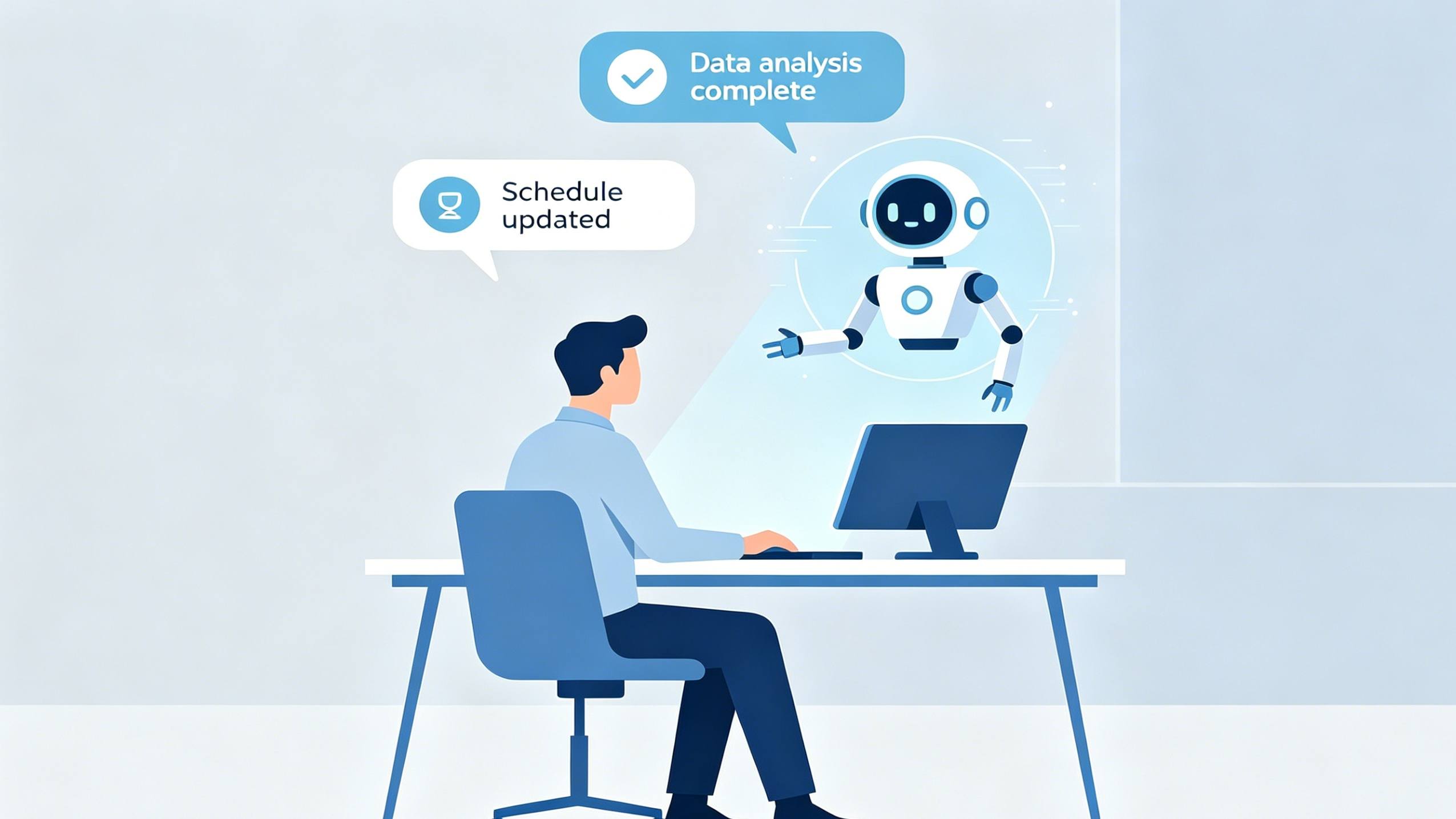
While AI cannot possess soft skills, it is becoming an invaluable tool for helping humans develop them. This is the critical nuance in the "AI vs. Humans" debate.
Scalable Practice Environments
One of the biggest hurdles in learning soft skills like public speaking or difficult conversations is the lack of "safe" practice spaces. Practicing on a real client or a real employee has high stakes.
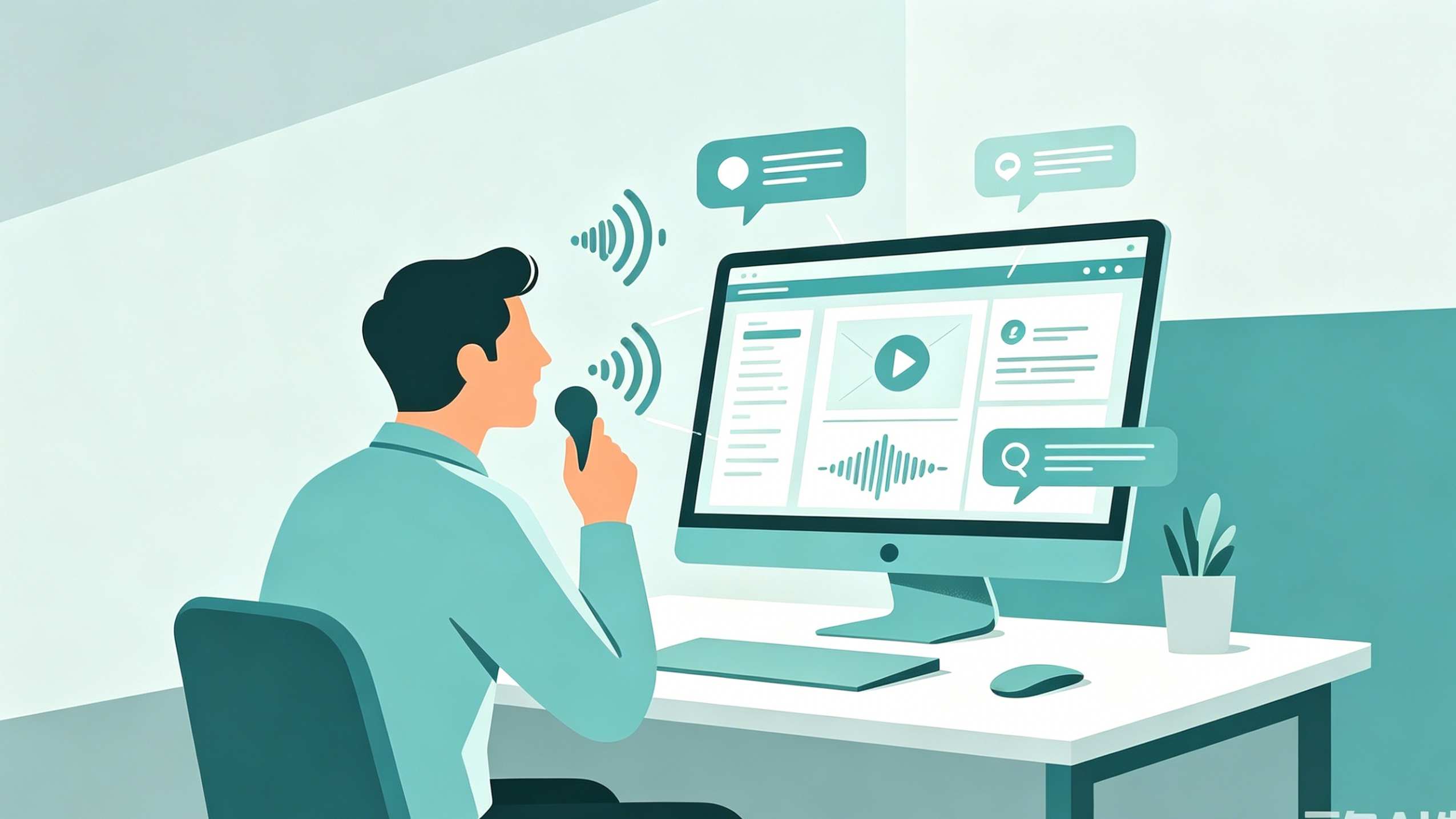
AI provides a low-stakes, scalable environment where a professional can practice their delivery, tone, and argument structure repeatedly. For instance, an AI can play the role of a "skeptical investor," allowing a founder to refine their pitch. The AI provides objective feedback on the user’s pacing, clarity, and use of persuasive language. In this capacity, the AI isn't "learning" soft skills; it is acting as a sophisticated mirror, reflecting the human's performance back to them so they can improve.
Data-Driven Self-Awareness
AI can analyze thousands of hours of a salesperson’s calls to identify patterns that the salesperson themselves might not notice. It might find that the salesperson tends to interrupt more when they are nervous, or that they use fewer "collaborative" words in the final stage of a deal. This data-driven insight allows the human to apply their own emotional intelligence to change their behavior. The AI provides the "what," but the human provides the "how" and the "why."
The Future of Work: The Human Premium
As AI continues to commoditize technical skills, the market value of genuine human soft skills is set to skyrocket. This is the "Human Premium."
The Rise of High-Touch Roles
In an economy saturated with AI-generated content and automated services, "high-touch" roles—those that require deep empathy, complex negotiation, and human connection—will become the primary differentiators for businesses. A customer service experience that is handled by a human who can truly understand a customer's unique frustration will be a luxury service. A leader who can inspire a team through a period of intense uncertainty using their own personal vulnerability and courage will be irreplaceable.
Adapting Education for the Human Element
Educational systems must pivot from teaching "what to know" (which AI can provide instantly) to "how to be." This means prioritizing communication, ethics, philosophy, and psychology. If we focus on training people to be better "calculators," they will lose to AI. If we focus on training them to be better "navigators" of the human experience, they will thrive.
Summary
The fundamental reason AI cannot learn soft skills is that it lacks the embodied experience and subjective consciousness that these skills require. Soft skills are not just about producing the right words; they are about the intent, the emotional resonance, and the accountability behind those words.
AI excels at fluency—it can simulate the appearance of empathy and leadership by matching patterns in data. However, it lacks substance—the biological and moral foundation that defines true human connection. As we move further into the AI era, the ability to read non-verbal cues, navigate ethical ambiguity, and build genuine trust will become the most valuable skills in the global workforce. AI will serve as a powerful coach and a mirror for these "durable" human skills, but it will never be a substitute for the human touch.
Frequently Asked Questions
Can AI eventually learn empathy if it gets more data?
No. Empathy is a biological and physiological process, not just a data problem. While AI can get better at simulating empathy by recognizing more patterns in speech and facial expressions, it cannot experience empathy. True empathy requires a shared biological understanding of feelings like pain, joy, or fear, which a machine cannot have.
Why does AI struggle with "common sense" in social situations?
"Common sense" in social contexts is actually a massive database of lived human experiences and cultural nuances. Much of this is never written down and therefore is not in the AI's training data. Human social intuition is built on thousands of hours of physical interaction and observation, something an algorithm cannot replicate through text analysis alone.
Will soft skills really protect my job from AI?
While no job is entirely "immune" to change, roles that depend heavily on soft skills—like therapy, high-level management, complex sales, and healthcare—are the most resistant to full automation. AI can handle the administrative and analytical parts of these jobs, but the core human-to-human relationship remains the value-add that machines cannot replicate.
How can I use AI to improve my own soft skills?
You can use AI as a role-play partner to practice difficult conversations, ask it for feedback on the clarity and tone of your writing, or use it to brainstorm different perspectives on a conflict. Think of AI as a "simulator" where you can fail safely before you deal with the real human stakes.
What is the difference between "Machine Fluency" and "Human Substance"?
Machine Fluency is the ability to generate a response that sounds correct and polite based on statistical probability. Human Substance is the character, moral judgment, and lived experience that sit behind a response. You can have fluency without substance, which is why AI sometimes feels "uncanny" or hollow in emotional situations.
-
Topic: The Most Important Human Skills AI Can’t Replacehttps://online.hbs.edu/blog/post/human-skills-ai-cant-replace
-
Topic: The Skills That AI Can't Replace | Career Shifthttps://careershift.dev/blog/skills-ai-cant-replace/
-
Topic: Soft Skills the AI Revolution Can’t Replace — TechClasshttps://www.techclass.com/resources/learning-and-development-articles/the-future-of-soft-skills-what-ai-can-t-replace