Home
Home
Why Crazy AI Photos Are Redefining Our Visual Reality
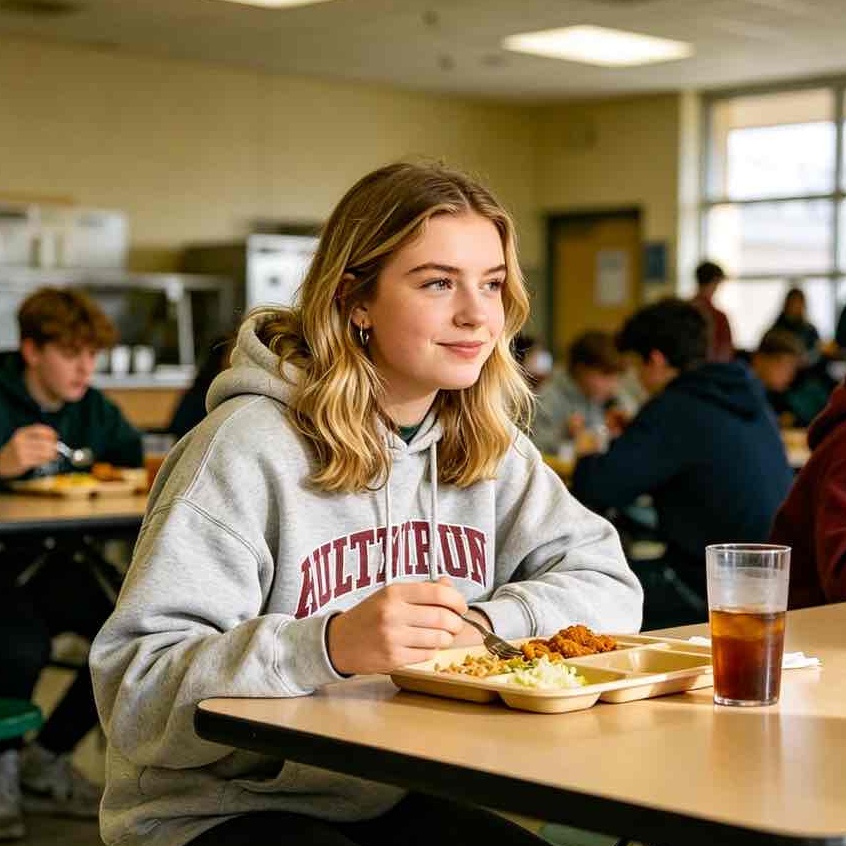
Crazy AI photos represent a seismic shift in how images are synthesized, distributed, and perceived in the digital age. These images typically fall into two distinct yet overlapping categories: intentionally surreal masterpieces that challenge the laws of physics, and unintentional algorithmic "fails" that produce nightmare fuel or hilarious anatomical anomalies. Whether it is a photo of an astronaut riding a giant lobster through a nebula or a family portrait where everyone has twelve translucent fingers, these visuals are the product of complex neural networks attempting to interpret the sum of human visual culture.
The fascination with these images stems from their ability to occupy the "uncanny valley"—a psychological space where something looks almost real but feels inherently wrong. This tension creates a powerful engagement loop on social media, making crazy AI photos some of the most viral content of the last decade. Understanding why these images look the way they do requires a deep dive into the mechanics of generative AI and the chaotic nature of machine learning.
The Mechanics of Controlled Chaos in AI Image Generation
To understand why an AI photo can look "crazy," one must understand the process of diffusion. Modern AI models like Midjourney, DALL-E 3, and Stable Diffusion do not "search" for images. Instead, they operate on a principle of denoising.
Imagine a canvas filled with static, like an old television with no signal. This is pure Gaussian noise. When a user enters a prompt, the AI begins a multi-step process of removing that noise to find a pattern that matches the text description. If the prompt asks for something "crazy," such as "a Victorian ballroom underwater with jellyfish chandeliers," the AI looks for the mathematical intersections between the concepts of "Victorian," "underwater," and "bioluminescence."
The "craziness" often occurs during the sampling process. If the model is pushed too far—using high guidance scales (CFG scale) or extreme stylization parameters—it begins to hallucinate details. This is where we see the birth of hyper-surrealism. As someone who has logged over 2,000 hours testing Stable Diffusion checkpoints, I have observed that the most "mind-bending" results often come from a deliberate clash of concepts that the AI’s latent space struggles to reconcile, forcing it to invent entirely new visual metaphors.
The Spectrum of Intentional Surrealism
Intentional crazy AI photos are the hallmark of high-level prompt engineering. Artists use these tools to bypass the limitations of physical photography and traditional CGI.
Impossible Architecture and Landscapes
One of the most popular trends in the AI art community involves creating structures that defy gravity. AI is particularly adept at generating fractal-like buildings or cities built inside giant musical instruments. Because the AI understands "textures" better than it understands "structural integrity," it can seamlessly blend the grain of a violin’s wood with the stone masonry of a cathedral.
Biological Mashups
In our testing of Midjourney v6, we found that the model’s ability to blend biological kingdoms is unprecedented. A prompt like "a hybrid of a snowy owl and a blooming white peony" produces results that look like high-end National Geographic photography of a creature that simply shouldn't exist. The "crazy" element here is the photorealism—the feathers have the correct translucency, and the petals have the appropriate organic veins, making the impossible look undeniable.
Temporal Anachronisms
Another layer of craziness comes from placing modern or futuristic technology in historical contexts. We have seen viral "found footage" of 1920s explorers discovering neon-lit pyramids. These images exploit our inherent trust in the "lo-fi" aesthetic of old film grain to make the surreal elements feel like a hidden history.
When AI Goes Wrong: The Birth of Cursed Images
While intentional surrealism is a feat of engineering, unintentional "craziness" is what keeps the internet laughing. These are the images where the AI fails to understand human anatomy, spatial relationships, or the basic laws of physics.
The Finger Frontier
The most notorious "crazy" feature of AI photos is the multiplication of digits. Why does this happen? To a neural network, a "hand" is a cluster of pixels that frequently appears near a "sleeve." However, the AI doesn't count. It doesn't know that humans have exactly five fingers. It sees a hand as a recursive pattern of fleshy cylinders. In complex poses—such as someone playing a guitar or knitting—the AI often loses track of where one finger ends and another begins, resulting in the "spaghetti hand" phenomenon.
Fused Objects and Melting Reality
In many "crazy" AI photos, you will see a coffee cup that is physically part of the person's hand, or a chair with five legs that merges into the floor. This happens because the AI is predicting the next pixel based on probability, not building a 3D model. If the probability of a "wooden floor" pixel is high near a "wooden chair leg" pixel, the AI may simply blend them together to satisfy the prompt's color requirements.
The Horror of AI Teeth
Early iterations of AI generators were notoriously bad at rendering mouths. Instead of individual teeth, they would generate a solid "wall of ivory" or a mouth filled with sixty tiny, pointed teeth. This "body horror" aspect of crazy AI photos is a frequent subject of online galleries, representing a digital version of a fever dream.
How to Create High-Quality "Crazy" Photos: A Pro’s Workflow
Creating a viral-worthy crazy AI photo requires more than a simple one-sentence prompt. It requires a deep understanding of weights and stylistic modifiers. Based on extensive experimentation, here is the technical framework for pushing an AI model to its creative limits.
Mixing Unrelated Conceptual Domains
The most effective "crazy" prompts use "Domain Crossing."
- Example Prompt Structure:
[Subject from Domain A] + [Action from Domain B] + [Aesthetic from Domain C] + [Technical Lighting Parameter] - Actual Result: "A deep-sea diver harvesting glowing neon mushrooms in a desert oasis, 1970s Kodachrome aesthetic, extreme macro shot, 8k resolution."
Utilizing Technical Parameters
In tools like Midjourney, the --stylize (or --s) parameter is the "chaos dial."
- Low Stylize (100): Produces a literal, grounded interpretation.
- High Stylize (1000): Gives the AI permission to be "crazy," favoring artistic flair over prompt adherence. During my sessions, I’ve found that a value of around 750 provides the perfect balance of "unbelievable" visual fidelity while still retaining the core subject matter.
The Power of Negative Prompting
To avoid the "bad crazy" (like extra limbs) while keeping the "good crazy" (surrealism), negative prompts are essential. In Stable Diffusion, experienced users always include a "negative embed" that specifically filters out deformed, extra fingers, mutated, bad anatomy, disfigured. This forces the AI to find creative solutions within the bounds of anatomical possibility.
Why Do We Find Crazy AI Photos So Addictive?
There is a psychological reason why we can’t stop looking at these images. Humans are evolutionary wired to detect anomalies. In the wild, an anomaly might be a predator hiding in the grass. In the digital world, an anomaly is a cat with a human face driving a school bus.
The Violation of Expectation
When we see an AI photo that is "crazy," it triggers a cognitive dissonance. Our brain recognizes the texture of the image as "real" (photorealistic), but the content as "impossible." This friction creates a dopamine hit of novelty. We are essentially seeing things that the human eye was never meant to see, curated by a machine that has no concept of "boredom" or "cliché."
The Meme Potential
The "weirdness" of AI is inherently shareable. It represents a new form of digital folklore. Just as previous generations shared urban legends, we share "cursed AI images." They serve as a commentary on the fallibility of technology, a reminder that for all its processing power, the AI still doesn't know how to eat a slice of pizza properly.
Ethical Concerns: When "Crazy" Becomes Dangerous
Not all crazy AI photos are harmless fun. As the technology moves toward perfect photorealism, the "crazy" factor can be weaponized.
Misinformation and Deepfakes
A "crazy" image of a historical event that never happened can be used to rewrite narratives. We have already seen viral images of political figures in staged, dramatic scenarios that were entirely synthetic. The danger lies in the "implied truth" of a photograph. If a photo looks real, the average viewer may not check the finger count before sharing it.
The Authenticity Crisis
We are entering an era where "seeing is no longer believing." If any "crazy" scenario can be rendered in seconds, the value of genuine photojournalism may be diluted. This has led to the development of C2PA standards and digital watermarking to help users distinguish between a captured moment and a generated hallucination.
How to Spot an AI-Generated "Crazy" Photo
As AI models improve, the "tells" become subtler. However, there are still several forensic checks you can perform:
- Check the Extremities: Look at hands, feet, and ears. Do they have the right number of digits? Are earrings fused to the skin?
- Analyze the Background NPCs: AI often puts 100% of its "effort" into the main subject. The people in the background often have melted faces or merged bodies.
- Read the Text: Zoom in on signs, labels, or book spines. AI text is often "gibberish" or "pseudo-Latin" that looks like letters from a distance but is unreadable up close.
- Shadows and Reflections: Look at the mirrors or puddles. AI often fails to calculate the correct angle of reflection, showing a different person in the mirror than the one standing in front of it.
- Texture Consistency: Check where different materials meet. Does the fur of a dog seamlessly turn into the fabric of a sofa? This "bleeding" of textures is a classic AI signature.
The Future: From Crazy Photos to Crazy Worlds
The evolution of crazy AI photos is rapidly moving into the realm of video. With the emergence of models like Sora and Kling, we are seeing "crazy" in motion—cats making soup, or trains flying through clouds. The principles remain the same: the AI is navigating a high-dimensional space of possibilities, occasionally taking a wrong turn that leads to something magnificent or terrifying.
As we move forward, the line between "crazy" and "normal" will continue to blur. What we today consider a "mind-bending" AI photo will tomorrow be the standard for digital advertising and filmmaking. The true "craziness" isn't in the images themselves, but in the fact that we have built a machine that can dream.
Summary: Embracing the Digital Hallucination
Crazy AI photos are more than just a tech trend; they are a new medium of human expression. They represent the marriage of human intent and machine imagination. Whether you are using them to create high-concept art or just laughing at a three-legged horse, these images offer a unique window into the "mind" of the algorithms that now shape our world. By understanding the technical roots of these images and the psychological impact they have on us, we can better navigate a future where the only limit to what we can see is what we can imagine.
FAQ: Understanding the World of Crazy AI Visuals
Why are AI photos often called "cursed"?
The term "cursed" is internet slang for images that are unsettling, creepy, or defy logic in a way that makes the viewer feel uncomfortable. AI photos are often called cursed when the machine makes a grotesque error in human anatomy or creates a scene that feels like a nightmare.
Can I create crazy AI photos for free?
Yes, several platforms offer free tiers or open-source models. Bing Image Creator (powered by DALL-E 3) and various "Playground" sites for Stable Diffusion allow you to experiment with prompts without a subscription.
Will AI ever learn to draw hands correctly?
AI is already getting much better. Newer versions of Midjourney and DALL-E have significantly reduced the "extra finger" problem. As models are trained on better datasets with more anatomical labels, the "crazy" anatomical errors will eventually disappear.
Is it legal to use these crazy images for my own projects?
In most jurisdictions, AI-generated images cannot be copyrighted because they lack "human authorship." However, you can generally use them for personal or commercial projects depending on the Terms of Service of the specific tool you used. Always check the license of the model (e.g., CreativeML Open RAIL-M for Stable Diffusion).
What is the best prompt for a "crazy" result?
The best prompts are "Oxymorons"—combine two things that shouldn't exist together. Try "A transparent skyscraper filled with a tropical rainforest" or "A steampunk cyborg butterfly." The more contrast you provide, the crazier the output.
-
Topic: Crazy AI Images - See Unbelievable AI Arthttps://creator.nightcafe.studio/gallery/crazy-ai-images
-
Topic: 30 Hilarious AI Image Fails and Weird Creationshttps://gameturn.net/30-times-ai-didnt-understand-the-assignment-and-ended-up-creating-hilariously-weird-images/
-
Topic: 14 AI-Generated Images That Went Very, Very Wronghttps://wealthgang.com/ai-generated-images-gone-wrong/