Home
Home
Why Debate AI Bots Are Changing the Way We Practice Persuasion

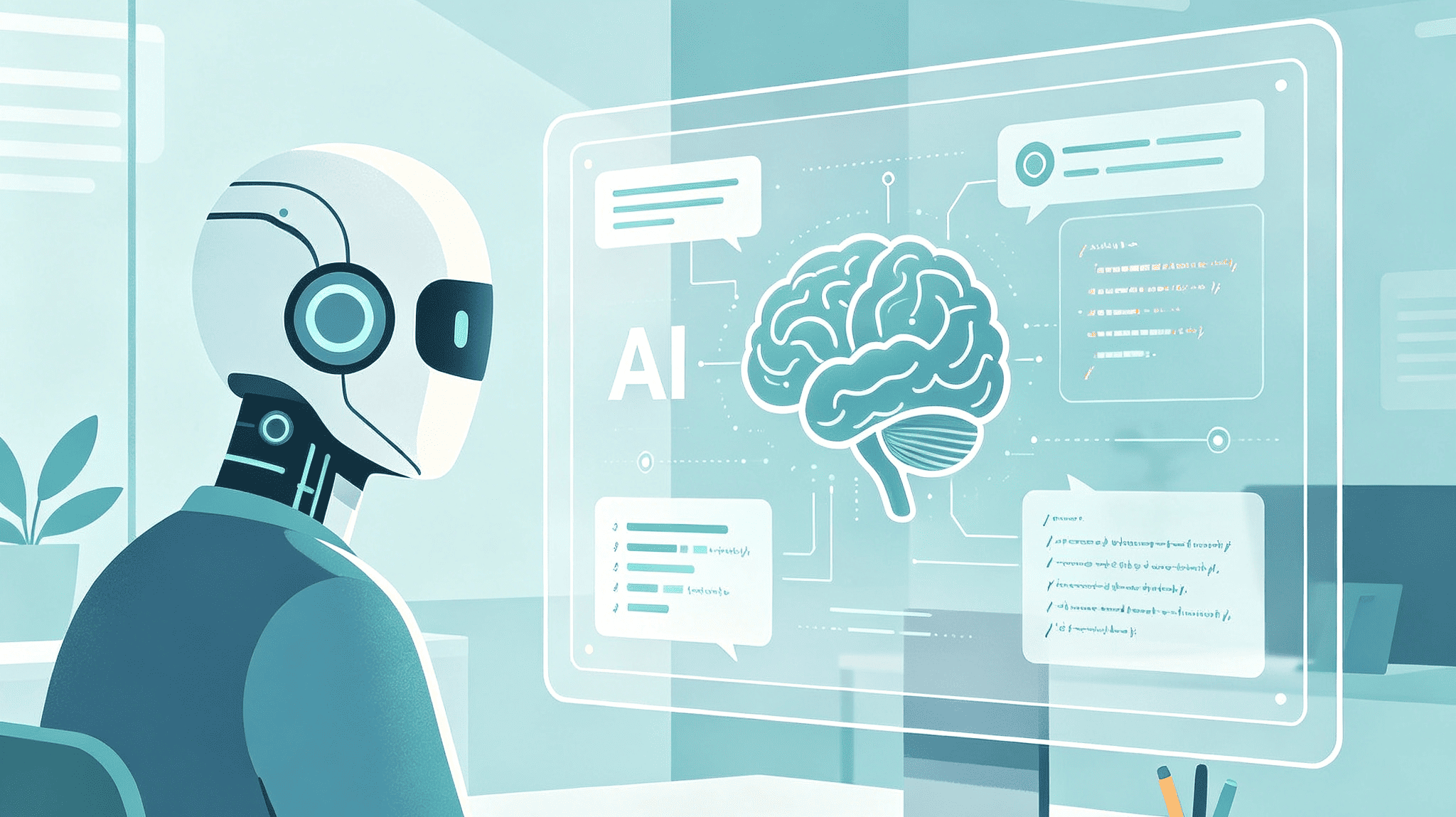
A debate AI bot is a specialized implementation of Large Language Models (LLMs) engineered to engage in structured, logical, and adversarial discourse. Unlike general-purpose chatbots that aim to assist or agree with the user, a debate bot is designed to challenge assertions, identify logical fallacies, and sustain a coherent counter-argument over multiple turns. These systems are increasingly used by students to prepare for competitive speech, by professionals to stress-test business strategies, and by researchers exploring the frontiers of AI safety.
The evolution of these tools has moved rapidly from simple text generators to complex multi-agent systems capable of participating in high-level policy debates. Understanding how to leverage these bots requires a grasp of both the underlying technology and the nuances of argumentative theory.
What Defines a True Debate AI Bot?
In its simplest form, a debate AI bot is a digital sparring partner. However, the technical distinction lies in its objective function. While a standard AI might prioritize "helpfulness" (often leading to a phenomenon called sycophancy, where the AI agrees with the user), a debate bot prioritizes "adversarial robustness."
These bots are programmed to:
- Adopt Specific Personas: Whether acting as a Socratic interlocutor or a hardline opposition speaker, the bot maintains a consistent ideological stance.
- Identify Fallacies: Advanced models can spot "straw man" arguments, "ad hominem" attacks, or "slippery slope" logic in real-time.
- Synthesize Evidence: They can scan massive datasets to find statistics, historical precedents, and expert testimonies to back up their claims.
- Maintain Contextual Integrity: They remember the "clash" of the debate—the specific points where two arguments meet—and ensure that rebuttals are directly responsive rather than generic.
The Mechanics Behind Machine Argumentation
To understand why a debate AI bot feels different from a standard ChatGPT interface, one must look at its architectural prompting.
Persona and System Instructions
The "magic" of a high-quality debate bot starts with its system prompt. Instead of a blank slate, the model is often told: "You are a world-class debate champion specializing in British Parliamentary style. Your goal is to win the round by prioritizing logical consistency, deep impact analysis, and direct refutation of the user’s last point." This framing forces the model to move beyond simple information retrieval and into the realm of strategic communication.
Multi-Agent Workflows
The most advanced systems, such as the recently documented "Deep Debater," do not rely on a single model. Instead, they use a hierarchical multi-agent architecture. One agent might be responsible for "researching" evidence (scanning specialized databases), another for "structuring" the speech (ensuring it follows the A.R.E.I. format: Assertion, Reasoning, Evidence, Impact), and a third for "critiquing" the draft to find weaknesses before the final output is generated.
In our testing of multi-agent setups, we found that this "internal dialogue" significantly reduces factual hallucinations. When one AI agent is forced to "fact-check" another before speaking, the quality of the evidence provided—the "cards" in policy debate terminology—improves by an order of magnitude.
Top Debate AI Tools to Watch in 2026
The landscape of AI debate has shifted from experimental scripts to polished platforms. Depending on your needs, different tools offer varying levels of depth.
1. Debate AI: The Spectator's Choice
Debate AI is unique because it focuses on model-versus-model interaction. Users can select two different LLMs—for example, Claude 3.5 Sonnet to argue for a motion and GPT-5 to argue against it. Watching two different "brains" clash provides a neutral perspective on a topic, as it removes the user's own bias from the interaction. It is particularly effective for seeing how different training philosophies impact argumentative style.
2. Debatify: The Professional Coach
Debatify is built for the competitive debater. It supports specific formats like British Parliamentary (BP) and Lincoln-Douglas (LD). What sets it apart is the "Point of Information" (POI) feature. During your timed practice speech, the AI can interject with a POI, forcing you to think on your feet and handle interruptions—a critical skill in real-world debating that standard chatbots cannot simulate.
3. Symbai: Visualizing the Logic
For those who struggle with the "flow" of a debate, Symbai uses argument mapping. Instead of a scrolling chat, it produces a visual tree of the argument. You can see exactly which premise supports which conclusion and where the "rebuttal" branch cuts off the logic. This is an invaluable tool for academic research and legal prep where the structure of the argument is as important as the content.
4. DeepAI Debate: Low-Friction Sparring
If you simply want to test a quick thought, DeepAI’s debate tool offers a zero-friction environment. There are no complex settings; you simply state your position, and it immediately pushes back. While it lacks the depth of "Deep Debater" or the structure of Debatify, it is excellent for overcoming "confirmation bias" in the early stages of forming an opinion.
Adapting AI to Professional Debate Formats
One of the greatest challenges for AI has been adhering to the rigid rules of competitive debate. However, specialized bots are now mastering these nuances.
British Parliamentary (BP)
In BP, the AI must understand its role among four teams. If the bot is the "Closing Government," it cannot simply repeat what the "Opening Government" said. It must provide an "extension"—a new, unique contribution to the debate. This requires a high level of "state awareness," where the AI evaluates the previous 40 minutes of simulated transcript to find an untapped logical path.
Lincoln-Douglas (LD)
LD debate is philosophical. Here, a bot cannot just rely on statistics. It must argue based on "Values" (e.g., Justice, Liberty, Utility) and "Criteria." In our experience, LLMs are surprisingly adept at LD because they have been trained on vast amounts of philosophical text. An AI bot can seamlessly transition from a Kantian Categorical Imperative defense to a Utilitarian critique, provided the user understands how to frame the "Value" at the start of the round.
Policy Debate
This is the most technical format, involving heavy evidence-sharing (evidence "cards"). Systems like "Deep Debater" use specialized databases, such as the Open Debate Evidence corpus, to ensure they are quoting actual journals and government reports. In this arena, the bot acts as a high-speed research assistant that can synthesize a 50-page policy paper into a 30-second "solvency" argument in real-time.
The Practical Value of AI Sparring
Why would someone choose to argue with a machine instead of a human? There are several distinct advantages that are currently transforming education and professional training.
1. The 24/7 "No-Judgment" Zone
Developing a persuasive voice is intimidating. Many students hesitate to speak up in a classroom for fear of sounding "wrong" or "uninformed." An AI bot provides a safe, private space to fail. You can try out an experimental (or even unpopular) argument, see how it gets dismantled, and try again instantly. This "high-frequency, low-stakes" practice is the fastest way to build cognitive fluency.
2. Objective Logical Critique
Humans are prone to emotional bias. In a heat-of-the-moment debate, a human partner might get frustrated or resort to rhetoric. An AI bot remains detached. After the debate, you can ask the bot: "Evaluate my performance based on the burden of proof. Which of my arguments were 'dropped' by you, and which did I successfully defend?" This meta-analysis is often more valuable than the debate itself.
3. Stress-Testing Business Decisions
In a corporate setting, "Groupthink" is a major risk. Leaders often surround themselves with people who agree with them. A "Debate AI Bot" can be utilized as a "Red Team" tool. By inputting a proposed strategy and telling the bot, "Find every reason why this merger will fail," executives can uncover blind spots that their human colleagues might be too polite to mention.
Navigating the Limitations: Hallucination and Bias
Despite the rapid progress, debate AI is not a "magic bullet" for truth. Users must remain vigilant about several critical flaws.
The Hallucination Problem
AI models are predictive engines, not truth engines. If a bot needs a statistic to win an argument and cannot find one in its immediate context, it might "hallucinate" a plausible-sounding but entirely fake data point. In the context of a debate, this is dangerous. Never use an AI-generated statistic in a real-world competition or paper without verifying it against a primary source.
Lack of Rhetorical "Soul"
Persuasion is not just logic (Logos); it is also character (Ethos) and emotion (Pathos). While an AI can simulate empathy, it does not truly understand the human experience. It cannot tell a moving personal story that resonates with a jury or an audience in the same way a human speaker can. Its persuasiveness is "technical," not "relational."
Algorithmic Bias
Every LLM has a "worldview" based on its training data. If the data contains Western-centric biases or specific political leanings, the debate bot may be more "persuasive" or "stubborn" on certain topics. This is why tools like "Debate AI" (which uses multiple models) are superior—they allow you to see the bias of one model corrected by the bias of another.
How to Get the Best Results: Mastering the Debate Prompt
To move beyond basic back-and-forth, you need to use sophisticated prompting techniques. Here are three proven templates for different goals.
For Skill Refinement (The Socratic Coach)
"Act as a Socratic debate coach. I will present a thesis on [Topic]. Instead of telling me I am wrong, ask me three pointed questions that expose the underlying assumptions in my logic. Once I answer, evaluate my response for consistency."
For Competitive Prep (The Adversarial Sparring)
"We are debating the motion: [This House Believes That...]. You are the Opposition. I am the Proposition. You must use the A.R.E.I. framework for all your points. Do not concede any point unless I provide empirical evidence. Start with a 3-minute opening statement."
For Research (The Multi-Perspective Analysis)
"Analyze the argument that [Topic]. Provide the three strongest logical arguments for this position and the three most common 'rebuttals' used by experts in the field. Rank them by their 'Impact' on a general audience."
The Future of AI in Discourse: AI Safety via Debate
An emerging field in AI research is "AI Safety via Debate." The theory is that if we have two super-intelligent AIs debate a topic in front of a human judge, the human will be able to determine the truth even if they aren't an expert in the subject. The idea is that "it is easier to recognize a lie in a debate than to find the truth in a vacuum." This suggests that debate AI bots won't just be for practice; they might become the primary way we interact with and supervise complex AI systems in the future.
Conclusion
The debate AI bot has evolved from a novelty into a sophisticated tool for cognitive development. Whether you are using a multi-agent system like "Deep Debater" for technical research or a platform like "Debatify" to prepare for a university tournament, these tools offer a unique advantage: the ability to sharpen your mind against a tireless, objective, and endlessly knowledgeable opponent.
However, the "Experience" of a debate—the human connection, the subtle shift in a room's energy, and the ethical responsibility of persuasion—remains firmly in the human domain. Use the bot to build your shield and sharpen your sword, but remember that the heart of any debate is the person standing behind the podium.
Summary
- Purpose: Debate bots provide a structured, adversarial environment to practice persuasion and critical thinking.
- Technology: They range from single-model chat interfaces to hierarchical multi-agent workflows like "Deep Debater."
- Key Benefits: 24/7 availability, objective feedback, and the ability to simulate various professional debate formats (BP, LD, Policy).
- Main Risks: AI hallucinations and a lack of genuine emotional resonance.
- Best Practice: Always verify AI-provided evidence and use specific system prompts to define the bot's persona and rules.
FAQ
Can a debate AI bot help me win real-world competitions? Yes, primarily by helping you anticipate counter-arguments and practicing your "refutation" speed. However, real judges often value "Ethos" and "Pathos," which AI cannot teach as effectively as a human coach.
Which AI model is best for debating? Currently, models with strong reasoning capabilities like Claude 3.5 Sonnet or GPT-4o are preferred. For competitive formats, specialized platforms like Debatify or Public Forum AI are more effective than raw chat interfaces.
Does using a debate bot make you more biased? It can, if you only use one model. To avoid this, it is recommended to use "multi-model" platforms where you can see different AI architectures argue opposite sides of the same topic.
Is there a free debate AI bot? Yes, tools like DeepAI Debate and the free tiers of ChatGPT or Claude can be used for casual sparring. More specialized tools often require a subscription for advanced features like voice-mode and format-specific scoring.