Home
Home
Why Fleas Cant Actually Live in Human Hair
The short answer to whether humans can get fleas in their hair is a definitive no—at least not in the way one might "get" head lice. While it is biologically possible for a flea to hop onto a person’s head and remain there for a few hours, humans do not serve as suitable long-term hosts for these parasites. Fleas are specialized survivalists that have evolved over millions of years to thrive in the dense, warm, and consistent environment of animal fur. Human hair, by comparison, is an inhospitable wasteland for a flea.
Understanding why fleas cannot establish a colony on your scalp requires a deep dive into insect biology, environmental requirements, and the specific mechanics of how these pests interact with their preferred hosts. If you have spotted a jumping insect in your hair or are experiencing itchy red bumps near your hairline, it is more likely a sign of a surrounding infestation rather than a personal parasitic colonization.
The Biological Mismatch Between Fleas and Human Hair
Fleas, specifically the common cat flea (Ctenocephalides felis) which accounts for nearly 90% of household infestations, are anatomically designed for a very specific type of habitat. Their bodies are laterally compressed—meaning they are thin from side to side—allowing them to navigate between individual strands of thick fur with ease.
Hair Density and Grip Mechanics
A cat has between 800 and 1,600 hairs per square inch. This incredible density provides a structural forest where a flea can hide, move, and anchor itself. Human hair is far too sparse. Even the thickest head of human hair lacks the structural integrity to protect a flea from light, air currents, or the simple act of a human running their fingers through their hair.
Furthermore, fleas possess backward-facing spines and specialized claws designed to lock onto the coarse, scaly texture of animal fur. Human hair is typically smoother and more cylindrical, providing very little "purchase" for a flea’s legs. When a flea lands on a human scalp, it feels exposed and unstable. In most cases, the insect will take a opportunistic blood meal and immediately jump off to find a more secure environment, such as a pet’s coat or a deep-pile carpet.
The Thermal Gap
Temperature plays a critical role in the flea life cycle, particularly for the incubation of eggs and the metabolism of adult insects. The core body temperature of cats and dogs ranges from 101°F to 102.5°F. The microclimate created beneath a layer of dense fur stays consistently warm.
In contrast, the surface of the human scalp is significantly cooler, often hovering around 91°F to 94°F due to heat dissipation. For a flea, this 10-degree difference is substantial. It slows their metabolic rate and makes the environment unsuitable for laying viable eggs. Without the consistent high heat of a furry host, the flea’s reproductive cycle effectively grinds to a halt.
Fleas vs Head Lice: Identifying the Correct Pest
It is common for individuals to confuse fleas with head lice, but the two are vastly different in behavior, anatomy, and treatment requirements. Misidentifying the pest can lead to weeks of wasted effort using the wrong shampoos or environmental treatments.
Movement Patterns
The most distinguishing feature of a flea is its jumping ability. A flea can leap up to 13 inches horizontally—about 200 times its own body length. If you attempt to catch a bug in your hair and it disappears in the blink of an eye, it is likely a flea. Head lice, conversely, cannot jump or fly. They move by crawling slowly from hair shaft to hair shaft using specialized hook-like claws. If the insect is slowly traversing a strand of hair, it is almost certainly a louse.
Attachment to Hair
Head lice are famous for "nits"—tiny, oval-shaped eggs that are cemented to the hair shaft near the scalp. These eggs are difficult to remove and do not fall off easily. Fleas do not attach their eggs to their host. A flea egg is smooth and dry, designed to fall off the host into the environment (carpets, bedding, or soil) where the larvae can develop in the dark. If you find white specks "glued" to your hair, you are looking at lice, not fleas.
Host Specificity
Lice are "host-specific," meaning the species that lives on humans cannot survive on dogs or cats. Fleas are "host-preferential." While they prefer pets, they are opportunistic and will bite humans if the primary host is unavailable or if the population density in the home has reached a breaking point.
Why Do I Feel Fleas Crawling in My Hair?
If fleas cannot live in human hair, why do so many people report the sensation of them crawling on their scalps? There are several logical explanations for this phenomenon.
Physical Proximity to Infested Pets
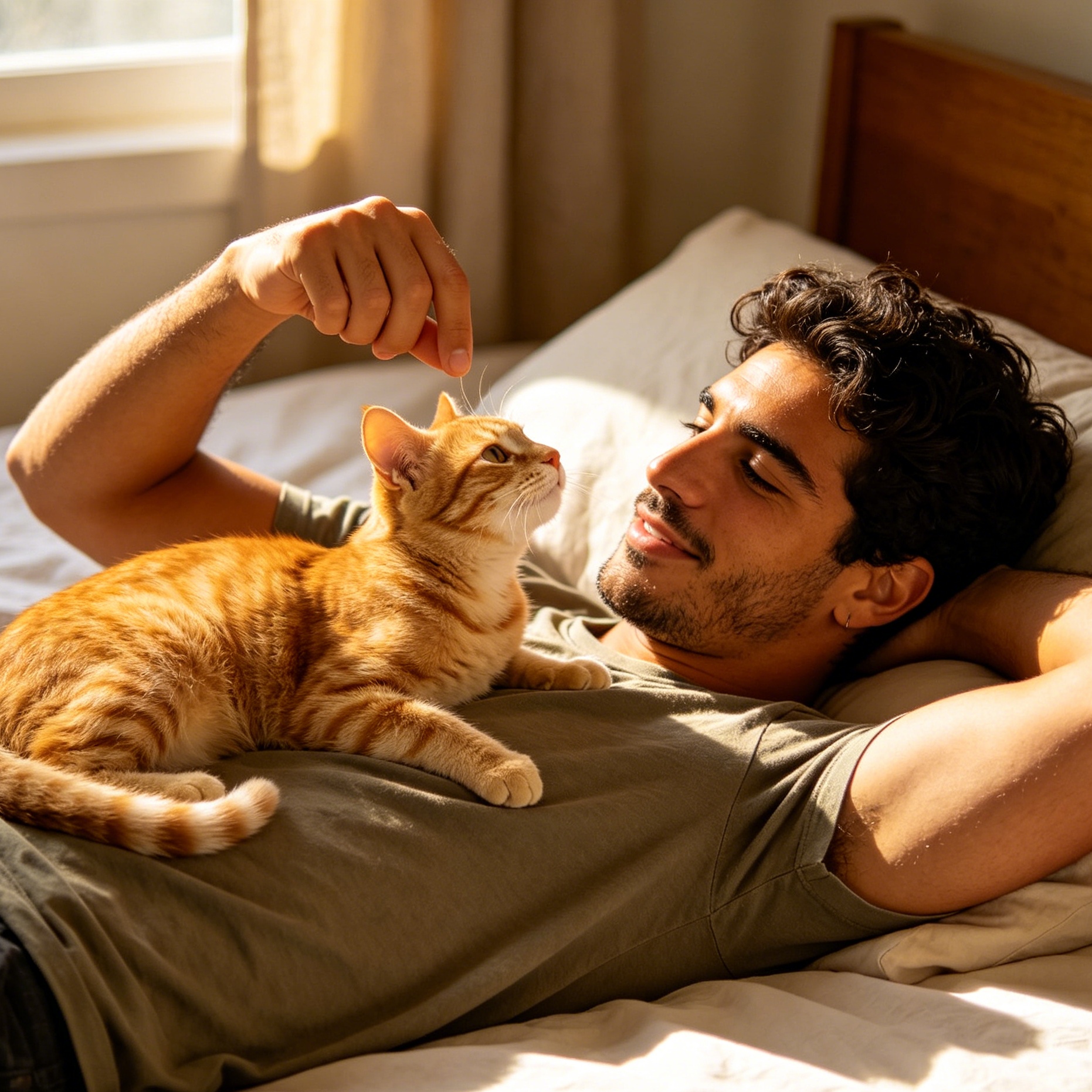
The most common way a flea ends up in human hair is through direct contact with an infested animal. If you sleep with your dog or cat, or if you spend time cuddling them on a couch, fleas can easily hop from the pet’s fur directly onto your head. Because fleas are attracted to carbon dioxide and body heat, your head is a natural target when it is at the same level as the pet.
Heavy Environmental Infestations
When a home is severely infested, the "flea load" in the carpets and furniture becomes so high that the insects begin to seek out any warm-blooded host. In these scenarios, fleas may jump onto your legs and travel upward, or jump from the back of a sofa onto your neck and hair. They aren't looking to move in; they are looking for a quick meal because the competition for space on the pet is too fierce.
The Power of Suggestion and Delusory Parasitosis
The psychological impact of a flea infestation is significant. Once a person knows there are fleas in the house, every stray hair or itch on the scalp can feel like a crawling insect. This is known as "formication"—the sensation of insects crawling on the skin. In extreme cases, this can lead to delusory parasitosis, where an individual remains convinced they are infested despite a total lack of physical evidence.
Signs and Symptoms of Fleas on the Scalp
While fleas won't stay in your hair, they will certainly bite you while they are there. Identifying these signs is the first step toward confirming a household problem.
The Bite Pattern
Flea bites on the scalp or hairline usually appear as small, red, swollen bumps. Unlike mosquito bites, which are often large and singular, flea bites frequently appear in clusters of three or four, sometimes referred to as "breakfast, lunch, and dinner." Because the skin on the scalp is thin and sensitive, these bites can be intensely itchy and may develop a small halo of redness.
Identifying Flea Dirt
"Flea dirt" is actually the excrement of adult fleas, consisting primarily of digested blood. It looks like tiny black pepper flakes. To confirm if the specks in your hair are flea dirt, place them on a wet white paper towel. If the specks dissolve and create a reddish-brown stain (the blood rehydrating), you have confirmed the presence of fleas. Finding flea dirt on your pillowcase is a strong indicator that fleas are jumping onto you during the night.
Allergic Reactions
Some individuals suffer from Flea Bite Hypersensitivity. For these people, a single bite can trigger a widespread itchy rash or hives (urticaria). If you find that your scalp is becoming inflamed or you are developing scabs from scratching, you may be experiencing an allergic reaction to the flea's saliva, which contains anticoagulants to keep your blood flowing while they feed.
How to Remove Fleas from Human Hair
If you have confirmed that a flea is currently in your hair, there is no need to panic or use harsh pesticidal shampoos designed for pets. Human-safe methods are highly effective.
Immediate Washing
Standard human shampoo is surprisingly lethal to fleas. The surfactants in shampoo break the surface tension of water, which drowns the flea almost instantly. When washing your hair:
- Lather Thoroughly: Ensure the shampoo reaches the scalp and the hair behind the ears and at the nape of the neck.
- Leave it in: Let the lather sit for 3 to 5 minutes to ensure any adult fleas are submerged and unable to breathe.
- Rinse and Repeat: A second wash ensures that any dislodged "flea dirt" or debris is rinsed away.
Fine-Toothed Combing
After washing, use a fine-toothed nit comb or a dedicated flea comb to sweep through the hair while it is still wet. Start at the scalp and pull the comb all the way through to the ends. Wipe the comb on a white tissue after every pass. If you catch a live flea, dip the comb into a bowl of soapy water to kill the insect.
Essential Oils as a Deterrent
While not a cure for an infestation, certain scents act as natural repellents for fleas. Diluting a few drops of tea tree oil, rosemary oil, or peppermint oil into your regular shampoo can make your scalp less attractive to opportunistic fleas. However, never apply undiluted essential oils directly to the skin, as they can cause severe irritation.
Eradicating the Source: The 95% Rule
Cleaning your hair is only a temporary fix. To stop fleas from jumping back into your hair, you must address the source of the infestation. It is a common misconception that the fleas you see represent the whole problem. In reality, adult fleas on hosts make up only about 5% of the total population. The remaining 95% exists in your home as eggs, larvae, and pupae.
Step 1: Treat All Pets
Even if only one pet appears to be scratching, every animal in the house must be treated with a veterinarian-approved flea preventative. Modern "spot-on" treatments or oral medications work by making the pet's blood toxic to fleas or by disrupting the flea's ability to lay eggs. Consistency is key; many treatments fail because owners stop them once the visible fleas disappear, forgetting about the eggs still waiting to hatch in the carpet.
Step 2: High-Heat Laundry
Flea eggs and larvae cannot survive high temperatures. Gather all bedding, pillowcases, hats, scarves, and clothing that may have come into contact with your hair or your pets. Wash these items in hot water (at least 140°F) and dry them on the highest heat setting for at least 30 minutes.
Step 3: Strategic Vacuuming
The vacuum cleaner is one of the most effective tools in flea control. Vacuuming doesn't just pick up eggs and larvae; the vibrations actually stimulate flea pupae (which are encased in a protective cocoon resistant to chemicals) to hatch prematurely. Once they emerge, they can be killed by insecticides or sucked up by the vacuum. Focus on areas where pets sleep, under furniture, and along baseboards. Immediately empty the vacuum canister or bag into an outdoor bin.
Step 4: Environmental Regulators
For persistent infestations, look for products containing IGRs (Insect Growth Regulators) like methoprene or pyriproxyfen. These chemicals don't kill adult fleas but prevent larvae from maturing into biting adults, effectively breaking the life cycle.
Historical Perspective: The Human Flea (Pulex irritans)
While the cat flea is the modern culprit, there is a species known as the "human flea" (Pulex irritans). In pre-modern times, before the advent of vacuum cleaners and daily hygiene rituals, these fleas were quite common in human dwellings. Unlike the cat flea, Pulex irritans is more comfortable on humans, though it still prefers to spend most of its time in the environment (like straw bedding or floorboards) rather than living on the person's body.
Today, Pulex irritans is rare in developed urban environments. It is occasionally found in rural areas or in homes with very poor sanitation, but for the average person wondering why their head is itchy, the cat flea jumping from a beloved pet is a much more likely explanation.
Summary of Key Findings
To summarize the relationship between fleas and human hair:
- No Permanent Residence: Fleas cannot live, breed, or survive long-term in human hair due to low density and cooler temperatures.
- Opportunistic Visitors: Fleas may jump into your hair for a quick meal, especially if you share a bed with an infested pet.
- Identification is Key: If you see something jumping, it's a flea. If it's crawling and has eggs glued to the hair, it's lice.
- Treatment is Environmental: Shampoos will kill the fleas currently on you, but the real battle is won by treating pets and deep-cleaning the home.
Frequently Asked Questions (FAQ)
Can fleas lay eggs in human hair?
It is extremely unlikely. While a female flea could theoretically lay eggs while feeding on your scalp, the eggs are smooth and would fall out of your hair almost immediately. Furthermore, human blood does not provide the specific nutrients needed for most common flea species to produce viable eggs over a sustained period.
What shampoo kills fleas on humans?
You do not need specialized "flea shampoo" for humans. Regular dish soap (like Dawn) or any standard hair shampoo will suffice. The soap acts as a surfactant that breaks the surface tension of the water, causing the fleas to sink and drown.
Can flea bites on the scalp cause hair loss?
Directly, no. However, the intense itching can lead to vigorous scratching, which may cause "traction alopecia" or secondary skin infections. If the scalp becomes infected (folliculitis), temporary hair thinning can occur in the affected area.
How long can a flea stay on a human?
Without a furry host to hide in, a flea typically stays on a human only for the duration of a blood meal, which lasts from a few minutes to an hour. After feeding, they usually jump off to find a more suitable hiding spot.
Are some people more attractive to fleas than others?
Yes. Fleas are attracted to higher body heat, carbon dioxide emissions, and certain skin scents. Some studies suggest that people with Type O blood may be slightly more attractive to certain biting insects, though this is not a definitive rule for fleas.
Should I shave my head if I find fleas?
Absolutely not. Shaving your head provides no benefit in flea control because fleas do not live in the hair shafts. Shaving would actually make your scalp more exposed and easier for fleas to bite. Simply washing your hair and treating your environment is the correct course of action.
Can fleas spread diseases to humans through scalp bites?
While fleas are historically famous for spreading the bubonic plague, modern household fleas are more likely to transmit tapeworms (if accidentally ingested) or "cat scratch fever" (Bartonella henselae). However, the risk of serious disease from a common household flea bite in a developed area is very low. The primary concern is usually skin irritation and secondary infection from scratching.
By focusing on the environment and the health of your pets, you can quickly resolve any issues with fleas in your home and rest easy knowing that your hair is not a suitable home for these persistent pests.
-
Topic: Can Fleas Live in Human Hair? | On Demand Pest Controlhttps://www.ondemandpestcontrol.com/can-fleas-live-in-human-hair/
-
Topic: Can Fleas Live In Human Hair? What Fleas Can And Can't Do - Backyard Pestshttps://www.backyardpests.com/fleas-in-human-hair
-
Topic: Do Fleas Live in Human Hair? Flea Facts & Removal Tipshttps://bettertermite.com/do-fleas-live-in-human-hair/