Home
Home
Why Free AI Image Generators Are Finally Outperforming Paid Subscriptions
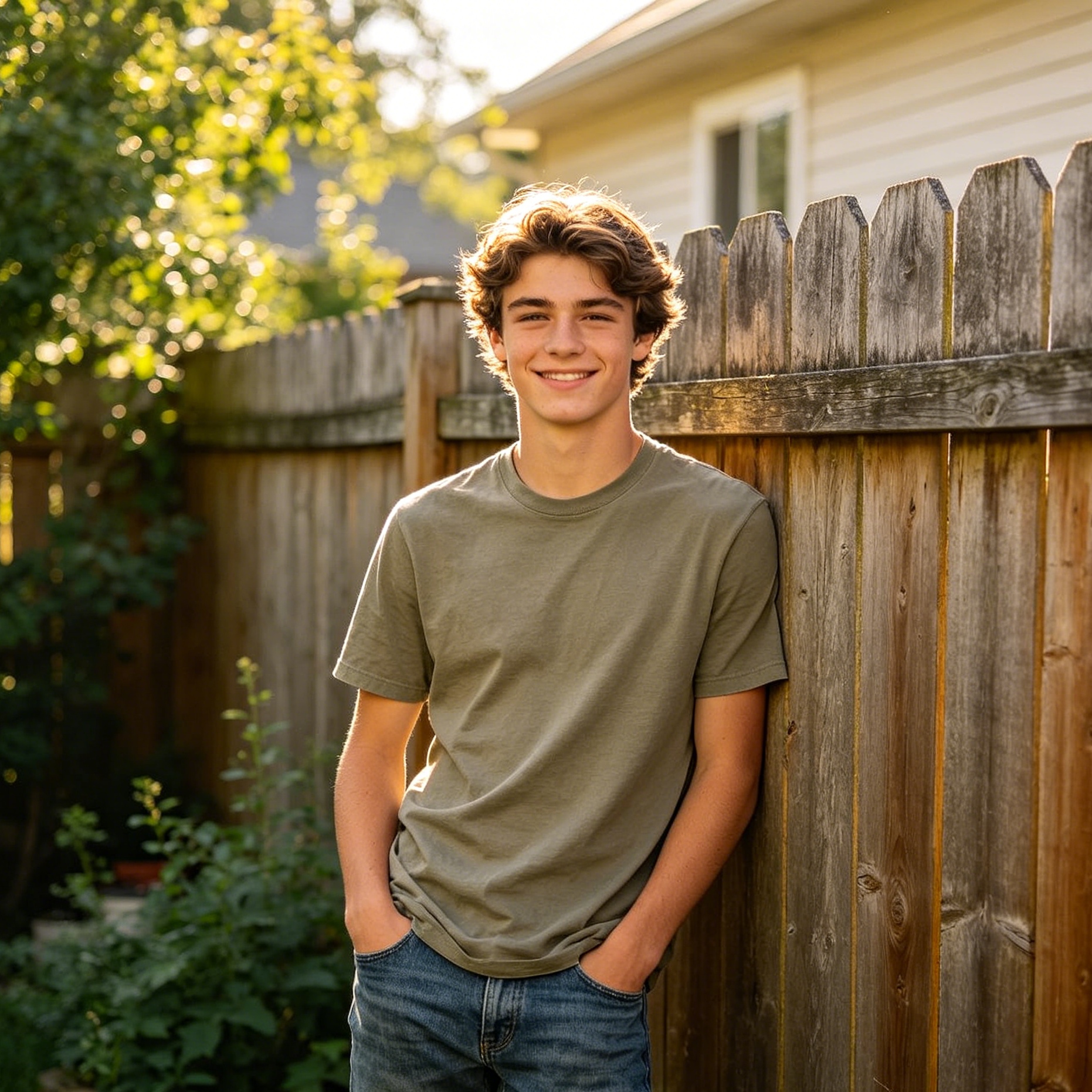
The landscape of digital art creation underwent a seismic shift between 2024 and 2026. What used to require a hefty monthly subscription to Midjourney or DALL-E (via ChatGPT Plus) is now accessible through high-performance free tiers that, in many cases, offer superior control and specialized output. The emergence of open-source weights and aggressive competition among tech giants has democratized high-fidelity image synthesis to the point where paid subscriptions are becoming optional for the majority of creative professionals and hobbyists.
For those seeking an immediate recommendation, the current market leaders for free AI generation are Microsoft Designer for ease of use, Leonardo.ai for creative versatility, and Ideogram for unparalleled text rendering. Each of these platforms provides a generous daily allocation of generations that can sustain a professional workflow without financial commitment.
The Evolution of Free AI Image Generation Technology
The rapid improvement in free AI image generators is primarily driven by the refinement of latent diffusion models. Unlike the early iterations of generative AI, which struggled with human anatomy and complex spatial relationships, modern models utilize massive datasets of billions of image-text pairs. These systems, particularly the newer Flux and Imagen architectures, have "learned" visual semantics with such precision that they can interpret nuanced natural language prompts with near-perfect fidelity.
The shift toward open-source or "open-weight" models has been the most significant catalyst. When high-performance models like Flux.1 are released with licenses that allow third-party hosting, the cost of generation drops. This competition forces proprietary platforms to offer more robust free tiers to maintain user engagement. Consequently, the gap between "free" and "pro" quality has narrowed to the point of being negligible for 90% of use cases.
Microsoft Designer and the DALL-E 3 Advantage
Microsoft Designer, formerly integrated under the Bing Image Creator banner, remains the most accessible entry point for high-end AI generation. Powered by OpenAI’s DALL-E 3, this tool excels in following complex instructions.
Performance and User Experience
In our testing, Microsoft Designer consistently handles long, descriptive prompts that other free tools might ignore. For instance, a prompt requesting "a wide-angle shot of a futuristic cyberpunk library where the bookshelves are made of liquid light and a robotic owl sits on a velvet chair in the foreground" was executed with remarkable adherence to every specific element.
Credits and Limitations
The platform operates on a "boost" system. Users typically receive 15 to 100 boosts daily (depending on account status and regional promotions). Each boost generates a set of four images in seconds. Once boosts are exhausted, generation continues at a slower pace rather than being cut off entirely. This "unlimited but slower" approach makes it a reliable fallback for high-volume users.
Leonardo.ai for Advanced Creative Control
Leonardo.ai has transitioned from a niche game asset generator to a comprehensive creative suite. It stands out because it offers professional-grade features—such as canvas editing, upscaling, and fine-tuned models—within its free tier.
The Token System
Leonardo.ai provides 150 tokens every 24 hours. A standard image generation costs roughly 1 to 2 tokens, meaning a user can generate 75 to 150 images per day for free. This is one of the most generous allocations in the industry.
Professional Features in Free Tiers
- Fine-tuned Models: Users can select from models optimized for photorealism, 3D animation, or vintage sketches.
- Alchemy Engine: Even free users can occasionally access the "Alchemy" pipeline, which adds a layer of refined texture and lighting that rivals professional photography.
- Canvas Editor: This allows for "outpainting," where the AI expands an existing image based on the surrounding context, a feature usually reserved for paid tiers in other apps.
Ideogram 3.0 and the Solution to AI Text Rendering
Historically, AI image generators were notoriously bad at spelling. They would produce gibberish instead of coherent text. Ideogram 3.0 has effectively solved this problem, making it the premier choice for graphic designers, poster makers, and social media managers.
Text Accuracy Benchmarks
During a benchmark test involving the creation of a vintage travel poster with the text "Visit Mars: The Red Jewel," Ideogram rendered the typography with perfect spelling, kerning, and stylistic integration. The text wasn't just "pasted" on; it respected the lighting and texture of the overall composition.
Daily Free Quota
Ideogram offers 25 images per day on its free plan. While lower than Leonardo.ai, the quality of each generation is high enough that "cherry-picking" results is rarely necessary. Each prompt generates four distinct variations, and the platform allows for public viewing of other users' prompts, which serves as an excellent learning resource.
Google ImageFX and the Power of Imagen
Google's entry into the consumer AI art space, ImageFX, leverages the Imagen 4 model. It is characterized by its "fluid" interface, which allows users to swap out keywords using a dropdown menu system to see how specific changes affect the output.
Photorealistic Output
ImageFX is currently the leader in photorealism. When prompted for "a macro shot of a raindrop on a leaf with a reflection of a city skyline," the results are indistinguishable from high-end DSLR photography. The model handles subsurface scattering and refractive indices with a level of physical accuracy that DALL-E 3 occasionally misses.
Ethical Safeguards
Google embeds a "SynthID" digital watermark into every image. While invisible to the human eye, this metadata identifies the image as AI-generated, which is an important consideration for users concerned with ethical content creation and platform compliance.
Adobe Firefly and the Case for Ethical Training
For professional designers working within the Adobe ecosystem, Firefly offers a unique proposition: it is trained exclusively on Adobe Stock images and public domain content. This makes it the "safest" free AI generator for commercial use.
Integration and Generative Fill
The web version of Firefly allows for 25 generative credits per month for free users. While the quantity is low, the ability to use "Generative Fill"—adding or removing objects from an image with simple text commands—is incredibly powerful for retouching existing photos.
Commercial Rights
Unlike many free tiers that restrict usage to personal projects, images generated with Adobe Firefly are generally cleared for commercial use, provided the user follows Adobe's standard licensing terms. This makes it an essential tool for small business owners and freelancers.
Flux.1 the New Standard for Open Source Power
The release of Flux.1 by Black Forest Labs has disrupted the industry. As an open-weight model, it provides quality that exceeds Midjourney v6 in many aspects, particularly in complex scene composition and human anatomy.
How to Access Flux for Free
Since Flux is a heavy model, running it locally requires significant hardware (typically a GPU with 16GB+ VRAM). However, several "aggregator" sites like Soloa AI or WaveSpeed offer free daily access to Flux.1 Schnell (the fast version) and Flux.1 Dev.
Technical Performance
Flux.1 excels at "prompt adherence." If you ask for a specific number of items—for example, "three red apples and two green pears on a wooden table"—Flux is much more likely to count correctly than DALL-E or Stable Diffusion. This precision is a major leap forward for free-to-use models.
High-Volume Creation with Playground AI
Playground AI is designed for users who need to iterate quickly. It acts as an interface for multiple models, including Stable Diffusion XL and its own specialized filters.
100 Images Per Day
The free tier allows for 100 images per day, which is vastly superior to almost any other high-quality platform. This high limit makes it the perfect "sandbox" for experimenting with different styles and long-tail prompts.
Community and Style Filters
Playground offers a massive library of "Style Filters" that act like Instagram filters but for AI models. You can turn a simple prompt into a "Cinematic," "Oil Painting," or "Neon Punk" image with a single click. This reduces the need for complex prompt engineering, making it ideal for those who aren't experts in technical descriptions.
Canva Magic Media for Integrated Design
Canva has integrated AI image generation directly into its design suite through "Magic Media." This is a game-changer for people who aren't just making "art," but are making "designs."
Workflow Efficiency
The primary advantage here isn't the model's raw power (which is solid but not industry-leading), but the workflow. You can generate an image and immediately drag it into a flyer, resize it, and add branded text without ever leaving the tab. Free users get 50 lifetime uses, which eventually refreshes or resets through various promotional tiers.
Running Stable Diffusion Locally for Unlimited Freedom
For users with a powerful PC, the ultimate "free" generator is a local installation of Stable Diffusion (using interfaces like Automatic1111 or ComfyUI).
Hardware Requirements
To run modern models like SDXL or Flux locally, you ideally need:
- GPU: NVIDIA RTX 3060 or better (8GB VRAM is the bare minimum, 16GB is recommended).
- RAM: 16GB+.
- Disk Space: 50GB+ for various checkpoints and LoRAs.
The Benefit of Zero Limits
When you run AI locally, there are no filters, no credit limits, and total privacy. You can download thousands of community-made models from sites like Civitai to achieve specific art styles—from hyper-realistic architectural renders to 1990s anime aesthetics. This is the only way to achieve truly "unlimited" free generation.
Comparing Credit Systems and Daily Limits
Understanding how these platforms manage "free" access is crucial for planning your creative projects. Here is a breakdown of the most common structures:
| Platform | Free Limit | Reset Period | Watermark | Best For |
|---|---|---|---|---|
| Microsoft Designer | 15+ Boosts | Daily | No | Beginners & Complexity |
| Leonardo.ai | 150 Tokens | 24 Hours | No | Pro Features & Stylization |
| Ideogram | 25 Images | Daily | No | Text & Typography |
| Playground AI | 100 Images | Daily | No | High Volume & Iteration |
| Google ImageFX | Unlimited* | Fair Use | Hidden | Photorealism |
| Adobe Firefly | 25 Credits | Monthly | Yes | Commercial Safety |
Essential Prompt Strategies for Free Model Optimization
Since free tools often have daily limits, you want to make every generation count. Effective prompting is a skill that saves time and credits.
Use the "Subject-Action-Setting-Lighting" Formula
Instead of a vague prompt like "a cat," use a structured approach:
- Subject: A majestic Maine Coon cat.
- Action: Sleeping curled up.
- Setting: On a rustic wooden windowsill in a sunlit cottage.
- Lighting: Warm golden hour light with visible dust motes.
- Style: Cinematic 8k photography, shallow depth of field.
Leverage Negative Prompts
Platforms like Leonardo.ai and Playground AI allow for "Negative Prompts." These tell the AI what not to include. Common negative prompts to improve quality include: "deformed hands, blurry, low resolution, extra fingers, distorted face, watermark, text."
Understand Aspect Ratios
Most free tools default to a 1:1 square ratio. However, specifying the ratio in the settings (if available) or the prompt can drastically change the composition. A 16:9 ratio is better for landscapes, while 9:16 is essential for TikTok or Instagram Story content.
Addressing the Limitations of Free Tier AI
While the quality is high, users must navigate certain trade-offs when choosing not to pay.
Resolution Constraints
Most free versions limit the output to 1024x1024 pixels. For high-quality printing or large-scale displays, you will need a separate AI Upscaler (like Upscayl, which is a free, open-source desktop app) to increase the resolution without losing detail.
Queue Times
During peak hours, free users are often moved to a "slow queue." Microsoft Designer and Bing are particularly prone to this, where a generation might take 60 seconds instead of the usual 10.
Public Galleries
On many platforms (like Ideogram and the standard version of Leonardo), images generated on the free tier are added to a public community gallery. If you are working on a sensitive or private project, you may need a paid tier to toggle on "Private Mode."
Legal Considerations and Commercial Usage Rights
The legal status of AI-generated art is still evolving. In most jurisdictions, including the US, AI-generated images cannot be copyrighted because they lack "human authorship."
Personal vs. Commercial Use
- Personal Use: Almost all free tools allow this (social media posts, personal blogs, wallpapers).
- Commercial Use: Adobe Firefly and Leonardo.ai (with some caveats) are the most friendly toward commercial use. Always read the Terms of Service. For example, some platforms state that if you generate an image on a free tier, the platform retains a license to use your creation for their marketing.
Summary of the Best Free AI Image Generators
The "best" tool depends entirely on your specific project requirements. For those who value photorealistic accuracy, Google ImageFX is the clear winner. If your project involves marketing graphics or posters with specific text, Ideogram 3.0 is indispensable. For game developers and digital artists who need model control and consistent characters, Leonardo.ai offers the most robust toolkit.
By strategically rotating between these platforms—using Microsoft for your complex scenes, Ideogram for your text-heavy designs, and Leonardo for your artistic refinements—you can maintain a high-end creative output without ever paying a subscription fee. The era of the "premium paywall" for AI art is effectively over for anyone willing to explore these versatile free alternatives.
Frequently Asked Questions
Which free AI image generator is best for creating realistic humans?
Google ImageFX and the Flux.1 model (accessed via aggregators) currently lead the market in rendering realistic human anatomy, skin textures, and hair. They have significantly fewer issues with "uncanny valley" effects than older models.
Can I use free AI images for my YouTube thumbnails?
Yes, most creators use tools like Microsoft Designer or Leonardo.ai for thumbnails. Since thumbnails are part of a larger creative work (the video), they generally fall under acceptable use, but always check the specific platform’s TOS if your channel is heavily monetized.
Is there a truly unlimited free AI image generator?
The only truly unlimited way to generate images is to run Stable Diffusion or Flux locally on your own computer. This requires a powerful GPU but removes all credit limits and content filters.
Do free AI image generators have watermarks?
It varies. Adobe Firefly and some mobile-first apps like Picsart or Fotor often include watermarks on free exports. However, Microsoft Designer, Leonardo.ai, and Playground AI typically provide watermark-free images for their daily free allocations.
Can AI generate text now?
Yes, newer models like Ideogram 3.0 and DALL-E 3 (via Microsoft Designer) are excellent at generating coherent, stylized text within images. This was a major limitation in 2023 that has been largely solved in 2025-2026.
-
Topic: Top 6 Free Online AI Image Generators | Create Custom Visualshttps://www.capcut.com/resource/best-free-online-ai-image-generators
-
Topic: 13 Best Free AI Image Generators (2026) | Soloahttps://soloa.ai/blog/best-free-ai-image-generators-2026
-
Topic: 12 Best Free Ai Image Generators You Should Know • PromptDenhttps://promptden.com/blog/12-best-free-ai-image-generators-you-should-know