Home
Home
Why Horse Outline Images Are Essential for Modern Design and Creative Projects

The image of the horse has captivated human imagination for millennia, appearing in everything from Paleolithic cave paintings to modern corporate logos. In the contemporary digital landscape, horse outline images have emerged as one of the most versatile and highly sought-after assets for designers, educators, and hobbyists alike. These minimalist graphics strip away complex textures and shading, leaving behind the essential form and spirit of the animal. This clarity not only makes them visually striking but also incredibly functional across a wide range of media.
Defining the Core Styles of Horse Line Art
Understanding the nuances of horse outline styles is the first step in selecting the right asset for a project. Each style carries its own emotional weight and technical requirements.
Minimalist Continuous Line Art
Continuous line art involves creating an entire horse figure using a single, unbroken stroke. This style is the epitome of modern sophistication. From a design perspective, the fluidity of a single line mirrors the natural grace and movement of a galloping equine.
- Visual Psychology: It evokes feelings of connectivity, flow, and elegance.
- Best Use Cases: High-end lifestyle branding, minimalist tattoos, and contemporary wire-frame decor.
- Technical Tip: When working with continuous line vectors, pay close attention to the smoothness of the Bezier curves. Jittery paths can ruin the illusion of effortless motion.
High-Contrast Silhouettes
Silhouettes are solid shapes filled with a single color, usually black. While they are not "outlines" in the sense of a hollow frame, they function similarly by focusing entirely on the outer perimeter of the horse's form.
- Visual Impact: Silhouettes are instantly recognizable even at small sizes. They capture the power of a rearing stallion or the speed of a racing thoroughbred with maximum contrast.
- Application: Icons, mobile app buttons, and large-scale signage where readability from a distance is paramount.
- Experience Insight: In professional testing, we’ve found that silhouettes work best when the negative space—such as the area between a horse's legs—is clearly defined to prevent the shape from looking like a generic blob.
Hand-Drawn Doodles and Sketches
These outlines possess an organic, imperfect quality that suggests a human touch. Unlike the sterile precision of geometric art, doodle-style horses feel approachable and warm.
- Style Variations: This includes "kawaii" or cute pony outlines popular in children's media, as well as rough charcoal-style digital strokes.
- Primary Audience: Educators creating worksheets, DIY crafters, and greeting card designers.
- Design Utility: These are the primary choice for coloring pages, as the thicker, friendlier lines are easier for children to follow and fill.
Technical and Geometric Outlines
Geometric horse outlines are constructed using precise shapes—circles, triangles, and straight lines—to form the equine anatomy. This style bridges the gap between biological form and mathematical precision.
- Symbolism: It suggests technology, structure, and forward-thinking.
- Usage: Logo design for tech startups, architecture-related branding, and modern art prints.
Technical Specifications: Choosing Between Vector and Raster
One of the most critical decisions a creator makes when sourcing horse outline images is the file format. The choice depends entirely on the final output medium.
The Vector Advantage: SVG, AI, and EPS
For professional design, vector formats are the industry standard. Unlike raster images composed of pixels, vectors are based on mathematical paths.
- Infinite Scalability: A vector horse outline can be scaled from a tiny business card icon to a massive roadside billboard without losing a single ounce of clarity.
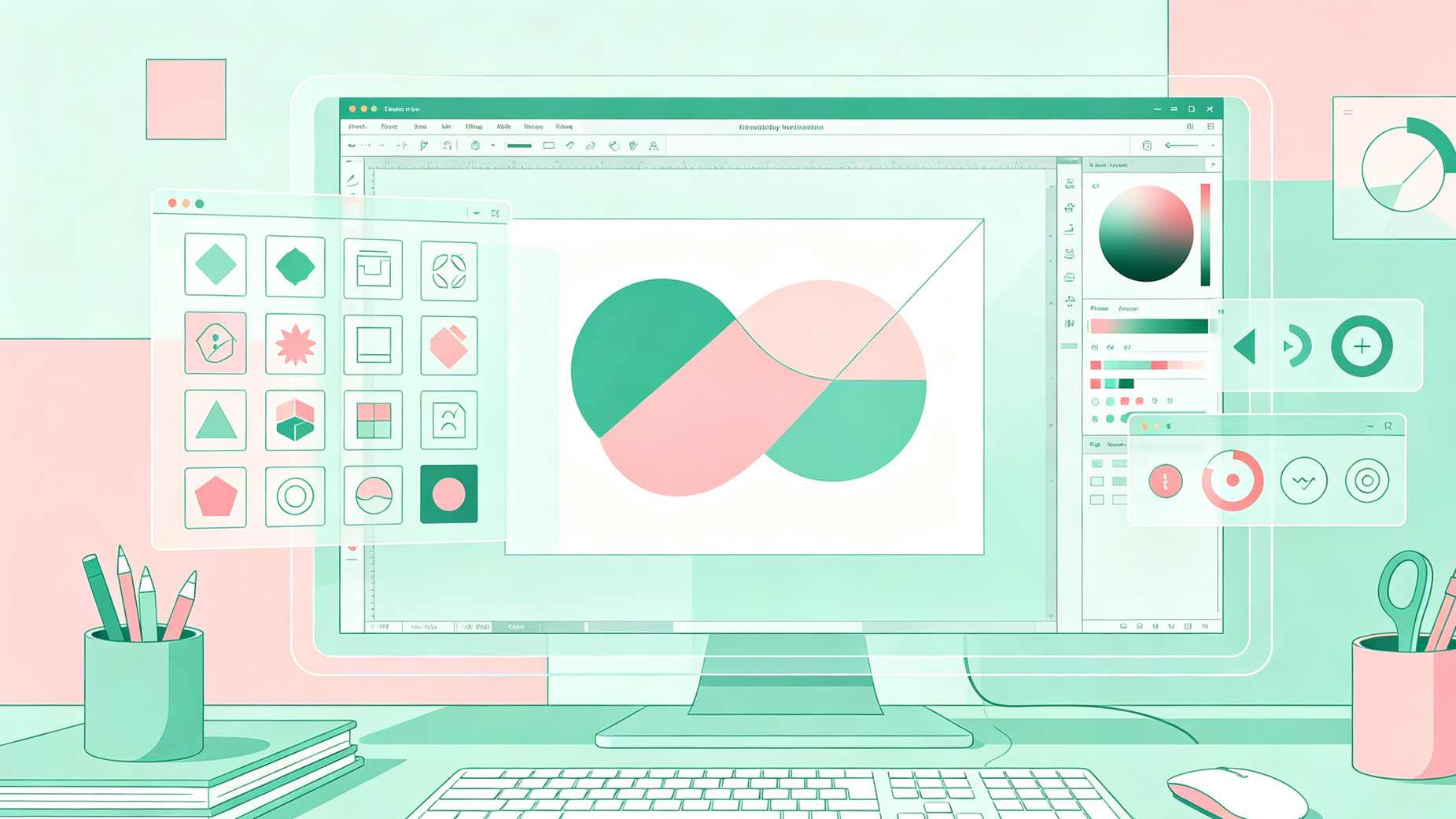
- Ease of Editing: In software like Adobe Illustrator, you can click on individual anchor points to adjust the curve of the horse's neck or the flick of its tail.
- Production Readiness: If you are using a CNC machine, a laser cutter, or a vinyl plotter, you must use a vector path. The machine follows the "outline" as a physical instruction for where to cut.
Raster Realities: PNG and JPG
Raster images have their place, particularly in digital-first environments where complex textures are sometimes combined with outlines.
- Transparency with PNG: A high-resolution PNG with a transparent background is ideal for web design, allowing you to layer the horse outline over photos or colored gradients without a white box surrounding it.
- File Size Efficiency: For social media posts or blog headers, a compressed JPG might be faster to load, though it lacks the flexibility of a vector.
The Design Workflow: Integrating Horse Outlines into Professional Projects
Integrating a horse outline into a project requires more than just "copy and paste." It involves a strategic understanding of composition and line weight.
Strategic Line Weight
The thickness of the outline—measured in points (pt)—dramatically changes the tone of the artwork. A 0.5pt hairline suggests delicacy, fragility, and high fashion. Conversely, a 5pt thick stroke feels bold, masculine, and grounded. When designing for print, always ensure the line weight is thick enough to be captured by the printer's resolution; lines thinner than 0.25pt often disappear or appear broken in physical prints.
Anatomy and Pose Selection
The pose of the horse in the outline communicates a specific message. Choosing the wrong pose can misalign with a brand's identity:
- Rearing: Represents power, rebellion, and untamed energy. Ideal for sports teams or high-performance automotive brands.
- Galloping: Suggests speed, progress, and urgency. Common in logistics and courier service logos.
- Grazing or Standing: Communicates peace, reliability, and nature. Perfect for equestrian centers, veterinary clinics, or organic food packaging.
- The Head Profile: Focusing only on the head allows for more detail in the eye and mane, often used in luxury fashion or high-end breeding programs.
Color Implementation
While most horse outlines are downloaded in black and white, the application of color can modernize the graphic. A gold-leaf effect on a minimalist horse head outline instantly elevates the design to "luxury" status. Using neon gradients can push the same outline into a "synthwave" or futuristic aesthetic.
Expanding Applications: Beyond the Desktop
Horse outline images are not confined to the digital screen. Their simplicity makes them the perfect bridge between digital design and physical craftsmanship.
DIY Home Decor and Stenciling
For interior designers and DIY enthusiasts, horse outlines serve as the blueprint for wall murals and custom furniture. By using a projector to cast a horse outline onto a large wall, even a non-artist can trace and paint a professional-looking silhouette. Similarly, these outlines are used to create stencils for "etching" onto glassware or "burning" into wooden cutting boards.
Textile and Apparel Design
In the fashion industry, horse outlines are frequently used for embroidery and screen printing. Because the designs are linear, they are easy for embroidery machines to translate into stitch paths. We often see these outlines on the chest of polo shirts, as patterns on silk scarves, or as bold back-prints on denim jackets.
Educational Tools and Scientific Illustration
Educators utilize horse outlines to teach both art and biology. In art classes, a basic outline provides the "scaffolding" for students to learn about light and shadow. In biology, a simplified anatomical outline helps students identify key muscle groups and skeletal structures without the distraction of a realistic coat.
Cultural Significance: The Year of the Horse and Beyond
Certain timeframes see a massive spike in the demand for horse outline images. For instance, in the lead-up to the Chinese New Year, specifically the Year of the Horse (such as 2026), designers look for "Zodiac-style" outlines. These often incorporate traditional motifs like clouds or coins into the body of the horse, blending modern line art with ancient cultural symbolism.
Creating Your Own Horse Outlines: A Professional Methodology
If you cannot find the perfect image on stock platforms, creating your own is a valuable skill. The most effective method is the "tracing" technique:
- Reference Sourcing: Find a high-resolution photograph of a horse in the desired pose.
- Opacity Adjustment: Lower the photo's opacity to about 20% in your design software.
- Path Creation: Using a Pen Tool, trace the outer edge of the horse. Focus on capturing the large muscle groups rather than every individual hair.
- Simplification: After tracing, remove unnecessary anchor points. A clean, professional outline should have the fewest points possible to maintain the shape.
- Closing the Path: Ensure the start and end points meet. This is crucial for filling the shape with color later or for use in manufacturing.
Summary
Horse outline images are far more than simple drawings; they are sophisticated tools that bridge the gap between abstract art and functional design. Whether you are building a brand identity for a luxury boutique, creating educational materials for a classroom, or embarking on a personal crafting project, the horse outline offers a unique combination of aesthetic beauty and technical versatility. By understanding the differences between styles, the technical requirements of file formats, and the psychological impact of different poses, you can leverage these equine assets to create truly impactful work.
Frequently Asked Questions
What is the best file format for a horse outline if I want to resize it?
The best format is a vector file, such as SVG, AI, or EPS. These formats use mathematical paths instead of pixels, allowing you to scale the image to any size without losing quality or becoming "pixelated."
Can I use horse outline images for commercial logos?
Yes, but you must ensure you have the proper license. Many stock platforms offer royalty-free licenses for commercial use, but it is always best to customize a stock outline significantly to ensure your logo is unique and trademarkable.
How do I turn a photo of my horse into an outline?
You can use the "Image Trace" feature in software like Adobe Illustrator or manually trace the photo using the Pen Tool. For a more organic look, you can use a tablet and stylus to draw over the photo on a new layer in Photoshop or Procreate.
What is the difference between a horse silhouette and a horse outline?
A silhouette is a solid, filled shape (usually black) that shows the overall form of the horse. An outline consists only of the perimeter lines, leaving the interior of the shape empty or transparent.
Where can I find horse outlines specifically for laser cutting?
Look for sites that offer "cut files" or "DXF/SVG" vectors. These are specifically designed with closed paths that laser-cutting software can interpret as a continuous cut line.
Why do some horse outlines look "bumpy" when enlarged?
This usually happens if the image is a raster file (like a low-res JPG) or if a vector path has too many unnecessary anchor points. To fix this, use a vector format and "simplify" the path in your editing software to smooth out the curves.
Are there specific horse poses that are popular for tattoos?
Minimalist "continuous line" horses and rearing silhouettes are highly popular for tattoos. People often choose these for their symbolic representation of freedom, strength, and elegance.
-
Topic: Outline Cute Horse Stock Illustrations – 16,701 Outline Cute Horse Stock Illustrations, Vectors & Clipart - Dreamstimehttps://www.dreamstime.com/illustration/outline-cute-horse.html
-
Topic: Outline Horses Stock Illustrations – 4,130 Outline Horses Stock Illustrations, Vectors & Clipart - Dreamstimehttps://www.dreamstime.com/illustration/outline-horses.html
-
Topic: Horse Outline Clipart Images | Free Download | PNG Transparent Background - Pngtreehttps://pngtree.com/so/horse-outline-clipart