Home
Home
Why Modern AI Assistant Apps Are Moving From Simple Chatting to Real Work

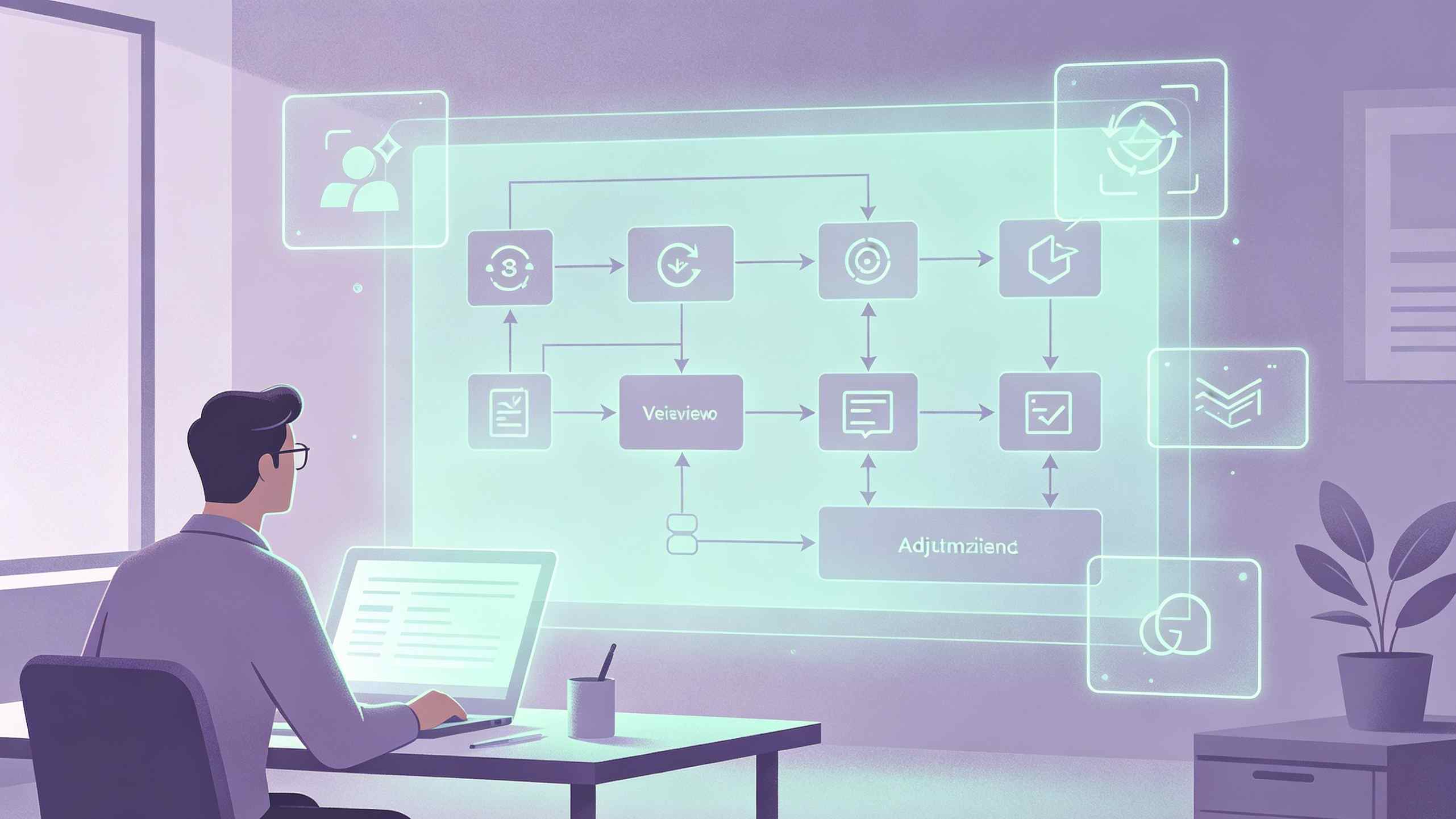
The landscape of the AI assistant app has undergone a seismic shift. Just a few years ago, a digital assistant was little more than a voice-activated timer or a glorified search interface that struggled to understand basic syntax. Today, the "assistant" moniker covers a spectrum of sophisticated software agents capable of reasoning, coding, and managing entire workflows with minimal human intervention. This evolution represents a transition from reactive chatbots to proactive autonomous agents.
The Three Pillars of Modern AI Assistant Apps
To navigate the crowded market of AI assistants, it is essential to understand the three distinct categories that currently define the industry. Each serves a different purpose, and the most productive users often leverage a combination of all three.
1. Conversational AI and Generalist Chatbots
These are the foundational "brains" of the AI world. Apps like ChatGPT, Claude, and Gemini fall into this category. They are built on Large Language Models (LLMs) and are designed for reasoning, creative writing, and broad knowledge retrieval. Their primary interface is a message box where the user provides a prompt, and the AI generates a coherent response.
In a recent practical test, I found that using a generalist chatbot for initial project ideation saves approximately three hours of brainstorming per week. However, these tools are often "stateless" by default, meaning they might not remember a conversation from a month ago unless specifically configured to do so through features like "Memory" in ChatGPT or "Projects" in Claude.
2. Specialized and Single-App Productivity Tools
Unlike generalists, specialized AI assistant apps focus on mastering a single domain. These tools are integrated directly into existing workflows—such as calendars, coding environments, or transcription services.
- Scheduling Assistants: Tools like Motion or Reclaim use AI to dynamically rearrange a calendar based on task priority.
- Meeting Assistants: Apps like Otter.ai or Fireflies transcribe meetings and, more importantly, use NLP to extract action items and sentiment.
- Coding Assistants: GitHub Copilot suggests entire blocks of code in real-time, functioning as an AI pair programmer.
3. Autonomous AI Agents
This is the new frontier. An autonomous AI agent does not just talk; it performs actions across multiple applications. These apps can open a browser, navigate to a CRM like Salesforce, update a lead's status, and then send a follow-up email via Gmail—all from a single natural language command.
Apps like Lindy or Kimi Work are leading this charge. They represent the realization of "agentic AI," where the software possesses the agency to interact with the web and desktop environments much like a human would.
Leading AI Assistant Apps for 2026: A Deep Dive
Choosing the right AI assistant app requires looking beyond marketing buzzwords and examining specific model performance and integration depth.
ChatGPT: The Multimodal Powerhouse
ChatGPT remains the benchmark for versatility. With the rollout of models like GPT-4o, the app has become a multimodal engine. During testing of the Advanced Voice Mode, the latency was low enough to allow for near-instantaneous interruptions, making it an excellent tool for practicing presentations or learning new languages.
Technical Insight: For power users, the "Custom GPTs" feature allows for the creation of specialized sub-assistants trained on specific datasets. However, be aware of the "hallucination" rate; even with GPT-4o, complex mathematical reasoning can occasionally fail if not double-checked with a dedicated calculator tool.
Claude: The Reasoning Specialist
Developed by Anthropic, Claude has gained a massive following among researchers and writers. Its "Artifacts" feature—which allows a side-by-side view of code or documents being edited in real-time—is a significant UX innovation.
In my experience, Claude 3.5 Sonnet excels at "nuance." When asked to summarize a legal contract, it identifies subtle risks that other models often overlook. For developers, Claude’s ability to understand the context of large codebases (thanks to its massive context window of 200,000 tokens) makes it indispensable for debugging legacy systems.
Gemini: The Ecosystem King
For those deeply embedded in the Google Workspace, Gemini is the most logical choice. Its primary strength is its native integration with Gmail, Drive, and Docs.
Real-world Scenario: You can ask Gemini, "Find the travel itinerary Clara sent me in July and add the hotel check-in time to my Google Calendar." It performs this cross-app task seamlessly. While it might occasionally lag behind ChatGPT in creative writing flair, its utility as a personal organizer within the Google ecosystem is unmatched.
Microsoft Copilot: The Enterprise Standard
Copilot is less of a standalone app and more of a pervasive layer across Word, Excel, PowerPoint, and Teams. Its value lies in "contextual awareness" of corporate data. It can draft a PowerPoint deck based on a Word document you wrote yesterday, ensuring brand consistency and saving hours of manual slide design.
How to Choose the Right AI Assistant for Your Workflow
Identifying the "best" app is less about features and more about identifying your specific bottlenecks.
What is the primary problem you are solving?
- If you struggle with organization: Prioritize a specialized assistant like Motion that integrates with your calendar.
- If you are a content creator: Look for tools with high creative reasoning like Claude or Jasper.
- If you need to automate repetitive web tasks: Focus on autonomous agents like Lindy.
The Importance of Integration Capabilities
An AI assistant app that cannot "talk" to your other tools is just another tab to manage. The most effective assistants utilize APIs to connect with Slack, Trello, Salesforce, and Zapier. Before committing to a subscription, verify that the app supports the software stack you already use.
Context Awareness and RAG
The most advanced apps now use Retrieval-Augmented Generation (RAG). Instead of relying solely on their pre-trained data, these assistants can securely search your own local files or company databases to provide answers that are grounded in your specific reality. This reduces hallucinations and increases the practical utility of the AI.
Technical Requirements and Performance Metrics
While most AI assistant apps are cloud-based, there is a growing trend toward local execution for privacy-conscious users.
- Cloud-Based Apps: Require a stable, high-speed internet connection. Performance is measured by tokens per second (TPS). A good assistant should provide a TPS high enough to mimic human reading speed.
- Local AI Assistants: If you are running an AI assistant locally (using frameworks like Ollama or LM Studio), hardware becomes the bottleneck. For a model with 70 billion parameters (like Llama 3), you typically need at least two NVIDIA RTX 3090/4090 GPUs to achieve usable speeds.
Security, Privacy, and Ethical Considerations
Entrusting an AI assistant app with access to your email and calendar carries inherent risks.
Data Privacy
Users must scrutinize the privacy policy of any AI provider. Does the company use your prompts to train their next model? For individual users, this might be a minor concern, but for enterprises, it is a deal-breaker. Look for apps that offer "Zero Data Retention" (ZDR) or enterprise-grade encryption.
The Problem of Over-Reliance
There is a cognitive risk in offloading too much reasoning to an AI. While assistants are excellent at synthesis and organization, they lack the human ability to understand "why" a project matters. Use AI to handle the mechanics of work, but maintain human oversight for the strategy.
The Future: From Assistant to Agent
As we move toward 2027, the distinction between a "chatbot" and an "assistant" will vanish. We are entering the era of "Invisible AI," where the assistant is integrated so deeply into the operating system that you no longer "open an app" to use it. It will simply be there, anticipating your needs based on your behavior and goals.
The shift toward autonomous agents means that the next generation of AI assistant apps will focus on "outcome-based" prompts. Instead of asking for a draft of an email, you will tell the AI to "Handle the logistics for the product launch," and it will coordinate the invites, track the RSVPs, and manage the follow-up tasks without further input.
Frequently Asked Questions (FAQ)
What is the best AI assistant app for students?
For students, ChatGPT and Gemini are excellent for summarizing long lecture notes and explaining complex concepts. However, it is vital to use these as tutoring tools rather than ghostwriters to ensure academic integrity.
Can an AI assistant app work offline?
Most popular AI assistants (like ChatGPT or Claude) require an internet connection to access the powerful servers where the models live. However, some specialized mobile apps use smaller, "on-device" models that can perform basic tasks offline, though their reasoning capabilities are significantly lower.
Are AI assistant apps safe for business use?
They can be, provided you use the enterprise versions. Standard consumer versions of AI apps often lack the necessary security certifications (like SOC 2 Type II or HIPAA) required for handling sensitive corporate or medical data.
How much do these apps typically cost?
Most offer a free tier with limited usage or older models. Premium subscriptions generally cost around $20 per month for individuals, while enterprise plans are priced per seat and include advanced security and administrative controls.
Summary
Modern AI assistant apps have evolved into powerful digital partners that can reason, act, and organize. By understanding the differences between conversational chatbots, specialized productivity tools, and autonomous agents, users can build a "productivity stack" that saves hours of manual labor every week. Whether you are a developer looking for code suggestions or a manager trying to tame a chaotic calendar, there is an AI assistant app designed to solve your specific problem. The key is to start with a clear understanding of your needs, prioritize integration and security, and always maintain human oversight over the AI's output.
-
Topic: Top AI Assistants of 2025: Which One Fits Your Workflow Best?https://www.techrounder.com/pdf/blog/top-ai-assistants-of-2025-which-one-fits-your-workflow-best.pdf
-
Topic: Introducing Gemini, your new personal AI assistanthttps://gemini.google/assistant/
-
Topic: 44 Top AI Apps to Know in [2026 | Built Inhttps://builtin.com/artificial-intelligence/ai-apps