Home
Home
Why Modern AI Voice Chat Feels More Like Talking to a Person Than a Machine

Artificial Intelligence (AI) voice chat represents a fundamental shift in how humans interact with technology. It is no longer about reciting rigid commands or triggers to a digital assistant that often fails to understand context. Instead, modern AI voice chat enables fluid, real-time, spoken conversations that mirror the nuances of human interaction. Unlike the robotic voices of the past decade, these systems use advanced generative models to understand intent, manage complex multi-turn dialogues, and respond with an emotional range that was previously impossible.
Defining the New Era of Conversational AI
AI voice chat is defined by its ability to process and generate spoken language synchronously. While traditional voice assistants like early versions of Siri or Alexa operated on a "command-and-response" loop, today's AI voice agents—such as OpenAI's Advanced Voice Mode or Google’s Gemini Live—operate on a continuous stream of data.
The core difference lies in reasoning. A traditional assistant looks for a keyword (e.g., "Weather") and fetches a pre-defined API response. A modern AI voice agent, however, listens to your entire sentence, understands the underlying sentiment, remembers what you said three minutes ago, and can even handle being interrupted mid-sentence without losing the thread of the conversation.
The Technical Architecture Behind the Sound
To understand why this technology has suddenly become so effective, it is necessary to examine the underlying mechanics. For years, voice systems relied on a "cascaded" pipeline. This involved three distinct steps:
- Speech-to-Text (STT): Converting the user's audio into text.
- Large Language Model (LLM) Processing: Analyzing the text and generating a text-based response.
- Text-to-Speech (TTS): Converting that text back into an audio file.
The problem with this cascaded approach was latency and information loss. Each step added hundreds of milliseconds of delay, and the "emotion" of the user’s voice (the prosody) was lost during the transcription to text.
The Rise of Voice-Native Models
The breakthrough in the last year has been the development of "voice-native" or "omni-modality" models. Systems like GPT-4o process audio directly. There is no intermediate text conversion that strips away the tone. When the model "hears" a user’s voice, it captures the pitch, the speed, and the hesitation. This allows the AI to respond not just with the right words, but with the right tone—sounding empathetic when a user is frustrated or upbeat when confirming a success.
In practical testing, these native models have reduced latency to below 300 milliseconds, which is the threshold for human-perceived "real-time" interaction. When latency drops to this level, the conversational "uncanny valley" begins to disappear.
Key Features That Define Quality in AI Voice Chat
For a voice chat system to be considered high-value, it must master several sophisticated behaviors that humans take for granted.
1. Interruption Handling (Full Duplex)
Earlier systems were "half-duplex," meaning only one party could talk at a time. If you spoke while the AI was talking, it wouldn't hear you. Modern AI voice chat uses advanced echo cancellation and voice activity detection (VAD). If you interrupt the AI to correct a detail, the model stops instantly, processes the new information, and adjusts its response. This "give-and-take" is the hallmark of a natural conversation.
2. Contextual Memory and Reasoning
AI voice chat systems now maintain a much larger "context window." In recent updates to models like GPT-Realtime-2, the context window has expanded to 128k tokens. This means the AI can remember specific details from a 20-minute conversation, such as a specific dietary restriction mentioned at the start, and apply it to a recommendation made at the end.
3. Prosody and Emotional Range
Prosody refers to the rhythm, stress, and intonation of speech. Modern TTS engines, such as those from ElevenLabs or OpenAI’s proprietary voices, can now inject sighs, laughter, and variations in speed. This prevents "listener fatigue," a common issue with older, flat-toned synthetic voices.
4. Multilingual Fluidity
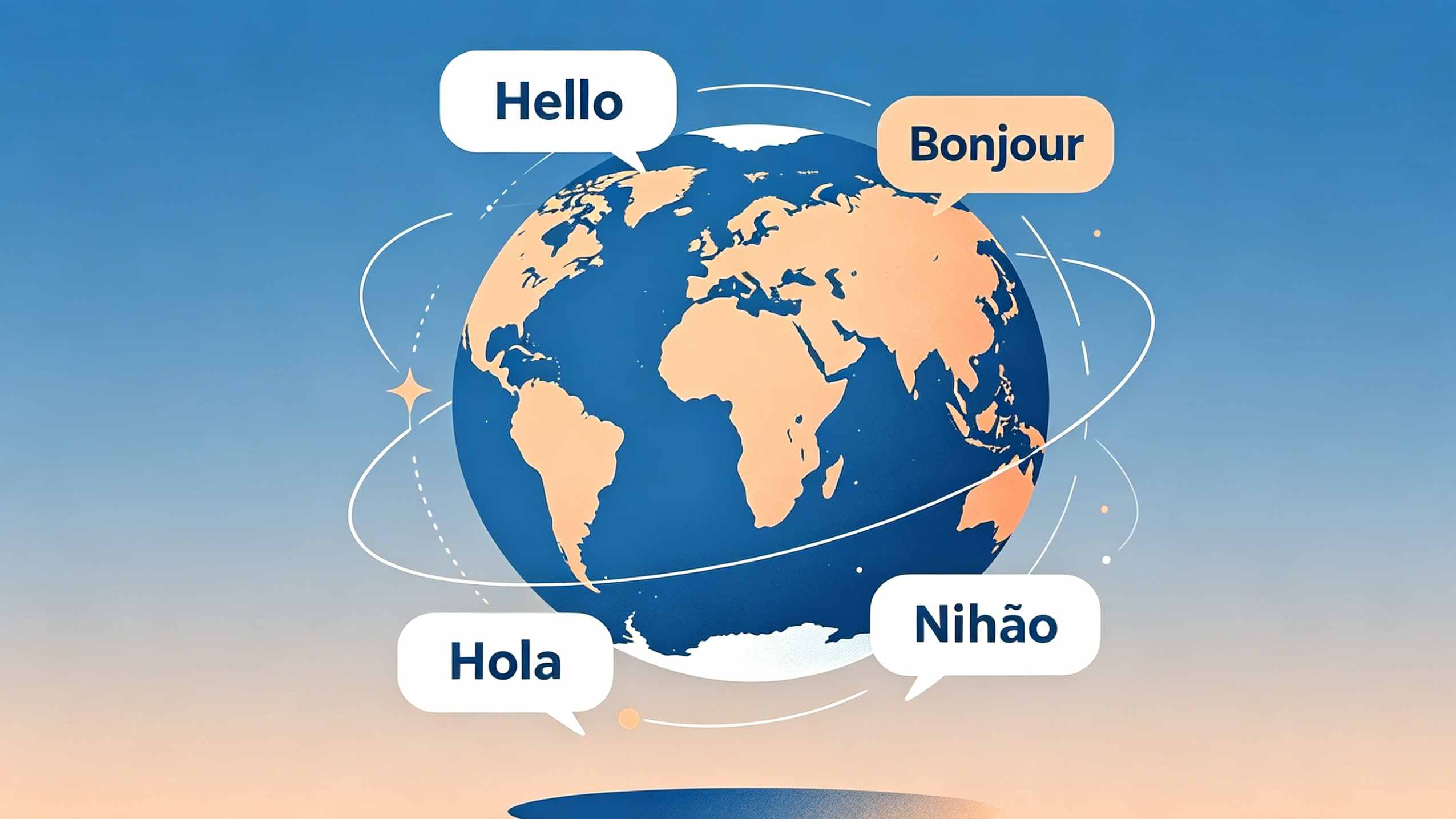
Recent models can detect and switch between dozens of languages in real time. For instance, a user could start a sentence in English and finish it in Spanish; the AI will not only understand the "code-switching" but can respond in kind or provide a real-time translation that maintains the speaker’s original vocal characteristics.
Real-World Performance: A Comparative Experience
When evaluating these tools, the difference between a "good" and a "great" experience often comes down to how the model handles complex reasoning while maintaining voice stability.
In our internal tests using various reasoning levels—from minimal to "extra high"—we observed a clear trade-off. When an AI agent is tasked with a simple request, such as "Set a timer for ten minutes," minimal reasoning is sufficient, and the response is nearly instantaneous. However, when asked to "Help me brainstorm a strategic pre-mortem for a coffee shop business located near a commuter rail station," the higher reasoning levels provide significantly more depth.
During these high-reasoning tasks, the AI might use "preambles"—short phrases like "Let me look into that" or "One moment while I check the data." These are not just fillers; they are engineered to maintain the social connection while the model processes complex logic. In our experience, the presence of these natural fillers makes the AI feel more competent and less like a lagging software application.
High-Impact Use Cases for AI Voice Chat
The shift from text-based AI to voice-based AI is opening new markets and improving accessibility across multiple sectors.
Personal Productivity and Brainstorming
Many users find that talking through a problem is more effective than typing. AI voice chat allows for hands-free brainstorming while driving, walking, or cooking. You can draft emails, organize your calendar, or rehearse a presentation with an AI that provides constructive feedback on your tone and clarity.
Language Learning and Skill Development
One of the most powerful applications is language immersion. Users can practice speaking a new language with an AI that never gets tired, corrects grammar in real time, and can simulate different social scenarios—such as ordering at a restaurant or conducting a job interview. This reduces the "anxiety of error" that many students feel when practicing with native speakers.
Enterprise Customer Service
According to industry projections, up to 70% of customer service interactions will be initiated and resolved within conversational AI systems by 2028. Modern voice agents can handle inbound calls, resolve common technical issues, and qualify leads without the user ever needing to wait on hold. Because these agents can access internal databases (RAG - Retrieval-Augmented Generation) in real time, they provide more accurate information than a human agent might be able to recall instantly.
Accessibility
For individuals with visual impairments or motor disabilities that make typing difficult, AI voice chat is a life-changing interface. It provides a level of autonomy that traditional screen readers cannot match, allowing users to navigate complex software and the internet through natural dialogue.
Leading Platforms and Tools in 2025
Several key players dominate the AI voice chat landscape, each offering different strengths:
- Google Gemini (Gemini Live): Deeply integrated into the Android ecosystem, Gemini Live excels at tasks involving Google Workspace (Docs, Gmail, Calendar). Its ability to pull real-time data from the web makes it a leading research assistant.
- OpenAI (ChatGPT Advanced Voice): Known for the most natural-sounding voices and superior emotional intelligence. Its GPT-4o and subsequent models set the standard for low-latency interactions.
- Microsoft Copilot Voice: Optimized for the professional environment, integrating seamlessly with Microsoft 365 to handle enterprise-level workflows.
- Local and Open-Source Solutions: For users concerned with privacy, projects like
voice-chat-aion GitHub allow developers to run models locally using Ollama or specialized TTS engines like SparkTTS. These require significant local hardware (typically 24GB+ of VRAM for smooth performance) but offer total control over data.
Challenges: The Road to Perfect Conversation
Despite the rapid progress, AI voice chat faces several hurdles.
The "Uncanny Valley" and Trust
As voices become more human, the psychological reaction to mistakes becomes more intense. A robotic voice hallucinating a fact is expected; a human-sounding voice lying feels like a betrayal. Ensuring the factual accuracy of voice agents is the primary challenge for developers.
Latency in Complex Reasoning
While native models are fast, adding "reasoning steps" (where the AI thinks before it speaks) can reintroduce latency. Finding the balance between a quick response and a thoughtful one is an ongoing area of optimization.
Privacy and Security
Voice data is highly personal. AI systems must be designed to redact Personal Identifiable Information (PII) in real time and ensure that voice recordings are not used for unauthorized training. The rise of "voice-native" agents that can call tools (like booking a flight) also introduces security risks that require robust authentication protocols.
Summary of the Current Landscape
AI voice chat has evolved from a novelty feature into a primary interface for human-computer interaction. The transition from cascaded pipelines to voice-native models has solved the latency issues that plagued earlier versions. With the integration of high-reasoning capabilities, these agents can now act as strategic partners, tutors, and efficient service providers.
Comparison Table: AI Voice Chat vs. Traditional Voice Assistants
| Feature | Traditional Voice Assistants (Siri/Alexa 1.0) | Modern AI Voice Chat (Gemini Live/ChatGPT) |
|---|---|---|
| Architecture | Scripted / Keyword Triggered | Generative / Neural Reasoning |
| Context | Single-turn (forgets previous prompt) | Multi-turn (deep contextual memory) |
| Latency | 1.0s - 2.0s | < 300ms |
| Interruption | Not supported (Half-Duplex) | Supported (Full-Duplex) |
| Tone | Monotonic / Robotic | Emotional / Prosodic |
| Task Scope | Simple tasks (Timer, Weather) | Complex reasoning (Strategy, Tutoring) |
FAQ: Frequently Asked Questions about AI Voice Chat
What is the best AI voice chat app for beginners?
For most users, the mobile apps for ChatGPT or Google Gemini provide the most intuitive experience. They require no setup and offer high-quality, pre-configured voices.
Can AI voice chat understand different accents?
Yes, modern models are trained on massive, diverse datasets. They are significantly better at understanding regional accents and non-native speakers than the voice recognition systems of five years ago.
Is AI voice chat private?
Most major providers offer privacy settings to opt out of data training. However, for maximum privacy, technical users should look into running local models using open-source frameworks.
Does AI voice chat require a fast internet connection?
Since most of the heavy lifting (reasoning and generation) happens in the cloud, a stable internet connection is required to maintain low latency. High-speed 5G or Wi-Fi is recommended for the best experience.
Can I change the AI's voice?
Yes, most platforms offer a variety of voice profiles ranging from different genders, ages, and personality types (e.g., "Calm," "Professional," or "Energetic").
Conclusion
The future of AI voice chat is not just about "talking to computers." It is about a "voice-native" world where software listens, reasons, and acts on our behalf. As models continue to improve in their reasoning efforts and emotional range, the boundary between digital assistance and human collaboration will continue to blur, making technology more accessible and more human than ever before.
-
Topic: Advancing voice intelligence with new models in the API | OpenAIhttps://openai.com/index/advancing-voice-intelligence-with-new-models-in-the-api/?gad_source=1&page=13
-
Topic: Voice-Native Agents: Rearchitecting Conversational AI with Open, Low-Latency Speech Models S81704 | GTC San Jose 2026 | NVIDIA On-Demandhttps://www.nvidia.com/en-us/on-demand/session/gtc26-s81704/
-
Topic: GitHub - bigsk1/voice-chat-ai: 🎙️ Speak with AI - Run locally using Ollama, OpenAI, Anthropic or xAI - Speech uses SparkTTS, OpenAI, ElevenLabs, Kokoro, Typecast or xAI · GitHubhttps://github.com/bigsk1/voice-chat-ai