Home
Home
Why Professional UX Designers Are Trading Traditional Workflows for AI Integrated Tools

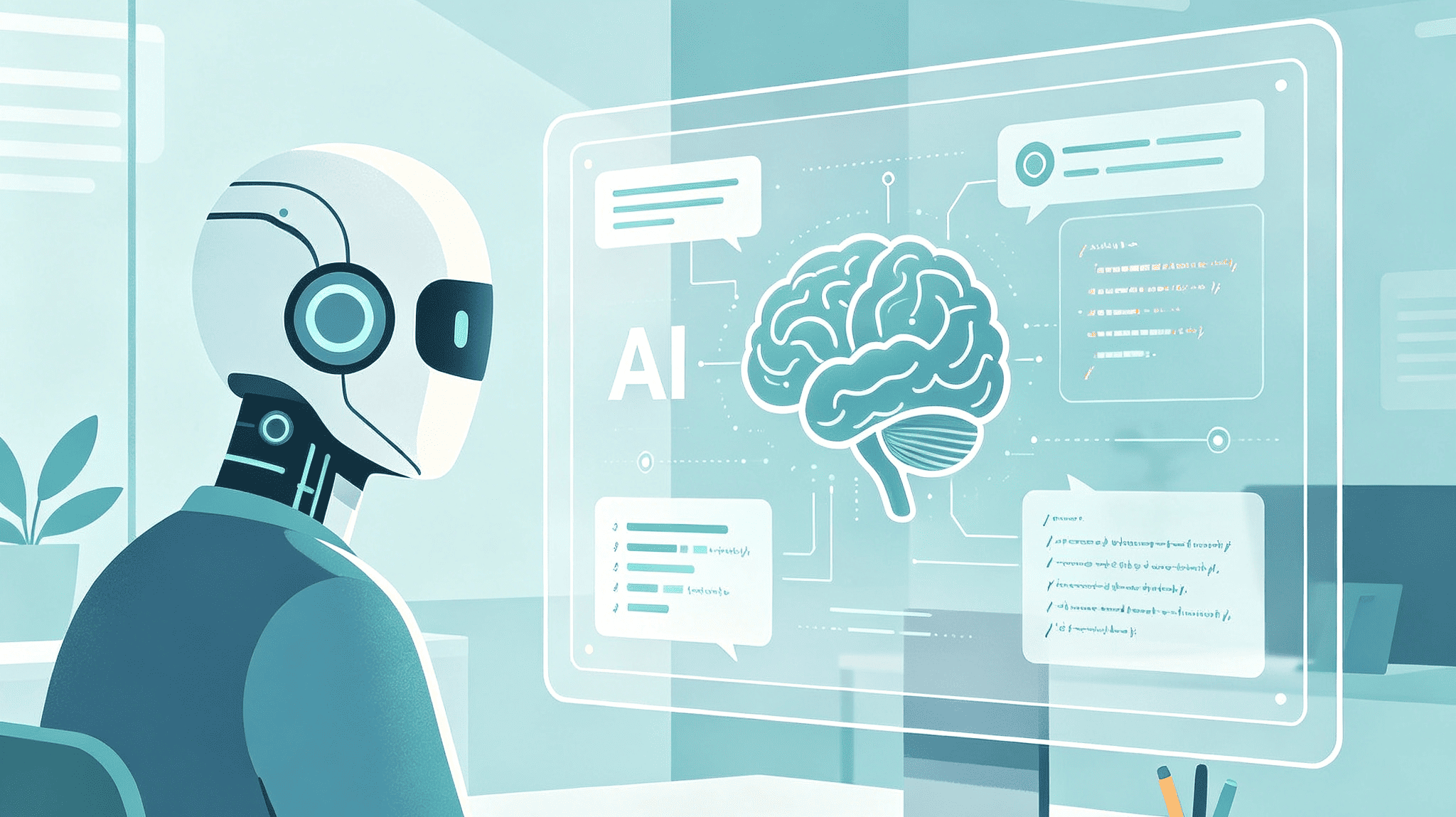
Artificial intelligence has officially crossed the threshold from a experimental novelty to a functional cornerstone within the professional User Experience (UX) design ecosystem. The shift is not characterized by a wholesale replacement of human creativity, but rather by the automation of high-frequency, low-leverage tasks. Today’s senior designers are leveraging a sophisticated stack of AI tools to eliminate "synthesis debt"—the lag time between gathering raw user data and producing actionable design patterns.
The modern UX workflow is being restructured around the capabilities of generative models and specialized machine learning algorithms. This evolution allows design teams to bypass the "blank canvas" stage of wireframing, transcribe hours of user interviews in minutes, and predict visual attention patterns before a single pixel is tested with a live user. To understand this transition, one must examine the specific tools that are currently defining the boundaries of AI-assisted design.
Accelerating User Research and Data Analysis
The foundation of any successful UX project is research, a phase historically plagued by manual labor. Extracting insights from qualitative data—such as interview recordings or open-ended survey responses—used to take days of tagging and sorting. AI tools have reduced this timeline by an order of magnitude.
Automating Qualitative Synthesis with Dovetail and Looppanel
Dovetail has emerged as a critical insights hub for enterprise design teams. In practical application, its AI features serve as a digital research assistant that handles the grunt work of transcription and sentiment analysis. When processing a batch of twenty user interviews, the tool can automatically tag recurring themes such as "navigation frustration" or "pricing confusion." Our tests indicate that while the automated tagging requires a human review to catch nuance, it captures approximately 85% of key themes accurately on the first pass.
Looppanel offers a similar advantage but excels in real-time qualitative analysis. It records interviews and provides accurate transcriptions across multiple languages, allowing researchers to tag themes instantly during the session. For designers working in fast-paced startup environments, this immediacy means that a research report can be delivered to stakeholders within hours of the final interview, rather than a week later.
Quantitative Testing at Scale via Maze
Maze has revolutionized unmoderated usability testing by integrating AI that analyzes user interactions autonomously. Instead of a researcher manually watching hundreds of screen recordings, Maze generates heatmaps and identifies "misclick" patterns and "high-friction" paths automatically. The AI-driven reporting provides a usability score that helps teams quantify the success of a design iteration before it moves to the development phase.
Perplexity as a Research Engine
Beyond internal data, UX designers use Perplexity as a high-fidelity answer engine for competitive research and market analysis. Unlike traditional search engines, Perplexity provides cited sources for its claims, making it an essential tool for validating assumptions about industry standards or accessibility requirements. It functions as a rapid-response librarian, allowing designers to gather technical specifications or UI patterns from competitors without manual browsing.
Strategy Ideation and Information Architecture
Before the visual interface takes shape, the UX designer must define the logic, personas, and user journeys. AI has become a powerful partner in this conceptual phase, acting as a sounding board that can simulate user perspectives and structure complex information.
Miro Assist and Collaborative Mapping
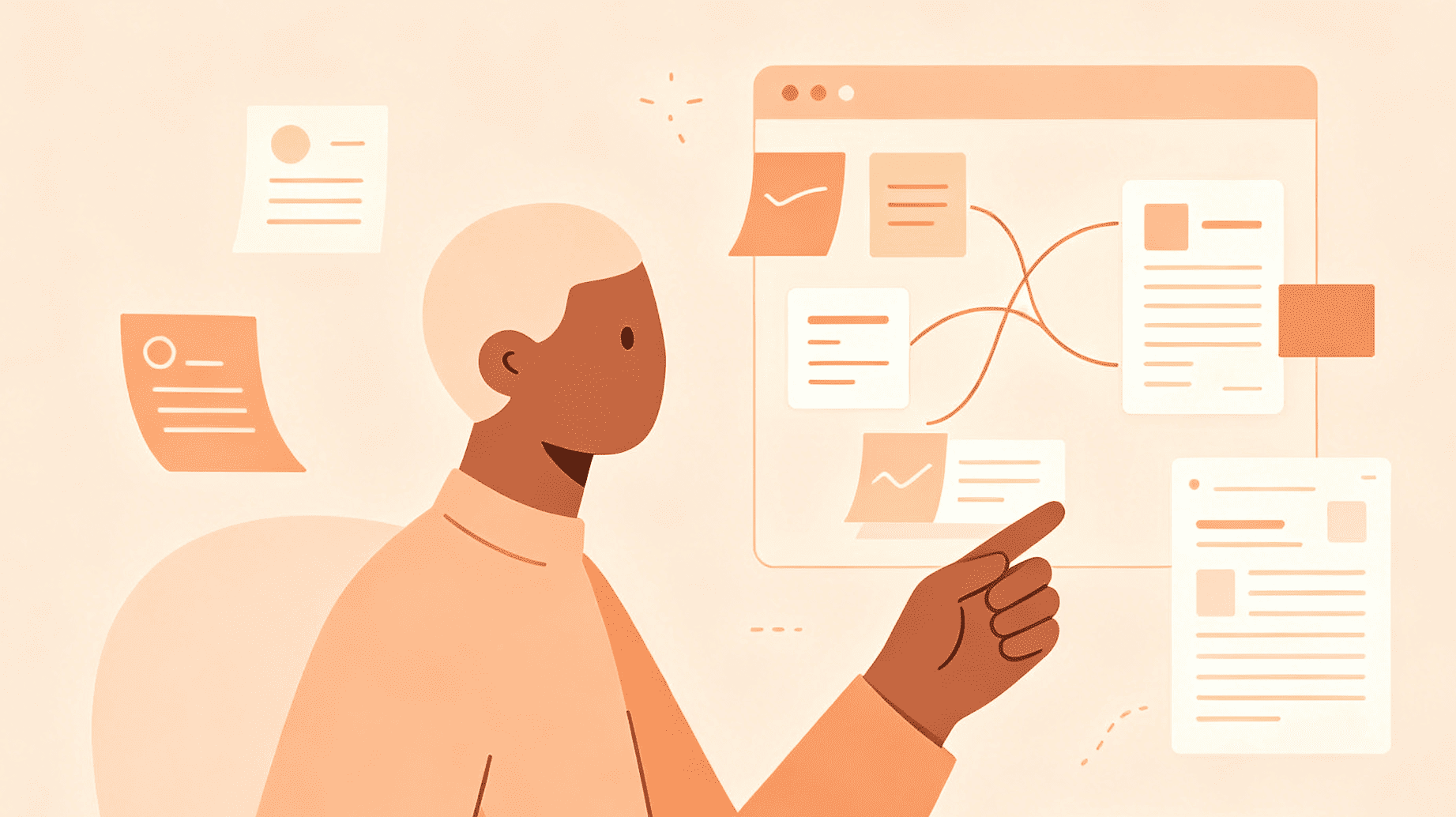
Miro Assist has integrated AI directly into the digital whiteboarding experience. During a brainstorming session, the AI can synthesize a chaotic cluster of sticky notes into a coherent user journey map or an organized affinity diagram. For a design lead managing a remote workshop, this means the time spent "tidying up" after a session is virtually eliminated. The AI can also generate new ideas based on the existing content on the board, helping teams break through creative blocks.
Bridging Research and Design with QoQo
QoQo is a Figma plugin specifically built for the planning phase. It helps designers generate user personas, journey maps, and sitemaps based on brief project descriptions. In a production environment, QoQo serves as a sanity check. By prompting the tool to "generate a persona for a first-time crypto investor with low technical literacy," a designer can quickly identify potential pain points that might have been overlooked in a standard persona exercise.
Large Language Models as Thought Partners
Claude and ChatGPT are now staple tools for UX writing and strategy. Claude, in particular, is favored for its long-context window, which allows designers to upload massive research documents and ask specific questions like, "Based on these 50 transcripts, what are the top three reasons users drop off at the checkout page?"
These models are also used for "persona roleplaying." By instructing an AI to act as a specific user demographic, designers can conduct "pre-mortems" on their ideas, asking the AI to critique a proposed feature from the perspective of a user with specific needs or frustrations. While this does not replace real user testing, it hardens the design strategy before it reaches the prototyping stage.
The Transformation of Wireframing and Prototyping
The transition from a conceptual flow to a digital interface is where AI provides the most visible gains in efficiency. The era of drawing every rectangle and button by hand is ending, replaced by a "prompt-to-prototype" workflow.
Figma AI and the Native Ecosystem
Figma’s integration of AI—often referred to as Figma Make—is perhaps the most significant shift for professional designers. Because it lives natively within the industry-standard tool, there is no friction in the workflow. Designers can use text prompts to generate entire UI layouts or specific components.
The real power of Figma AI lies in its ability to understand the design system. If a team has a well-documented library of components, the AI can (in theory) suggest layouts that adhere to that system’s constraints. In our practical application, we find that while the AI-generated layouts often require "pixel-pushing" to reach production quality, they provide a 60% head start on layout exploration.
Rapid Structure with Relume and Visily
Relume has become the gold standard for website information architecture. It generates sitemaps and low-fidelity wireframes from text prompts, focusing on content hierarchy rather than visual styling. This is crucial for UX designers who want to ensure the "bones" of a site are correct before worrying about colors and typography. Relume’s output is exportable to Figma, allowing for a seamless transition from structure to style.
Visily, on the other hand, is designed for rapid prototyping, often used by non-designers or product managers to communicate ideas. It can transform a hand-drawn sketch or a screenshot into an editable, high-fidelity wireframe. For a designer tasked with "cleaning up" a stakeholder’s rough idea, Visily acts as a high-speed translation layer.
Bridging Design and Code with V0.dev and Framer
The gap between design and development is narrowing through tools like V0.dev (by Vercel) and Framer. V0.dev allows designers to generate production-ready React code from text prompts or screenshots. This is the beginning of what some call "Vibe Coding"—where the intent is expressed in natural language and the AI handles the technical implementation.
Framer has evolved from a simple prototyping tool into a full-scale AI website builder. It can generate entire responsive websites from a description, including copy and images. For freelance UX designers or small teams, Framer allows them to manage the entire lifecycle from design to live deployment without a dedicated developer, provided the site's complexity remains within the tool's parameters.
Visual Design and Automated Aesthetics
While UX is often about logic and function, the User Interface (UI) is the primary touchpoint for the user. AI tools are now handling the aesthetic heavy lifting, from color theory to high-fidelity image generation.
Khroma and Personalized Color Engines
Khroma uses machine learning to learn a designer’s color preferences and then generates an infinite number of palettes based on those tastes. Unlike static color palette generators, Khroma understands how colors work together in a UI context, showing how text looks on various backgrounds. This eliminates hours of trial-and-error in the brand discovery phase.
Adobe Firefly and Generative Fill
For designers working within the Adobe Creative Cloud, Firefly has changed how assets are created. The "Generative Fill" feature in Photoshop allows UX designers to extend backgrounds, remove unwanted elements, or generate custom imagery for high-fidelity prototypes in seconds. This is particularly useful when creating "hero" sections for landing pages where the perfect stock photo doesn't exist.
Galileo AI for High-Fidelity Iteration
Galileo AI represents the next step in UI generation. It creates fully stylized, visually rich mobile and web designs from simple prompts. Unlike low-fidelity wireframing tools, Galileo applies typography, icons, and color palettes automatically. For a designer needing to present five different "looks" for a mobile app to a client, Galileo can generate those concepts in the time it would take to design one screen manually.
UX Writing and Content Governance
Copy is a critical component of the user experience, yet it is often treated as an afterthought. AI has empowered designers to take ownership of the narrative and ensure consistency across large-scale products.
Frontitude and UX Writing Assistants
Frontitude acts as a bridge between design and content strategy. It is a Figma plugin that suggests UI copy based on the brand’s voice and the available space in the design. It helps prevent "lorem ipsum" placeholder text from making its way into prototypes, ensuring that stakeholders are reviewing the design with realistic content.
Grammarly and Acrolinx for Governance
While Grammarly is widely known for basic spell-checking, its integration into the design workflow helps maintain a professional tone across all documentation and interface text. For enterprise teams, Acrolinx provides AI-driven content governance, ensuring that the language used in a design adheres to strict brand guidelines and regulatory requirements. This is especially important in industries like fintech or healthcare, where word choice can have legal implications.
The Era of Vibe Coding: A New Paradigm for UX Professionals
A recent research paper titled "Vibe Coding for UX Design" highlights a fundamental shift in how professionals interact with their tools. The term "Vibe Coding," popularized by Andrej Karpathy, refers to a workflow where the professional expresses a high-level creative intent (the "vibe") and the AI translates that into functional artifacts.
The Four-Stage Workflow
The research identifies a four-stage workflow that is becoming standard among AI-literate designers:
- Ideation: Using AI to brainstorm and define the "vibe" or intent.
- AI Generation: Prompting the tool to create a first-pass prototype or code snippet.
- Debugging: Manually refining the AI’s output to fix errors or alignment issues.
- Review: Evaluating the final output against user needs and brand standards.
The Blurring of Roles
This paradigm is blurring the lines between UX designers, front-end engineers, and product managers. A designer who can "vibe code" a functional prototype in React using Cursor or Bolt.new is more valuable than one who only produces static images. However, this shift introduces new challenges. The research warns of "code unreliability" and the risk of "AI over-reliance," where designers might stop thinking critically about the user’s journey because the AI-generated layout looks "good enough."
Skill Redistribution
Expertise is shifting from "how to build" to "how to direct." The value of a UX designer in 2025 and beyond lies in their ability to orchestrate these AI tools, verify their output, and maintain the "human" element of design—empathy, ethical considerations, and complex problem-solving. As the technical barriers to entry lower, the importance of high-level strategic thinking increases.
Accessibility and Automated Auditing
Accessibility (a11y) is a legal and ethical requirement that is often difficult to audit manually at scale. AI tools have made it significantly easier to ensure that designs are inclusive.
Stark for Real-time Compliance
Stark is a suite of tools that integrates with Figma and browsers to audit designs for accessibility. Its AI features can automatically check for color contrast issues, suggest alt-text for images, and simulate various types of color blindness. By catching these issues during the design phase, teams avoid the "accessibility debt" that occurs when problems are only discovered after development.
Attention Insight and Predictive Heatmaps
Attention Insight uses AI algorithms to simulate how the human eye scans a page. It generates predictive heatmaps that show which elements—such as a Call to Action (CTA) button or a headline—will grab the user's attention. In a professional setting, this is used as an "early warning system." If the heatmap shows that users are looking at a decorative image instead of the primary button, the designer can adjust the visual hierarchy before conducting expensive eye-tracking studies with real humans.
Navigating the Limitations of AI in UX
Despite the massive gains in efficiency, AI tools are not a panacea. Professional designers must remain aware of several critical limitations to avoid common pitfalls.
The Homogenization of Design
AI models are trained on existing design data. This means they are inherently biased toward the "average" or the "status quo." If every designer uses the same AI tools to generate layouts, digital products will begin to look and feel identical. Human creativity is still the primary driver of brand differentiation and innovative interaction patterns that break the mold.
The Lack of Deep Empathy
AI cannot "feel" a user’s frustration. While it can identify a "high-friction path" through data, it cannot understand the emotional context of a user’s life. A UX designer must still conduct ethnographic research and spend time with real people to understand the "why" behind the data. AI provides the "what," but humans provide the "why."
Accuracy and Hallucinations
Generative AI can "hallucinate" UI patterns that are visually appealing but technically impossible or highly confusing for users. For example, an AI might generate a navigation menu that looks sleek but lacks a logical hierarchy or fails to account for mobile responsiveness. Every AI output must be scrutinized through the lens of established UX principles (like Nielsen’s Heuristics).
Summary: The New UX Stack
The transition to AI-integrated workflows is not a choice for the future; it is a reality of the present. The most successful UX designers are those who view AI as a "junior designer" that can handle 80% of the repetitive tasks, allowing the "senior designer" (the human) to focus on the 20% that requires deep strategy and empathy.
Key takeaways for the modern designer:
- Research: Use Dovetail and Looppanel to eliminate the manual labor of data synthesis.
- Prototyping: Master Figma AI and Relume to move from idea to structure in minutes.
- Coding: Embrace the "Vibe Coding" movement with tools like V0.dev to bridge the gap between design and engineering.
- Testing: Leverage predictive tools like Attention Insight to validate visual hierarchy before live testing.
By integrating these tools, UX professionals are not just working faster; they are working at a higher level of abstraction, focusing on the "right intention" rather than just the "right design."
FAQ
Will AI replace UX designers?
No. AI is excellent at automating tasks and generating variations based on existing patterns, but it lacks the ability to understand complex human emotions, ethical nuances, and unique brand strategies. It replaces tasks, not roles. Designers who learn to use AI will, however, likely replace those who do not.
How much do these AI tools cost for a professional team?
Costs vary significantly. Basic AI features in tools like Figma are often included in existing professional tiers, while specialized research tools like Dovetail or enterprise-grade governance tools like Acrolinx can cost hundreds or thousands of dollars per month depending on the scale. Most tools offer a "freemium" tier for individual exploration.
Are there privacy risks when using AI for user research?
Yes. When uploading user interview transcripts to AI tools, designers must ensure that the tools are GDPR/SOC2 compliant and that sensitive Personal Identifiable Information (PII) is redacted. Most professional-grade tools like Dovetail have robust privacy settings for this purpose.
Which AI tool should I learn first?
For most UX designers, the most impactful starting point is Figma AI and Relume. Since these tools integrate directly into the existing design workflow, they provide the most immediate return on investment in terms of time saved.
Can AI generate a full design system?
AI can help extract a design system from existing designs or suggest a starting point for colors and typography, but building a robust, scalable design system still requires human oversight to ensure consistency, accessibility, and technical feasibility across all platforms.
-
Topic: Vibe Coding for UX Design: Understanding UX Professionals’ Perceptions of AI-Assisted Design and Developmenthttps://arxiv.org/pdf/2509.10652v1
-
Topic: 8 Best AI Tools for UX Designers | IxDFhttps://www.interaction-design.org/literature/article/ai-tools-for-ux-designers?srsltid=AfmBOorjstPYdC0x3sQVguxfqMYQSyX_4Usx14FDn2heKmnX-wK_AZnj
-
Topic: AI UI/UX Tools: Comprehensive List for Designers (2026) | tasarim.aihttps://tasarim.ai/en/blog/ai-ui-ux-araclari-kapsamli-liste