 Home
Home
Why Runway Act-Two Is the Real Breakthrough for AI Motion Capture in 2025
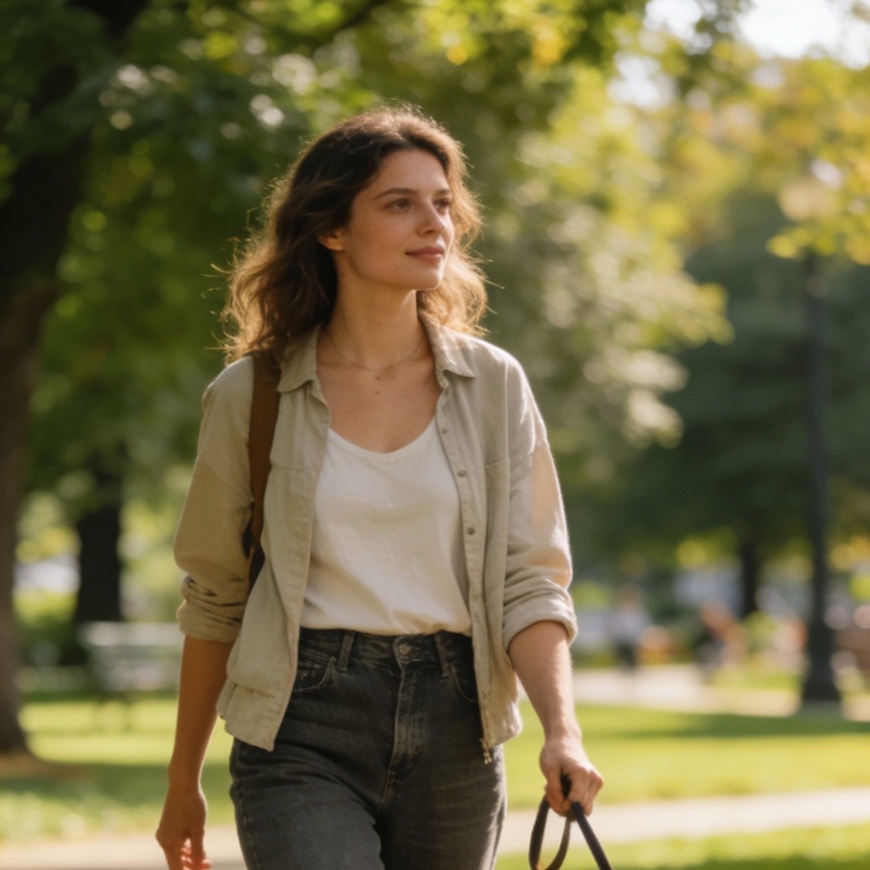
Runway Act-Two represents a significant evolution in generative AI, serving as a comprehensive motion capture and performance transfer tool that bridges the gap between traditional professional animation and accessible AI-driven content creation. Unlike its predecessor, Act-One, which focused primarily on facial expressions, Act-Two provides full-body tracking, intricate hand and finger movement capture, and environmental motion synthesis. By utilizing a "driving video" of a real person and mapping those movements onto a "character reference"—which can be a static image, a 3D model, or an existing video—Act-Two enables creators to produce high-fidelity character animations without the need for specialized suits, markers, or multi-camera setups.
The Technological Leap from Facial Capture to Full-Body Dynamics
The transition from Act-One to Act-Two marks a fundamental shift in how AI understands human kinematics. Act-One was a revolutionary step for dialogue-heavy scenes, allowing creators to transfer nuanced micro-expressions and lip-syncing from a webcam recording to a stylized character. However, it was limited by its focus on the head and shoulders, often leaving the rest of the body static or disconnected from the performance.
Act-Two addresses these limitations by integrating the Gen-4 video generation model. This upgraded architecture allows the system to analyze and replicate the entire skeletal structure of the performer. It tracks the torso, limb positioning, gait, and, perhaps most impressively, individual finger articulations. This advancement effectively solves the "hand problem" that has plagued AI video generation for years. In technical tests, the system demonstrates an ability to maintain finger consistency even during complex gestures like signing or holding invisible props, provided the driving video is sufficiently clear.
Understanding the Core Capabilities of Runway Act-Two
Act-Two is not merely a filter; it is a performance transfer engine. The tool functions by decomposing the driving video into motion data and then re-synthesizing that data within the context of the target character's geometry and style.
Full-Body and Skeletal Performance Transfer
Traditional motion capture requires a performer to wear a Lycra suit covered in reflective markers or sensors. Act-Two replaces this entire infrastructure with computer vision. The AI identifies key joints and pivot points on the driving performer's body—shoulders, elbows, wrists, hips, and knees. This data is then translated to the character reference. Whether the character is a photorealistic human, a 3D-rendered robot, or a 2D anime figure, the AI adapts the proportions to ensure the movement feels grounded and natural.
Hand and Finger Precision
Capturing the nuance of hand movements has historically been one of the most expensive aspects of animation. Act-Two introduces finger-level tracking that allows for intricate gesture recognition. This is particularly useful for characters that need to express emotion through their hands or perform specific tasks. During internal evaluations of the tool, we observed that when the driving performance video includes clear views of the palms and fingers, the AI successfully avoids the "blurring" effect typical of earlier generative models.
Automatic Environmental Motion Synthesis
One of the most subtle yet impactful features of Act-Two is its ability to generate environmental motion. When a static image is used as a character reference, the AI does not simply animate the subject against a frozen background. Instead, it generates a "living" scene. This includes subtle camera shakes that mimic a handheld lens, environmental movements like drifting smoke or wind-blown hair, and lighting shifts that correspond to the character's movement. This creates a much more immersive output compared to standard "puppet" animation.
Technical Specifications and Generation Parameters
To achieve professional-grade results, Act-Two operates within a specific set of technical parameters designed for cinematic flexibility and output quality.
- Frame Rate and Resolution: The system outputs at a consistent 24 frames per second (fps), the standard for film and high-end television. It supports a wide range of aspect ratios, including 16:9 (1280x720) for standard widescreen, 9:16 (720x1280) for social media, 21:9 (1584x672) for ultra-widescreen cinematic looks, and 1:1 (960x960) for balanced square formats.
- Duration Limits: Act-Two currently supports generations of up to 30 seconds. While this may seem short for a full feature, it is more than sufficient for individual shots in a professional edit, which typically range from 3 to 10 seconds.
- Model Engine: The tool is powered by Runway's Gen-4 model, which offers improved temporal consistency and better adherence to the original art style of the character reference compared to the Gen-3 Alpha used for previous tools.
Comparing Character Inputs: Image vs. Video
A critical decision for any creator using Act-Two is whether to provide a static image or a video as the character reference. Each method offers distinct advantages depending on the desired outcome of the scene.
Using a Character Image for Maximum Control
When you provide a static image, Act-Two has more creative freedom to define the character's movement and the environment's physics. This is often the preferred method for creating characters from scratch or for stylized art where no previous video exists.
- Gesture Control: This setting is exclusive to image inputs. It determines how much of the bodily motion from the driving video is forced onto the character.
- Environmental Generation: The AI generates the background motion automatically, which often results in a more cohesive look since the subject and the background are synthesized simultaneously.
Using a Character Video for Consistency and Context
If you have an existing video of a character—perhaps a clip from a 3D render or a previous live-action shot—using it as a reference ensures that the scene's lighting, background, and camera angle remain consistent with previous shots.
- Style Retention: The AI focuses on modifying the character's performance (face and body) while attempting to keep the original environment intact.
- Limitations: Gesture control is generally disabled for video inputs because the character's body movement is already defined by the reference video. Act-Two primarily "overwrites" the performance details rather than the core positioning.
Practical Insights: Optimizing the Driving Performance
The quality of an Act-Two generation is fundamentally tied to the quality of the driving performance video. Based on extensive testing across various lighting conditions and performance styles, several "golden rules" have emerged for ensuring a clean transfer.
Framing and Positioning
The subject in the driving video should be framed from at least the waist up. If the goal is full-body motion, the entire body should be in frame. It is vital that the subject's face remains visible throughout the performance; if the actor turns their back to the camera or obscurs their face with their hands, the AI may lose the facial tracking, leading to "glitching" or character distortion.
Lighting and Clarity
Avoid high-contrast shadows or extremely dim environments. The AI needs to "see" the edges of the body and the details of the facial features. In our testing, we found that flat, even lighting (like that from a ring light or a bright window) produces the most stable results. Shadows that cross the face can lead the AI to misinterpret a shadow as a facial feature, resulting in unnatural skin textures in the final output.
The Importance of the Initial Pose
For the best results with gesture control, the performer in the driving video should start in a pose that closely matches the pose of the character in the reference image. If the character image shows a person sitting with their hands on their lap, but the driving video starts with a person standing with their arms raised, the AI will have to "morph" the character's skeleton abruptly, which can create visual artifacts during the first few frames of the generation.
How to Configure Advanced Settings for Professional Results
Runway Act-Two provides two primary sliders that allow creators to fine-tune the AI's interpretation of the performance. Understanding these is the difference between a "good" animation and a "professional" one.
What Is Facial Expressiveness in Act-Two?
The Facial Expressiveness setting controls the intensity of the facial motion transfer.
- Low Settings (1-2): Use this for subtle, "underplayed" performances. It helps maintain character consistency and prevents the face from "breaking" or looking too elastic. This is ideal for photorealistic characters where subtle movements are more believable.
- Standard Setting (3): This is the default and generally offers the best balance for most use cases.
- High Settings (4-5): Use this for highly stylized or cartoon characters. If you are animating an expressive 2D character or a fantasy creature, you may want the facial features to stretch and move more dramatically. Note that at level 5, we have observed increased "jittering" in the eye and mouth areas if the driving video isn't perfectly sharp.
Mastering Gesture Control
The Gesture toggle (available for image inputs) determines whether the character follows the performer's body movements or stays mostly stationary while only moving their face. Enabling this is essential for action sequences, dancing, or any performance where body language is key. When disabled, the AI treats the character more like a "talking head," which can be useful for simple interview-style content where you want to ensure the background and body stay perfectly still.
Industry Applications: Who Is Using Act-Two?
The democratization of motion capture through Act-Two is already impacting several key sectors of the creative economy.
Pre-visualization in Film and Television
For professional studios, Act-Two is a powerful tool for "Pre-viz." Before spending hundreds of thousands of dollars on a professional mocap stage, directors can use Act-Two to quickly block out scenes. They can record themselves in an office, apply the motion to a rough 3D model of their character, and see if the performance works within the intended camera angles.
Indie Game Development
Independent developers often lack the budget for AAA motion capture. Act-Two allows them to create high-quality narrative sequences and NPC (non-player character) dialogues using nothing more than a smartphone. The ability to export these as 24fps video files makes them easy to integrate into game engines like Unity or Unreal Engine for cutscene playback.
Educational and Corporate Content
Creating relatable educational avatars often requires a human touch that standard text-to-speech tools lack. Act-Two allows educators to record their own lectures and "skin" themselves as a character that appeals more to their target audience—whether it's an animated scientist for kids or a professional 3D avatar for corporate training.
Addressing the Limitations and Safety Standards
While Act-Two is a massive step forward, it is not without its limitations. The AI can still struggle with "occlusion"—when one part of the body moves behind another. For example, if a performer crosses their arms tightly, the AI might momentarily lose track of which hand is which. Similarly, extremely fast or chaotic movements can result in motion blur that the AI cannot accurately interpret.
From a safety and ethical standpoint, Runway has implemented strict content moderation. The tool is designed to prevent the unauthorized generation of public figures and prohibits the creation of harmful or sexually explicit content. Users who attempt to bypass these safeguards face account restrictions, ensuring the technology is used for creative, non-malicious purposes.
Conclusion and Summary
Runway Act-Two represents a milestone in the "Prosumer" AI era. By combining full-body skeletal tracking, finger-level precision, and environmental motion synthesis into a single web-based interface, it has removed the traditional barriers to professional-grade animation. Whether you are an indie filmmaker trying to bring a fantasy creature to life or a marketer looking for a more engaging way to present a digital spokesperson, Act-Two provides a level of control and fidelity that was previously unimaginable without a Hollywood budget.
Summary of Key Benefits:
- Equipment-Free Mocap: No suits or sensors required; just a driving video.
- Comprehensive Tracking: Captures face, body, and hands simultaneously.
- Gen-4 Fidelity: Higher consistency and better style adherence.
- Versatile Inputs: Works with both static images and existing videos.
- Cinematic Standards: Outputs 24fps video in multiple professional aspect ratios.
Frequently Asked Questions (FAQ)
What is the cost of using Runway Act-Two?
Act-Two typically costs 5 credits per second of video generated. There is a 3-second minimum charge per generation, meaning even a 1-second clip will cost 15 credits. It is available to users on Runway's standard, pro, and enterprise plans.
Can I use Act-Two to animate multiple characters at once?
Currently, Act-Two is optimized for single-character performance transfer. While you can generate multiple clips and edit them together, the AI focuses on one "driving" subject at a time to maintain tracking accuracy.
Does Act-Two work on mobile devices?
Yes, Act-Two is accessible through the Runway web platform on mobile browsers and via the dedicated Runway mobile app. This allows creators to record their driving performance and start the generation process directly from their phone.
How long does it take to generate an Act-Two video?
Generation times vary based on server load and the duration of the clip, but most 5-to-10-second clips are processed within 1 to 3 minutes.
Can Act-Two change the voice of my character?
Yes, Act-Two has the capability to modify or synchronize the character's voice based on the audio from the driving performance, allowing for a complete character transformation including both visuals and sound.
-
Topic: Creating with Act-Two – Runwayhttps://help.runwayml.com/hc/en-us/articles/42311337895827-Creating-with-Act-Two?e-page-34222331=10&e-page-48f39926=2
-
Topic: Runway Act-Two - Professional AI Character Animationhttps://runwayaleph.com/runway-ai/runway-act-two
-
Topic: Draft:Act-Two (AI motion capture) - Wikipediahttps://en.m.wikipedia.org/wiki/Draft:Act-Two_(AI_motion_capture)









